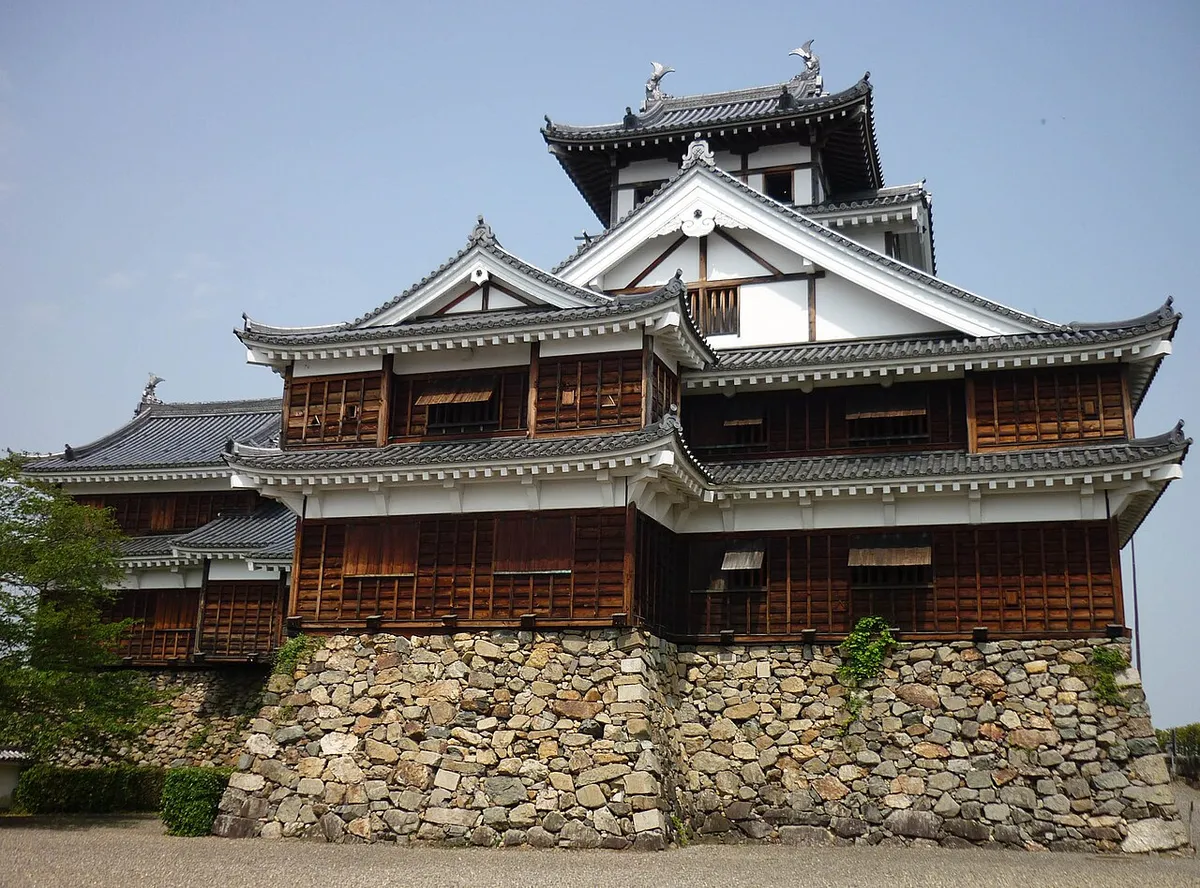
Fukuchiyama Castle

福知山城·Fukuchiyama-jo

D Tourism Score 52/100
B Defense Score 76/100

Built by the man who killed Nobunaga — Akechi Mitsuhide's castle in Tamba, rehabilitated from villain to tragic hero by a 2020 TV drama.

#158 — Continued 100 Castles Reconstructed
Fukuchiyama Castle (福知山城)
Photo:投稿者が撮影/Wikimedia Commons/Public domain

Quick Facts

Quick Facts

Admission
¥360

¥110

Hours
09:00 – 17:00

Last entry 16:30

Nearest Station
Fukuchiyama Station (JR San'in Main Line / JR Fukuchiyama Line / Kyoto Tango Railway)
Walk from Station
15 min walk
Time Needed
1 to 1.5 hours

Adult fee increased to ¥360 from April 1, 2026. Child (elementary/junior high) ¥110.

Defense Overview

Defense Overview

Why Fukuchiyama Castle was hard to attack

This castle is hard to attack because it combines a raised core with defended outer space with enough defensive depth to slow attackers before the center.

An attacker would not get a simple direct approach to the center. They would have to cross water barriers or moat lines and push through successive outer areas before the core.

Overall score

76/100

Estimated range

70–82

Confidence

A

Strong multi-source support

This is a site-original comparison score for learning and comparison, not a reconstruction of one historical battle.

Radar view

Terrain 15/20 Entrance 14/20 Internal 16/20 Siege 16/20 Oversight 15/20
How this estimate was built+

This estimate combines broad terrain, approach, layout, and route-control signals. It is meant to explain the castle's defensive logic in plain English, not reconstruct a single historical attack.

Terrain Advantage

How much the terrain itself seems to help: height, slope, ridges, cliffs, water edges, and limited approach directions.

15/20

Entrance Defense

How awkward and dangerous the first entry looks: gates, bridge or moat crossings, chokepoints, and forced turns.

14/20

Internal Complexity

How hard it seems to keep pushing after entry: layered baileys, depth, compartmentalization, and repeated defensive lines.

16/20

Siege Endurance

A rough sense of long-hold potential: moats, water access, space, storage plausibility, and defensive staying power.

16/20

Strategic Oversight

How much the castle appears to command nearby roads, plains, rivers, basins, harbors, or town approaches.

15/20

Why Visit

Fukuchiyama Castle tells one of Japanese history's most dramatic stories — the builder who went from loyal general to notorious traitor in a single night, then died 13 days later. The stone walls with embedded grave markers are genuinely unusual. The 2020 Taiga drama has made Mitsuhide a sympathetic figure, adding emotional depth to what was previously a villain's lair. Accessible by JR from Kyoto in about 1 hour.

Highlights

1

Built by the Man Who Betrayed Nobunaga

Fukuchiyama Castle was built by Akechi Mitsuhide — the brilliant general who served Oda Nobunaga faithfully for years before staging the most famous betrayal in Japanese history, the Honno-ji Incident of 1582. Mitsuhide lured Nobunaga to the Honno-ji temple in Kyoto and surrounded it with his army, forcing Nobunaga to commit seppuku. Within thirteen days he was dead himself, defeated by Toyotomi Hideyoshi at the Battle of Yamazaki. Fukuchiyama is where he built his castle and administered his domain during the brief years when he was Nobunaga's most trusted general.

2

Recycled Gravestones in the Castle Walls

During the construction of Fukuchiyama Castle, Akechi Mitsuhide — apparently pragmatic about building materials — incorporated recycled stone from local temples, graves, and millstones into the castle walls. Visitors today can see Buddhist grave markers and stone lantern bases embedded in the ishigaki stone walls, giving the castle a uniquely eerie character. The reuse of religious stones would have been considered deeply impious, suggesting either Mitsuhide's urgency or his notorious willingness to prioritize results over convention.

3

Rehabilitated by a TV Drama

For most of Japanese history, Akechi Mitsuhide was the ultimate villain — the treacherous subordinate who murdered his brilliant lord Nobunaga. Then came the 2020 NHK Taiga drama 'Kirin ga Kuru' (The麒麟 Comes), starring Nagase Tomoya as a sympathetic, nuanced Mitsuhide who is driven to the Honno-ji betrayal by circumstances rather than treachery. The drama reframed Mitsuhide as a tragic hero and created a tourism boom to Fukuchiyama that the city's tourism board has enthusiastically promoted ever since.

Structure Details

Visitor tip

Fukuchiyama Castle is an enjoyable half-day visit combining a walkable hilltop reconstruction with a genuinely interesting historical story. Look carefully at the stone walls for the embedded grave markers and millstones — they are not obvious at a glance but become clearly visible once pointed out. The castle museum inside has good exhibits on Akechi Mitsuhide's career and the Honno-ji Incident.

Castle type

Hill castle

Hill-top flatland castle — built on a low hill above the Yura River plain, commanding the Tamba Basin approaches

Layout type

Linked compound layout

Compound style — main tower on the hilltop with compounds descending on the slopes

Main tower

Concrete reconstruction (1986) — built on original stone foundations; exterior approximates the Azuchi-Momoyama period design based on historical records

4 floors, 1 below

Stone walls

Natural stone stacking

The stone walls of Fukuchiyama Castle are historically noteworthy for two reasons: their early Azuchi-Momoyama construction style established by Mitsuhide's builders, and the unusual incorporation of recycled religious stones (grave markers, stone lanterns, millstones) embedded visibly in the wall faces. These recycled stones are one of the most talked-about features of the castle and can be seen on a guided wall tour.

Moats

Original moat remnants survive on the approach sides of the castle hill. The Yura River below provided additional water defense on the natural side of the hilltop position.

Key defensive features

Hill Position Above Yura River

The castle hill rises above the Yura River, using the river as a natural water barrier on one side and providing elevated command over the approach roads through the Tamba Basin.

Stone Moat System

Moat remnants survive on the approach sides not protected by the river, creating a multi-directional water barrier around the castle hill.

Tamba Basin Control Position

Fukuchiyama's strategic location commands the Tamba Basin — the main route between the San'in coast and Kyoto. Controlling Fukuchiyama meant controlling movement between the Japan Sea coast and the capital.

The Story of Fukuchiyama Castle

Originally built 1579 / Akechi Mitsuhide
Current form 1986 / Fukuchiyama City (concrete reconstruction)
    1579

    Akechi Mitsuhide, one of Oda Nobunaga's most capable generals, builds Fukuchiyama Castle after pacifying the Tamba region on Nobunaga's behalf. He incorporates recycled stone from local temples and graves into the castle walls — a pragmatic choice that subsequent centuries would find deeply impious.

    1582

    The Honno-ji Incident — Akechi Mitsuhide surrounds Oda Nobunaga at the Honno-ji temple in Kyoto with his army. Nobunaga, outnumbered and betrayed, commits suicide. Mitsuhide declares himself master of Japan — but his 'tenure' lasts just 13 days before Toyotomi Hideyoshi defeats him at the Battle of Yamazaki. Mitsuhide is killed by bandits while fleeing. Fukuchiyama Castle passes to new lords.

    1600

    After Sekigahara, Fukuchiyama domain is assigned to various Tokugawa-aligned lords, ultimately settled with the Okabe clan for much of the Edo period. The castle serves as a regional administrative post with no further military significance.

    1871

    Meiji abolition of domains. Castle structures are dismantled. The stone walls and foundations are preserved as the site becomes a public park.

    1986

    Fukuchiyama City constructs a concrete keep on the original stone foundations, housing a local history museum. The reconstruction uses original stone wall foundations authenticated by archaeological investigation.

    2020

    The NHK Taiga drama 'Kirin ga Kuru' airs, starring Nagase Tomoya as Akechi Mitsuhide. The sympathetic portrayal triggers a major tourism boom to Fukuchiyama Castle, cementing Mitsuhide's rehabilitation in popular Japanese culture.

In Pop Culture

TV

Kirin ga Kuru (NHK Taiga Drama, 2020)

The NHK historical drama 'Kirin ga Kuru' (The Kirin Comes) starred Nagase Tomoya as Akechi Mitsuhide, presenting him as a sympathetic figure whose betrayal of Nobunaga was driven by circumstance and principle rather than pure treachery. The drama was a major ratings success and directly drove a significant tourism increase to Fukuchiyama Castle.

Did You Know?

  • Akechi Mitsuhide's 13-day 'rule' of Japan after Honno-ji is so famous in Japanese history that the period is called 'Jusan-nichi Tenka' ('thirteen-day realm') — a poetic phrase for a brilliantly planned coup that lasted just under two weeks before Hideyoshi's counterattack destroyed it. Mitsuhide spent most of those 13 days at Fukuchiyama and Azuchi, trying to consolidate power, while Hideyoshi was force-marching his army back from Kyushu.
  • The embedded grave markers and millstones in Fukuchiyama Castle's stone walls are visible to visitors who look carefully — the grave markers are particularly striking, with Buddhist inscriptions and memorial carvings incorporated upside-down or sideways into the wall fabric. Whether this was deliberate disrespect or simply pragmatic use of available stone is debated.
  • Fukuchiyama is sometimes called the 'City of Mitsuhide' by local tourism promoters — a striking reversal for a man who was the designated villain of Japanese history for four centuries before the 2020 Taiga drama rehabilitated him in popular culture.

Score Breakdown

Tourism Score

D 52/100
  • Accessibility 13 /20
  • Foreign-Friendly 6 /20
  • Historical Value 14 /20
  • Visual Impact 11 /20
  • Facilities 8 /20

Defense Score

B 76/100
  • Terrain Advantage 15 /20
  • Entrance Defense 14 /20
  • Internal Complexity 16 /20
  • Siege Endurance 16 /20
  • Strategic Oversight 15 /20

Planning Your Visit

Best Time to Visit

Year-round. The castle sits in the center of Fukuchiyama city and is accessible in any weather. Spring cherry blossoms in the castle park are locally popular.

Time Needed

1 to 1.5 hours

Insider Tip

Ask at the castle about guided stone wall tours — some staff or volunteer guides will specifically point out the embedded grave markers and explain the story of their reuse. The story of the recycled religious stones is one of the castle's most memorable details and easy to miss if you don't know to look for it.

Map

Getting There

Nearest station: Fukuchiyama Station (JR San'in Main Line / JR Fukuchiyama Line / Kyoto Tango Railway)
Walk from station: 15 min walk
Parking: Parking available near the castle. The castle sits on a hill above the city center.
Accessible with a JR Pass

Admission

Adult¥360
Child¥110

Adult fee increased to ¥360 from April 1, 2026. Child (elementary/junior high) ¥110.

Opening Hours

Open09:00 – 17:00
Last entry16:30

Closed Tuesdays (or the following Wednesday if Tuesday is a holiday). Closed December 27–January 2.

Facilities

  • – English guides
  • – Audio guide
  • – Wheelchair access
  • ✓ Restrooms
  • ✓ Gift shop
  • ✓ Food nearby

Featured in collections

FAQ

Frequently Asked Questions

How do I get to Fukuchiyama Castle?

The nearest station is Fukuchiyama Station (JR San'in Main Line / JR Fukuchiyama Line / Kyoto Tango Railway). From there it is about 15 minutes on foot.

How much does Fukuchiyama Castle cost to enter?

Adult admission is ¥360 and child admission is ¥110.

Is Fukuchiyama Castle worth visiting?

Fukuchiyama Castle tells one of Japanese history's most dramatic stories — the builder who went from loyal general to notorious traitor in a single night, then died 13 days later. The stone walls with embedded grave markers are genuinely unusual. The 2020 Taiga drama has made Mitsuhide a sympathetic figure, adding emotional depth to what was previously a villain's lair. Accessible by JR from Kyoto in about 1 hour.

What are the opening hours of Fukuchiyama Castle?

09:00 to 17:00, last entry 16:30.

How long should I spend at Fukuchiyama Castle?

Plan for about 1 to 1.5 hours, depending on how closely you want to explore the grounds.