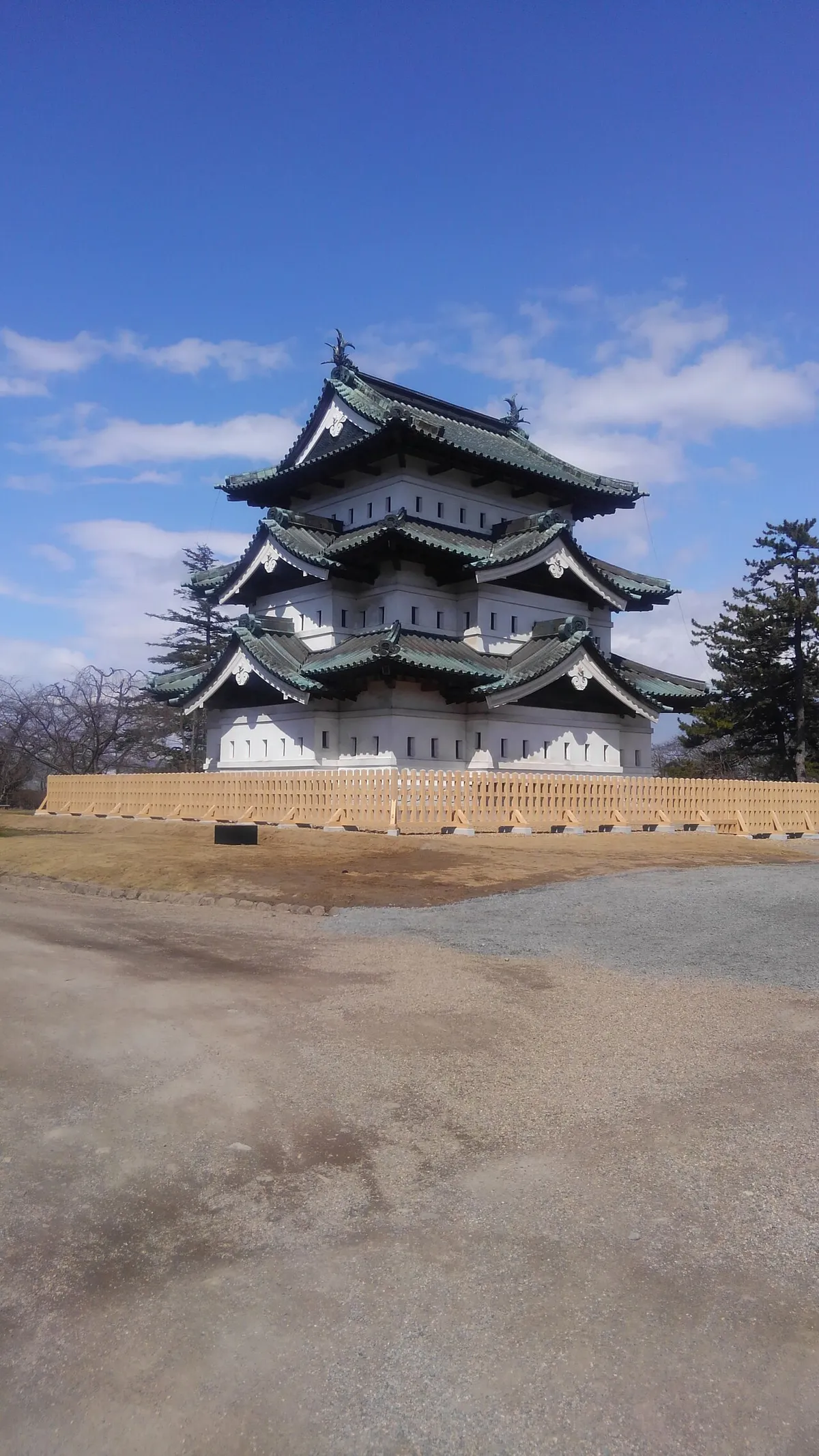
Hirosaki Castle

弘前城·Hirosaki-jo

B Tourism Score 70/100
B Defense Score 73/100

Small tower, massive beauty — Hirosaki is Japan's undisputed cherry blossom castle, drawing millions every spring to one of the country's most iconic seasonal spectacles.

#4 — 100 Famous Castles Surviving
Hirosaki Castle (弘前城)
Photo:kenjiro soma/Wikimedia Commons/Public domain

Quick Facts

Quick Facts

Admission
¥320

¥100

Hours
09:00 – 17:00

Last entry 16:00

Nearest Station
Hirosaki Station (JR Ou Main Line)
Walk from Station
30 min walk

Bus also available

Time Needed
2-3 hours (longer during cherry blossom season)

Combined ticket for tower, botanical garden, and Fujita Memorial Japanese Garden available. Children (elementary school age and under) free.

Defense Overview

Defense Overview

Why Hirosaki Castle was hard to attack

This castle is hard to attack because it combines a raised core with defended outer space with a controlled route inward.

An attacker would not get a simple direct approach to the center. They would have to cross water barriers or moat lines, pass tighter turns and chokepoints, and push through successive outer areas before the core.

Overall score

73/100

Estimated range

67–79

Confidence

A

Strong multi-source support

This is a site-original comparison score for learning and comparison, not a reconstruction of one historical battle.

Radar view

Terrain 16/20 Entrance 17/20 Internal 15/20 Siege 13/20 Oversight 12/20
How this estimate was built+

This estimate combines broad terrain, approach, layout, and route-control signals. It is meant to explain the castle's defensive logic in plain English, not reconstruct a single historical attack.

Terrain Advantage

How much the terrain itself seems to help: height, slope, ridges, cliffs, water edges, and limited approach directions.

16/20

Entrance Defense

How awkward and dangerous the first entry looks: gates, bridge or moat crossings, chokepoints, and forced turns.

17/20

Internal Complexity

How hard it seems to keep pushing after entry: layered baileys, depth, compartmentalization, and repeated defensive lines.

15/20

Siege Endurance

A rough sense of long-hold potential: moats, water access, space, storage plausibility, and defensive staying power.

13/20

Strategic Oversight

How much the castle appears to command nearby roads, plains, rivers, basins, harbors, or town approaches.

12/20

Why Visit

If you visit during cherry blossom season, Hirosaki is a top-tier experience — the combination of a genuine original tower, thousands of blossoms, and reflective moats creates images that are hard to match anywhere in Japan. Outside of cherry blossom season the castle is quieter but still charming, with autumn foliage providing a second peak. The original tower, gates, and turrets give it authentic historical texture.

Highlights

1

Japan's Most Beloved Cherry Blossom Castle

Every spring, around 2,600 cherry trees transform Hirosaki Castle Park into one of Japan's most spectacular floral displays. The image of the compact three-story white tower framed by cascading pink blossoms is among the most reproduced photographs in all of Japanese tourism. The festival draws over 2 million visitors in a single two-week period.
2

An Original Tower That Nearly Fell

In 2015, the entire main tower was moved 70 meters away from its original position — a remarkable engineering feat to repair the stone foundation underneath. For several years, the floating tower sitting on a new temporary platform was itself a tourist attraction. It was returned to its original location in 2024 after years of painstaking restoration work.

3

The Northernmost Original Tenshu

Hirosaki's small but genuine three-story tower is one of only 12 original surviving tenshu in Japan, and the northernmost of them all. Built in 1810 to replace the original that was destroyed by lightning, it stands as the only remaining original castle tower in the entire Tohoku region.

Structure Details

Visitor tip

The castle park is large and most enjoyment comes from wandering the grounds rather than rushing to the tower. The tower interior is small but atmospheric. In spring, arrive early morning to beat the crowds and catch the blossoms in soft light.

Castle type

Hill castle

Flatland hill castle — built on a low natural rise in an otherwise flat river basin

Layout type

Concentric layout

Enclosure style — concentric rings of moats and earthworks surrounding the central compound

Main tower

Original wooden tenshu (main keep) — built in 1810, one of only 12 surviving original castle towers in Japan

14.4m3 floors, 1 below

Stone walls

Natural stone stacking

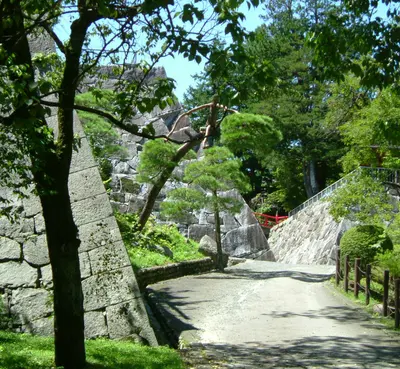
The stone walls of Hirosaki reflect the castle's secondary defensive role — built more for prestige and regional administration than for withstanding major sieges. The stonework is solid but less elaborate than the great military castles of western Japan.

Moats

A triple-moat system survives, now filled with water and surrounded by cherry trees. The moats are an integral part of the famous spring blossom landscape.

Key defensive features

Triple Moat System

Three concentric moats encircle the castle, now famous for their reflections of cherry blossoms in spring. In their military purpose, they created multiple barriers that would force attackers to cross open water repeatedly under fire.

Surviving Turrets and Gates

Three original turrets (yagura) and three original gates survive from the Edo period, giving the castle grounds an authentic historical atmosphere beyond just the main tower.

The Story of Hirosaki Castle

Originally built 1611 / Tsugaru Tamenobu / completed by Tsugaru Nobuhira
Current form 1810 / Tsugaru clan
    1611

    The Tsugaru clan completes the main castle compound, asserting control over the Tsugaru region of northwestern Aomori after breaking away from the Nanbu clan. A five-story main tower is constructed.

    1627

    The original five-story main tower is struck by lightning and burns to the ground. The castle operates without a main tower for nearly two centuries.

    1810

    The current three-story tower is built — not as a new main tower, but repurposed from a secondary turret on the southwest corner of the compound. This is the tower that survives today.

    1872

    The Meiji government orders the demolition of feudal castles. Most of Hirosaki's structures are torn down, but the local community purchases the main tower and key buildings, preserving them.

    1895

    Cherry trees are planted in the castle park on the initiative of a local army officer, beginning the tradition that would make Hirosaki famous throughout Japan.

    2015

    Engineers begin moving the entire main tower 70 meters from its original position to repair the deteriorating stone foundation beneath — a major engineering undertaking that draws visitors curious to see the 'floating castle.'

    2024

    After years of foundation repairs, the main tower is returned to its original position, completing one of Japan's most ambitious castle restoration projects.

In Pop Culture

event

Hirosaki Cherry Blossom Festival

The annual festival (late April to early May) is one of Japan's most celebrated seasonal events, regularly featured in travel media worldwide as a top spring destination.

Did You Know?

  • The fallen petals of cherry blossoms create a pink carpet on the castle moat every spring — a phenomenon locals call 'hanaikada' (flower raft), one of the most photographed natural displays in Japan.
  • Hirosaki Castle is the only original castle tower remaining in the entire Tohoku (northeastern Japan) region.
  • The current tower is technically a repurposed corner turret, not a purpose-built main tower — the original five-story main tower was destroyed by lightning in 1627 and never replaced with an equivalent structure.
  • Apple orchards surround the city — Aomori Prefecture produces over 60% of Japan's apples, and apple-themed snacks are sold throughout the castle park.

Score Breakdown

Tourism Score

B 70/100
  • Accessibility 12 /20
  • Foreign-Friendly 12 /20
  • Historical Value 16 /20
  • Visual Impact 16 /20
  • Facilities 14 /20

Defense Score

B 73/100
  • Terrain Advantage 16 /20
  • Entrance Defense 17 /20
  • Internal Complexity 15 /20
  • Siege Endurance 13 /20
  • Strategic Oversight 12 /20

Planning Your Visit

Best Time to Visit

Late April to early May for cherry blossoms — this is one of Japan's premier spring destinations. Autumn (late October) for colorful foliage. Summer is pleasant; avoid visiting in winter when the tower is closed.

Time Needed

2-3 hours (longer during cherry blossom season)

Insider Tip

The moat 'flower raft' (hanaikada) — when fallen cherry petals completely cover the water surface in a pink carpet — typically happens in the final days of the blossom season. Check local forecasts and try to time your visit for this ephemeral display. Also seek out the apple-flavored soft cream sold in the park — it's made with local Aomori apples and is genuinely excellent.

Map

Getting There

Nearest station: Hirosaki Station (JR Ou Main Line)
Walk from station: 30 min walk
Bus: Dotemachi Loop Bus (100 yen) stops near the castle. Taxi from station also convenient.
Parking: Paid parking available around the castle park. Free in some areas.
Accessible with a JR Pass

Admission

Adult¥320
Child¥100

Combined ticket for tower, botanical garden, and Fujita Memorial Japanese Garden available. Children (elementary school age and under) free.

Opening Hours

Open09:00 – 17:00
Last entry16:00

IMPORTANT: Tower interior closed indefinitely from November 24, 2025 for multi-year relocation and seismic renovation. Castle grounds and park remain open. Cherry Blossom Festival (late April to early May) still held.

Facilities

  • ✓ English guides
  • – Audio guide
  • – Wheelchair access
  • ✓ Restrooms
  • ✓ Gift shop
  • ✓ Food nearby

Nearby Castles

Featured in collections

FAQ

Frequently Asked Questions

How do I get to Hirosaki Castle?

The nearest station is Hirosaki Station (JR Ou Main Line). From there it is about 30 minutes on foot. Dotemachi Loop Bus (100 yen) stops near the castle. Taxi from station also convenient.

How much does Hirosaki Castle cost to enter?

Adult admission is ¥320 and child admission is ¥100.

Is Hirosaki Castle worth visiting?

If you visit during cherry blossom season, Hirosaki is a top-tier experience — the combination of a genuine original tower, thousands of blossoms, and reflective moats creates images that are hard to match anywhere in Japan. Outside of cherry blossom season the castle is quieter but still charming, with autumn foliage providing a second peak. The original tower, gates, and turrets give it authentic historical texture.

What are the opening hours of Hirosaki Castle?

09:00 to 17:00, last entry 16:00.

How long should I spend at Hirosaki Castle?

Plan for about 2-3 hours (longer during cherry blossom season), depending on how closely you want to explore the grounds.