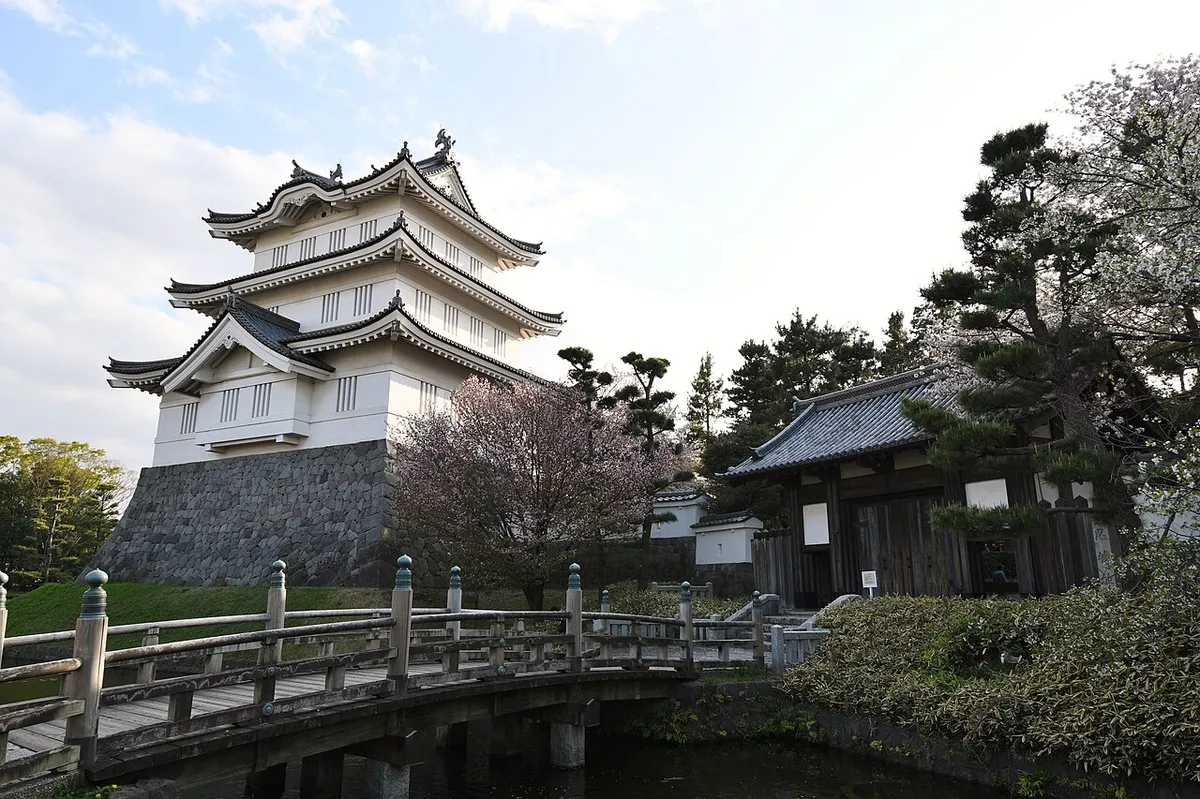
Oshi Castle

忍城·Oshi-jo

D Tourism Score 48/100
C Defense Score 67/100

The Floating Castle that refused to sink — Oshi's 1590 water siege is one of the great underdog stories in Japanese military history.

#118 — Continued 100 Castles Reconstructed
Oshi Castle (忍城)
Photo:Saigen Jiro/Wikimedia Commons/CC0

Quick Facts

Quick Facts

Admission
Free Free
Hours
09:00 – 16:30

Last entry 16:00

Nearest Station
Gyoda Station (Chichibu Railway)
Walk from Station
15 min walk
Time Needed
1–1.5 hours

Castle grounds (Gyoda City Museum of History and Folklore, which includes the reconstructed turret) charges ¥200 for adults. The outer park grounds are free. Note: the museum is within the castle grounds.

Defense Overview

Defense Overview

Why Oshi Castle was hard to attack

This castle is hard to attack because it combines managed outer defenses on relatively level ground with enough defensive depth to slow attackers before the center.

An attacker would not simply arrive at the center on open flat ground. They would have to cross water barriers or moat lines, approach through at least some constrained entry space, and push through successive outer areas before the core.

Overall score

67/100

Estimated range

61–73

Confidence

A

Strong multi-source support

This is a site-original comparison score for learning and comparison, not a reconstruction of one historical battle.

Radar view

Terrain 10/20 Entrance 12/20 Internal 15/20 Siege 16/20 Oversight 14/20
How this estimate was built+

This estimate combines broad terrain, approach, layout, and route-control signals. It is meant to explain the castle's defensive logic in plain English, not reconstruct a single historical attack.

Terrain Advantage

How much the terrain itself seems to help: height, slope, ridges, cliffs, water edges, and limited approach directions.

10/20

Entrance Defense

How awkward and dangerous the first entry looks: gates, bridge or moat crossings, chokepoints, and forced turns.

12/20

Internal Complexity

How hard it seems to keep pushing after entry: layered baileys, depth, compartmentalization, and repeated defensive lines.

15/20

Siege Endurance

A rough sense of long-hold potential: moats, water access, space, storage plausibility, and defensive staying power.

16/20

Strategic Oversight

How much the castle appears to command nearby roads, plains, rivers, basins, harbors, or town approaches.

14/20

Why Visit

Oshi Castle as a physical site is modest, but the historical story is exceptional. If you have any interest in the Sengoku period or have seen the film 'Nobou no Shiro,' visiting Oshi gives that story a physical grounding. The museum inside the reconstructed turret has good exhibits on the 1590 water siege. The castle grounds are pleasant and free to walk. Accessible as a half-day trip from Tokyo via the Chichibu Railway from Kumagaya.

Highlights

1

The Floating Castle That Refused to Sink

In 1590, Toyotomi Hideyoshi's general Ishida Mitsunari attempted something unprecedented to capture Oshi Castle: he diverted rivers and built earthwork dykes to flood the surrounding marshland and literally drown the castle into submission. The garrison, led by the spirited Narita Nagachika (later called 'Nobou'), refused to surrender even as the floodwaters rose. When the surrounding province had already fallen, Oshi alone held out — earning it the legendary name 'Ukishiro' (Floating Castle).
2

Nobou no Shiro: The Movie That Made It Famous

The 2012 film 'Nobou no Shiro' (The Floating Castle, lit. 'The Castle of Nobou') dramatized the water siege of 1590 and became a major Japanese box office hit. The film brought national attention to Oshi Castle and the figure of Narita Nagachika — an unlikely, unassuming lord who somehow held out against Toyotomi's overwhelming force. The film's success has made Oshi the most pop-culturally recognized site among the 続100名城 (Continued 100 Famous Castles) list.

3

Surrounded by Marshland — Japan's Most Water-Integrated Flatland Castle

Oshi Castle was built in the middle of the vast Musashino wetlands — a naturally marshy environment that made conventional siege approaches nearly impossible. The castle's defensive genius was not in its walls or tower but in its geographic placement: surrounded by extensive marshland that turned the surrounding terrain into a natural moat hundreds of meters wide. When Ishida Mitsunari tried to weaponize this water with his flood dike, he was using the castle's own natural defense against it.

Structure Details

Visitor tip

The physical castle site today is modest — a concrete turret reconstruction and a city museum on a pleasant park mound. The real value is the historical story: the 1590 water siege and the determined defense led by 'Nobou.' If you have seen or plan to see the film 'Nobou no Shiro,' visiting Oshi Castle gives the story a physical reality. The museum inside the reconstruction has good historical displays on the siege.

Castle type

Flatland castle

Flatland castle — built on a low artificial mound in the middle of the Musashino wetlands, using the surrounding marshland as its primary natural defense

Layout type

Concentric layout

Enclosure style — compounds within concentric defenses on the artificial mound, surrounded by natural marshland extending outward in all directions

Main tower

Concrete reconstruction of a three-story turret (1988) — the original Oshi Castle did not possess a large main tower. The reconstruction represents a turret (yagura) that served as the castle's visual anchor. The Gyoda City Museum of History and Folklore is incorporated into the reconstructed structure.

3 floors

Stone walls

Natural stone stacking

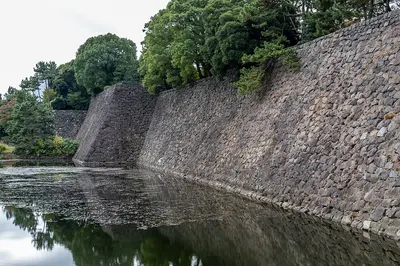
The castle's artificial mound is surrounded by stone embankments and earthen walls, but the primary defensive feature was always the surrounding marshland rather than the fortifications themselves. The stone walls visible today are modest in scale — they were never intended to be the main defensive barrier.

Moats

The castle's 'moat' was effectively the entire surrounding marshland — hundreds of meters of wetland that made conventional assault nearly impossible. Artificial water channels were incorporated into the defensive layout, but the natural marsh was the dominant water feature. When Ishida Mitsunari built flood dykes in 1590, he was attempting to turn this natural marsh into an actively hostile flooding agent.

Key defensive features

Natural Marsh Surrounding

The entire castle was situated in the middle of the Musashino wetlands — a vast natural marsh that made approach by conventional infantry formations nearly impossible. Any attacking force had to move through deep, unstable marsh terrain, heavily loaded with equipment, while under fire.

Flood Resistance (1590 Siege)

When Ishida Mitsunari deliberately flooded the marsh further with artificial dykes, the castle's elevated mound kept it above the floodwaters. The very feature intended to destroy the castle — more water — failed because the mound was designed to rise above natural flood levels. The flooding instead inundated Mitsunari's own siege positions.

Artificial Mound Elevation

The castle mound was artificially raised above the surrounding marsh level — a precisely calibrated engineering decision that gave defenders dry ground while keeping the surrounding terrain inaccessible to attacking forces.

The Story of Oshi Castle

Originally built 1478 / Narita Akiyasu
Current form 1988 / Gyoda City (concrete turret reconstruction)
    1478

    The Narita clan establishes a fortification on a mound in the Musashino wetlands, creating what will become Oshi Castle. The natural marsh surrounding the site is the key strategic asset from the beginning.

    1590

    Ishida Mitsunari, commanding on behalf of Toyotomi Hideyoshi, attempts to flood Oshi Castle by constructing an earth dyke 28 kilometers long to raise water levels around the castle. The garrison of approximately 500 men, led by Narita Nagachika ('Nobou'), refuses to surrender despite the entire surrounding Kanto region falling to Hideyoshi's forces. The flood partially inundates Mitsunari's own positions. The castle holds until Nobou voluntarily surrenders — after learning that Odawara Castle (the main Hojo stronghold) has already fallen — negotiating an honorable withdrawal.

    1590

    After the fall of the Hojo clan and the unification of the Kanto region under Tokugawa Ieyasu (transferred to Kanto by Hideyoshi), Oshi becomes a Tokugawa domain seat and is developed as an administrative center.

    1871

    Domain abolition ends Oshi Castle's administrative function. The castle structures are dismantled over subsequent years, leaving the mound and earthworks.

    1988

    Gyoda City completes the concrete reconstruction of the three-story turret and opens the Gyoda City Museum of History and Folklore within. The castle grounds are developed as a public park.

    2012

    The film 'Nobou no Shiro' (The Floating Castle) is released to major box office success, bringing national attention to Oshi Castle and the 1590 water siege story. Tourism to the site increases significantly following the film's popularity.

In Pop Culture

Film

Nobou no Shiro (The Floating Castle)

The 2012 film directed by Shinji Higuchi and Isshin Inudo dramatized the 1590 water siege of Oshi Castle, starring Mansai Nomura as Narita Nagachika ('Nobou'). The film was a major box office success and introduced Oshi Castle to a national audience.

Did You Know?

  • Ishida Mitsunari's flood dyke, built to encircle Oshi Castle in 1590, was reportedly 28 kilometers in circumference — an extraordinary engineering feat requiring massive labor mobilization. The project was completed but ultimately failed when the castle mound remained above the raised water level.
  • The Narita clan, who built and defended Oshi Castle, is historically notable as one of the Kanto families who produced samurai retainers for multiple generations of competing lords — an example of mid-level warrior families navigating the Sengoku period through skillful political positioning rather than military dominance.
  • Gyoda City, where Oshi Castle stands, is also known as the 'footwear capital' of Japan — the city produces a significant proportion of Japan's tabi (split-toe socks) and traditional footwear, a craft tradition that dates to the castle town era when the local cloth-working industry supplied samurai equipment.

Score Breakdown

Tourism Score

D 48/100
  • Accessibility 10 /20
  • Foreign-Friendly 9 /20
  • Historical Value 13 /20
  • Visual Impact 10 /20
  • Facilities 6 /20

Defense Score

C 67/100
  • Terrain Advantage 10 /20
  • Entrance Defense 12 /20
  • Internal Complexity 15 /20
  • Siege Endurance 16 /20
  • Strategic Oversight 14 /20

Planning Your Visit

Best Time to Visit

Year-round — the site is not particularly seasonal. Spring cherry blossoms in the park grounds are pleasant. Avoid summer midday heat in the open park.

Time Needed

1–1.5 hours

Insider Tip

Watch the film 'Nobou no Shiro' before visiting — it transforms a modest concrete reconstruction into a vivid historical site. The film's depiction of the water siege and the garrison's extraordinary resistance gives every corner of the castle grounds a narrative dimension that no amount of museum signage can replicate.

Map

Getting There

Nearest station: Gyoda Station (Chichibu Railway)
Walk from station: 15 min walk
Parking: Free parking available at the museum/castle grounds. Easy car access from Route 17 bypass.

Admission

Free

Castle grounds (Gyoda City Museum of History and Folklore, which includes the reconstructed turret) charges ¥200 for adults. The outer park grounds are free. Note: the museum is within the castle grounds.

Opening Hours

Open09:00 – 16:30
Last entry16:00

Closed Mondays (or following Tuesday if Monday is a holiday), December 28–January 4. The outer park grounds are freely accessible at all times.

Facilities

  • – English guides
  • – Audio guide
  • ✓ Wheelchair access
  • ✓ Restrooms
  • ✓ Gift shop
  • ✓ Food nearby

Nearby Castles

Featured in collections

FAQ

Frequently Asked Questions

How do I get to Oshi Castle?

The nearest station is Gyoda Station (Chichibu Railway). From there it is about 15 minutes on foot.

How much does Oshi Castle cost to enter?

Oshi Castle is free to enter.

Is Oshi Castle worth visiting?

Oshi Castle as a physical site is modest, but the historical story is exceptional. If you have any interest in the Sengoku period or have seen the film 'Nobou no Shiro,' visiting Oshi gives that story a physical grounding. The museum inside the reconstructed turret has good exhibits on the 1590 water siege. The castle grounds are pleasant and free to walk. Accessible as a half-day trip from Tokyo via the Chichibu Railway from Kumagaya.

What are the opening hours of Oshi Castle?

09:00 to 16:30, last entry 16:00.

How long should I spend at Oshi Castle?

Plan for about 1–1.5 hours, depending on how closely you want to explore the grounds.