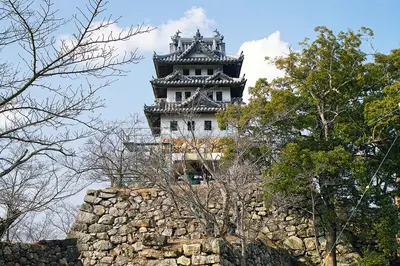
Akashi Castle

明石城·Akashi-jo

D Tourism Score 55/100
C Defense Score 66/100

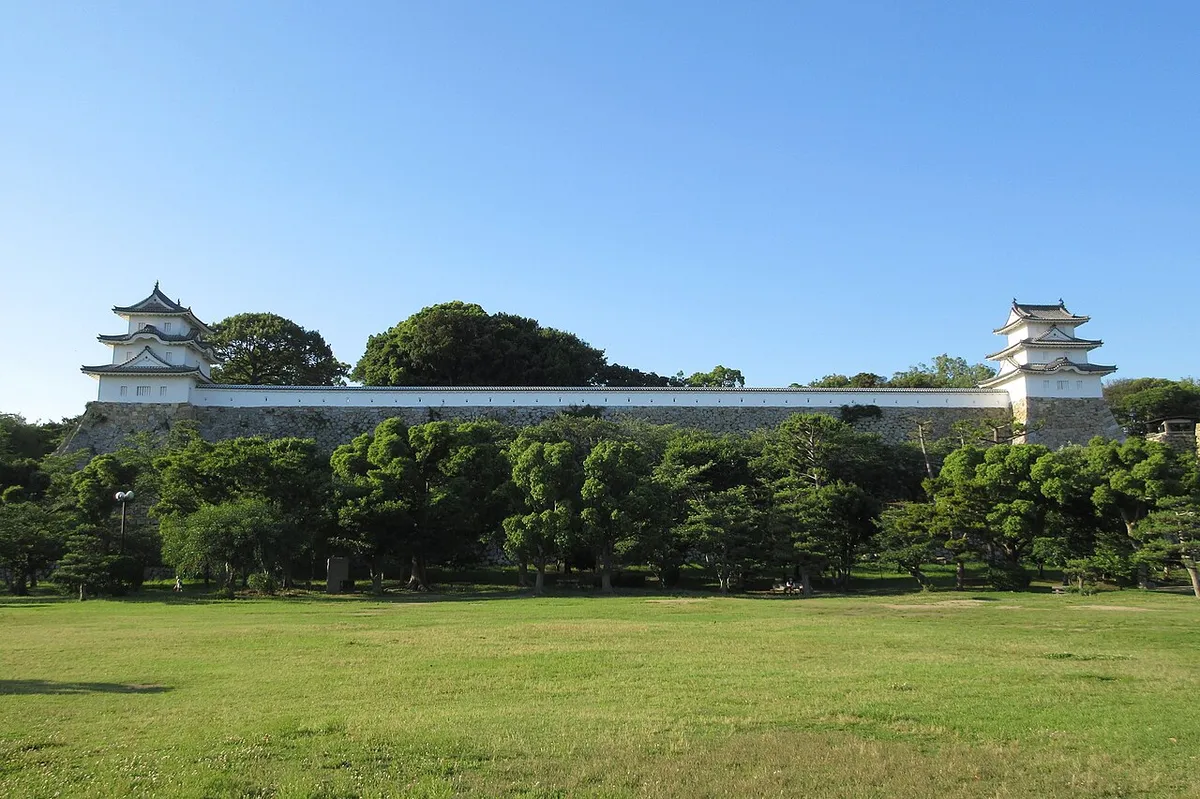
Two original turrets visible from the train platform, a massive tower foundation that was never used, and free access — Akashi is the most accessible castle ruins in Japan.

#58 — 100 Famous Castles Ruins
Akashi Castle (明石城)
Photo:KishujiRapid/Wikimedia Commons/CC BY-SA 4.0

Quick Facts

Quick Facts

Admission
Free Free
Hours
null – null
Nearest Station
Akashi Station (JR Sanyo Main Line / Sanyo Shinkansen stops at Nishi-Akashi, 1 stop away)
Walk from Station
3 min walk
Time Needed
45 minutes–1 hour

Akashi Castle Park (Akashikoen) is freely accessible. The two original turrets can be viewed externally from the park grounds. No admission fee.

Defense Overview

Defense Overview

Why Akashi Castle was hard to attack

This castle is hard to attack because it combines managed outer defenses on relatively level ground with enough defensive depth to slow attackers before the center.

An attacker would not simply arrive at the center on open flat ground. They would have to cross water barriers or moat lines and push through successive outer areas before the core.

Overall score

66/100

Estimated range

60–72

Confidence

B

Usable estimate with some inference

This is a site-original comparison score for learning and comparison, not a reconstruction of one historical battle.

Radar view

Terrain 10/20 Entrance 11/20 Internal 15/20 Siege 16/20 Oversight 14/20
How this estimate was built+

This estimate combines broad terrain, approach, layout, and route-control signals. It is meant to explain the castle's defensive logic in plain English, not reconstruct a single historical attack.

Terrain Advantage

How much the terrain itself seems to help: height, slope, ridges, cliffs, water edges, and limited approach directions.

10/20

Entrance Defense

How awkward and dangerous the first entry looks: gates, bridge or moat crossings, chokepoints, and forced turns.

11/20

Internal Complexity

How hard it seems to keep pushing after entry: layered baileys, depth, compartmentalization, and repeated defensive lines.

15/20

Siege Endurance

A rough sense of long-hold potential: moats, water access, space, storage plausibility, and defensive staying power.

16/20

Strategic Oversight

How much the castle appears to command nearby roads, plains, rivers, basins, harbors, or town approaches.

14/20

Why Visit

Akashi Castle offers a genuinely unusual combination: two original Important Cultural Property turrets you can see from the train without even entering the grounds, a fascinating empty tenshu-dai that tells the story of Tokugawa ambition and restriction, and direct JR access three stops from Kobe. The park is pleasant year-round (one of Hyogo's top cherry blossom spots) and the price is right (free). Easy to combine with Himeji Castle (20 minutes west by JR) for a full castle day along the Sanyo coast.

Highlights

1

Two Original Turrets, Visible from the Train

Akashi Castle's two surviving original turrets — the Hitsuji-Saru Yagura (southwest turret) and the Tatsumi Yagura (southeast turret) — are designated Important Cultural Properties and can be seen directly from the platform of JR Akashi Station. This makes Akashi Castle one of the most conveniently sighted original castle structures in Japan. You need not even buy a ticket: look left when arriving at Akashi from Kobe.
2

Repurposed from Other Castles

Akashi Castle was built from recycled materials: historical records indicate that several of the turrets were moved from other Tokugawa-controlled castles that were being reduced or demolished as part of the shogunate's post-Sekigahara castle policy. The southwest turret is believed to have originally come from Fushimi Castle in Kyoto. This practice of 'castle recycling' was common in the early Edo period.

3

The Castle That Never Got Its Main Tower

Akashi Castle was planned to have a large main tower (tenshu), and the massive stone platform (tenshu-dai) was built in preparation. But the main tower was never constructed — the Tokugawa shogunate's restrictions on castle construction, combined with the domain's financial constraints, meant the tower platform stood empty for the entire Edo period. The enormous stone platform is still there today, dwarfing the small turrets, a monument to ambition unrealized.

Structure Details

Visitor tip

You can see the two surviving turrets from the train — look for them from the JR Akashi Station platform. In the park, walk to the main compound stone walls and find the tenshu-dai (large stone platform at the corner) — it's surprisingly large and gives a vivid sense of the tower that was planned but never built. The turrets can be viewed closely from the grounds.

Castle type

Flatland castle

Flatland castle — built on low ground adjacent to Akashi Bay (Osaka Bay), with the sea providing a natural western defense

Layout type

Concentric layout

Enclosure style — concentric compounds with moats, planned as a large flatland fortress controlling the Sanyo road

Main tower

Ruins with two original turrets — the main tower was never built (foundation platform survives). Two original Edo-period turrets survive as Important Cultural Properties: Hitsuji-Saru Yagura (southwest) and Tatsumi Yagura (southeast).

Stone walls

Natural stone stacking

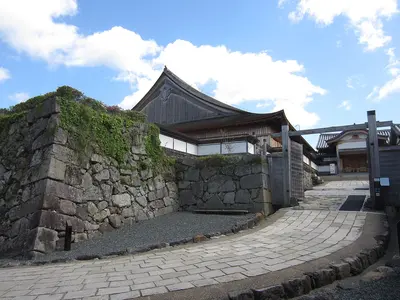
The stone walls of the main compound are substantial and well-preserved, including the impressive tenshu-dai (tower foundation platform). The original moat system partially survives. The two surviving turrets sit on corner positions of the main compound stone walls.

Moats

A moat system partially survives around the castle site. Akashi Bay (part of Osaka Bay) provided a natural defensive barrier to the west in the castle's active period.

Key defensive features

Sanyo Road Control

Akashi sits directly on the Sanyo road — the main coastal highway between Kyoto/Osaka and western Japan (modern Hiroshima, Yamaguchi, Kyushu). Control of this route was Akashi Castle's primary strategic function as a Tokugawa forward position on the Sanyo corridor.

Akashi Bay Coastal Defense

The Akashi Strait between Honshu and Awaji Island is one of Japan's most strategically important maritime passages — connecting the Seto Inland Sea to Osaka Bay. The castle's coastal position gave it some oversight of this passage.

Tenshu-dai — The Tower That Never Was

The large stone tenshu-dai (tower foundation platform) at the corner of the main compound was built to support a major main tower. Its size implies a tower of substantial ambition. The empty platform stands today as an unusual monument to a defensive structure that was planned but never executed.

The Story of Akashi Castle

Originally built 1618 / Ogasawara Tadazane
Current form 1619 / Ogasawara Tadazane
    1618

    Tokugawa Ieyasu's successor shogun Tokugawa Hidetada orders Ogasawara Tadazane to build a castle at Akashi as a Tokugawa forward position on the Sanyo road, following the destruction of the Toyotomi clan at Osaka in 1615. Construction begins immediately.

    1619

    Core castle construction completed. Several turrets are installed, some reportedly moved from Fushimi Castle (Kyoto) which was being reduced. The large tenshu-dai (tower foundation platform) is built in expectation of a main tower.

    1619

    The main tower is never built — the shogunate's castle construction regulations and the domain's finances prevent the planned tower. The massive stone platform stands empty for the entire Edo period.

    1874

    Meiji government orders demolition of castle buildings. Most structures are destroyed. Two turrets survive the demolition — either overlooked, or deliberately preserved through local advocacy.

    1957

    The two surviving turrets — Hitsuji-Saru Yagura and Tatsumi Yagura — are designated as Important Cultural Properties, securing their preservation.

Did You Know?

  • The two surviving turrets are among the relatively rare examples of original Edo-period castle turrets surviving in Japan. Most castle turrets were demolished in the Meiji era or destroyed in WWII — surviving originals are genuinely scarce.
  • The Hitsuji-Saru Yagura (southwest turret) is believed to have been moved from Fushimi Castle in Kyoto during the early Edo period — making it a recycled castle component with a history predating Akashi Castle itself. Fushimi Castle was associated with Toyotomi Hideyoshi, so the Tokugawa reuse of its components had a pointed political symbolism.
  • Akashi is famous for its proximity to the Akashi Kaikyo Bridge (明石海峡大橋) — now the world's longest suspension bridge (3,911 meters), completed in 1998. The bridge crosses the strait between Honshu and Awaji Island that the castle once overlooked. The juxtaposition of the 17th-century castle turrets and the modern engineering marvel visible from the same park is striking.
  • The Japan Standard Time meridian (135° East longitude) passes through Akashi — the city is the official reference point for Japanese time. The Akashi Municipal Planetarium marks the meridian location.

Score Breakdown

Tourism Score

D 55/100
  • Accessibility 20 /20
  • Foreign-Friendly 10 /20
  • Historical Value 12 /20
  • Visual Impact 9 /20
  • Facilities 4 /20

Defense Score

C 66/100
  • Terrain Advantage 10 /20
  • Entrance Defense 11 /20
  • Internal Complexity 15 /20
  • Siege Endurance 16 /20
  • Strategic Oversight 14 /20

Planning Your Visit

Best Time to Visit

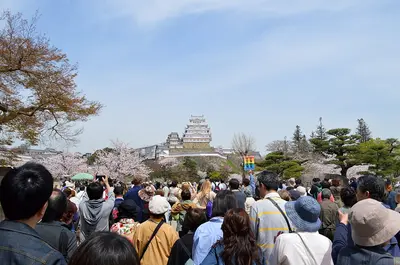
Cherry blossom season (late March to early April) — Akashi Castle Park is one of Hyogo's most popular hanami venues, with hundreds of cherry trees surrounding the turrets and moat. Avoid Golden Week crowds; weekday mornings in spring are ideal.

Time Needed

45 minutes–1 hour

Insider Tip

Find the tenshu-dai — the large stone foundation platform at the corner of the main compound where the main tower was planned but never built. Its scale is surprising; it was designed to support a major multi-story tower, and standing on the platform gives views over the Akashi Bay and (on clear days) across to Awaji Island. The empty platform communicates the Tokugawa castle control system — even lords who could afford to build towers were often prevented from doing so — more vividly than any museum exhibit.

Map

Getting There

Nearest station: Akashi Station (JR Sanyo Main Line / Sanyo Shinkansen stops at Nishi-Akashi, 1 stop away)
Walk from station: 3 min walk
Parking: Paid parking available in Akashi Castle Park.
Accessible with a JR Pass

Admission

Free

Akashi Castle Park (Akashikoen) is freely accessible. The two original turrets can be viewed externally from the park grounds. No admission fee.

Opening Hours

Open

Open grounds, accessible at all times. Park amenities (sports facilities) have their own hours.

Facilities

  • – English guides
  • – Audio guide
  • ✓ Wheelchair access
  • ✓ Restrooms
  • – Gift shop
  • ✓ Food nearby

Nearby Castles

Featured in collections

FAQ

Frequently Asked Questions

How do I get to Akashi Castle?

The nearest station is Akashi Station (JR Sanyo Main Line / Sanyo Shinkansen stops at Nishi-Akashi, 1 stop away). From there it is about 3 minutes on foot.

How much does Akashi Castle cost to enter?

Akashi Castle is free to enter.

Is Akashi Castle worth visiting?

Akashi Castle offers a genuinely unusual combination: two original Important Cultural Property turrets you can see from the train without even entering the grounds, a fascinating empty tenshu-dai that tells the story of Tokugawa ambition and restriction, and direct JR access three stops from Kobe. The park is pleasant year-round (one of Hyogo's top cherry blossom spots) and the price is right (free). Easy to combine with Himeji Castle (20 minutes west by JR) for a full castle day along the Sanyo coast.

What are the opening hours of Akashi Castle?

null to null.

How long should I spend at Akashi Castle?

Plan for about 45 minutes–1 hour, depending on how closely you want to explore the grounds.