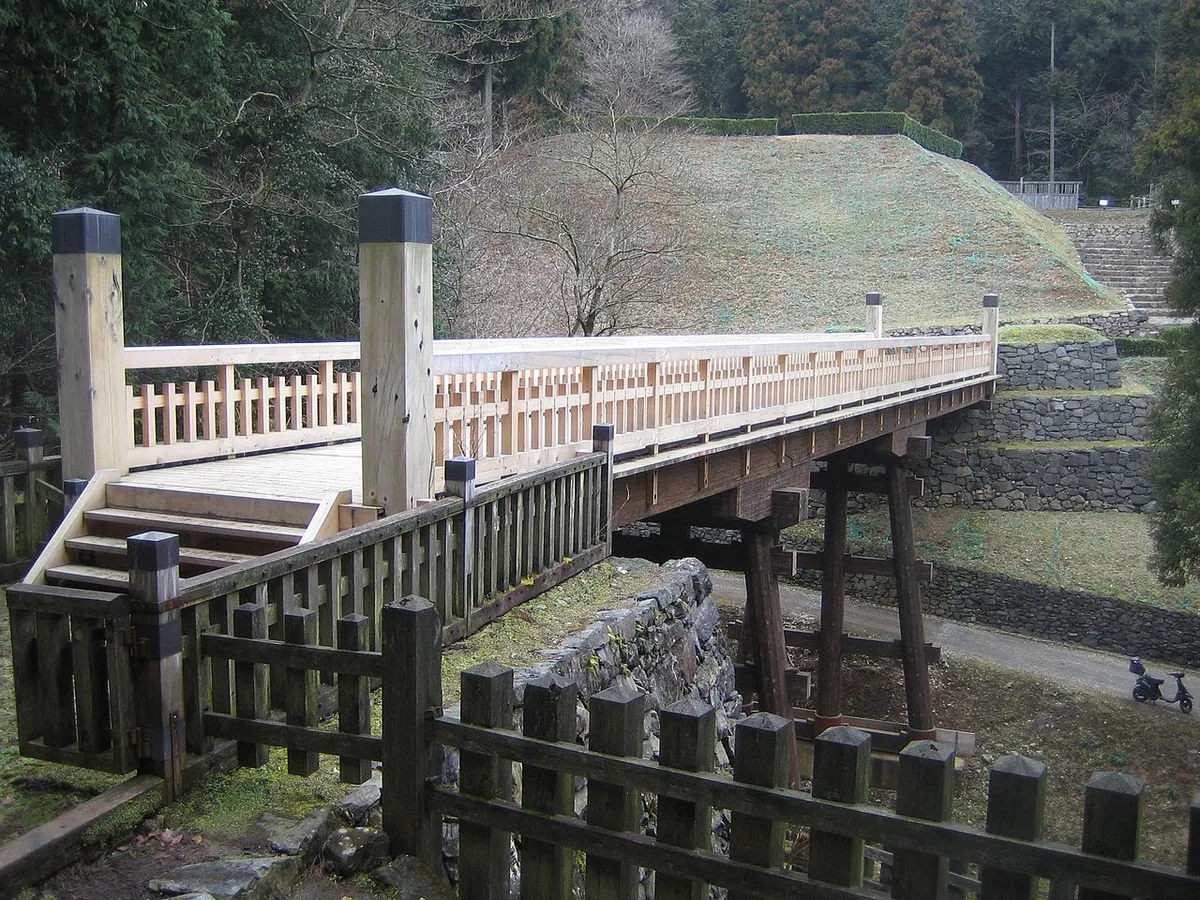
Hachioji Castle

八王子城·Hachioji-jo

F Tourism Score 38/100
A Defense Score 86/100

Tokyo's forgotten mountain fortress — where thousands died in a single day when Hideyoshi came for the last holdouts of the Hojo clan.

#22 — 100 Famous Castles Ruins
Hachioji Castle (八王子城)
Photo:Mocchy/Wikimedia Commons/Public domain

Quick Facts

Quick Facts

Admission
Free Free
Hours
09:00 – 17:00

Last entry 16:30

Nearest Station
Takao Station (JR Chuo Line / Keio Line)
Walk from Station
35 min walk

Bus also available

Time Needed
2.5–3.5 hours for the full trail loop including summit and return

Free access to mountain trail and ruins. The adjacent Hachioji Castle Ruins Omotenashi-kan visitor center is also free.

Defense Overview

Defense Overview

Why Hachioji Castle was hard to attack

This castle is hard to attack because it holds stronger ground above the surrounding approaches instead of letting attackers close on the core from easy footing.

An attacker would first have to fight the site itself before reaching the main defenses. They would have to cross water barriers or moat lines, pass tighter turns and chokepoints, and face more defensive depth after the first line.

Overall score

86/100

Estimated range

80–92

Confidence

B

Usable estimate with some inference

This is a site-original comparison score for learning and comparison, not a reconstruction of one historical battle.

Radar view

Terrain 20/20 Entrance 20/20 Internal 14/20 Siege 15/20 Oversight 17/20
How this estimate was built+

This estimate combines broad terrain, approach, layout, and route-control signals. It is meant to explain the castle's defensive logic in plain English, not reconstruct a single historical attack.

Terrain Advantage

How much the terrain itself seems to help: height, slope, ridges, cliffs, water edges, and limited approach directions.

20/20

Entrance Defense

How awkward and dangerous the first entry looks: gates, bridge or moat crossings, chokepoints, and forced turns.

20/20

Internal Complexity

How hard it seems to keep pushing after entry: layered baileys, depth, compartmentalization, and repeated defensive lines.

14/20

Siege Endurance

A rough sense of long-hold potential: moats, water access, space, storage plausibility, and defensive staying power.

15/20

Strategic Oversight

How much the castle appears to command nearby roads, plains, rivers, basins, harbors, or town approaches.

17/20

Why Visit

Hachioji is the best mountain castle ruin experience accessible from Tokyo, period. The combination of surviving stone walls, genuine mountain terrain, deep forest atmosphere, and the weight of the 1590 massacre narrative makes it far more affecting than many better-known sites. The fact that it's essentially unknown outside specialist circles means you'll likely have the trail to yourself on weekdays.

Highlights

1

The Massacre of 1590

When Toyotomi Hideyoshi's forces stormed the castle during the Odawara campaign of 1590, the main Hojo garrison had marched south to defend Odawara Castle, leaving Hachioji defended by a skeleton crew of servants, retainers' wives, and commoners. They fought and died to the last. Local legend holds that the blood of the dead ran into the Shiratori River, turning it red — and that the corpses of women and children who leapt from the castle's cliffs still haunt the gorge below.
2

A Mountain Castle Above Greater Tokyo

Hachioji Castle sits on a steep wooded ridge in the Takao mountain range, less than 50 kilometers from central Tokyo — yet the forest is so dense and the trails so rugged that standing at the summit ruins, the modern city disappears entirely. This is one of the only genuine mountain castle experiences accessible from the Tokyo metropolitan area.

3

Stone Walls Reclaimed by Forest

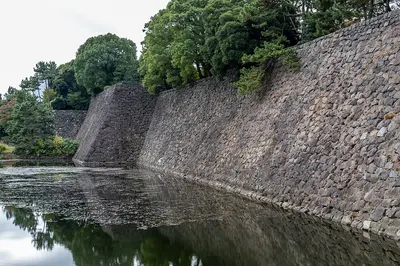
Unlike many castle sites reduced to empty ground, Hachioji has substantial stone walls still standing on the mountain slopes, slowly being absorbed into the forest. Mossy ishigaki emerge from the undergrowth along the trail — a genuinely atmospheric ruin rather than a manicured heritage site.

Structure Details

Visitor tip

The castle trail is a genuine mountain hike — wear sturdy footwear and bring water. From the trail entrance, allow 30–40 minutes to reach the main Honmaru summit (Hachioji-yama peak, 445m). The 'Goten Ato' (palace ruins) area at the base has the best-preserved stone walls and is a good first stop before the steep main climb.

Castle type

Mountain castle

Mountain castle (built on steep mountain terrain, relying on natural topography for defense)

Layout type

Ladder layout

Stepped-tier layout — multiple compounds on successive ridges and peaks

Main tower

Ruins only — stone wall foundations and earthworks remain; no standing structures

Stone walls

Natural stone stacking

Surviving stone walls (ishigaki) on the approach and lower compounds, increasingly covered by tree roots and moss. The upper summit compounds are mostly earthwork traces.

Key defensive features

Ridge and Valley Control

The castle occupied an entire mountain ridge system, with compounds placed to control every approach valley. Attackers had to fight uphill through dense forest on narrow trails — no room for formation tactics.

Cliff Gorges (Natural)

The Shiratori and Koigawa river gorges on either side of the ridge provided sheer natural barriers, making a flanking attack nearly impossible without the knowledge of local trails.

Successive Gate Barriers

Multiple gate structures (now in ruins) were positioned along the single main approach trail, each one requiring attackers to fight through a defended chokepoint before engaging the next.

The Story of Hachioji Castle

Originally built 1571 / Hojo Ujiteru
Current form 1587 / Hojo Ujiteru (expanded)
    1571

    Hojo Ujiteru, son of the late Hojo Ujiyasu, begins construction of a mountain castle on the Hachioji ridge system to guard the western approaches to the Hojo clan's Odawara domain. The castle controls routes through the Takao mountain passes leading toward the Kanto plain.

    1587

    Major expansion of the castle complex. Ujiteru develops the full multi-compound layout across the ridge system. The castle becomes one of the most formidable mountain fortresses in the Kanto region, reflecting the Hojo clan's increasingly urgent need to defend against the growing power of Toyotomi Hideyoshi.

    1590

    Toyotomi Hideyoshi launches his Odawara campaign to destroy the Hojo clan — the last major power bloc resisting his unification of Japan. The main Hojo forces concentrate at Odawara Castle. Hachioji is left with a garrison of servants, women, and elderly retainers numbering perhaps a few hundred.

    1590

    Toyotomi forces under Maeda Toshiie and Uesugi Kagekatsu — estimated at 15,000 to 50,000 men — assault Hachioji Castle. The defenders fight desperately but are overwhelmed within a single day. Those who are not killed in battle leap from the cliffs or take their own lives. The castle is destroyed and never rebuilt.

    1590

    Odawara Castle surrenders weeks later. The Hojo clan is extinguished. Tokugawa Ieyasu is assigned the Kanto region as his domain, relocating from Mikawa to what will become Edo (Tokyo). The ruins of Hachioji are left to the forest.

In Pop Culture

TV

Various NHK Taiga dramas covering the Sengoku period

The fall of the Hojo clan and the 1590 Odawara campaign — including the massacre at Hachioji Castle — appears periodically in NHK historical dramas, particularly those covering Toyotomi Hideyoshi or Tokugawa Ieyasu.

Did You Know?

  • The Shiratori ('White Bird') River that flows through the gorge below the castle is named, according to local legend, for the white birds that gathered after the 1590 massacre — though historians note the name predates the battle.
  • Hachioji Castle is one of the few castle sites in Japan where the trail to the ruins passes directly through what were once functional defensive works — the surviving stone walls along the approach trail are original 16th-century construction.
  • The mountain the castle sits on, Hachioji-yama (445m), was also called Fukamidori-yama ('Deep Green Mountain') — the thick forest that defeated attackers today creates one of the most atmospheric ruin experiences in the greater Tokyo area.

Score Breakdown

Tourism Score

F 38/100
  • Accessibility 5 /20
  • Foreign-Friendly 4 /20
  • Historical Value 14 /20
  • Visual Impact 9 /20
  • Facilities 6 /20

Defense Score

A 86/100
  • Terrain Advantage 20 /20
  • Entrance Defense 20 /20
  • Internal Complexity 14 /20
  • Siege Endurance 15 /20
  • Strategic Oversight 17 /20

Planning Your Visit

Best Time to Visit

Autumn (mid-October to mid-November) for spectacular foliage around the ruins. Spring (late March to April) for green forest without summer heat. Avoid typhoon season (September) when the mountain trails can be dangerous. Winter visits are possible but cold and potentially icy on upper slopes.

Time Needed

2.5–3.5 hours for the full trail loop including summit and return

Insider Tip

Don't skip the Goten Ato (lower palace area) at the base of the main climb — the stone walls here are the best preserved and most photogenic section of the site. Many visitors rush past to reach the summit; the lower area repays slower exploration. Bring insect repellent in summer.

Map

Getting There

Nearest station: Takao Station (JR Chuo Line / Keio Line)
Walk from station: 35 min walk
Bus: Bus from Hachioji Station or Takao Station to 'Hachioji-jo Ato Iriguchi' stop, then 15-minute walk to trail entrance.
Parking: Free parking lot at the castle ruins entrance. Limited spaces.
Accessible with a JR Pass

Admission

Free

Free access to mountain trail and ruins. The adjacent Hachioji Castle Ruins Omotenashi-kan visitor center is also free.

Opening Hours

Open09:00 – 17:00
Last entry16:30

Mountain trail is open year-round but visitor center closes on Mondays and over the New Year period. Trail can be muddy and slippery in rainy season — appropriate footwear essential.

Facilities

  • – English guides
  • – Audio guide
  • – Wheelchair access
  • ✓ Restrooms
  • – Gift shop
  • – Food nearby

Nearby Castles

Featured in collections

FAQ

Frequently Asked Questions

How do I get to Hachioji Castle?

The nearest station is Takao Station (JR Chuo Line / Keio Line). From there it is about 35 minutes on foot. Bus from Hachioji Station or Takao Station to 'Hachioji-jo Ato Iriguchi' stop, then 15-minute walk to trail entrance.

How much does Hachioji Castle cost to enter?

Hachioji Castle is free to enter.

Is Hachioji Castle worth visiting?

Hachioji is the best mountain castle ruin experience accessible from Tokyo, period. The combination of surviving stone walls, genuine mountain terrain, deep forest atmosphere, and the weight of the 1590 massacre narrative makes it far more affecting than many better-known sites. The fact that it's essentially unknown outside specialist circles means you'll likely have the trail to yourself on weekdays.

What are the opening hours of Hachioji Castle?

09:00 to 17:00, last entry 16:30.

How long should I spend at Hachioji Castle?

Plan for about 2.5–3.5 hours for the full trail loop including summit and return, depending on how closely you want to explore the grounds.