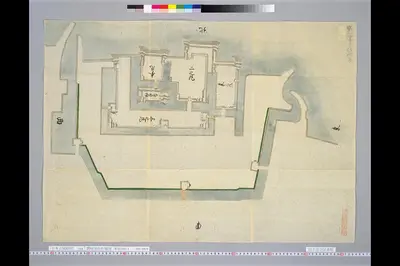
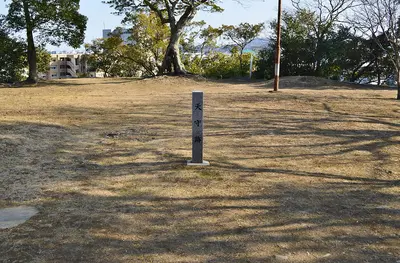
Hiketa Castle

引田城·Hiketa-jo

F Tourism Score 35/100
B Defense Score 74/100

Coastal promontory castle above the Seto Inland Sea — natural rock integrated into stone walls at Shikoku's eastern maritime gateway.

#177 — Continued 100 Castles Ruins
Hiketa Castle (引田城)
Photo:平居/Wikimedia Commons/CC BY-SA 4.0

Quick Facts

Quick Facts

Admission
Free Free
Hours
00:00 – 23:59
Nearest Station
Hiketa Station (JR Kotoku Line)
Walk from Station
20 min walk
Time Needed
1 hour

Free admission. The ruins are a public site accessible via hiking trail. No structures survive — earthworks and stone wall remnants only.

Defense Overview

Defense Overview

Why Hiketa Castle was hard to attack

This castle is hard to attack because it combines a raised core with defended outer space with enough defensive depth to slow attackers before the center.

An attacker would not get a simple direct approach to the center. They would have to cross water barriers or moat lines, approach through at least some constrained entry space, and push through successive outer areas before the core.

Overall score

74/100

Estimated range

68–80

Confidence

B

Usable estimate with some inference

This is a site-original comparison score for learning and comparison, not a reconstruction of one historical battle.

Radar view

Terrain 15/20 Entrance 15/20 Internal 16/20 Siege 14/20 Oversight 14/20
How this estimate was built+

This estimate combines broad terrain, approach, layout, and route-control signals. It is meant to explain the castle's defensive logic in plain English, not reconstruct a single historical attack.

Terrain Advantage

How much the terrain itself seems to help: height, slope, ridges, cliffs, water edges, and limited approach directions.

15/20

Entrance Defense

How awkward and dangerous the first entry looks: gates, bridge or moat crossings, chokepoints, and forced turns.

15/20

Internal Complexity

How hard it seems to keep pushing after entry: layered baileys, depth, compartmentalization, and repeated defensive lines.

16/20

Siege Endurance

A rough sense of long-hold potential: moats, water access, space, storage plausibility, and defensive staying power.

14/20

Strategic Oversight

How much the castle appears to command nearby roads, plains, rivers, basins, harbors, or town approaches.

14/20
Why Visit

Hiketa Castle is one of the most atmospherically situated castle sites in Shikoku — the rocky coastal promontory, the Seto Inland Sea views, and the working fishing harbor below make for an unusually complete and evocative historical landscape. A good stop when traveling the eastern Kagawa coast toward Tokushima.

Highlights

1

Sea Castle Above the Seto Inland Sea

Hiketa Castle sits on a rocky promontory jutting into the Seto Inland Sea — one of the most dramatically situated water-edge castle sites in Shikoku. The castle was designed as a suijo (water castle), with the sea protecting multiple sides and providing direct access for supply ships and naval operations. The view from the ruins over the Seto Inland Sea and Awaji Island is exceptional.

2

Sengoku Shikoku's Eastern Gateway

Hiketa Castle controlled the eastern entrance to Sanuki Province (modern Kagawa) from the Seto Inland Sea — the gateway through which armies and trade goods passed between Shikoku and the main islands. Its position at the eastern tip of Kagawa made it a strategic pivot in any power struggle over Shikoku's territory.

3

Well-Preserved Natural Stone Terrace Walls

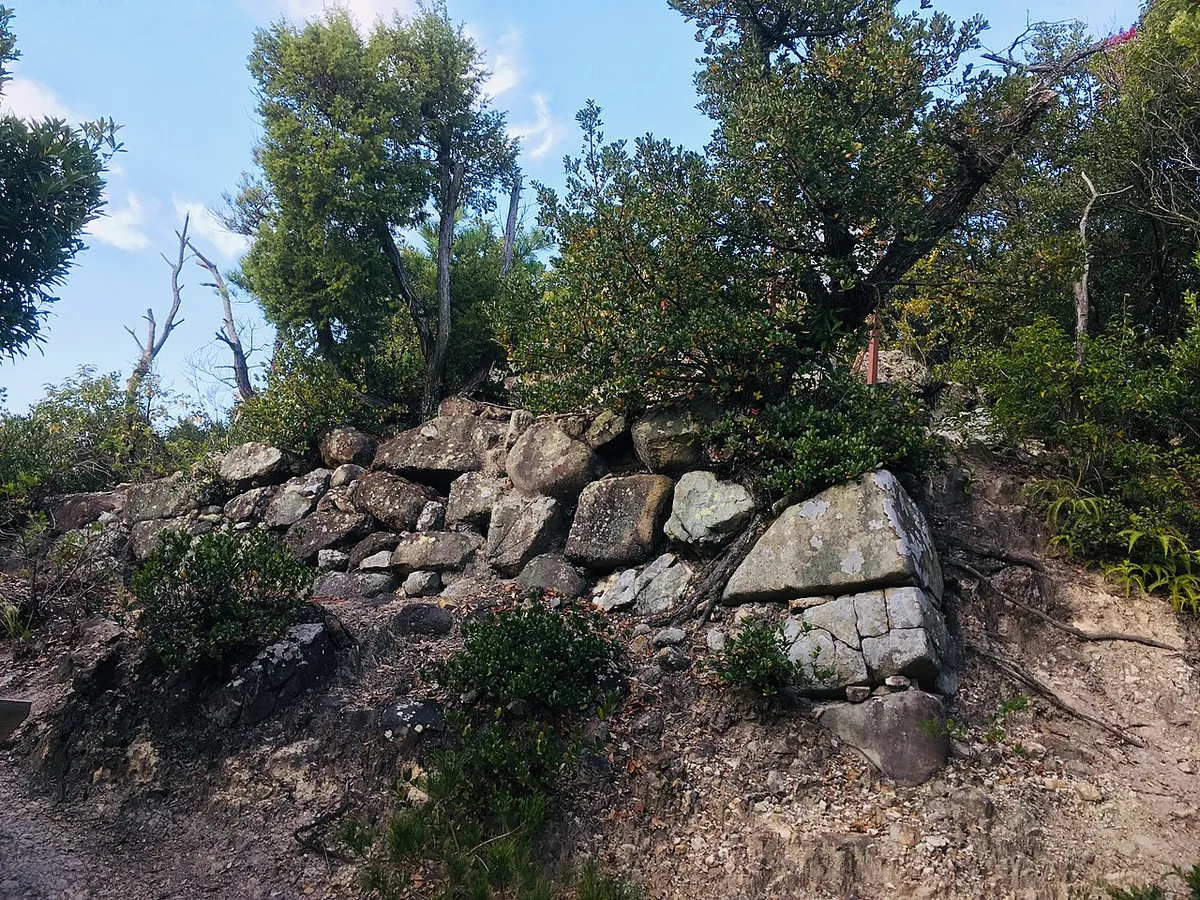
The ruins feature stone wall remnants that take advantage of the natural rock formations of the promontory — a technique that integrates the original rock outcrops into the wall structure. This naturalistic construction, combined with the coastal setting, makes Hiketa's ruins visually distinctive among Shikoku castle sites.

Structure Details

Visitor tip

The walk to Hiketa Castle ruins takes about 20-30 minutes from the harbor parking area, climbing the rocky promontory. The natural rock formations integrated into the castle walls are unusual and worth examining closely. The view over the Seto Inland Sea from the summit is the major reward.

Castle type

Hill castle

Hill-top flatland castle — rocky coastal promontory castle with sea protecting multiple sides, combining hilltop position with maritime barriers

Layout type

Linked compound layout

Compound style — compounds arranged on the rocky promontory with sea cliffs providing natural barriers

Main tower

Ruins — stone wall remnants integrated with natural rock formations; no standing structures

Stone walls

Natural stone stacking

Hiketa Castle's stone walls integrate the natural rocky outcrops of the promontory into the wall structure, maximizing defensive strength while minimizing construction effort.

Key defensive features

Sea Barriers on Multiple Sides

The promontory position meant sea cliffs and the Seto Inland Sea protected the castle on multiple sides. Any attack had to come from the single landward approach.

Natural Rock Integration

The castle's walls incorporate the natural rock formations of the promontory, making them harder to undermine and requiring attackers to deal with natural stone obstacles in addition to constructed defenses.

Naval Access and Supply

The coastal position allowed supply ships to approach the castle by sea, making blockade from the landward side insufficient for a complete siege.

The Story of Hiketa Castle

Originally built 1572 / Sogou Kazumasa
Current form 1585 / Ikoma clan
    1572

    Sogou Kazumasa builds Hiketa Castle on the coastal promontory to control the eastern approaches to Sanuki Province from the Seto Inland Sea.

    1585

    Toyotomi Hideyoshi's Shikoku campaign results in the subjugation of Chosokabe Motochika. The Sanuki region is assigned to Ikoma Chikamasa, who takes control of Hiketa Castle and the surrounding domain.

    1615

    The One-Castle-Per-Province law effectively concentrates domain military resources at Takamatsu Castle, rendering Hiketa Castle obsolete. The coastal promontory castle is abandoned.

In Pop Culture

TV

NHK Kagawa local history programming

Hiketa Castle is featured in NHK Shikoku regional programming covering the Sengoku period history of Sanuki Province and the Seto Inland Sea coastal castles.

Did You Know?

  • Hiketa Castle is one of a series of coastal and island castles around the Seto Inland Sea that controlled the maritime trade routes between Kyushu, Shikoku, and central Japan — a distinct castle type optimized for naval warfare and maritime control.
  • The Hiketa fishing harbor below the castle remains an active working harbor today, giving the site an unusually living quality compared to most castle ruins.
  • The integration of natural rock formations into Hiketa Castle's stone walls required less stone transport and cutting than conventional ishigaki construction — an important consideration for a coastal site where heavy stone transport by boat was the only option.

Score Breakdown

Tourism Score

F 35/100
  • Accessibility 5 /20
  • Foreign-Friendly 3 /20
  • Historical Value 11 /20
  • Visual Impact 10 /20
  • Facilities 6 /20

Defense Score

B 74/100
  • Terrain Advantage 15 /20
  • Entrance Defense 15 /20
  • Internal Complexity 16 /20
  • Siege Endurance 14 /20
  • Strategic Oversight 14 /20

Planning Your Visit

Best Time to Visit

Spring and autumn for the mountain climb. The coastal setting is attractive in any season.

Time Needed

1 hour

Insider Tip

Hiketa town has excellent soy sauce production heritage — the area is one of the historic centers of Kagawa's famous shoyu brewing tradition. Visit the old brewing area after the castle.

Map

Getting There

Nearest station: Hiketa Station (JR Kotoku Line)
Walk from station: 20 min walk
Parking: Parking available near Hiketa fishing harbor at the castle base area.
Accessible with a JR Pass

Admission

Free

Free admission. The ruins are a public site accessible via hiking trail. No structures survive — earthworks and stone wall remnants only.

Opening Hours

Open00:00 – 23:59

Open at all times. Trail conditions vary with weather. Spring and autumn recommended.

Facilities

  • – English guides
  • – Audio guide
  • – Wheelchair access
  • – Restrooms
  • – Gift shop
  • ✓ Food nearby

Nearby Castles

Featured in collections

FAQ

Frequently Asked Questions

How do I get to Hiketa Castle?

The nearest station is Hiketa Station (JR Kotoku Line). From there it is about 20 minutes on foot.

How much does Hiketa Castle cost to enter?

Hiketa Castle is free to enter.

Is Hiketa Castle worth visiting?

Hiketa Castle is one of the most atmospherically situated castle sites in Shikoku — the rocky coastal promontory, the Seto Inland Sea views, and the working fishing harbor below make for an unusually complete and evocative historical landscape. A good stop when traveling the eastern Kagawa coast toward Tokushima.

What are the opening hours of Hiketa Castle?

00:00 to 23:59.

How long should I spend at Hiketa Castle?

Plan for about 1 hour, depending on how closely you want to explore the grounds.