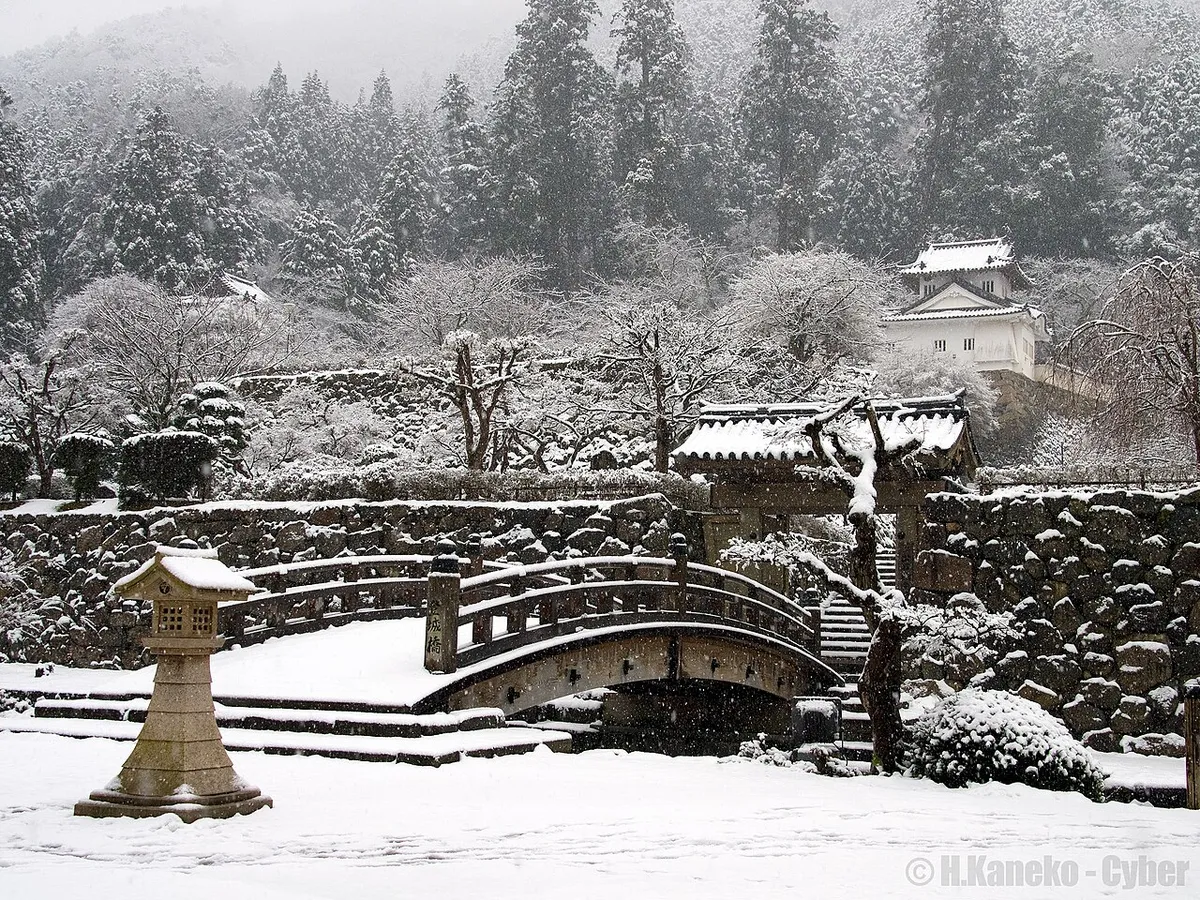
Izushi Castle

出石城·Izushi-jo

D Tourism Score 48/100
B Defense Score 79/100

A charming castle town famous for its sara soba, cherry-blossom moat, and Meiji clock tower — northern Hyogo's most enjoyable historical day trip.

#165 — Continued 100 Castles Ruins
Izushi Castle (出石城)
Photo:Hiroaki Kaneko/Wikimedia Commons/CC BY-SA 3.0

Quick Facts

Quick Facts

Admission
Free Free
Hours
00:00 – 23:59
Nearest Station
Toyooka Station (JR San'in Main Line)
Walk from Station
0 min walk

Bus also available

Time Needed
2-3 hours (castle town + soba lunch)

Free to enter the castle ruins and park. The Izushi clan museum and some adjacent historical buildings charge small admission fees. The castle grounds and hilltop ruins are always free.

Defense Overview

Defense Overview

Why Izushi Castle was hard to attack

This castle is hard to attack because its strength comes from its command of nearby routes and the surrounding town while still forcing attackers to break through defended space.

An attacker would not get a simple direct approach to the center. They would have to cross water barriers or moat lines, approach through at least some constrained entry space, push through successive outer areas before the core, and do so under a position that also watches the surrounding routes.

Overall score

79/100

Estimated range

73–85

Confidence

B

Usable estimate with some inference

This is a site-original comparison score for learning and comparison, not a reconstruction of one historical battle.

Radar view

Terrain 15/20 Entrance 15/20 Internal 16/20 Siege 16/20 Oversight 17/20
How this estimate was built+

This estimate combines broad terrain, approach, layout, and route-control signals. It is meant to explain the castle's defensive logic in plain English, not reconstruct a single historical attack.

Terrain Advantage

How much the terrain itself seems to help: height, slope, ridges, cliffs, water edges, and limited approach directions.

15/20

Entrance Defense

How awkward and dangerous the first entry looks: gates, bridge or moat crossings, chokepoints, and forced turns.

15/20

Internal Complexity

How hard it seems to keep pushing after entry: layered baileys, depth, compartmentalization, and repeated defensive lines.

16/20

Siege Endurance

A rough sense of long-hold potential: moats, water access, space, storage plausibility, and defensive staying power.

16/20

Strategic Oversight

How much the castle appears to command nearby roads, plains, rivers, basins, harbors, or town approaches.

17/20

Why Visit

Izushi is one of those rare Japanese destinations that exceeds expectations. The castle ruins are modest but the castle town atmosphere is excellent, the soba culture is genuinely special, and the spring cherry blossoms along the moat are beautiful. It's a relaxed half-day to full-day experience that combines history, food, and a well-preserved historical streetscape.

Highlights

1

Izushi Soba — Japan's Most Famous Castle Town Food

Izushi is famous throughout Japan for its soba noodles — specifically, the local tradition of serving soba on small lacquered dishes (sara soba), where diners order multiple small portions and stack the dishes. The castle town is lined with soba restaurants, each competing on the quality of their handmade buckwheat noodles. The food tradition is inseparably linked to the castle town experience.
2

A Perfectly Preserved Castle Town in Northern Hyogo

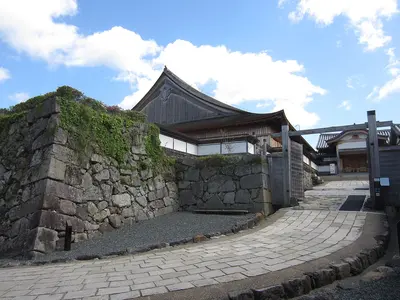
Izushi preserves an unusually complete castle town layout: the Shumon (main castle gate) and surrounding stone walls, a historical town center with Edo-period merchant streetscapes, a famous clock tower (Shinkokan), and the tree-lined castle moat. It is compact enough to explore entirely on foot and well-maintained as a heritage townscape.

3

Cherry Blossoms Along the Castle Moat

In spring, the cherry trees lining the Izushi Castle moat create one of the most picturesque castle blossom scenes in the San'in-Kinki region. The combination of cherry blossoms, stone walls, the old clock tower, and the soba restaurants makes spring the prime time to visit.

Structure Details

Visitor tip

Izushi is one of Japan's most enjoyable castle town visits — not for castle ruins (the tower is gone) but for the atmosphere. The Shumon gate and stone walls give a genuine castle feel, the moat cherry blossoms are beautiful in season, and the soba restaurant culture is genuinely excellent. Plan around the soba — arrive hungry, do the castle first, then eat your way through the town. The castle hill itself is a short climb with nice views of the basin.

Castle type

Hill castle

Hill-top flatland castle — built on a low hill in the Izushi mountain basin of northern Hyogo (Tajima Province), with the castle town and moat system arranged around the hill base in the Tajima valley

Layout type

Linked compound layout

Compound style — castle compounds on the hilltop with extensive outer enclosures and moat system enclosing the lower castle town

Main tower

Partial ruins with reconstructed gate and walls — the main tower (tenshu) is gone, but the Shumon gate complex, stone walls, and the hilltop compound earthworks survive, along with the picturesque moat that encircles the castle area. The Shumon gate is a nationally registered cultural property.

Stone walls

Fitted cut-stone masonry

The Izushi Castle stone walls (ishigaki) survive in good condition around the main castle compound and gate areas, representing Edo-period construction. The walls are well-maintained and visually attractive, especially framed by cherry blossoms in spring.

Moats

The original moat system partially survives, with the picturesque moat on the eastern approach particularly well-maintained. Cherry trees line the moat, creating the famous spring blossom scene that draws visitors from across northern Kinki.

Key defensive features

Mountain Basin Strategic Control

Izushi Castle commands the floor of the Izushi mountain basin — a valley in Tajima Province (northern Hyogo) that controls the routes between the San'in coast and the Kinai. Whoever held Izushi controlled movement through this mountain corridor.

Moat-Enclosed Castle Town

The moat system that partially survives originally enclosed the entire castle town area, merging the castle's defensive perimeter with the town walls. This town-castle integration made the entire Izushi urban area a defensive unit, not just the hilltop castle compound.

Mountain Valley Chokepoint

The Izushi basin is naturally constrained by surrounding mountains, channeling all approach routes through the valley floor where the castle sits. Any force entering the basin came under observation from the castle immediately, and any advance deeper into Tajima Province had to neutralize the castle first.

The Story of Izushi Castle

Originally built 1604 / Sengoku Hidehisa
Current form 1695 / Sengoku Tadamasa
    1604

    The Sengoku clan establishes Izushi Castle on the hilltop in the Izushi mountain basin, following their assignment to Tajima Province after the Battle of Sekigahara. The clan develops the castle and surrounding castle town over the early Edo period.

    1695

    The castle reaches its full Edo-period form under Sengoku Tadamasa, with stone walls, gate complexes, and the castle town layout essentially as it survives today. The moat-enclosed castle town becomes a prosperous regional center in Tajima Province.

    1706

    A large group of exiled Sado soba makers arrives in Izushi, bringing their distinctive small-dish (sara soba) serving tradition. This is the traditional origin of Izushi's famous soba culture — a culinary tradition that would outlast the castle itself.

    1871

    The Meiji government abolishes the Sengoku domain, and Izushi Castle is surrendered to the new government. The castle tower and most structures are eventually demolished, but the Shumon gate, stone walls, moat, and castle town layout survive.

    1896

    The Shinkokan clock tower — one of Izushi's most iconic landmarks — is constructed near the Shumon gate, becoming a symbol of the Meiji-era modernization of the old castle town.

    2017

    Izushi Castle is designated #165 on the 続日本100名城 list, recognizing the exceptional integrity of its castle town heritage, the surviving Shumon gate and stone walls, and the town's distinctive cultural identity built around the sara soba tradition.

Did You Know?

  • Izushi sara soba is so famous in Japan that the town has over 50 soba restaurants — extraordinary for a town of just a few thousand residents. The traditional custom is to order in odd numbers (3, 5, 7 dishes) and stack the finished dishes to show your appetite.
  • The Shinkokan clock tower (built 1896) is one of only a handful of clock towers from the Meiji period surviving in Japan. It has become so associated with Izushi that it now appears on local souvenirs and promotional materials as much as the castle itself.
  • The Sengoku clan who built Izushi Castle are not connected to the word 'sengoku' (warring states period) — confusingly, the family name 'Sengoku' (仙石) uses different kanji and means something entirely different.

Score Breakdown

Tourism Score

D 48/100
  • Accessibility 9 /20
  • Foreign-Friendly 8 /20
  • Historical Value 12 /20
  • Visual Impact 11 /20
  • Facilities 8 /20

Defense Score

B 79/100
  • Terrain Advantage 15 /20
  • Entrance Defense 15 /20
  • Internal Complexity 16 /20
  • Siege Endurance 16 /20
  • Strategic Oversight 17 /20

Planning Your Visit

Best Time to Visit

Late March to early April for cherry blossoms along the moat. Any time is good for soba. Summer festivals add atmosphere; winter is cold but the town is still operational.

Time Needed

2-3 hours (castle town + soba lunch)

Insider Tip

Reserve a soba restaurant in advance if visiting on a weekend or during cherry blossom season — the popular spots fill up quickly. The consensus local recommendation is to visit at least 5 dishes of sara soba per person to properly experience the tradition. Pair with a walk along the moat afterward.

Map

Getting There

Nearest station: Toyooka Station (JR San'in Main Line)
Walk from station: 0 min walk
Bus: Bus from Toyooka Station to Izushi town takes about 30 minutes. The castle is a short walk from the Izushi bus terminal in the castle town.
Parking: Free and paid parking available near the castle town. Easy access by car.
Accessible with a JR Pass

Admission

Free

Free to enter the castle ruins and park. The Izushi clan museum and some adjacent historical buildings charge small admission fees. The castle grounds and hilltop ruins are always free.

Opening Hours

Open00:00 – 23:59

Castle ruins open year-round. The Izushi castle town is most popular in spring (cherry blossoms along the moat) and summer (Izushi soba season at its peak). Winter can be cold and snowy in this northern Hyogo mountain basin.

Facilities

  • – English guides
  • – Audio guide
  • – Wheelchair access
  • ✓ Restrooms
  • ✓ Gift shop
  • ✓ Food nearby

Nearby Castles

Featured in collections

FAQ

Frequently Asked Questions

How do I get to Izushi Castle?

The nearest station is Toyooka Station (JR San'in Main Line). From there it is about 0 minutes on foot. Bus from Toyooka Station to Izushi town takes about 30 minutes. The castle is a short walk from the Izushi bus terminal in the castle town.

How much does Izushi Castle cost to enter?

Izushi Castle is free to enter.

Is Izushi Castle worth visiting?

Izushi is one of those rare Japanese destinations that exceeds expectations. The castle ruins are modest but the castle town atmosphere is excellent, the soba culture is genuinely special, and the spring cherry blossoms along the moat are beautiful. It's a relaxed half-day to full-day experience that combines history, food, and a well-preserved historical streetscape.

What are the opening hours of Izushi Castle?

00:00 to 23:59.

How long should I spend at Izushi Castle?

Plan for about 2-3 hours (castle town + soba lunch), depending on how closely you want to explore the grounds.