Amagasaki Castle

尼崎城·Amagasaki-jo

D Tourism Score 45/100
C Defense Score 60/100

One man's ¥6 billion gift to his hometown — a brand-new castle in an old city that lost its original to Meiji-era demolition.

#166 — Continued 100 Castles Reconstructed
Amagasaki Castle (尼崎城)
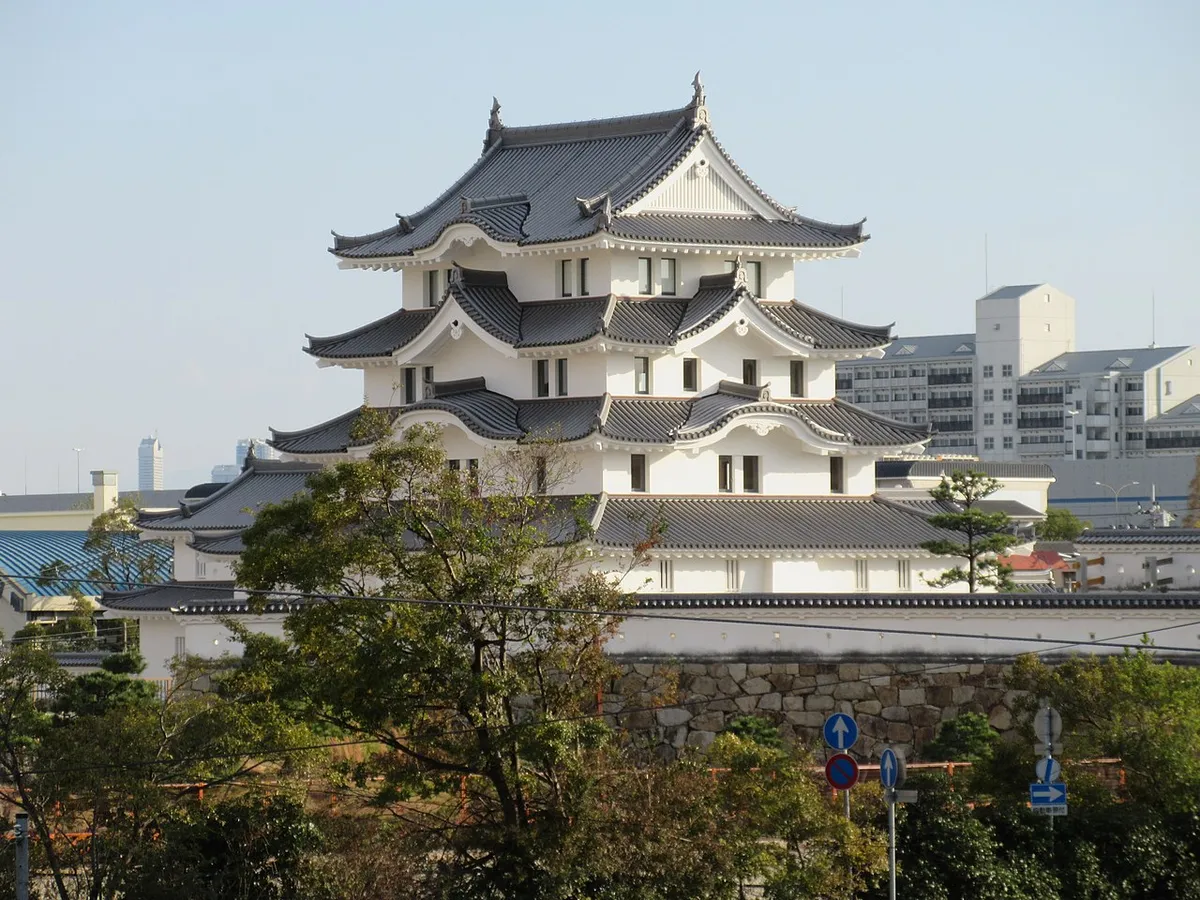
Photo:KishujiRapid/Wikimedia Commons/CC BY-SA 4.0

Quick Facts

Quick Facts

Admission
¥500

¥250

Hours
10:00 – 17:00

Last entry 16:30

Nearest Station
Amagasaki Station (JR Kobe Line / Hanshin Main Line)
Walk from Station
5 min walk
Time Needed
45 minutes to 1 hour

Children (elementary school age) ¥250. Preschool children free. The reconstruction was funded by private donation from a local businessman and opened in 2019.

Defense Overview

Defense Overview

Why Amagasaki Castle was hard to attack

This castle is hard to attack because it combines managed outer defenses on relatively level ground with enough defensive depth to slow attackers before the center.

An attacker would not simply arrive at the center on open flat ground. They would have to cross water barriers or moat lines.

Overall score

60/100

Estimated range

54–66

Confidence

A

Strong multi-source support

This is a site-original comparison score for learning and comparison, not a reconstruction of one historical battle.

Radar view

Terrain 10/20 Entrance 11/20 Internal 14/20 Siege 13/20 Oversight 12/20
How this estimate was built+

This estimate combines broad terrain, approach, layout, and route-control signals. It is meant to explain the castle's defensive logic in plain English, not reconstruct a single historical attack.

Terrain Advantage

How much the terrain itself seems to help: height, slope, ridges, cliffs, water edges, and limited approach directions.

10/20

Entrance Defense

How awkward and dangerous the first entry looks: gates, bridge or moat crossings, chokepoints, and forced turns.

11/20

Internal Complexity

How hard it seems to keep pushing after entry: layered baileys, depth, compartmentalization, and repeated defensive lines.

14/20

Siege Endurance

A rough sense of long-hold potential: moats, water access, space, storage plausibility, and defensive staying power.

13/20

Strategic Oversight

How much the castle appears to command nearby roads, plains, rivers, basins, harbors, or town approaches.

12/20
Why Visit

Amagasaki Castle is an interesting visit if you frame it correctly: not as a traditional castle experience but as a story about community memory, civic philanthropy, and what Japanese cities do when they've lost their historical anchors. The location is genuinely excellent — five minutes from a major train hub — and the interior museum is thoughtful. Go with modest expectations about historical authenticity and you'll find it more rewarding than the tourism scores suggest.

Highlights

1

A Castle Built by One Man's Generosity

Amagasaki Castle was not rebuilt by the government or a heritage fund — it was reconstructed entirely because a single local businessman, Miyazaki Taro, donated ¥6 billion of his own money to give his hometown a castle again. It opened in 2019 after just three years of construction, a remarkable act of civic philanthropy that resonated across Japan.

2

History in a Modern Shell

The original Amagasaki Castle was demolished in 1874 during the Meiji era. The 2019 reconstruction is frankly a modern building in castle form — but the interior museum does an earnest job of telling the castle's actual history, the Tokugawa-era Amagasaki domain, and the story of the reconstruction project itself. It's as much a museum about community memory as about feudal Japan.

3

One of Kansai's Most Accessible Castles

Five minutes on foot from Amagasaki Station — which is served by both JR and Hanshin lines — makes Amagasaki Castle one of the most conveniently located castle reconstructions in all of Kansai. For visitors staying in Osaka who want a quick castle experience without the Osaka Castle crowds, this is a genuinely pleasant alternative.

Structure Details

Visitor tip

Amagasaki Castle is best approached as a local history museum in a handsome building rather than a traditional castle visit. The interior exhibits focus on the Amagasaki domain in the Edo period and the story of the 2019 reconstruction. The views from the upper floors over the surrounding city give a sense of the flat Osaka Plain topography that characterized the original castle's environment.

Castle type

Flatland castle

Flatland castle — built on completely flat ground, relying entirely on moats and walls rather than natural topography for defense

Layout type

Concentric layout

Ring-style layout — compounds surrounding the central honmaru on flat terrain

Main tower

Modern concrete reconstruction (2019) — funded by private donation; exterior approximates Edo-period appearance based on historical records and paintings

4 floors

Stone walls

Natural stone stacking

The 2019 reconstruction includes decorative stone walls around the base, approximating the original castle's ishigaki. These are modern construction designed for appearance rather than historical authenticity — but they contribute to the overall castle atmosphere.

Key defensive features

Original Moat System (lost)

The historical Amagasaki Castle was defended by an extensive moat system on the flat Osaka Plain — similar in principle to Osaka Castle's water defenses. The moats were filled during the Meiji era and subsequent urban development has removed all traces.

Coastal Position on Osaka Bay

The original castle was positioned to control sea traffic in Osaka Bay, serving as a Tokugawa checkpoint on the maritime approaches to Osaka. This coastal position was its primary strategic value, not its land defenses.

The Story of Amagasaki Castle

Originally built 1617 / Toda Ujikane
Current form 2019 / Miyazaki Taro (private donation reconstruction)
    1617

    Toda Ujikane begins construction of Amagasaki Castle under Tokugawa authority, establishing it as the administrative center of the new Amagasaki domain. The castle is designed for coastal defense of Osaka Bay — a Tokugawa security measure following the destruction of the Toyotomi clan at the Summer Siege of Osaka (1615).

    1635

    The castle passes to the Aoyama clan, who administer Amagasaki domain through much of the Edo period. Amagasaki grows into a prosperous merchant and crafts town under Tokugawa stability, though the castle itself sees no military action.

    1711

    The Matsudaira clan (a Tokugawa branch family) takes over Amagasaki domain, holding it until the Meiji Restoration. The castle continues as an administrative headquarters with no combat history.

    1874

    The Meiji government demolishes Amagasaki Castle as part of the nationwide program of removing feudal infrastructure. The stone materials are reportedly recycled for construction of the new Osaka prefectural offices. The site is converted to military use and later urban park.

    2015

    Local businessman Miyazaki Taro announces a ¥6 billion personal donation to reconstruct Amagasaki Castle as a gift to the city. The project is widely covered in Japanese media as an extraordinary act of private civic generosity.

    2019

    The reconstructed Amagasaki Castle opens to the public. It becomes immediately popular with local residents and draws visitors from across Kansai as a symbol of community pride and an accessible castle experience between Osaka and Kobe.

In Pop Culture

other

Japanese news coverage of reconstruction

The ¥6 billion private donation and three-year construction project was widely covered across Japanese television and print media in 2015–2019, making Amagasaki Castle unusually well-known despite its modest historical significance.

Did You Know?

  • The reconstruction cost ¥6 billion (approximately $55 million USD) — all from a single private donor. Miyazaki Taro, who made his fortune in the pachinko industry, said he wanted to give something lasting to his hometown. His donation is believed to be the largest single private contribution to a castle reconstruction project in Japanese history.
  • The original Amagasaki Castle's demolition materials were used to build the new Osaka prefectural government offices in the Meiji era — an ironic fate for a castle that spent its entire existence as a Tokugawa administrative facility.
  • Amagasaki is sandwiched between Osaka and Kobe but has a distinct working-class industrial identity shaped by its manufacturing history. The castle reconstruction was explicitly framed as a project to boost civic pride and tourism in a city often overlooked between its more famous neighbors.

Score Breakdown

Tourism Score

D 45/100
  • Accessibility 18 /20
  • Foreign-Friendly 6 /20
  • Historical Value 7 /20
  • Visual Impact 9 /20
  • Facilities 5 /20

Defense Score

C 60/100
  • Terrain Advantage 10 /20
  • Entrance Defense 11 /20
  • Internal Complexity 14 /20
  • Siege Endurance 13 /20
  • Strategic Oversight 12 /20

Planning Your Visit

Best Time to Visit

Year-round — the modern construction means no seasonal maintenance closures. Spring brings cherry blossoms in the surrounding park.

Time Needed

45 minutes to 1 hour

Insider Tip

Amagasaki is an easy add-on between Osaka and Kobe — the train stops here on the JR Kobe Line. If you're making the Osaka–Kobe trip and have an hour to spare, stepping off for a quick castle visit breaks up the journey nicely. The castle exterior is also freely photographable from the park at any hour.

Map

Getting There

Nearest station: Amagasaki Station (JR Kobe Line / Hanshin Main Line)
Walk from station: 5 min walk
Accessible with a JR Pass

Admission

Adult¥500
Child¥250

Children (elementary school age) ¥250. Preschool children free. The reconstruction was funded by private donation from a local businessman and opened in 2019.

Opening Hours

Open10:00 – 17:00
Last entry16:30

Closed Tuesdays (or following day if Tuesday is a holiday). Closed year-end and New Year period.

Facilities

  • – English guides
  • – Audio guide
  • ✓ Wheelchair access
  • ✓ Restrooms
  • ✓ Gift shop
  • ✓ Food nearby

Nearby Castles

Featured in collections

FAQ

Frequently Asked Questions

How do I get to Amagasaki Castle?

The nearest station is Amagasaki Station (JR Kobe Line / Hanshin Main Line). From there it is about 5 minutes on foot.

How much does Amagasaki Castle cost to enter?

Adult admission is ¥500 and child admission is ¥250.

Is Amagasaki Castle worth visiting?

Amagasaki Castle is an interesting visit if you frame it correctly: not as a traditional castle experience but as a story about community memory, civic philanthropy, and what Japanese cities do when they've lost their historical anchors. The location is genuinely excellent — five minutes from a major train hub — and the interior museum is thoughtful. Go with modest expectations about historical authenticity and you'll find it more rewarding than the tourism scores suggest.

What are the opening hours of Amagasaki Castle?

10:00 to 17:00, last entry 16:30.

How long should I spend at Amagasaki Castle?

Plan for about 45 minutes to 1 hour, depending on how closely you want to explore the grounds.