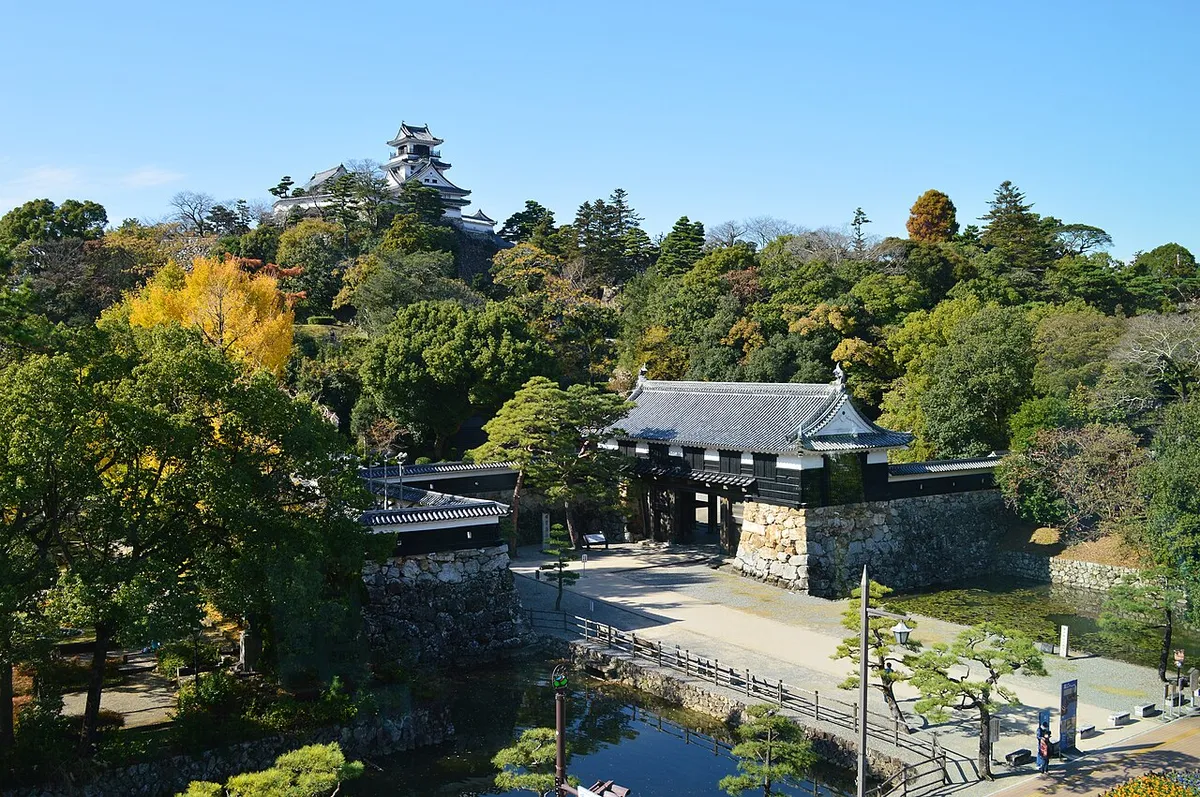
Kochi Castle

高知城·Kochi-jo

B Tourism Score 72/100
A Defense Score 85/100

Japan's most complete castle experience — the only place where both an original tower and original lord's palace survive side by side.

#84 — 100 Famous Castles Surviving
Kochi Castle (高知城)
Photo:Saigen Jiro/Wikimedia Commons/CC0

Quick Facts

Quick Facts

Admission
¥500

¥0

Hours
09:00 – 17:00

Last entry 16:30

Nearest Station
Kochi Station (JR Dosan Line / Tosa Kuroshio Railway)
Walk from Station
20 min walk

Bus also available

Time Needed
1.5-2 hours

Visitors under 18 free. One of the most affordable original castle admission fees in Japan.

Defense Overview

Defense Overview

Why Kochi Castle was hard to attack

This castle is hard to attack because it uses high ground and difficult natural access to deny attackers an easy approach.

An attacker would first have to fight the site itself before reaching the main defenses. They would have to cross water barriers or moat lines, approach through at least some constrained entry space, and push through successive outer areas before the core.

Overall score

85/100

Estimated range

79–91

Confidence

A

Strong multi-source support

This is a site-original comparison score for learning and comparison, not a reconstruction of one historical battle.

Radar view

Terrain 20/20 Entrance 19/20 Internal 16/20 Siege 14/20 Oversight 16/20
How this estimate was built+

This estimate combines broad terrain, approach, layout, and route-control signals. It is meant to explain the castle's defensive logic in plain English, not reconstruct a single historical attack.

Terrain Advantage

How much the terrain itself seems to help: height, slope, ridges, cliffs, water edges, and limited approach directions.

20/20

Entrance Defense

How awkward and dangerous the first entry looks: gates, bridge or moat crossings, chokepoints, and forced turns.

19/20

Internal Complexity

How hard it seems to keep pushing after entry: layered baileys, depth, compartmentalization, and repeated defensive lines.

16/20

Siege Endurance

A rough sense of long-hold potential: moats, water access, space, storage plausibility, and defensive staying power.

14/20

Strategic Oversight

How much the castle appears to command nearby roads, plains, rivers, basins, harbors, or town approaches.

16/20

Why Visit

Kochi Castle's unique distinction — the complete survival of both the military tower and the residential palace — is something no castle enthusiast should miss. The castle is small and admission is cheap, but what it offers is historically unmatched. Combine it with the Sunday market at the castle approach for one of the most enjoyable mornings in all of Shikoku.

Highlights

1

The Only Castle to Survive Completely Intact

Kochi Castle is the only castle in Japan where the main tower AND the lord's residential palace (Kaitoku-kan) both survive in their original forms, together on the same site. Every other original castle in Japan has either lost its palace or lost its tower. At Kochi, you can experience both — the functional military tower and the refined private living quarters — as a complete set.
2

The Sunday Market That Rivals the Castle

Every Sunday, the long street leading to Kochi Castle's main gate becomes one of Japan's best and oldest open-air markets — Kochi Tosa-no-Ichi, running continuously for over 300 years. Fresh Kochi produce (yuzu citrus, bonito, vegetables), local crafts, and street food fill the approach road. The castle and the market together make for a perfect Sunday in Kochi.

3

Yamauchi Kazutoyo's Legacy

The castle was built by Yamauchi Kazutoyo, a warlord who rose from complete poverty to become lord of a major domain through military skill and fortunate alliances. His wife, Chiyo — famous for selling her prized hair ornament to buy her husband a war horse at a crucial moment — is still celebrated in Kochi today. Their rags-to-riches story gives the castle a human dimension.

Structure Details

Visitor tip

Kochi Castle is small but complete. The best way to experience it is to walk the full historical approach — starting from the Ote-mon gate at the base of the hill, climbing through the three compounds, and ending at the main tower. The lord's palace (Kaitoku-kan) connected to the tower is the unique feature: it's the only place in Japan where you can walk directly from a surviving original palace into a surviving original castle tower.

Castle type

Mountain castle

Mountain castle — built on Otakasa Hill, a small rocky hillock rising from the flat Kochi Plain

Layout type

Linked compound layout

Compound style — tower connected to palace and supporting structures on the hilltop

Main tower

Original wooden tenshu (main keep) — one of 12 surviving original castle towers in Japan

18.5m4 floors, 1 below

Stone walls

Natural stone stacking

The stone walls wrap around the natural contours of Otakasa Hill, integrating with the rocky outcrops. The walls are relatively modest in scale compared to the grand castles of Himeji or Kumamoto — Kochi Castle's primary defense was its rocky hilltop position.

Key defensive features

Otakasa Hill Natural Defense

The castle sits atop a rocky outcrop rising sharply from the flat Kochi Plain. The natural steepness of the hill's approaches — particularly the rocky west and north faces — made scaling difficult.

Tsume-no-mon (Final Gate)

The innermost gate of the main compound is positioned after a sharp turn in the approach, ensuring that any attacker who breached the outer gates still faced another heavily defended barrier before reaching the main tower.

The Story of Kochi Castle

Originally built 1603 / Yamauchi Kazutoyo
Current form 1753 / Yamauchi clan (reconstruction after 1727 fire)
    1601

    Yamauchi Kazutoyo receives Tosa Province (modern Kochi) as his domain after supporting Tokugawa at Sekigahara. He immediately begins construction of a new castle at Otakasa Hill.

    1611

    Kochi Castle's main tower is completed. The entire complex, including the lord's palace, forms a unified hilltop fortress overlooking the Kochi Plain.

    1727

    A major fire breaks out in the castle town and spreads to the castle, destroying the main tower and most buildings. Only a few structures survive.

    1748

    Reconstruction of the castle begins under the seventh-generation Yamauchi lord. Using the original designs, craftsmen rebuild the entire compound faithfully.

    1753

    The reconstruction is complete — the main tower, palace, and all supporting structures are rebuilt in their original forms. This is the castle you visit today.

    1873

    Like many castles, Kochi faces demolition threats under the Meiji government. Local citizens organize to preserve the castle, which survives intact into the modern era.

    1959

    The castle is designated an Important Cultural Property, and the comprehensive historical compound — the only place in Japan with both an original tower and original palace — is formally recognized as uniquely valuable.

In Pop Culture

TV

Ryoma den (NHK Taiga Drama, 2010)

This drama about Sakamoto Ryoma, Kochi's most famous historical figure, features the city and its castle setting extensively.

Did You Know?

  • Kochi Castle is the only castle in Japan where both the original tenshu (main tower) and the original honmaru goten (lord's palace) survive together on the same site. Every other surviving original tower in Japan has lost its accompanying palace.
  • The castle's reconstruction after the 1727 fire was so faithful to the original that historians initially debated whether it had actually been rebuilt at all — the craftsmanship was that authentic.
  • The Sunday market (Kochi Tosa-no-Ichi) at the castle approach has been running continuously for over 300 years, making it one of the oldest regularly held markets in Japan. It stretches nearly 1 km.
  • Kochi Prefecture produces more yuzu citrus than any other place in Japan — you'll find yuzu in everything at the Sunday market, from ponzu sauce to sweets to cosmetics.

Score Breakdown

Tourism Score

B 72/100
  • Accessibility 11 /20
  • Foreign-Friendly 11 /20
  • Historical Value 18 /20
  • Visual Impact 16 /20
  • Facilities 16 /20

Defense Score

A 85/100
  • Terrain Advantage 20 /20
  • Entrance Defense 19 /20
  • Internal Complexity 16 /20
  • Siege Endurance 14 /20
  • Strategic Oversight 16 /20

Planning Your Visit

Best Time to Visit

Sunday mornings for the combination of market and castle. Cherry blossom season (late March to early April) fills the castle grounds with pink blossoms. Avoid visiting in high summer if you can — Kochi is one of the hottest and most humid cities in Japan.

Time Needed

1.5-2 hours

Insider Tip

Walk through the Kaitoku-kan palace rooms slowly — most visitors rush through. Look at the decorative transoms between rooms and the garden views from the sliding screen doors: this is what the lord actually saw from his private quarters, unchanged for centuries. Then climb into the tower directly from the palace connection — unique in Japan.

Map

Getting There

Nearest station: Kochi Station (JR Dosan Line / Tosa Kuroshio Railway)
Walk from station: 20 min walk
Bus: MY KOCHI BUS and Tosa Dentetsu street tram stop near the castle. The tram to Tosa-Dentetsu Kochi Kaijo-mae is convenient.
Parking: Paid parking available near the castle grounds.
Accessible with a JR Pass

Admission

Adult¥500
ChildFree

Visitors under 18 free. One of the most affordable original castle admission fees in Japan.

Opening Hours

Open09:00 – 17:00
Last entry16:30

Closed December 26–January 1.

Facilities

  • – English guides
  • – Audio guide
  • – Wheelchair access
  • ✓ Restrooms
  • ✓ Gift shop
  • ✓ Food nearby

Nearby Castles

Featured in collections

FAQ

Frequently Asked Questions

How do I get to Kochi Castle?

The nearest station is Kochi Station (JR Dosan Line / Tosa Kuroshio Railway). From there it is about 20 minutes on foot. MY KOCHI BUS and Tosa Dentetsu street tram stop near the castle. The tram to Tosa-Dentetsu Kochi Kaijo-mae is convenient.

How much does Kochi Castle cost to enter?

Adult admission is ¥500 and child admission is ¥0.

Is Kochi Castle worth visiting?

Kochi Castle's unique distinction — the complete survival of both the military tower and the residential palace — is something no castle enthusiast should miss. The castle is small and admission is cheap, but what it offers is historically unmatched. Combine it with the Sunday market at the castle approach for one of the most enjoyable mornings in all of Shikoku.

What are the opening hours of Kochi Castle?

09:00 to 17:00, last entry 16:30.

How long should I spend at Kochi Castle?

Plan for about 1.5-2 hours, depending on how closely you want to explore the grounds.