Uwajima Castle

宇和島城·Uwajima-jo

D Tourism Score 50/100
B Defense Score 75/100

Remote, unhurried, and genuinely old — Uwajima's original tower is a quiet pilgrimage for those who seek authentic history off the tourist trail.

#83 — 100 Famous Castles Surviving
Uwajima Castle (宇和島城)
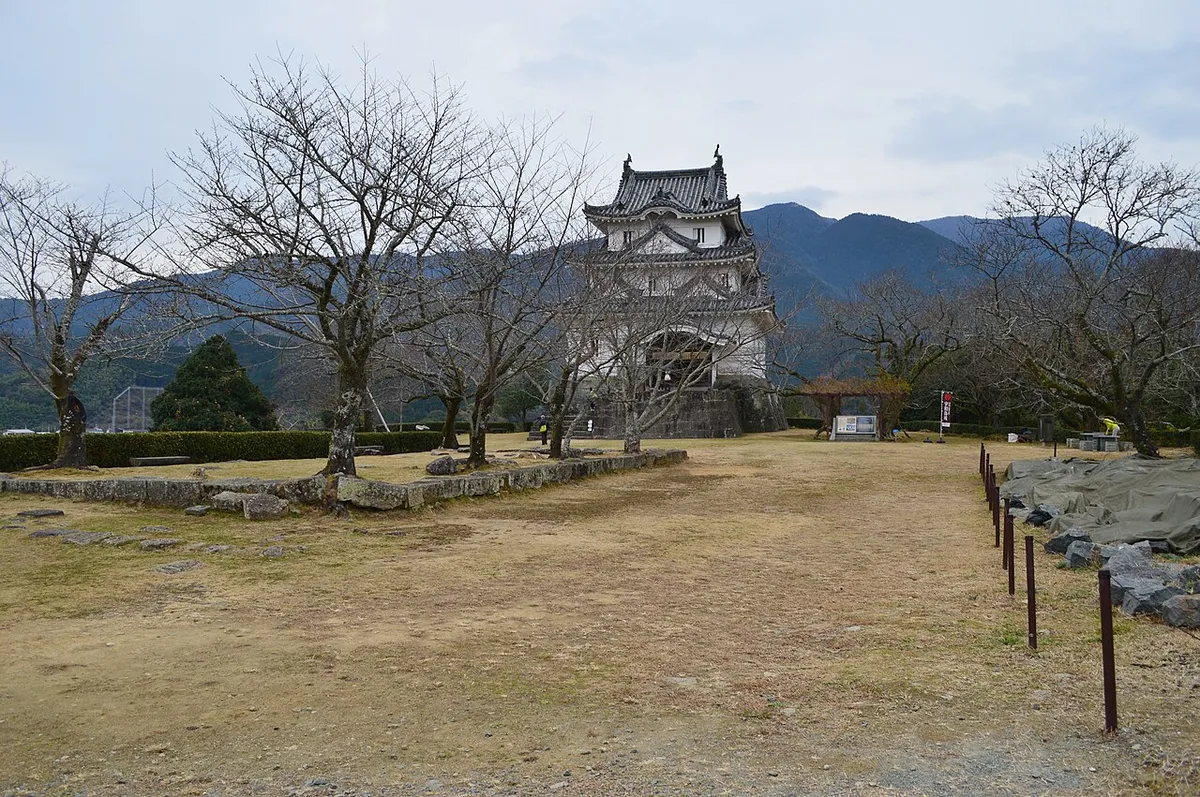
Photo:Saigen Jiro/Wikimedia Commons/CC0

Quick Facts

Quick Facts

Admission
¥200

¥0

Hours
09:00 – 17:00

Last entry 16:40

Nearest Station
Uwajima Station (JR Yodo Line / JR Uchiko Line)
Walk from Station
20 min walk
Time Needed
1-1.5 hours

High school students and under free. One of Japan's most affordable original tenshu castles.

Defense Overview

Defense Overview

Why Uwajima Castle was hard to attack

This castle is hard to attack because it combines a raised core with defended outer space with enough defensive depth to slow attackers before the center.

An attacker would not get a simple direct approach to the center. They would have to cross water barriers or moat lines and push through successive outer areas before the core.

Overall score

75/100

Estimated range

69–81

Confidence

A

Strong multi-source support

This is a site-original comparison score for learning and comparison, not a reconstruction of one historical battle.

Radar view

Terrain 15/20 Entrance 14/20 Internal 16/20 Siege 15/20 Oversight 15/20
How this estimate was built+

This estimate combines broad terrain, approach, layout, and route-control signals. It is meant to explain the castle's defensive logic in plain English, not reconstruct a single historical attack.

Terrain Advantage

How much the terrain itself seems to help: height, slope, ridges, cliffs, water edges, and limited approach directions.

15/20

Entrance Defense

How awkward and dangerous the first entry looks: gates, bridge or moat crossings, chokepoints, and forced turns.

14/20

Internal Complexity

How hard it seems to keep pushing after entry: layered baileys, depth, compartmentalization, and repeated defensive lines.

16/20

Siege Endurance

A rough sense of long-hold potential: moats, water access, space, storage plausibility, and defensive staying power.

15/20

Strategic Oversight

How much the castle appears to command nearby roads, plains, rivers, basins, harbors, or town approaches.

15/20
Why Visit

Uwajima rewards visitors who make the effort to travel to this remote corner of Shikoku. The original tower has a quiet intimacy that more famous castles lack, and the small city around it has a genuine local character. The castle is best combined with other Shikoku sights — nearby Ozu Castle (rebuilt reconstruction) and Matsuyama are logical additions.

Highlights

1

One of Twelve — Original Since the 1600s

Uwajima Castle's three-story tower is one of only 12 original surviving wooden tenshu in Japan — a remarkably intimate and authentic structure that has stood since the early 17th century without being rebuilt. Its small scale only adds to the sense of encountering genuine history.

2

Date Hidemune's Remote Southern Fortress

Uwajima was constructed by Date Hidemune, son of the legendary Date Masamune (the 'One-Eyed Dragon' of the north). The Date clan ruled this remote corner of Shikoku for generations, and the castle reflects their relatively modest position — far from the political center but proud and independent.

3

A Castle That Watched the Sea

Uwajima originally stood on a peninsula jutting into the sea — a 'water castle' where the ocean itself served as a natural moat on three sides. Land reclamation over centuries has disconnected it from the water, but the maritime strategic logic of its placement is still visible in the landscape.

Structure Details

Visitor tip

The walk up the hill to the tower takes about 10 minutes from the base. The tower interior is small (three stories) but original and atmospheric. Uwajima is a good add-on to a Shikoku itinerary rather than a primary destination — plan to combine it with other sights in the area.

Castle type

Hill castle

Flatland hill castle — built on a low hill that was originally surrounded by sea on three sides

Layout type

Linked compound layout

Compound style — main tower and secondary structures spread across the hill

Main tower

Original wooden tenshu (main keep) — built in 1666, one of only 12 surviving original castle towers in Japan

15.8m3 floors, 1 below

Stone walls

Natural stone stacking

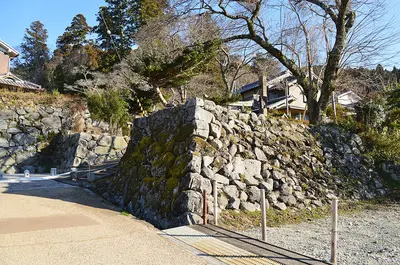
Modest stone walls follow the natural contours of the hill. Uwajima's defenses were never of the most elaborate type — the original sea-surrounded location provided the primary defense, making elaborate landward fortification less critical.

Key defensive features

Original Sea-Surrounded Position

When built, the castle stood on a peninsula with sea on three sides — the ocean served as a vast natural moat that made amphibious assault the only approach from most directions.

Hill Elevation

The castle hill gives defenders a commanding view over the surrounding area and approaches, allowing early detection of any threat from land or sea.

The Story of Uwajima Castle

Originally built 1601 / Todo Takatora
Current form 1666 / Date Muneoki
    1601

    Todo Takatora, one of Japan's greatest castle architects, builds the original Uwajima Castle on a sea-surrounded peninsula. His design maximizes the natural water defenses of the peninsular site.

    1614

    Date Hidemune, son of the legendary Date Masamune, receives Uwajima domain as his fief. The Date clan will rule Uwajima for the remainder of the Edo period.

    1666

    Date Muneoki reconstructs the main tower in its current three-story form. This tower survives intact to the present day.

    1871

    The Meiji government's abolition of domains ends Date clan rule. Like most castles, Uwajima loses its administrative function, but the tower is preserved.

    1934

    The tower is designated a National Important Cultural Property, providing formal protection for one of Japan's rare original tenshu.

Did You Know?

  • Uwajima Castle was designed by Todo Takatora, one of the master castle architects of the Sengoku era — the same man who designed key portions of Iyo-Matsuyama (a different castle) and other major fortifications.
  • The castle's original peninsula location made it effectively a 'water castle' (mizujiro) — a type that used water as its primary defense rather than mountains or elaborate earthworks.
  • Uwajima is also famous for its unusual Taga Shrine, which houses a fertility museum — an unexpected contrast to the refined historical atmosphere of the castle nearby.
  • The surrounding Uwajima area is known for its spectacular summer bullfighting (togyu) — not Spanish-style bullfighting, but bull-versus-bull matches that have been held here for over 400 years.

Score Breakdown

Tourism Score

D 50/100
  • Accessibility 9 /20
  • Foreign-Friendly 8 /20
  • Historical Value 14 /20
  • Visual Impact 12 /20
  • Facilities 7 /20

Defense Score

B 75/100
  • Terrain Advantage 15 /20
  • Entrance Defense 14 /20
  • Internal Complexity 16 /20
  • Siege Endurance 15 /20
  • Strategic Oversight 15 /20

Planning Your Visit

Best Time to Visit

Spring and autumn. The castle is pleasant year-round but lacks dramatic seasonal attractions. Avoid midsummer heat.

Time Needed

1-1.5 hours

Insider Tip

Uwajima is famous for its jakoten (fried fish paste) and tai-meshi (sea bream rice) — local dishes that reflect the coastal fishing culture of the region. The castle visit pairs well with a seafood lunch at one of the local restaurants near the station.

Map

Getting There

Nearest station: Uwajima Station (JR Yodo Line / JR Uchiko Line)
Walk from station: 20 min walk
Parking: Small parking area at the base of the castle hill.
Accessible with a JR Pass

Admission

Adult¥200
ChildFree

High school students and under free. One of Japan's most affordable original tenshu castles.

Opening Hours

Open09:00 – 17:00
Last entry16:40

Nov–Feb: closes at 16:00. Mar–Oct: closes at 17:00. Closed December 29–31. Castle hill grounds accessible outside hours; tower interior closes at listed time.

Facilities

  • – English guides
  • – Audio guide
  • – Wheelchair access
  • ✓ Restrooms
  • ✓ Gift shop
  • ✓ Food nearby

Nearby Castles

Featured in collections

FAQ

Frequently Asked Questions

How do I get to Uwajima Castle?

The nearest station is Uwajima Station (JR Yodo Line / JR Uchiko Line). From there it is about 20 minutes on foot.

How much does Uwajima Castle cost to enter?

Adult admission is ¥200 and child admission is ¥0.

Is Uwajima Castle worth visiting?

Uwajima rewards visitors who make the effort to travel to this remote corner of Shikoku. The original tower has a quiet intimacy that more famous castles lack, and the small city around it has a genuine local character. The castle is best combined with other Shikoku sights — nearby Ozu Castle (rebuilt reconstruction) and Matsuyama are logical additions.

What are the opening hours of Uwajima Castle?

09:00 to 17:00, last entry 16:40.

How long should I spend at Uwajima Castle?

Plan for about 1-1.5 hours, depending on how closely you want to explore the grounds.