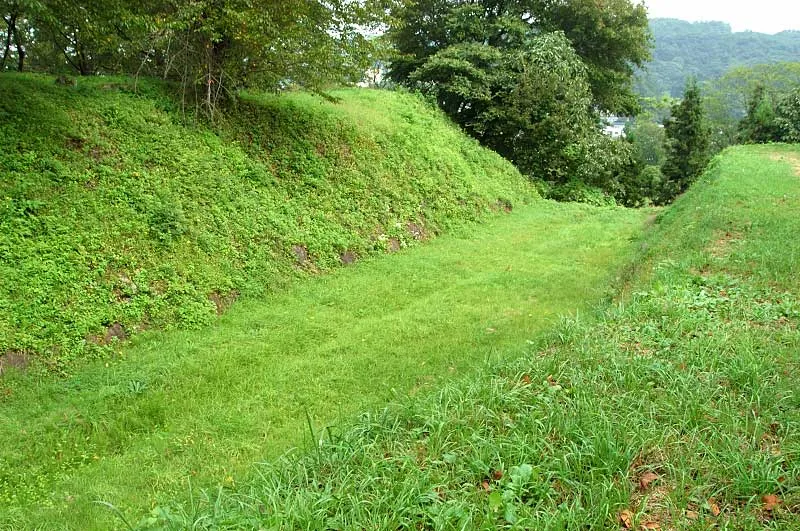
Kunohe Castle

九戸城·Kunohe-jo

F Tourism Score 32/100
B Defense Score 72/100

Where Japan's unification was completed — the last Tohoku rebellion ended here in 1591 when Hideyoshi's 60,000-man army forced the final surrender.

#104 — Continued 100 Castles Ruins
Kunohe Castle (九戸城)
Photo:Satoshin at Japanese Wikipedia/Wikimedia Commons/CC BY-SA 3.0

Quick Facts

Quick Facts

Admission
Free Free
Hours
00:00 – 23:59
Nearest Station
Ninohe Station (IGR Iwate Galaxy Railway)
Walk from Station
30 min walk
Time Needed
45 minutes to 1 hour

Ruins freely accessible as a public park. No on-site admission fee. The Kunohe Castle Site is managed by Ninohe City.

Defense Overview

Defense Overview

Why Kunohe Castle was hard to attack

This castle is hard to attack because it combines a raised core with defended outer space with enough defensive depth to slow attackers before the center.

An attacker would not get a simple direct approach to the center. They would have to cross water barriers or moat lines and push through successive outer areas before the core.

Overall score

72/100

Estimated range

66–78

Confidence

B

Usable estimate with some inference

This is a site-original comparison score for learning and comparison, not a reconstruction of one historical battle.

Radar view

Terrain 15/20 Entrance 14/20 Internal 16/20 Siege 14/20 Oversight 13/20
How this estimate was built+

This estimate combines broad terrain, approach, layout, and route-control signals. It is meant to explain the castle's defensive logic in plain English, not reconstruct a single historical attack.

Terrain Advantage

How much the terrain itself seems to help: height, slope, ridges, cliffs, water edges, and limited approach directions.

15/20

Entrance Defense

How awkward and dangerous the first entry looks: gates, bridge or moat crossings, chokepoints, and forced turns.

14/20

Internal Complexity

How hard it seems to keep pushing after entry: layered baileys, depth, compartmentalization, and repeated defensive lines.

16/20

Siege Endurance

A rough sense of long-hold potential: moats, water access, space, storage plausibility, and defensive staying power.

14/20

Strategic Oversight

How much the castle appears to command nearby roads, plains, rivers, basins, harbors, or town approaches.

13/20

Why Visit

Kunohe Castle's historical significance far exceeds its visual impact — the ruins are a flat, accessible park with stone wall sections but no tower or dramatic scenery. The reason to visit is historical: this is where Japan's unification was completed. The last independent military power in Tohoku ended here, betrayed after surrendering on a promise of amnesty. The accessibility (flat terrain, car parking adjacent) makes it easy despite the remote northern Iwate location.

Highlights

1

The Last Battle of Tohoku's Unification

In 1591, Kunohe Castle was the site of the final military confrontation that completed Toyotomi Hideyoshi's unification of Japan. Kunohe Masazane — one of the most powerful northern lords in Tohoku — refused to submit to Hideyoshi's authority and launched what became known as the Kunohe Rebellion. Hideyoshi's response was overwhelming: a force of over 60,000 soldiers was dispatched under Date Masamune and Gamo Ujisato to crush the rebellion. After a siege of several months, Kunohe Masazane surrendered under a promise of amnesty — which Hideyoshi did not honor. The betrayal and execution of Kunohe and his followers at Kyoto marked the formal end of independent Tohoku warrior power.
2

The Flood Defense — Literally

Kunohe Castle's most distinctive defensive feature was the deliberate use of river flooding. The castle was positioned at the confluence of the Oumono and Mabechi rivers, and the defenders could manipulate the river flow to create temporary water obstacles around the castle perimeter. This use of deliberate inundation — flooding the surrounding terrain to deny attackers solid ground — was an unusual and effective adaptation to the flat riverine terrain of northern Iwate.

3

Stone Walls That Surprised the Besiegers

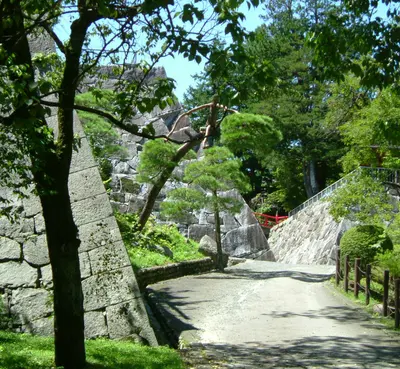
Kunohe Castle's excavations revealed stone wall construction that contemporary besiegers reportedly did not expect from a northern Tohoku lord. The castle had been significantly upgraded in the years before the rebellion, reflecting Kunohe Masazane's awareness that conflict with Hideyoshi was coming. The surviving stone wall sections are among the most northern examples of sophisticated Sengoku ishigaki construction in Japan.

Structure Details

Visitor tip

The Kunohe Castle ruins are a flat, accessible park on the river confluence hill — unusually easy to visit for a castle of this historical significance. The stone wall sections are visible and clearly labeled. The main challenge is context: the ruins themselves are quiet and undramatic, and the story (the last battle of Tohoku unification, the betrayed surrender) needs to be known before visiting for the site to have emotional impact. Read the history section before going.

Castle type

Hill castle

Hill-top flatland castle — built on a low hill at the confluence of the Oumono and Mabechi rivers in northern Iwate, using the rivers as natural defensive moats

Layout type

Linked compound layout

Compound style — main compound at the hill summit with secondary compounds descending to the river terrace level; river channels used as outer moat equivalent

Main tower

No tower survives. Stone wall sections, earthwork platforms, and the river confluence defensive position are the primary surviving features.

Stone walls

Natural stone stacking

Kunohe Castle's stone walls (ishigaki) were a significant investment for a northern Tohoku lord — the stone construction is more sophisticated than most of the region's contemporary fortifications and reflects Kunohe Masazane's serious preparation for the coming conflict with Hideyoshi. Surviving sections of the stone walls are visible in the ruins park.

Moats

The Oumono and Mabechi rivers at the castle's confluence served as natural water moats on multiple sides. The defenders enhanced this natural defense by manipulating river channels to extend the water obstacle coverage — effectively creating a controlled flooding defense.

Key defensive features

River Confluence Water Defense

The castle's position at the junction of the Oumono and Mabechi rivers provided natural water obstacles on multiple sides. The ability to manipulate river flow extended this protection further, creating temporary flooded terrain that slowed and disordered attacking formations approaching the castle across the river plain.

Unexpected Stone Wall Construction

For a northern Tohoku lord, Kunohe Castle's stone wall construction represented a significant upgrade from regional norms. The ishigaki sections suggest serious military investment in the years before 1591 — Kunohe Masazane was not caught unprepared; he had deliberately fortified against the coming siege.

River Terrace Layered Defense

The castle compounds descend in terraces from the summit to the river level, creating multiple defensive lines corresponding to the natural river terrace geography. An attacker who crossed the river would still face successive terraced compound walls before reaching the main summit position.

The Story of Kunohe Castle

Originally built 1539 / Kunohe clan
Current form 1591 / Kunohe Masazane (final expanded form before siege)
    1539

    The Kunohe clan establishes a fortification at the river confluence site in northern Iwate, taking advantage of the natural water defenses provided by the Oumono and Mabechi rivers.

    1590

    Toyotomi Hideyoshi completes the siege of Odawara Castle and issues orders for all Tohoku lords to submit. Kunohe Masazane — one of the most powerful northern lords — refuses. His refusal is one of the last acts of defiance against Hideyoshi's unification.

    1591

    Kunohe Masazane launches his rebellion against Hideyoshi's authority. A massive Toyotomi force of over 60,000 soldiers, commanded by Date Masamune and Gamo Ujisato, besieges the castle.

    1591

    After months of siege, Kunohe Masazane surrenders on a promise of personal amnesty. He is taken to Kyoto — where Hideyoshi refuses to honor the amnesty. Kunohe Masazane and his principal followers are executed. The last independent military power in Tohoku is extinguished. Japan is now fully unified under Toyotomi authority.

    1598

    The South Nambu clan takes control of Kunohe Castle and renames it Fukuoka Castle. It serves as an administrative center for the northern Nambu domain until superseded by more modern lowland fortifications in the Edo period.

    2006

    Kunohe Castle site is selected for the Zoku-100 Famous Castles list, recognizing its critical role in the completion of Japanese unification under the Toyotomi.

In Pop Culture

TV

Various NHK taiga dramas set in the Toyotomi unification period

The Kunohe Rebellion and the castle's siege appear in historical dramas covering Date Masamune, Gamo Ujisato, and the final stages of Toyotomi Hideyoshi's unification campaign.

Did You Know?

  • The betrayal of Kunohe Masazane's surrender terms is one of the most debated episodes in the Toyotomi unification period. Whether Hideyoshi personally ordered the execution in violation of the amnesty promise, or whether Masazane's conduct during the siege gave grounds for retrial, remains contested by historians. What is clear is that the execution was intentional — a final, emphatic statement that Tohoku independence was over.
  • Kunohe Masazane's rebellion is sometimes called the 'last gasp of the Tohoku spirit' in Japanese historiography — a final assertion of the region's traditional independence from central authority. The north of Japan had resisted central control from the Yamato state onward; Kunohe's rebellion in 1591 was, in a sense, the final episode of a resistance that stretched back over a millennium.
  • Date Masamune's role in the Kunohe siege is historically significant because he was simultaneously the conqueror and the subject of suspicion. Hideyoshi dispatched Masamune to subdue Kunohe partly because Masamune knew the northern terrain — but also to use Masamune's own campaign as a loyalty test. The successful suppression of Kunohe helped Masamune demonstrate his submission to Toyotomi authority, though Hideyoshi never fully trusted him.

Score Breakdown

Tourism Score

F 32/100
  • Accessibility 8 /20
  • Foreign-Friendly 4 /20
  • Historical Value 13 /20
  • Visual Impact 4 /20
  • Facilities 3 /20

Defense Score

B 72/100
  • Terrain Advantage 15 /20
  • Entrance Defense 14 /20
  • Internal Complexity 16 /20
  • Siege Endurance 14 /20
  • Strategic Oversight 13 /20

Planning Your Visit

Best Time to Visit

May through October. Spring cherry blossoms and autumn foliage are pleasant at this northern location. Winter visits are possible but cold.

Time Needed

45 minutes to 1 hour

Insider Tip

Ninohe City's local museum in town has better exhibits on the Kunohe Rebellion than the castle site itself. If deeply interested in the historical episode, start at the museum before visiting the ruins. The betrayed-surrender story — Kunohe Masazane taken to Kyoto and executed after an amnesty promise — is one of the most morally striking episodes of the Sengoku period and deserves more than a casual glance at an explanatory board.

Map

Getting There

Nearest station: Ninohe Station (IGR Iwate Galaxy Railway)
Walk from station: 30 min walk
Parking: Free parking adjacent to the castle ruins park. Easy access by car from Route 4.

Admission

Free

Ruins freely accessible as a public park. No on-site admission fee. The Kunohe Castle Site is managed by Ninohe City.

Opening Hours

Open00:00 – 23:59

Open year-round. Snow cover November–March — winter visits possible but limited visibility of earthworks. Best visited April–November.

Facilities

  • – English guides
  • – Audio guide
  • ✓ Wheelchair access
  • ✓ Restrooms
  • – Gift shop
  • ✓ Food nearby

Nearby Castles

Featured in collections

FAQ

Frequently Asked Questions

How do I get to Kunohe Castle?

The nearest station is Ninohe Station (IGR Iwate Galaxy Railway). From there it is about 30 minutes on foot.

How much does Kunohe Castle cost to enter?

Kunohe Castle is free to enter.

Is Kunohe Castle worth visiting?

Kunohe Castle's historical significance far exceeds its visual impact — the ruins are a flat, accessible park with stone wall sections but no tower or dramatic scenery. The reason to visit is historical: this is where Japan's unification was completed. The last independent military power in Tohoku ended here, betrayed after surrendering on a promise of amnesty. The accessibility (flat terrain, car parking adjacent) makes it easy despite the remote northern Iwate location.

What are the opening hours of Kunohe Castle?

00:00 to 23:59.

How long should I spend at Kunohe Castle?

Plan for about 45 minutes to 1 hour, depending on how closely you want to explore the grounds.