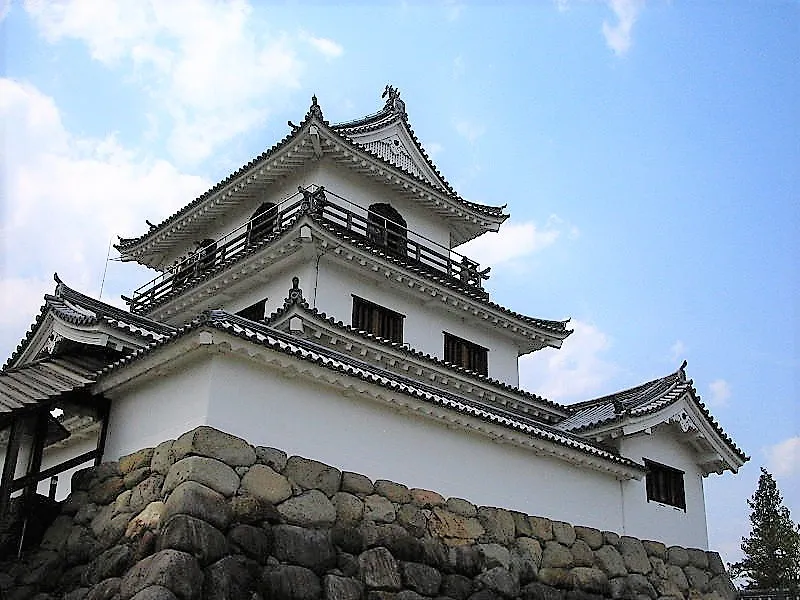
Shiroishi Castle

白石城·Shiroishi-jo

D Tourism Score 48/100
B Defense Score 73/100

Japan's first modern wooden castle reconstruction — and the only castle legally exempted from the Tokugawa one-castle rule.

#105 — Continued 100 Castles Reconstructed
Shiroishi Castle (白石城)
Photo:by Haseyu-/Wikimedia Commons/Public domain

Quick Facts

Quick Facts

Admission
¥400

¥200

Hours
09:00 – 17:00

Last entry 16:30

Nearest Station
Shiroishi Station (JR Tohoku Main Line)
Walk from Station
15 min walk
Time Needed
1–1.5 hours

Adult ¥400, children ¥200. Combined tickets with the Shiroishi City History Exploration Museum available.

Defense Overview

Defense Overview

Why Shiroishi Castle was hard to attack

This castle is hard to attack because it combines a raised core with defended outer space with enough defensive depth to slow attackers before the center.

An attacker would not get a simple direct approach to the center. They would have to cross water barriers or moat lines and push through successive outer areas before the core.

Overall score

73/100

Estimated range

67–79

Confidence

A

Strong multi-source support

This is a site-original comparison score for learning and comparison, not a reconstruction of one historical battle.

Radar view

Terrain 15/20 Entrance 14/20 Internal 16/20 Siege 14/20 Oversight 14/20
How this estimate was built+

This estimate combines broad terrain, approach, layout, and route-control signals. It is meant to explain the castle's defensive logic in plain English, not reconstruct a single historical attack.

Terrain Advantage

How much the terrain itself seems to help: height, slope, ridges, cliffs, water edges, and limited approach directions.

15/20

Entrance Defense

How awkward and dangerous the first entry looks: gates, bridge or moat crossings, chokepoints, and forced turns.

14/20

Internal Complexity

How hard it seems to keep pushing after entry: layered baileys, depth, compartmentalization, and repeated defensive lines.

16/20

Siege Endurance

A rough sense of long-hold potential: moats, water access, space, storage plausibility, and defensive staying power.

14/20

Strategic Oversight

How much the castle appears to command nearby roads, plains, rivers, basins, harbors, or town approaches.

14/20

Why Visit

Shiroishi Castle offers two things most castles cannot: a genuinely historically faithful wooden reconstruction (the first of the modern era) and a unique political story — the only castle in Japan formally exempted from the Tokugawa one-castle-per-domain law. For visitors traveling the Tohoku region, Shiroishi is an easy stop on the Tohoku Main Line and a more authentic experience than the concrete reconstructions that dominate the region. The castle town is quiet and genuine, the tower is small but well-presented, and the Katakura Kojuro connection gives the site real narrative weight.

Highlights

1

The Castle That Defied the Shogunate's One-Castle Rule

In 1615 the Tokugawa shogunate issued the ikoku-ichijo-rei — the 'one castle per domain' law — requiring all daimyo to demolish excess castles. Virtually every lord complied immediately. Shiroishi Castle is the extraordinary exception: the Katakura clan, senior retainers of the powerful Date clan of Sendai, were granted special permission to maintain it. This unique dispensation, granted only here, makes Shiroishi historically remarkable among Tohoku castles.
2

Japan's First Wooden Castle Reconstruction of the Modern Era

When Shiroishi Castle was reconstructed in 1995, it became Japan's first post-war wooden tenshu reconstruction — a milestone in Japan's ongoing castle preservation movement. Built from detailed historical records and original blueprints, the three-story wooden tower demonstrates what a genuine reconstruction effort looks like before the concrete era of the 1950s–70s established a different (and now controversial) precedent. The 1995 reconstruction set the modern standard.

3

Katakura Kojuro and the Date Clan's Shadow Castle

Shiroishi was the seat of Katakura Kojuro — one of the most famous samurai retainers in Japanese history, the trusted right-hand man of Date Masamune (the 'One-Eyed Dragon'). Known as 'Kojuro the Military Commander,' he managed Shiroishi while Masamune governed Sendai, making this castle the strategic southern anchor of the Date domain. Kojuro's loyalty and military genius are celebrated in countless historical dramas and novels.

Structure Details

Visitor tip

The wooden reconstruction is the main attraction — enter the tower and climb to the top floor for views over the Shiroishi valley. The tower interior explains the castle's unusual history as the only castle exempted from the one-castle law. The walk up from the station passes through a quiet provincial town that still feels authentic rather than tourist-developed.

Castle type

Hill castle

Hill-top flatland castle — built on Shiroyama, a low hill rising above the Shiroishi River valley, with the castle town spreading across flat terrain below

Layout type

Linked compound layout

Compound style — tiered compounds ascending the hill, with the main tower at the summit

Main tower

Wooden reconstruction (1995) — Japan's first post-war wooden tenshu reconstruction, built from historical records and original Edo-period blueprints. Three stories, historically accurate to the original Edo-period tower.

16m3 floors

Stone walls

Natural stone stacking

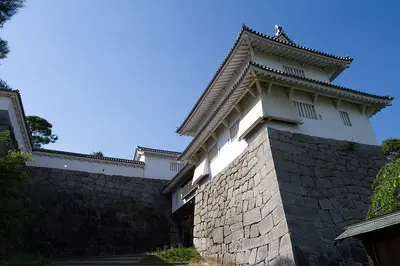
Stone walls of nozurazumi style — natural undressed stones fitted without mortar — climb the hillside in terraced layers. While modest in height compared to major western Japan castles, they are well-preserved and give an accurate sense of a middle-ranking daimyo retainer's castle in the early Edo period.

Moats

A dry moat (karabori) system surrounded the castle's lower reaches. The hilltop position reduced the need for elaborate water defenses, relying instead on natural slopes and stone walls.

Key defensive features

Hill Elevation

The castle sits on Shiroyama hill, giving defenders a commanding view of the Shiroishi River plain and the approaches from the south. Any army advancing up the Tohoku road (Oshu Kaido) would be visible from the tower hours before arriving.

Stone Wall Terraces

The hillside is stepped into multiple walled terraces, requiring attackers to breach successive stone walls to advance upward — a time-consuming and costly process under fire from the defenders above.

The Story of Shiroishi Castle

Originally built 1591 / Gamo Ujisato (initial construction); Katakura Kojuro (redevelopment)
Current form 1995 / Shiroishi City (wooden reconstruction)
    1591

    A castle is first established at Shiroyama by Gamo Ujisato during the chaotic post-Odawara campaign period, as Toyotomi Hideyoshi reorganizes Tohoku's feudal geography.

    1600

    Katakura Kojuro — Date Masamune's most trusted retainer — takes control of Shiroishi and begins developing it as the southern anchor of the Date domain. After Sekigahara, Shiroishi is confirmed as Kojuro's seat.

    1615

    The Tokugawa shogunate issues the one-castle-per-domain law (ikoku-ichijo-rei). Shiroishi Castle is granted a unique exemption — the only such exemption in Japan — allowing the Katakura clan to maintain it as an auxiliary castle to Sendai.

    1868

    During the Boshin War, Shiroishi Castle serves as the meeting place for the Ouetsu Reppan Domei — a coalition of northern domains resisting the Meiji imperial forces. The meeting that formed this northern alliance takes place within the castle walls.

    1874

    The main tower and remaining castle structures are demolished under Meiji government orders. The hill is converted to a public park.

    1995

    Shiroishi City completes the reconstruction of the main tower in wood — Japan's first wooden tenshu reconstruction of the post-war era, setting a new standard for historically faithful castle restoration.

In Pop Culture

TV

Numerous NHK taiga dramas featuring Date Masamune and the Katakura clan

Katakura Kojuro is a recurring figure in historical dramas set in the Sengoku and early Edo periods, usually portrayed as Date Masamune's indispensable right-hand man.

Did You Know?

  • Shiroishi City is famous for Shiroishi umen — a local thin wheat noodle, low in calories, that has been produced in the castle town since the Edo period. Legend credits Katakura Kojuro with encouraging its production. The noodle is now the city's most celebrated food product.
  • The 1995 wooden reconstruction was built without using nails in the traditional Japanese carpentry style (kiwarigumi) wherever structurally possible, faithfully reproducing the construction techniques of the original Edo-period tower.
  • Shiroishi Castle served as the venue for the 1868 formation meeting of the Ouetsu Reppan Domei — a northern alliance of 31 domains that represented Japan's most significant organized resistance to the Meiji imperial restoration. The alliance ultimately failed, but the castle's role in that final stand of the old order gives it a historically poignant significance.

Score Breakdown

Tourism Score

D 48/100
  • Accessibility 10 /20
  • Foreign-Friendly 8 /20
  • Historical Value 13 /20
  • Visual Impact 11 /20
  • Facilities 6 /20

Defense Score

B 73/100
  • Terrain Advantage 15 /20
  • Entrance Defense 14 /20
  • Internal Complexity 16 /20
  • Siege Endurance 14 /20
  • Strategic Oversight 14 /20

Planning Your Visit

Best Time to Visit

Cherry blossom season (late April — slightly later than central Japan due to Tohoku's climate) for peak visual appeal. Autumn (October) for clear mountain views. Avoid January–February when snow can make the hill approach slippery.

Time Needed

1–1.5 hours

Insider Tip

Try the local shiroishi umen noodles in the castle town before or after your visit — several restaurants near the station serve this regional specialty. It is one of those genuinely local foods that almost no foreign visitor encounters, and the castle connection gives it an added context.

Map

Getting There

Nearest station: Shiroishi Station (JR Tohoku Main Line)
Walk from station: 15 min walk
Parking: Free parking available at the castle grounds. Easy access by car from Route 4.
Accessible with a JR Pass

Admission

Adult¥400
Child¥200

Adult ¥400, children ¥200. Combined tickets with the Shiroishi City History Exploration Museum available.

Opening Hours

Open09:00 – 17:00
Last entry16:30

Apr–Oct: 9:00–17:00. Nov–Mar: 9:00–16:00.

Facilities

  • – English guides
  • – Audio guide
  • – Wheelchair access
  • ✓ Restrooms
  • ✓ Gift shop
  • ✓ Food nearby

Nearby Castles

Featured in collections

FAQ

Frequently Asked Questions

How do I get to Shiroishi Castle?

The nearest station is Shiroishi Station (JR Tohoku Main Line). From there it is about 15 minutes on foot.

How much does Shiroishi Castle cost to enter?

Adult admission is ¥400 and child admission is ¥200.

Is Shiroishi Castle worth visiting?

Shiroishi Castle offers two things most castles cannot: a genuinely historically faithful wooden reconstruction (the first of the modern era) and a unique political story — the only castle in Japan formally exempted from the Tokugawa one-castle-per-domain law. For visitors traveling the Tohoku region, Shiroishi is an easy stop on the Tohoku Main Line and a more authentic experience than the concrete reconstructions that dominate the region. The castle town is quiet and genuine, the tower is small but well-presented, and the Katakura Kojuro connection gives the site real narrative weight.

What are the opening hours of Shiroishi Castle?

09:00 to 17:00, last entry 16:30.

How long should I spend at Shiroishi Castle?

Plan for about 1–1.5 hours, depending on how closely you want to explore the grounds.