Nihonmatsu Castle

二本松城·Nihonmatsu-jo

D Tourism Score 45/100
B Defense Score 79/100

The castle where children fought and died for a losing cause — and where chrysanthemums now bloom in their memory each autumn.

#11 — 100 Famous Castles Ruins
Nihonmatsu Castle (二本松城)
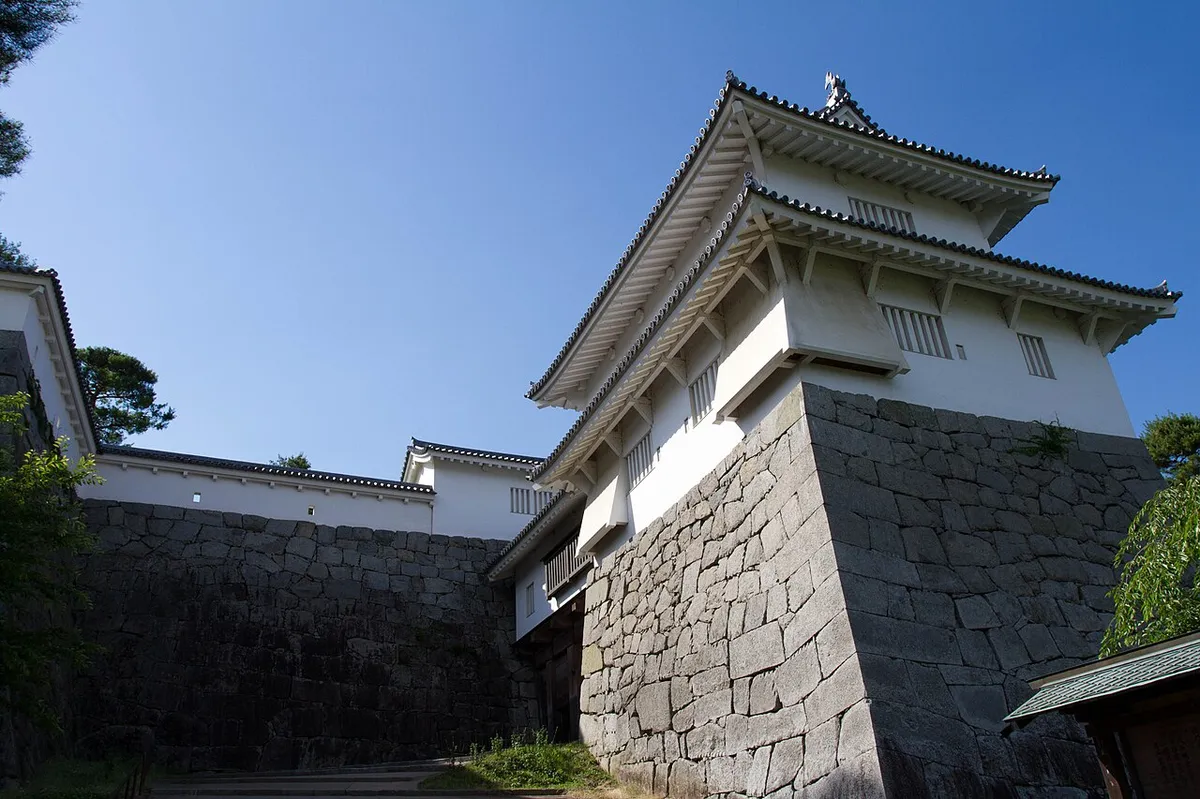
Photo:baku13/Wikimedia Commons/CC BY-SA 2.1 jp

Quick Facts

Quick Facts

Admission
Free Free
Hours
00:00 – 24:00
Nearest Station
Nihonmatsu Station (JR Tohoku Main Line)
Walk from Station
20 min walk
Time Needed
1-1.5 hours during festival season; 45 minutes otherwise

Castle ruins (Nihonmatsu-jo Historic Park) are completely free. The adjacent Nihonmatsu City Museum charges a small fee for special exhibitions.

Defense Overview

Defense Overview

Why Nihonmatsu Castle was hard to attack

This castle is hard to attack because it combines a raised core with defended outer space with a controlled route inward.

An attacker would not get a simple direct approach to the center. They would have to cross water barriers or moat lines, approach through at least some constrained entry space, and face more defensive depth after the first line.

Overall score

79/100

Estimated range

73–85

Confidence

B

Usable estimate with some inference

This is a site-original comparison score for learning and comparison, not a reconstruction of one historical battle.

Radar view

Terrain 15/20 Entrance 15/20 Internal 17/20 Siege 16/20 Oversight 16/20
How this estimate was built+

This estimate combines broad terrain, approach, layout, and route-control signals. It is meant to explain the castle's defensive logic in plain English, not reconstruct a single historical attack.

Terrain Advantage

How much the terrain itself seems to help: height, slope, ridges, cliffs, water edges, and limited approach directions.

15/20

Entrance Defense

How awkward and dangerous the first entry looks: gates, bridge or moat crossings, chokepoints, and forced turns.

15/20

Internal Complexity

How hard it seems to keep pushing after entry: layered baileys, depth, compartmentalization, and repeated defensive lines.

17/20

Siege Endurance

A rough sense of long-hold potential: moats, water access, space, storage plausibility, and defensive staying power.

16/20

Strategic Oversight

How much the castle appears to command nearby roads, plains, rivers, basins, harbors, or town approaches.

16/20
Why Visit

Nihonmatsu Castle is worth visiting specifically during the Chrysanthemum Festival (October to mid-November) — the combination of the atmospheric ruins and spectacular floral displays creates a uniquely Japanese aesthetic experience. Outside festival season it is a quiet ruins site for dedicated enthusiasts. The Boshin War history, particularly the Shonen-tai story, gives the site emotional depth that purely architectural castle visits often lack.

Highlights

1

The Boys Who Defended It

During the Boshin War of 1868, Nihonmatsu Castle was defended partly by the 'Nihonmatsu Shonen-tai' — young boys as young as 12 years old who took up arms when adult soldiers were unavailable. Many died in the fighting. This poignant episode, similar to the Aizu Byakkotai story, has made the castle a site of somber reflection on the end of the samurai era.

2

Chrysanthemum Festival

Nihonmatsu is nationally famous for its annual Chrysanthemum Festival (Nihonmatsu Kiku Ningyo Festival) each autumn — one of Japan's most celebrated flower festivals. Elaborate human-sized chrysanthemum doll displays are installed throughout the castle grounds, transforming the ruins into a spectacular floral exhibition that draws visitors from across Japan.

3

Kasumiga-jo: The Mist Castle

Nihonmatsu Castle is poetically known as 'Kasumiga-jo' (Mist Castle) — on autumn and spring mornings, mist rises from the Abukuma River basin below, enveloping the mountain in cloud. The castle ruins emerging from morning mist create one of Tohoku's most atmospheric natural phenomena.

Structure Details

Visitor tip

The best time to visit is during the Chrysanthemum Festival in October–November, when the grounds are filled with spectacular floral displays. Otherwise this is a quiet ruins site for enthusiasts. The climb to the summit takes about 20 minutes on foot and offers good views. The lower gate area is the most visually rewarding section for a quick visit.

Castle type

Hill castle

Hill-top flatland castle — built on a low mountain above the Abukuma River valley, with the town below and mountain forest above

Layout type

Linked compound layout

Compound style — main compound on the mountain summit with lower compounds stepping down the slopes

Main tower

Ruins only — all wooden structures are lost. Stone walls, earthworks, and the lower gate area survive in various states of preservation.

Stone walls

Natural stone stacking

Stone walls survive in several sections of the castle, particularly around the lower compound gate area and portions of the summit compound. The lower gate area has been partially restored and features the most photogenic surviving stonework.

Moats

A moat and earthwork system surrounded the lower castle compound. Remnants of the outer moat survive near the castle park entrance.

Key defensive features

Mountain Summit Position

The main compound sits atop a forest-covered mountain with steep slopes on multiple sides. The elevation provides clear views over the Abukuma River valley and the approaches from north and south along the Tohoku highway.

Abukuma River Valley Control

The castle's position above the Abukuma River allowed the Nihonmatsu clan to control movement along one of Tohoku's most important river valleys and road corridors.

The Story of Nihonmatsu Castle

Originally built 1414 / Nihonmatsu Mitsumori
Current form 1643 / Niwa clan
    1414

    The Nihonmatsu clan builds the first castle on Mount Shiroha above the Abukuma River, establishing control over this strategic location on the Oshu Highway — the great road north into Tohoku.

    1586

    Date Masamune attacks and destroys the Nihonmatsu clan, incorporating their territory into the growing Date domain. The castle passes through several lords during the turbulent late Sengoku period.

    1643

    The Niwa clan are assigned Nihonmatsu domain and spend the next decades expanding and improving the castle into its final form, including the lower compound gate structures that partially survive today.

    1868

    During the Boshin War, the Niwa clan sides with the pro-shogunate Northern Alliance. Imperial forces attack and after fierce resistance — including the tragic deployment of the Shonen-tai youth fighters — the castle falls and burns. Most structures are destroyed in the fighting and subsequent fire.

    1998

    Partial restoration of the castle ruins site begins, including stonework repairs and trail improvement, creating the current Historic Park designation.

In Pop Culture

documentary

Nihonmatsu Shonen-tai documentaries

The story of the young boys who defended the castle in 1868 has been covered in multiple historical documentaries and educational programs, particularly around the anniversary of the Boshin War.

Did You Know?

  • The youngest confirmed defender of Nihonmatsu Castle in 1868 was 12 years old — children had been assigned to the Shonen-tai as emergency mobilization when the domain's adult warriors were insufficient. Several died in the fighting.
  • The Chrysanthemum Festival at Nihonmatsu has been held annually since the Edo period — the domain's lords were passionate chrysanthemum cultivators, and this tradition became one of Japan's most celebrated regional festivals.
  • Nihonmatsu sits on the old Oshu Highway (Oshu Kaido) — the main road connecting Edo with northern Tohoku — making control of the castle critically important for managing traffic and commerce through the region.
  • The castle's poetic name 'Kasumiga-jo' (Mist Castle) is shared with Tottori Castle — both castles were known for their dramatic morning mist phenomena, leading to potential confusion in historical records.

Score Breakdown

Tourism Score

D 45/100
  • Accessibility 7 /20
  • Foreign-Friendly 6 /20
  • Historical Value 11 /20
  • Visual Impact 12 /20
  • Facilities 9 /20

Defense Score

B 79/100
  • Terrain Advantage 15 /20
  • Entrance Defense 15 /20
  • Internal Complexity 17 /20
  • Siege Endurance 16 /20
  • Strategic Oversight 16 /20

Planning Your Visit

Best Time to Visit

Chrysanthemum Festival (late October to mid-November) is the clear best time — this is when the site transforms from quiet ruins to a nationally acclaimed event.

Time Needed

1-1.5 hours during festival season; 45 minutes otherwise

Insider Tip

The festival doll installations are placed throughout the castle grounds including at the lower gate area and partway up the mountain trail — you don't need to climb to the summit to see the main displays. The festival runs for approximately three weeks and is announced annually on the Nihonmatsu city website.

Map

Getting There

Nearest station: Nihonmatsu Station (JR Tohoku Main Line)
Walk from station: 20 min walk
Parking: Free parking available at the castle park entrance.
Accessible with a JR Pass

Admission

Free

Castle ruins (Nihonmatsu-jo Historic Park) are completely free. The adjacent Nihonmatsu City Museum charges a small fee for special exhibitions.

Opening Hours

Open00:00 – 24:00

The ruins park is open at all times. Note the castle mountain trail may be closed during icy winter conditions (December–February).

Facilities

  • – English guides
  • – Audio guide
  • – Wheelchair access
  • ✓ Restrooms
  • – Gift shop
  • – Food nearby

Nearby Castles

Featured in collections

FAQ

Frequently Asked Questions

How do I get to Nihonmatsu Castle?

The nearest station is Nihonmatsu Station (JR Tohoku Main Line). From there it is about 20 minutes on foot.

How much does Nihonmatsu Castle cost to enter?

Nihonmatsu Castle is free to enter.

Is Nihonmatsu Castle worth visiting?

Nihonmatsu Castle is worth visiting specifically during the Chrysanthemum Festival (October to mid-November) — the combination of the atmospheric ruins and spectacular floral displays creates a uniquely Japanese aesthetic experience. Outside festival season it is a quiet ruins site for dedicated enthusiasts. The Boshin War history, particularly the Shonen-tai story, gives the site emotional depth that purely architectural castle visits often lack.

What are the opening hours of Nihonmatsu Castle?

00:00 to 24:00.

How long should I spend at Nihonmatsu Castle?

Plan for about 1-1.5 hours during festival season; 45 minutes otherwise, depending on how closely you want to explore the grounds.