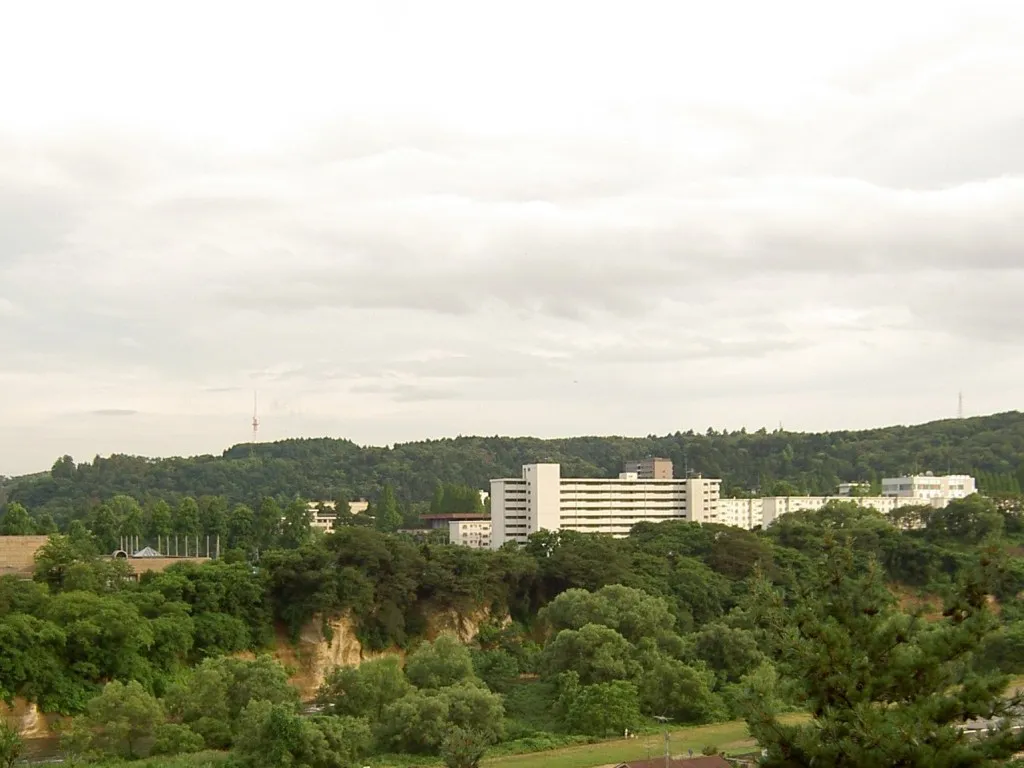
Sendai Castle

仙台城·Sendai-jo

C Tourism Score 65/100
A Defense Score 83/100

The mountain stronghold of the One-Eyed Dragon — where Date Masamune's equestrian statue surveys the city he founded, from ruins that speak of a castle that never needed a main tower.

#7 — 100 Famous Castles Ruins
Sendai Castle (仙台城)
Photo:Caveman2/Wikimedia Commons/Public domain

Quick Facts

Quick Facts

Admission
Free Free
Hours
00:00 – 24:00
Nearest Station
Sendai Station (JR Tohoku Shinkansen / Multiple JR lines)
Walk from Station
40 min walk

Bus also available

Time Needed
1-1.5 hours

Castle ruins/grounds free, 24h access. Separate Aoba Castle Museum: Adult ¥770 (not included).

Defense Overview

Defense Overview

Why Sendai Castle was hard to attack

This castle is hard to attack because it uses high ground and difficult natural access to deny attackers an easy approach.

An attacker would first have to fight the site itself before reaching the main defenses. They would have to cross water barriers or moat lines and push through successive outer areas before the core.

Overall score

83/100

Estimated range

77–89

Confidence

B

Usable estimate with some inference

This is a site-original comparison score for learning and comparison, not a reconstruction of one historical battle.

Radar view

Terrain 19/20 Entrance 17/20 Internal 16/20 Siege 14/20 Oversight 17/20
How this estimate was built+

This estimate combines broad terrain, approach, layout, and route-control signals. It is meant to explain the castle's defensive logic in plain English, not reconstruct a single historical attack.

Terrain Advantage

How much the terrain itself seems to help: height, slope, ridges, cliffs, water edges, and limited approach directions.

19/20

Entrance Defense

How awkward and dangerous the first entry looks: gates, bridge or moat crossings, chokepoints, and forced turns.

17/20

Internal Complexity

How hard it seems to keep pushing after entry: layered baileys, depth, compartmentalization, and repeated defensive lines.

16/20

Siege Endurance

A rough sense of long-hold potential: moats, water access, space, storage plausibility, and defensive staying power.

14/20

Strategic Oversight

How much the castle appears to command nearby roads, plains, rivers, basins, harbors, or town approaches.

17/20

Why Visit

Sendai Castle is primarily a historical atmosphere and viewpoint destination rather than a buildings-and-exhibits experience. The stone walls, the dramatic cliff-edge position, and the Date Masamune statue create a genuinely evocative visit. The views over Sendai city from the summit are the best in the region. For those interested in the Sengoku period and the colorful figure of Date Masamune, this is a meaningful pilgrimage site.

Highlights

1

Date Masamune: The One-Eyed Dragon

Sendai Castle was built by Date Masamune, the most famous warlord of the Tohoku region and one of the most colorful figures of the Sengoku period. Known as the 'One-Eyed Dragon' for losing an eye to smallpox as a child, Masamune unified much of Tohoku through brilliant military campaigns before Toyotomi Hideyoshi forced him to submit. His equestrian statue dominates the castle hill — one of the most dramatic samurai monuments in Japan.
2

Mountain Command, City Views

Sendai Castle (Aoba Castle) sits atop Mount Aoba, a steep forested hill rising directly above the city. The views from the castle grounds over Sendai city and the mountains beyond are spectacular on clear days. The mountain position also made the castle one of the most defensively formidable sites in Tohoku — though paradoxically, no main tower was ever built here.

3

No Tower Was Ever Built

Unlike most castle sites, Sendai Castle never had a main tower (tenshu). Date Masamune deliberately chose not to build one — possibly to avoid demonstrating ambitions that would alarm the Tokugawa shogunate, or possibly because the mountain position itself was deemed sufficient. What stood were extensive stone walls, multiple turrets, gates, and palatial residence buildings, all now lost.

4

Surviving Stone Walls

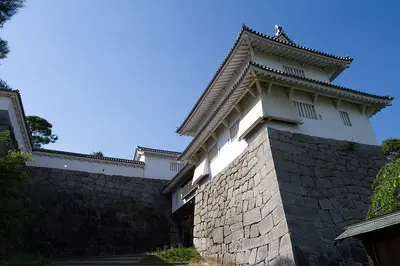
Though all wooden structures are gone, significant sections of the original stone walls survive across the mountain summit, offering a direct tactile connection to the Date clan's construction. The main compound's stone walls — some sections still reaching several meters high — give a clear sense of the castle's original scale.

Structure Details

Visitor tip

The Date Masamune equestrian statue is the centerpiece of any visit — an imposing bronze figure on horseback at the main compound overlook. The views from this point over Sendai city are the visit's highlight. Walk the surviving stone wall sections for the best historical atmosphere. The adjacent Aoba Castle Museum provides good historical context if you want more detail.

Castle type

Mountain castle

Mountain castle — built on Mount Aoba, rising steeply above the city of Sendai

Layout type

Linked compound layout

Compound style — main compound and subsidiary compounds following the mountain ridgeline

Main tower

No main tower was ever built — Date Masamune deliberately omitted the tenshu (main tower) from the castle's design. Only stone walls, turrets, gates, and palatial residence buildings were constructed, all of which are now lost.

Stone walls

Natural stone stacking

The surviving stone walls of Sendai Castle represent some of the finest remaining Tohoku castle stonework. Sections of the Honmaru's north and east walls still stand several meters high, showing the skilled construction that Date Masamune's builders achieved on challenging mountain terrain.

Key defensive features

Mount Aoba Vertical Defense

The castle sits on the sheer escarpment of Mount Aoba — the cliffs drop dramatically on the north and west sides, creating natural defensive walls that no engineering could improve upon. The approach from the city below is steep and exposed.

Hirose River Natural Moat

The Hirose River loops around the base of Mount Aoba, creating a natural moat on multiple sides. Combined with the mountain cliffs, the castle was surrounded by natural barriers requiring an attacker to find specific, limited approach routes.

Multi-Compound Mountain Layout

The castle compounds stepped down the mountain in layers — even if an attacker reached one compound, the next was higher and the defenders had the uphill advantage. The main compound at the summit was the final and most difficult position.

The Story of Sendai Castle

Originally built 1601 / Date Masamune
Current form 1601 / Date Masamune
    1601

    Date Masamune completes the move of his domain headquarters to the new castle on Mount Aoba, founding the city of Sendai. The castle's design deliberately omits the main tower — an unusual choice that may reflect Masamune's calculation that the mountain position made it unnecessary, or political caution toward the Tokugawa.

    1615

    The Tokugawa shogunate's 'One Castle per Domain' law (Ikkoku Ichijo Rei) requires each domain to demolish all but one castle. Sendai Castle is retained as the Date domain's primary castle.

    1868

    During the Boshin War, the Date clan initially supports the pro-shogunate Northern Alliance but switches allegiance as Imperial forces advance. The castle is surrendered without fighting.

    1882

    Most of the surviving castle buildings are demolished by the Meiji government or fall into disrepair. The stone walls and earthworks remain.

    1931

    The iconic bronze equestrian statue of Date Masamune is installed at the castle summit, becoming the defining image of the site.

    2011

    The Great East Japan Earthquake causes damage to sections of the castle's stone walls, requiring repair and stabilization work that continues for several years.

In Pop Culture

TV

Various Date Masamune historical dramas

Date Masamune is a perennially popular figure in Japanese historical drama. NHK's 1987 Taiga drama 'Dokuganryu Masamune' (starring Ken Watanabe) dramatized his life and featured the castle prominently.

Did You Know?

  • Date Masamune lost his right eye to smallpox as a child but reportedly had the diseased eye removed himself, earning the nickname 'Dokuganryu' (One-Eyed Dragon). Despite this, he became one of the most feared military commanders of his era.
  • The equestrian statue installed in 1931 was melted down for metal during WWII and the current statue is a 1964 replacement — ironically, the icon most associated with the castle is a postwar recreation.
  • Sendai Castle is locally called 'Aoba-jo' (Blue Leaf Castle) after Mount Aoba (Blue Leaf Mountain) — the 'Sendai Castle' designation is the formal historical name used outside the city.
  • Date Masamune sent a diplomatic mission to Europe via Mexico in 1613 (the Keichō Embassy) — a remarkably ambitious diplomatic initiative that reached audiences with the Pope and the Spanish King. The mission failed to achieve its goals but remains evidence of Masamune's extraordinary ambition.

Score Breakdown

Tourism Score

C 65/100
  • Accessibility 10 /20
  • Foreign-Friendly 11 /20
  • Historical Value 14 /20
  • Visual Impact 16 /20
  • Facilities 14 /20

Defense Score

A 83/100
  • Terrain Advantage 19 /20
  • Entrance Defense 17 /20
  • Internal Complexity 16 /20
  • Siege Endurance 14 /20
  • Strategic Oversight 17 /20

Planning Your Visit

Best Time to Visit

Clear days year-round for views; cherry blossoms in April are lovely. Autumn foliage on Mount Aoba is excellent in late October. Winter adds atmosphere but the mountain roads can be slippery.

Time Needed

1-1.5 hours

Insider Tip

Walk past the Date Masamune statue to the northern cliff edge — the sheer drop and view of the Hirose River below shows exactly why the mountain was chosen as a castle site. Then visit the Sendai City Museum at the Ninomaru site (bottom of the hill) for the best coverage of Date clan history. The Loople bus makes combining multiple Sendai sights easy.

Map

Getting There

Nearest station: Sendai Station (JR Tohoku Shinkansen / Multiple JR lines)
Walk from station: 40 min walk
Bus: Loople Sendai sightseeing bus stops at Aoba Castle (stop: Aoba-jo-ato). ¥260 per ride or ¥620 all-day pass. Strongly recommended over walking as the castle is uphill.
Parking: Paid parking available at the castle summit. Access road from the city.
Accessible with a JR Pass

Admission

Free

Castle ruins/grounds free, 24h access. Separate Aoba Castle Museum: Adult ¥770 (not included).

Opening Hours

Open00:00 – 24:00

Castle ruins are open at all times year-round. The Aoba Castle Museum on-site is open 09:00–17:00. Some facilities may have seasonal closures.

Facilities

  • – English guides
  • – Audio guide
  • – Wheelchair access
  • ✓ Restrooms
  • ✓ Gift shop
  • – Food nearby

Nearby Castles

Featured in collections

FAQ

Frequently Asked Questions

How do I get to Sendai Castle?

The nearest station is Sendai Station (JR Tohoku Shinkansen / Multiple JR lines). From there it is about 40 minutes on foot. Loople Sendai sightseeing bus stops at Aoba Castle (stop: Aoba-jo-ato). ¥260 per ride or ¥620 all-day pass. Strongly recommended over walking as the castle is uphill.

How much does Sendai Castle cost to enter?

Sendai Castle is free to enter.

Is Sendai Castle worth visiting?

Sendai Castle is primarily a historical atmosphere and viewpoint destination rather than a buildings-and-exhibits experience. The stone walls, the dramatic cliff-edge position, and the Date Masamune statue create a genuinely evocative visit. The views over Sendai city from the summit are the best in the region. For those interested in the Sengoku period and the colorful figure of Date Masamune, this is a meaningful pilgrimage site.

What are the opening hours of Sendai Castle?

00:00 to 24:00.

How long should I spend at Sendai Castle?

Plan for about 1-1.5 hours, depending on how closely you want to explore the grounds.