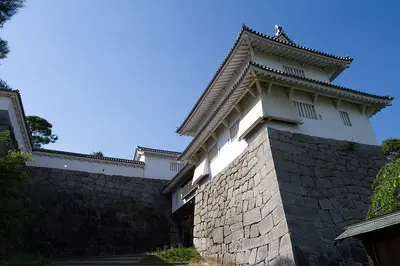
Yonezawa Castle

米沢城·Yonezawa-jo

D Tourism Score 50/100
C Defense Score 65/100

A shrine stands where the Uesugi clan's great castle once rose — the ghost of one of Japan's most celebrated samurai dynasties, preserved in cherry blossoms and spiritual memory.

#109 — Continued 100 Castles Ruins
Yonezawa Castle (米沢城)
Photo:Syced/Wikimedia Commons/CC0

Quick Facts

Quick Facts

Admission
Free Free
Hours
00:00 – 23:59
Nearest Station
Yonezawa Station (JR Ou Main Line / Yamagata Shinkansen)
Walk from Station
20 min walk

Bus also available

Time Needed
1.5–2 hours including the museum

Castle grounds (Matsugasaki Park) are freely accessible at all times. Uesugi Shrine on the grounds charges no admission. The nearby Uesugi Museum charges a small fee.

Defense Overview

Defense Overview

Why Yonezawa Castle was hard to attack

This castle is hard to attack because it combines managed outer defenses on relatively level ground with enough defensive depth to slow attackers before the center.

An attacker would not simply arrive at the center on open flat ground. They would have to cross water barriers or moat lines and push through successive outer areas before the core.

Overall score

65/100

Estimated range

59–71

Confidence

B

Usable estimate with some inference

This is a site-original comparison score for learning and comparison, not a reconstruction of one historical battle.

Radar view

Terrain 10/20 Entrance 11/20 Internal 15/20 Siege 16/20 Oversight 13/20
How this estimate was built+

This estimate combines broad terrain, approach, layout, and route-control signals. It is meant to explain the castle's defensive logic in plain English, not reconstruct a single historical attack.

Terrain Advantage

How much the terrain itself seems to help: height, slope, ridges, cliffs, water edges, and limited approach directions.

10/20

Entrance Defense

How awkward and dangerous the first entry looks: gates, bridge or moat crossings, chokepoints, and forced turns.

11/20

Internal Complexity

How hard it seems to keep pushing after entry: layered baileys, depth, compartmentalization, and repeated defensive lines.

15/20

Siege Endurance

A rough sense of long-hold potential: moats, water access, space, storage plausibility, and defensive staying power.

16/20

Strategic Oversight

How much the castle appears to command nearby roads, plains, rivers, basins, harbors, or town approaches.

13/20

Why Visit

Yonezawa Castle as a physical site is minimal — no tower, few stone remains, a park and a shrine. But as a historical pilgrimage, it rewards visitors who care about the Uesugi clan story: Kenshin the 'God of War,' Kagekatsu his heir, Naoe Kanetsugu the strategist, and Uesugi Yozan the reformer. The late April Uesugi Festival, with costumed processions and battle reenactments, is one of Tohoku's best samurai heritage events. The Uesugi Museum near the shrine is well worth a visit. Pair with Yonezawa beef for a genuinely satisfying regional experience.

Highlights

1

Birthplace of Uesugi Kenshin — and Naoe Kanetsugu

Yonezawa Castle is inextricably tied to the Uesugi clan — one of the most celebrated samurai families in Japanese history. Uesugi Kenshin, the 'God of War' who rivaled Takeda Shingen across five legendary battles at Kawanakajima, was born near here. His successor Uesugi Kagekatsu and the brilliant strategist Naoe Kanetsugu administered Yonezawa domain from this very castle — giving the site an extraordinary density of famous historical figures.
2

A Castle Transformed into a Shrine

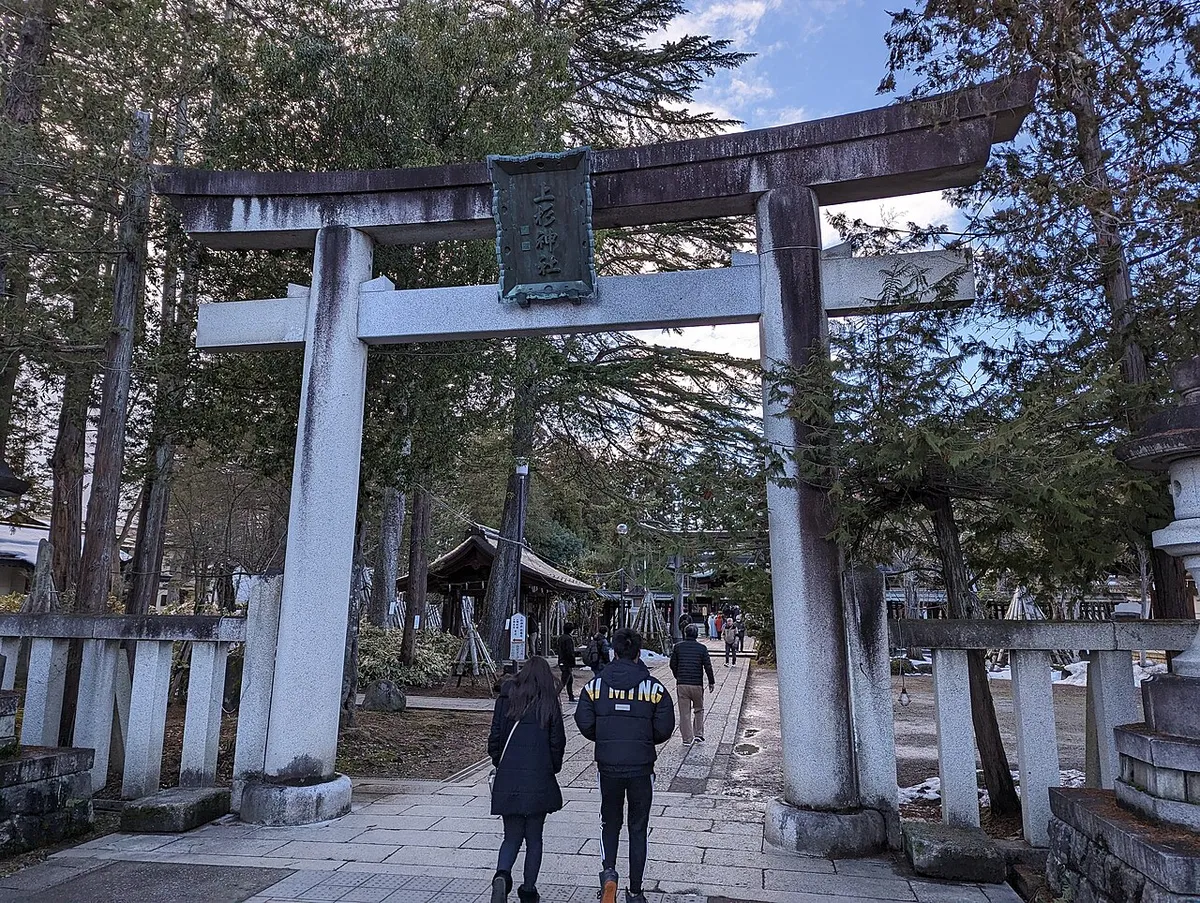
Where the main tower once stood, Uesugi Shrine now occupies the honmaru (main compound). Built to enshrine Uesugi Kenshin, the shrine gives the ruins a living spiritual function that most castle ruins lack. Visiting Yonezawa Castle today means visiting an active Shinto shrine on ground where one of Japan's most celebrated samurai clans once held power — a layering of history and living religion that is deeply Japanese.

3

Uesugi Yozan: The Reformer Lord

In the late Edo period, Yonezawa domain faced near-bankruptcy. Uesugi Yozan (Harunori), who took over a domain drowning in debt, implemented sweeping economic and administrative reforms — cutting his own salary by 90%, encouraging new industries, and transforming a failing domain into a model of Edo-period governance. Yozan is remembered as one of Japan's greatest reforming administrators and is studied in Japanese business schools to this day. John F. Kennedy quoted him in a speech. The castle grounds honor his memory.

Structure Details

Visitor tip

There is very little to see in terms of castle architecture — no tower, no stone walls, minimal surviving structures. The visit is about the Uesugi heritage, the shrine, and the park. Stop at Uesugi Shrine to pay respects (and appreciate that you are standing where Uesugi Kenshin's family once lived), then visit the Uesugi Shrine Treasure House and the nearby Uesugi Museum for historical context. The park is beautiful in cherry blossom season.

Castle type

Flatland castle

Flatland castle — built entirely on flat terrain in the Yonezawa basin, relying on moats and earthworks rather than natural elevation

Layout type

Concentric layout

Enclosure style — concentric moats surrounding the main compound, typical of flatland castle design

Main tower

Ruins only — all wooden structures including the main tower were demolished after the Meiji Restoration. The former honmaru (main compound) is now occupied by Uesugi Shrine. Stone foundations and moat earthworks survive.

Stone walls

Earthen walls

Yonezawa Castle was primarily defended by water moats and earthen embankments rather than the stone walls typical of western Japan castles. The flat Yonezawa basin offered no natural elevation, making water management the key defensive strategy. Surviving earthworks and moat traces can still be seen in the park.

Moats

A concentric moat system — inner, middle, and outer moats — surrounded the castle grounds. The moats connected to the Matsukawa River system, using the local water network for defense. Portions of the inner moat survive and are visible in the modern park.

Key defensive features

Concentric Water Moats

Three rings of water moats surrounded the castle, fed by the Matsukawa River system. The flat terrain meant these moats were the primary defensive barrier — any attacker had to cross open water under fire multiple times to reach the main compound.

Earthen Embankments

High rammed-earth embankments topped with wooden palisades lined the inner edges of each moat — a defensive style suited to the flat, moat-based castle design of the Tohoku plains.

The Story of Yonezawa Castle

Originally built 1238 / Nagai Shigetoki (initial fortification); greatly expanded under Uesugi clan
Current form 1601 / Uesugi Kagekatsu (transferred to Yonezawa from Aizu)
    1238

    A fortification is first established at the Yonezawa site by the Nagai clan, establishing a strategic presence in the Yonezawa basin in Dewa Province.

    1601

    After the Battle of Sekigahara, Uesugi Kagekatsu — Uesugi Kenshin's adopted heir — is reduced from 1.2 million koku (Aizu) to 300,000 koku and transferred to Yonezawa. The Uesugi clan rebuilds and expands Yonezawa Castle as their new seat.

    1767

    Uesugi Yozan (Harunori) becomes lord of Yonezawa domain at age 17, inheriting a domain with debts nine times its annual income. He begins sweeping reforms — cutting his own stipend drastically, encouraging silk and lacquerware industries, and personally farming castle grounds to set an example.

    1830

    By the time of Yozan's death (1822) and subsequent decades, Yonezawa domain has transformed from near-bankrupt to solvent, and Yozan is celebrated as one of Japan's greatest reforming administrators. His management philosophy is still studied in Japanese business education.

    1873

    The castle is demolished under Meiji orders. Uesugi Shrine is established on the former honmaru to enshrine Uesugi Kenshin, preserving the site's spiritual connection to the clan.

In Pop Culture

TV

Tenchijin (NHK Taiga Drama, 2009)

The 2009 NHK taiga drama focused on Naoe Kanetsugu, the Uesugi clan's famous strategist, bringing major attention to Yonezawa and its castle history.

Did You Know?

  • John F. Kennedy quoted Uesugi Yozan in a 1960 speech during his presidential campaign: 'The people in the world are not mine alone; they belong to the world.' Kennedy used Yozan as an example of enlightened leadership — an extraordinary transnational tribute to an Edo-period Japanese domain lord.
  • Yonezawa beef (Yonezawa-gyu) is one of Japan's three great wagyu beef varieties, alongside Kobe and Matsusaka. The cattle-raising tradition in Yonezawa dates to the Uesugi era, when the clan encouraged beef production as part of their agricultural development programs.
  • Uesugi Kenshin famously sent salt to his rival Takeda Shingen when Shingen's domain was embargoed by the Hojo and Imagawa clans — a legendary act of chivalry between enemies that has made 'Kenshin sent salt' a Japanese idiom for honorable dealing with adversaries.

Score Breakdown

Tourism Score

D 50/100
  • Accessibility 10 /20
  • Foreign-Friendly 9 /20
  • Historical Value 16 /20
  • Visual Impact 9 /20
  • Facilities 6 /20

Defense Score

C 65/100
  • Terrain Advantage 10 /20
  • Entrance Defense 11 /20
  • Internal Complexity 15 /20
  • Siege Endurance 16 /20
  • Strategic Oversight 13 /20

Planning Your Visit

Best Time to Visit

Late April for cherry blossoms and the Uesugi Festival simultaneously — this is when the park is at its most spectacular and the cultural programming richest. Autumn (October–November) for foliage color without crowds.

Time Needed

1.5–2 hours including the museum

Insider Tip

Eat Yonezawa beef in the castle town. This is one of Japan's three great wagyu varieties and far less known internationally than Kobe beef — restaurants near the castle serve it at reasonable prices compared to what you would pay in Tokyo. The combination of samurai history and exceptional beef makes Yonezawa a genuinely satisfying Tohoku stop.

Map

Getting There

Nearest station: Yonezawa Station (JR Ou Main Line / Yamagata Shinkansen)
Walk from station: 20 min walk
Bus: City loop buses connect Yonezawa Station to the castle park area. A taxi from the station is convenient and inexpensive.
Parking: Free parking available within Matsugasaki Park. Ample space except during the late-April Uesugi Festival.
Accessible with a JR Pass

Admission

Free

Castle grounds (Matsugasaki Park) are freely accessible at all times. Uesugi Shrine on the grounds charges no admission. The nearby Uesugi Museum charges a small fee.

Opening Hours

Open00:00 – 23:59

Park and shrine grounds accessible at all times. The Uesugi Shrine main hall has standard visiting hours. Famous for cherry blossoms in late April and the Yonezawa Uesugi Festival (late April).

Facilities

  • – English guides
  • – Audio guide
  • ✓ Wheelchair access
  • ✓ Restrooms
  • ✓ Gift shop
  • ✓ Food nearby

Nearby Castles

Featured in collections

FAQ

Frequently Asked Questions

How do I get to Yonezawa Castle?

The nearest station is Yonezawa Station (JR Ou Main Line / Yamagata Shinkansen). From there it is about 20 minutes on foot. City loop buses connect Yonezawa Station to the castle park area. A taxi from the station is convenient and inexpensive.

How much does Yonezawa Castle cost to enter?

Yonezawa Castle is free to enter.

Is Yonezawa Castle worth visiting?

Yonezawa Castle as a physical site is minimal — no tower, few stone remains, a park and a shrine. But as a historical pilgrimage, it rewards visitors who care about the Uesugi clan story: Kenshin the 'God of War,' Kagekatsu his heir, Naoe Kanetsugu the strategist, and Uesugi Yozan the reformer. The late April Uesugi Festival, with costumed processions and battle reenactments, is one of Tohoku's best samurai heritage events. The Uesugi Museum near the shrine is well worth a visit. Pair with Yonezawa beef for a genuinely satisfying regional experience.

What are the opening hours of Yonezawa Castle?

00:00 to 23:59.

How long should I spend at Yonezawa Castle?

Plan for about 1.5–2 hours including the museum, depending on how closely you want to explore the grounds.