Yamagata Castle

山形城·Yamagata-jo

D Tourism Score 45/100
B Defense Score 70/100

Tohoku's largest castle in its heyday, now a peaceful city park with a beautifully reconstructed gate — and a long restoration road still ahead.

#10 — 100 Famous Castles Ruins
Yamagata Castle (山形城)
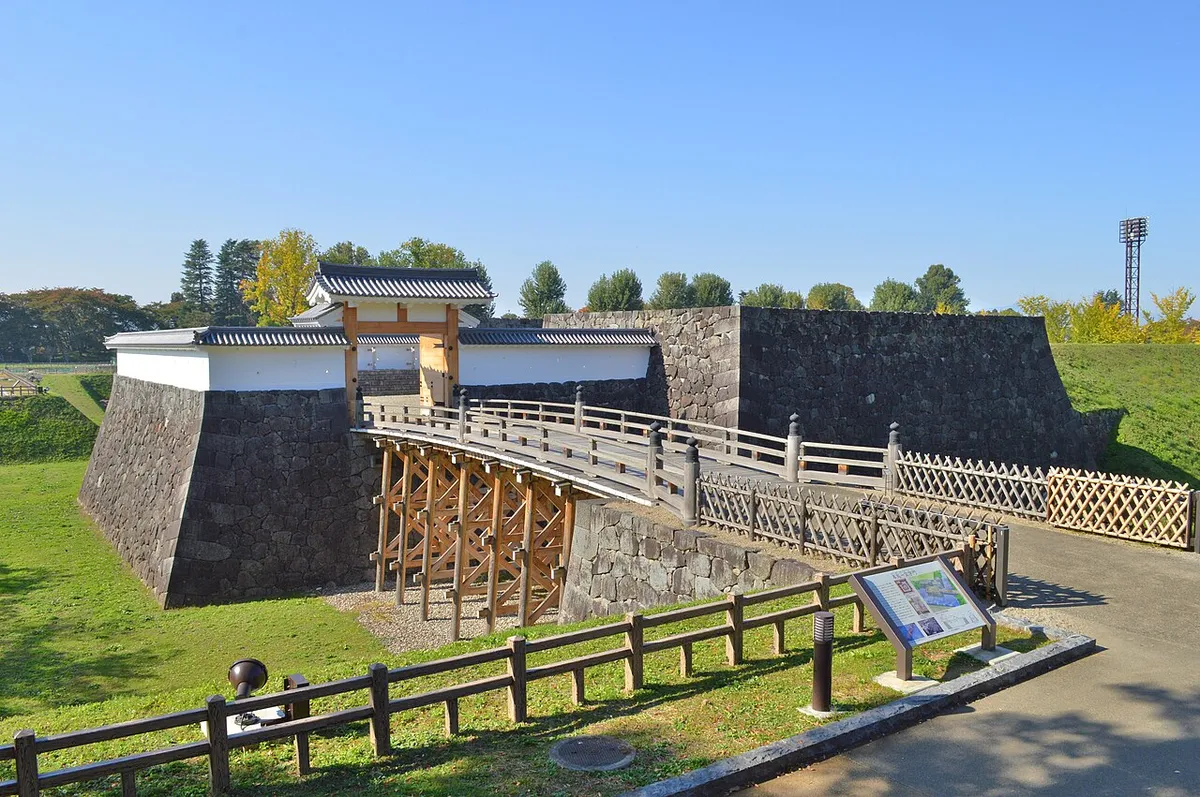
Photo:Saigen Jiro/Wikimedia Commons/CC0

Quick Facts

Quick Facts

Admission
Free Free
Hours
09:00 – 21:30
Nearest Station
Yamagata Station (JR Yamagata Shinkansen / Ou Main Line)
Walk from Station
15 min walk
Time Needed
1-1.5 hours

Kajo Park (castle ruins park) is completely free. The partially reconstructed Higashi-Otemon Gate complex is free to enter. The Yamagata City Tourist Information Center inside the gate area is free.

Defense Overview

Defense Overview

Why Yamagata Castle was hard to attack

This castle is hard to attack because attackers have to cross barriers and then keep working through constrained entry points before the core.

An attacker would not simply arrive at the center on open flat ground. They would have to cross water barriers or moat lines, pass tighter turns and chokepoints, and face more defensive depth after the first line.

Overall score

70/100

Estimated range

64–76

Confidence

B

Usable estimate with some inference

This is a site-original comparison score for learning and comparison, not a reconstruction of one historical battle.

Radar view

Terrain 11/20 Entrance 15/20 Internal 16/20 Siege 15/20 Oversight 13/20
How this estimate was built+

This estimate combines broad terrain, approach, layout, and route-control signals. It is meant to explain the castle's defensive logic in plain English, not reconstruct a single historical attack.

Terrain Advantage

How much the terrain itself seems to help: height, slope, ridges, cliffs, water edges, and limited approach directions.

11/20

Entrance Defense

How awkward and dangerous the first entry looks: gates, bridge or moat crossings, chokepoints, and forced turns.

15/20

Internal Complexity

How hard it seems to keep pushing after entry: layered baileys, depth, compartmentalization, and repeated defensive lines.

16/20

Siege Endurance

A rough sense of long-hold potential: moats, water access, space, storage plausibility, and defensive staying power.

15/20

Strategic Oversight

How much the castle appears to command nearby roads, plains, rivers, basins, harbors, or town approaches.

13/20
Why Visit

Yamagata Castle offers a glimpse of an ongoing, evidence-based restoration project — a different experience from finished reconstructions. The Higashi-Otemon Gate complex (1999) is excellent traditional wooden architecture, and the inner moat circuit is atmospheric. For visitors in Yamagata city, this is an easy and free half-morning visit. For Mogami Yoshiaki history enthusiasts, the site has genuine significance.

Highlights

1

Largest Castle in Tohoku

At its peak in the late Sengoku period, Yamagata Castle was the largest castle complex in the Tohoku region — a vast three-compound flatland fortress with multiple moats, gates, and towers spreading across what is now the center of Yamagata city. Though most structures are now gone, the scale of the original site is still discernible in the layout of the modern city around the park.

2

Reconstruction in Progress

Yamagata Castle is undergoing a long-term, evidence-based reconstruction program — the Higashi-Otemon (East Main Gate) complex was completed in 1999 using traditional wooden construction methods based on archaeological findings and historical records. Further reconstruction of the Nanmon (South Gate) and eventually the main compound structures is planned, making this a living restoration project.

3

Mogami Yoshiaki: Tohoku's Survivor

Yamagata Castle was the seat of Mogami Yoshiaki, a Tohoku warlord famous for his extraordinary political survival — he backed both sides at the Battle of Sekigahara (1600), ultimately supporting Tokugawa Ieyasu and receiving substantial territory as a reward. His political cunning kept the Mogami clan powerful longer than almost any other Tohoku lord.

Structure Details

Visitor tip

Enter through the reconstructed Higashi-Otemon Gate complex on the east side of the park. The gate building (free entry) contains a tourist information center and exhibition on the castle's history. Walk the inner moat circuit for the best atmosphere — the stone walls and water reflection are the site's strongest visual element. The park interior (former main compound area) is large open greenery, pleasant but historically minimal.

Castle type

Flatland castle

Flatland castle — built on the broad flat Yamagata Basin plain, relying entirely on moats and earthworks for defense rather than natural elevation

Layout type

Concentric layout

Enclosure style — three concentric compounds (Honmaru, Ninomaru, Sannomaru) surrounded by moats on the flat plain

Main tower

Ruins with partial reconstruction in progress — all original wooden structures are lost. The Higashi-Otemon (East Main Gate) was reconstructed in 1999 in traditional wood. Further reconstruction is ongoing.

Stone walls

Natural stone stacking

Stone walls survive in several sections of the inner compound, supplemented by the moat and earthwork system that was the castle's primary defensive structure. The inner moat section near the reconstructed gate is the most atmospheric surviving element.

Moats

An extensive double-moat system surrounded the inner and outer compounds. The inner moat surrounding the Ninomaru (second compound) survives and forms the centerpiece of Kajo Park. The outer moat has been largely filled in by urban development.

Key defensive features

Double Moat System

The original castle featured a double concentric moat arrangement — any attacker had to cross two wide water barriers before reaching the main compound walls. The inner moat survives and remains impressive in scale.

Multiple Gate Complexes

The castle's three compounds were each protected by elaborate gate complexes with masugata (square killing-ground) designs. The reconstructed Higashi-Otemon complex demonstrates the sophistication of the original gate architecture.

Flat Terrain Moat Dependency

With no natural elevation for defense, Yamagata Castle's builders invested heavily in water defenses — wide, deep moats that forced any attacker to cross open water under fire before reaching the walls. The scale of the moat system compensated for the flat terrain vulnerability.

The Story of Yamagata Castle

Originally built 1356 / Shiba Kaneyori (initial fort)
Current form 1592 / Mogami Yoshiaki
    1356

    An initial fortification is built on the flat plains of the Yamagata Basin, establishing military control over this agriculturally important area of inland Tohoku.

    1525

    The Mogami clan, relatives of the Ashikaga shogunate, take control of Yamagata and begin developing the fortification into a proper castle complex controlling the entire Yamagata Basin.

    1592

    Mogami Yoshiaki completes major expansion of the castle into its final form — three concentric compounds with double moats, multiple gate complexes, and a main tower, establishing Yamagata as the largest castle in Tohoku.

    1600

    During the Battle of Sekigahara, Mogami Yoshiaki sides with Tokugawa Ieyasu and repels an attack on the castle by the Uesugi clan in the northern theater of the conflict. This loyalty earns the Mogami a major increase in domain size.

    1622

    The Tokugawa shogunate removes the Mogami clan due to internal disputes. A succession of different lords govern the domain over the next two centuries, and the castle is gradually reduced and simplified.

    1871

    Domain abolition leaves the castle without institutional support. Buildings deteriorate and are eventually demolished. The military uses portions of the site, contributing to the loss of surviving structures.

    1999

    The Higashi-Otemon (East Main Gate) complex is completed after years of archaeological research and traditional wooden construction — the first major reconstruction at the site and a model for future restoration phases.

In Pop Culture

TV

Mogami Yoshiaki historical dramas

Mogami Yoshiaki appears in NHK Taiga dramas covering the Battle of Sekigahara period, particularly in episodes covering the northern theater of the 1600 campaign. His reputation as a cunning survivor makes him a colorful supporting character.

Did You Know?

  • Mogami Yoshiaki is sometimes called 'the fox of Tohoku' for his extraordinary political cunning — he survived by supporting whoever seemed to be winning at each crisis point, successfully navigating the turbulent transition from Sengoku chaos to Tokugawa order.
  • The castle site is now called 'Kajo Park' — the name combining 'Ka' (霞, mist) and 'jo' (城, castle) to give the poetic name 'Mist Castle Park,' echoing the misty morning phenomenon on the Yamagata Basin.
  • A professional baseball stadium (Kajo Baseball Stadium) was built inside the former main compound area in 1936 and operated for decades — an unusually modern intrusion into a historical castle site. It has since been demolished.
  • Yamagata Prefecture is famous for its cherries (the most produced in Japan) and its Hanagasa Festival — the castle park hosts cherry blossom events in late April that are among the most celebrated in Tohoku.

Score Breakdown

Tourism Score

D 45/100
  • Accessibility 12 /20
  • Foreign-Friendly 8 /20
  • Historical Value 10 /20
  • Visual Impact 9 /20
  • Facilities 6 /20

Defense Score

B 70/100
  • Terrain Advantage 11 /20
  • Entrance Defense 15 /20
  • Internal Complexity 16 /20
  • Siege Endurance 15 /20
  • Strategic Oversight 13 /20

Planning Your Visit

Best Time to Visit

Cherry blossom season (late April) is the clear best time — the moat-side cherry trees are spectacular. Autumn foliage in October and November is also excellent. Summer evenings (the park is open until 21:30) offer a pleasant lit-moat atmosphere.

Time Needed

1-1.5 hours

Insider Tip

Walk the full inner moat circuit (approximately 30 minutes) to appreciate the scale of the original castle — the moat is surprisingly wide and deep, and the stone walls visible from the moat path give the best sense of the castle's defensive engineering. The reconstructed gate is on the east side; most visitors stop there but the circuit reveals far more.

Map

Getting There

Nearest station: Yamagata Station (JR Yamagata Shinkansen / Ou Main Line)
Walk from station: 15 min walk
Parking: Free parking available inside Kajo Park.
Accessible with a JR Pass

Admission

Free

Kajo Park (castle ruins park) is completely free. The partially reconstructed Higashi-Otemon Gate complex is free to enter. The Yamagata City Tourist Information Center inside the gate area is free.

Opening Hours

Open09:00 – 21:30

Kajo Park is open year-round. Gate area open 09:00–21:30 (shorter hours in winter). Closed December 29–January 3.

Facilities

  • – English guides
  • – Audio guide
  • ✓ Wheelchair access
  • ✓ Restrooms
  • ✓ Gift shop
  • ✓ Food nearby

Nearby Castles

Featured in collections

FAQ

Frequently Asked Questions

How do I get to Yamagata Castle?

The nearest station is Yamagata Station (JR Yamagata Shinkansen / Ou Main Line). From there it is about 15 minutes on foot.

How much does Yamagata Castle cost to enter?

Yamagata Castle is free to enter.

Is Yamagata Castle worth visiting?

Yamagata Castle offers a glimpse of an ongoing, evidence-based restoration project — a different experience from finished reconstructions. The Higashi-Otemon Gate complex (1999) is excellent traditional wooden architecture, and the inner moat circuit is atmospheric. For visitors in Yamagata city, this is an easy and free half-morning visit. For Mogami Yoshiaki history enthusiasts, the site has genuine significance.

What are the opening hours of Yamagata Castle?

09:00 to 21:30.

How long should I spend at Yamagata Castle?

Plan for about 1-1.5 hours, depending on how closely you want to explore the grounds.