Matsuzaka Castle

松阪城·Matsuzaka-jo

D Tourism Score 42/100
B Defense Score 73/100

Impressive Momoyama-era stone walls in a pleasant hilltop park — and the finest beef in Japan is waiting in the restaurants below.

#48 — 100 Famous Castles Ruins
Matsuzaka Castle (松阪城)
Photo:shikabane taro/Wikimedia Commons/CC BY 3.0

Quick Facts

Quick Facts

Admission
Free Free
Hours
00:00 – 23:59
Nearest Station
Matsusaka Station (JR Kisei Main Line / Kintetsu Yamada Line)
Walk from Station
15 min walk
Time Needed
45 minutes (ruins) + 1 hour (Matsusaka beef lunch) = 2 hours total

The ruins and Matsuzaka Castle Park are completely free. The adjacent Matsuzaka City Museum (Matsusaka-jo Seki Kinensho) is free. There is no charge for any part of the site.

Defense Overview

Defense Overview

Why Matsuzaka Castle was hard to attack

This castle is hard to attack because it combines a raised core with defended outer space with a controlled route inward.

An attacker would not get a simple direct approach to the center. They would have to cross water barriers or moat lines and face more defensive depth after the first line.

Overall score

73/100

Estimated range

67–79

Confidence

B

Usable estimate with some inference

This is a site-original comparison score for learning and comparison, not a reconstruction of one historical battle.

Radar view

Terrain 15/20 Entrance 14/20 Internal 17/20 Siege 14/20 Oversight 13/20
How this estimate was built+

This estimate combines broad terrain, approach, layout, and route-control signals. It is meant to explain the castle's defensive logic in plain English, not reconstruct a single historical attack.

Terrain Advantage

How much the terrain itself seems to help: height, slope, ridges, cliffs, water edges, and limited approach directions.

15/20

Entrance Defense

How awkward and dangerous the first entry looks: gates, bridge or moat crossings, chokepoints, and forced turns.

14/20

Internal Complexity

How hard it seems to keep pushing after entry: layered baileys, depth, compartmentalization, and repeated defensive lines.

17/20

Siege Endurance

A rough sense of long-hold potential: moats, water access, space, storage plausibility, and defensive staying power.

14/20

Strategic Oversight

How much the castle appears to command nearby roads, plains, rivers, basins, harbors, or town approaches.

13/20

Why Visit

Matsuzaka Castle is best appreciated by visitors who understand that walls without buildings can be more eloquent than concrete tower reconstructions. The kirikomi-hagi stonework here is genuinely excellent, the hilltop park is attractive, and the free admission removes any barrier to stopping. The real incentive for most visitors is the combination: fine castle ruins + Matsusaka beef lunch = a very satisfying few hours in Mie Prefecture.

Highlights

1

Stone Walls That Rival More Famous Castles

Matsuzaka Castle's most striking feature is the quality and height of its surviving stone walls. The walls of the inner compound, built using the kirikomi-hagi (fitted stone) technique characteristic of late 16th-century construction under Gamo Ujisato, rise impressively from the hillside. Castle specialists consistently rank these stone walls among the finest surviving examples of Momoyama-era stonework — impressive given that the castle itself is rarely mentioned outside specialist circles.
2

Gamo Ujisato's Southern Masterpiece

Matsuzaka Castle was built by Gamo Ujisato — one of Oda Nobunaga's most trusted generals and an exceptionally skilled castle builder. Ujisato is better known for his work in the Tohoku region (where he governed Aizu), but Matsuzaka demonstrates his construction skills in the Tokai region. The castle's layout and stonework reflect the sophisticated Momoyama-era design sensibility that Ujisato deployed across his various building projects.

3

Matsusaka Beef Country

Matsusaka is most famous throughout Japan not for its castle but for Matsusaka beef (Matsusaka-gyu) — considered by many Japanese to be the finest Wagyu beef in Japan, surpassing even Kobe beef. The castle park visit naturally combines with a Matsusaka beef meal in the city center, making the site an obligatory stop for food-focused travelers passing through the Kinki/Tokai corridor.

Structure Details

Visitor tip

Matsuzaka Castle is a pure stone wall experience — there are no buildings, only the empty stone wall compounds on the hillside. This is an acquired taste in castle visiting, but if you appreciate fine masonry, these walls are genuinely worth seeing. The free admission and pleasant hilltop park setting make the stop easy to justify. Combine with a Matsusaka beef lunch in town.

Castle type

Hill castle

Hill-top flatland castle — built on Matsugashima Hill in the flat coastal Ise Plain, with the elevated position providing visibility and enhanced defensive height

Layout type

Linked compound layout

Compound style — multiple compounds on the hillside arranged to take advantage of the natural contours

Main tower

Stone wall ruins only — the original main tower collapsed in a storm in 1644, only 57 years after construction. No tower has ever been rebuilt. The impressive stone walls of the inner and outer compounds survive in excellent condition.

Stone walls

Fitted cut-stone masonry

Matsuzaka Castle's stone walls are its defining feature. The kirikomi-hagi stonework of the inner compound walls rises impressively up the hillside, with precisely fitted stones that have survived four centuries in excellent condition. The contrast between the fine stonework and the absence of any buildings above it creates a powerful and melancholy impression.

Key defensive features

Elevated Hill Position

The castle's position atop Matsugashima Hill gave defenders a commanding view of the surrounding Ise Plain and the approaches from all directions. The height advantage enhanced the effectiveness of archery and firearms from the walls.

Kirikomi-hagi Stone Walls

The fitted stone walls of the inner compound are exceptionally well-constructed and well-preserved. The quality of the stonework reflects Gamo Ujisato's attention to detail and the considerable resources committed to the castle's construction.

The Story of Matsuzaka Castle

Originally built 1588 / Gamo Ujisato
Current form 1588 / Gamo Ujisato
    1588

    Gamo Ujisato, one of Nobunaga's finest generals, builds Matsuzaka Castle on Matsugashima Hill as the administrative center for Ise Province. Ujisato simultaneously lays out the castle town with care — the foundation of modern Matsusaka city.

    1590

    Gamo Ujisato is transferred by Toyotomi Hideyoshi to Aizu domain in northern Honshu. The Matsuzaka domain passes through several lords before the Tokugawa period.

    1644

    The main tower collapses in a violent storm — just 56 years after construction. Under the Tokugawa peace, there is no military justification to rebuild it, and the ruins are left as they stand.

    1868

    Domain abolition ends Matsuzaka Castle's administrative function. The stone walls and earthworks remain as the castle's enduring legacy.

Did You Know?

  • Matsuzaka is more famous for Matsusaka beef (Matsusaka-gyu) than for its castle — the Wagyu cattle raised in the Matsusaka area have produced what many Japanese connoisseurs consider the finest beef in Japan. The castle town's restaurants serving Matsusaka beef draw far more visitors than the castle ruins themselves.
  • Gamo Ujisato, who built Matsuzaka Castle, was a notable Christian daimyo (baptized as 'Leo') who brought Jesuit missionaries into his domains. His construction work in both Matsusaka and Aizu reflects a sophisticated aesthetic that some scholars attribute partly to Christian European influences on castle design during the late 16th century.
  • The main tower's collapse in 1644 makes Matsuzaka unusual — most castle towers were deliberately demolished by the Meiji government or destroyed by fire or war. Matsuzaka's tower simply fell down in a storm, and no one deemed it worth rebuilding during the peaceful Edo period.

Score Breakdown

Tourism Score

D 42/100
  • Accessibility 11 /20
  • Foreign-Friendly 6 /20
  • Historical Value 13 /20
  • Visual Impact 8 /20
  • Facilities 4 /20

Defense Score

B 73/100
  • Terrain Advantage 15 /20
  • Entrance Defense 14 /20
  • Internal Complexity 17 /20
  • Siege Endurance 14 /20
  • Strategic Oversight 13 /20

Planning Your Visit

Best Time to Visit

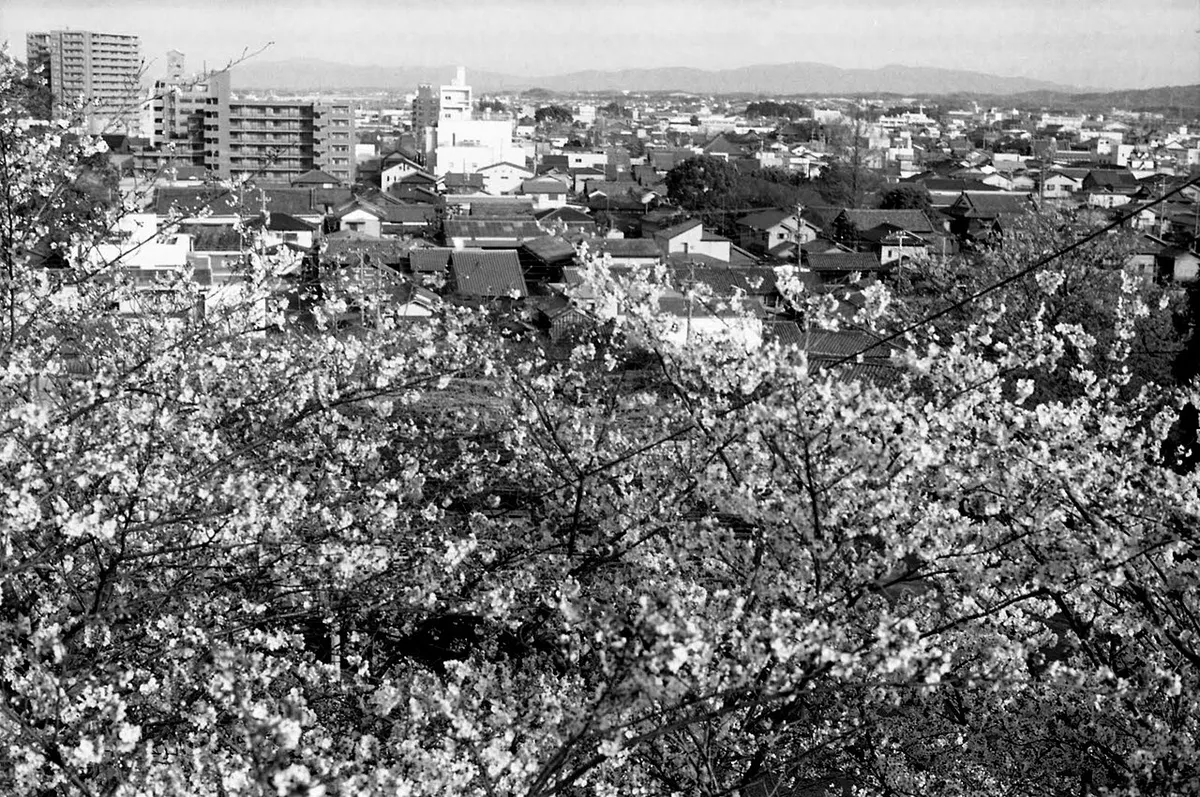
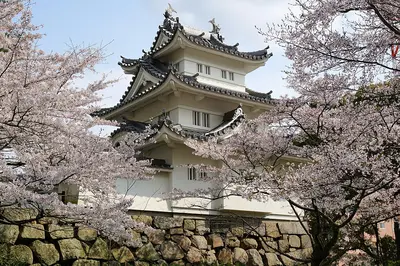
Spring cherry blossoms make the castle park particularly attractive. Year-round for the stone walls.

Time Needed

45 minutes (ruins) + 1 hour (Matsusaka beef lunch) = 2 hours total

Insider Tip

After the ruins, walk down into the city center to one of the Matsusaka beef restaurants — the lunch sets at several establishments are more affordable than the dinner menus and still showcase the quality that makes Matsusaka beef famous. The castle town merchant district (Motocho area) also preserves several Edo-period merchant houses worth a brief walk.

Map

Getting There

Nearest station: Matsusaka Station (JR Kisei Main Line / Kintetsu Yamada Line)
Walk from station: 15 min walk
Parking: Free parking available at the castle park.
Accessible with a JR Pass

Admission

Free

The ruins and Matsuzaka Castle Park are completely free. The adjacent Matsuzaka City Museum (Matsusaka-jo Seki Kinensho) is free. There is no charge for any part of the site.

Opening Hours

Open00:00 – 23:59

Castle park accessible at all times. The castle ruins are an outdoor site with no operational hours.

Facilities

  • – English guides
  • – Audio guide
  • – Wheelchair access
  • ✓ Restrooms
  • – Gift shop
  • ✓ Food nearby

Nearby Castles

Featured in collections

FAQ

Frequently Asked Questions

How do I get to Matsuzaka Castle?

The nearest station is Matsusaka Station (JR Kisei Main Line / Kintetsu Yamada Line). From there it is about 15 minutes on foot.

How much does Matsuzaka Castle cost to enter?

Matsuzaka Castle is free to enter.

Is Matsuzaka Castle worth visiting?

Matsuzaka Castle is best appreciated by visitors who understand that walls without buildings can be more eloquent than concrete tower reconstructions. The kirikomi-hagi stonework here is genuinely excellent, the hilltop park is attractive, and the free admission removes any barrier to stopping. The real incentive for most visitors is the combination: fine castle ruins + Matsusaka beef lunch = a very satisfying few hours in Mie Prefecture.

What are the opening hours of Matsuzaka Castle?

00:00 to 23:59.

How long should I spend at Matsuzaka Castle?

Plan for about 45 minutes (ruins) + 1 hour (Matsusaka beef lunch) = 2 hours total, depending on how closely you want to explore the grounds.