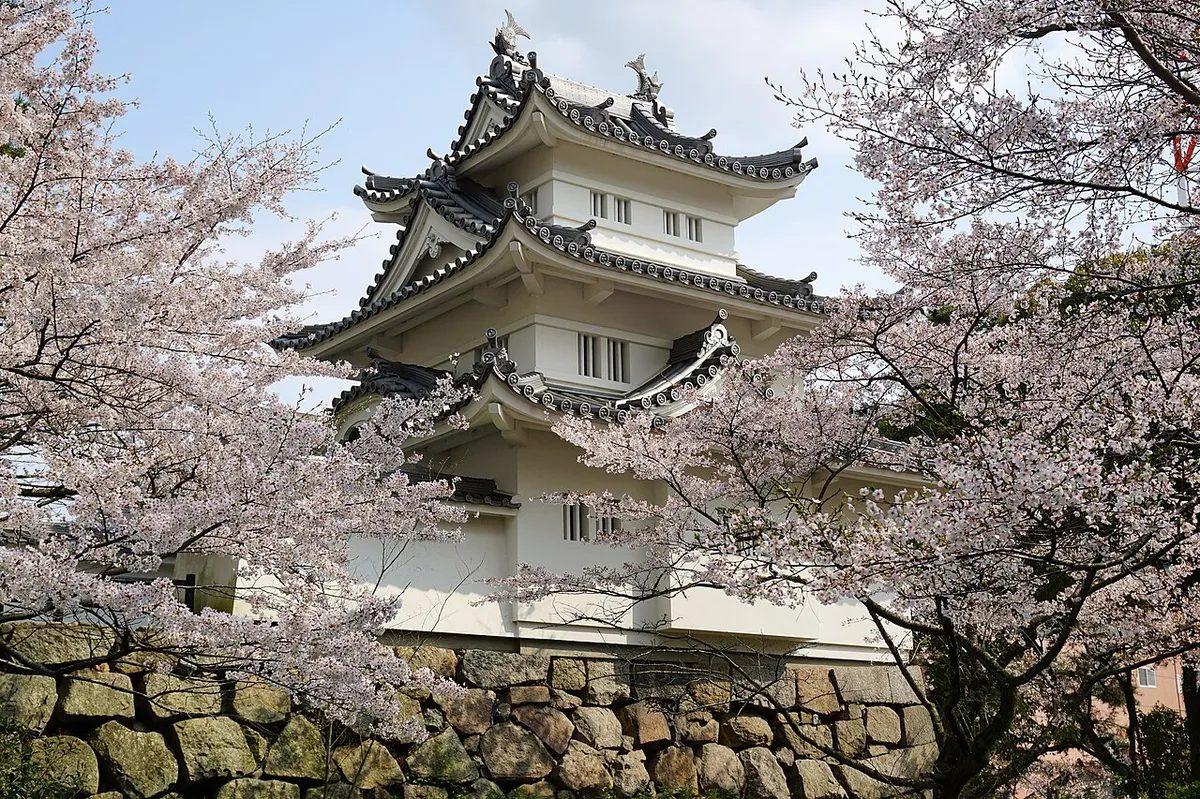
Tsu Castle

津城·Tsu-jo

F Tourism Score 35/100
C Defense Score 62/100

Todo Takatora's prefectural capital castle — almost everything is gone, but the master builder's stone wall style still shows in what little remains.

#48 — 100 Famous Castles Ruins
Tsu Castle (津城)
Photo:663highland/Wikimedia Commons/CC BY 2.5

Quick Facts

Quick Facts

Admission
Free Free
Hours
null – null
Nearest Station
Tsu Station (JR Kisei Main Line / Kintetsu Nagoya Line)
Walk from Station
15 min walk
Time Needed
30–45 minutes

Tsu Castle Park (Tsujoen) is freely accessible at all times. The reconstructed corner turret can be viewed externally. No interior fee.

Defense Overview

Defense Overview

Why Tsu Castle was hard to attack

This castle is hard to attack because attackers have to work across water barriers before pressing inward instead of getting a direct run at the core.

An attacker would not simply arrive at the center on open flat ground. They would have to cross water barriers or moat lines, approach through at least some constrained entry space, and push through successive outer areas before the core.

Overall score

62/100

Estimated range

56–68

Confidence

B

Usable estimate with some inference

This is a site-original comparison score for learning and comparison, not a reconstruction of one historical battle.

Radar view

Terrain 10/20 Entrance 12/20 Internal 15/20 Siege 13/20 Oversight 12/20
How this estimate was built+

This estimate combines broad terrain, approach, layout, and route-control signals. It is meant to explain the castle's defensive logic in plain English, not reconstruct a single historical attack.

Terrain Advantage

How much the terrain itself seems to help: height, slope, ridges, cliffs, water edges, and limited approach directions.

10/20

Entrance Defense

How awkward and dangerous the first entry looks: gates, bridge or moat crossings, chokepoints, and forced turns.

12/20

Internal Complexity

How hard it seems to keep pushing after entry: layered baileys, depth, compartmentalization, and repeated defensive lines.

15/20

Siege Endurance

A rough sense of long-hold potential: moats, water access, space, storage plausibility, and defensive staying power.

13/20

Strategic Oversight

How much the castle appears to command nearby roads, plains, rivers, basins, harbors, or town approaches.

12/20

Why Visit

Tsu Castle is for dedicated castle enthusiasts who want to complete the Mie castle circuit (alongside Iga-Ueno and Ise-Kameyama) or for anyone passing through Tsu on the Kintetsu Line. As a standalone destination it offers minimal visual interest — partial stone walls and a 1958 concrete turret in a city park. The historical interest lies in the Todo Takatora connection and the site's role as a gateway castle to the Ise region. Combine with Iga-Ueno (45 minutes by train) for a more rewarding Mie castle day.

Highlights

1

Todo Takatora's Design Philosophy in a Park

Tsu Castle was redesigned by Todo Takatora — the same master builder responsible for Iga-Ueno's extraordinary 30-meter stone walls, Imabari's sea-moated castle, and Uwajima. At Tsu, Takatora applied his characteristic approach: clean geometry, strong stone walls, and efficient water defenses using the nearby Ano River. Almost nothing survives above ground, but the layout reflects the thinking of Japan's most accomplished castle architect.
2

Simplest Name, Prefectural Capital

Tsu (津) means simply 'harbor' or 'port' — it is possibly the shortest place name in Japan (one kanji, one syllable). Despite this minimal name, Tsu became the capital of Mie Prefecture and remains its administrative center today. The castle that once stood here governed the approaches to Ise and the Kii Peninsula, one of Japan's most strategically sensitive regions.

Structure Details

Visitor tip

A brief park visit — walk the moat perimeter, look at the surviving stone walls, and view the 1958 reconstructed corner turret. The park (Tsujoen) is a local city park and is pleasant but offers minimal castle atmosphere.

Castle type

Flatland castle

Flatland castle — built on low ground near the Ano River and the Ise Bay coast, using water defenses comprehensively

Layout type

Concentric layout

Enclosure style — concentric moats and stone walls on flat terrain, taking advantage of river and sea proximity

Main tower

Ruins with reconstructed corner turret — all original castle buildings are gone. One corner turret (Tatsumi Yagura) was reconstructed in 1958 as a concrete structure. Stone walls and moats partially survive.

Stone walls

Natural stone stacking

Partial stone walls survive around the main compound, designated as a Historic Site. The moat system is partially preserved and water-filled, creating a pleasant park landscape.

Moats

The inner moat partially survives and is water-filled, giving the park its characteristic appearance. The Ano River to the east served as a natural defensive barrier and was incorporated into the overall water defense system.

Key defensive features

Ano River Water Defense

The Ano River on the eastern side provided a natural water barrier that Todo Takatora incorporated into the castle's defensive scheme — a characteristic Takatora technique of using natural waterways as extensions of the moat system.

Stone Walls (Todo Takatora Design)

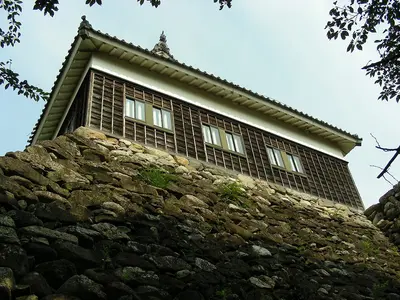
The surviving stone walls show Todo Takatora's characteristic construction style — clean geometry, large stones, steep face angle. Even in their fragmentary surviving form they give a sense of the original's quality.

The Story of Tsu Castle

Originally built 1558 / Hosono Fujiatsu
Current form 1608 / Todo Takatora
    1558

    Hosono Fujiatsu builds an initial fortification at the site on the Ise Bay coast. The location controls the harbor and the approaches to the Ise region.

    1568

    Oda Nobunaga sends his younger brother Oda Nobuyuki to control the Tsu region. The castle is developed as part of Nobunaga's expansion into Ise.

    1608

    Todo Takatora, fresh from his work at Iga-Ueno and other castles, takes control of the Tsu domain and redesigns the castle. He applies his characteristic stone wall and water defense principles, creating a clean geometric fortress suited to the flat coastal terrain.

    1871

    Meiji abolition of domains. Castle structures are systematically demolished. The site becomes a public park (Tsujoen).

    1958

    A concrete corner turret is reconstructed on the main compound as a visual marker. Partial stone walls and the inner moat are preserved as a Historic Site.

Did You Know?

  • Todo Takatora is one of the most prolific castle builders in Japanese history — he is credited with designing or constructing over 20 castles, including Iga-Ueno, Tsu, Imabari, Uwajima, Wakayama, Sasayama, and portions of Edo and Osaka castles. Tsu was his domain headquarters and represents his practical administrative style.
  • Tsu (津) is one of Japan's shortest place names — just one kanji, one syllable. The kanji means 'harbor' or 'ferry crossing,' referring to the site's role as an Ise Bay port. Despite its minimal name, it became and remains the prefectural capital of Mie.
  • The city of Tsu is the prefectural capital of Mie but is often overlooked by tourists who pass through on the way to Ise Shrine or Iga-Ueno. The castle site is a local amenity rather than a tourist destination — most visitors to the park are Tsu residents enjoying the moat and greenery.

Score Breakdown

Tourism Score

F 35/100
  • Accessibility 13 /20
  • Foreign-Friendly 5 /20
  • Historical Value 10 /20
  • Visual Impact 4 /20
  • Facilities 3 /20

Defense Score

C 62/100
  • Terrain Advantage 10 /20
  • Entrance Defense 12 /20
  • Internal Complexity 15 /20
  • Siege Endurance 13 /20
  • Strategic Oversight 12 /20

Planning Your Visit

Best Time to Visit

Cherry blossom season (late March to early April) — the moat-side cherry trees are the main seasonal draw. Otherwise, any season.

Time Needed

30–45 minutes

Insider Tip

Walk the full moat perimeter to appreciate the scale of the original water defense system even in its diminished state. The surviving stone walls near the main compound show Todo Takatora's characteristic clean construction style — compare them to the much more dramatic walls at Iga-Ueno (45 min by Iga Railway) to understand how the same architect adapted his approach to different scales of commission.

Map

Getting There

Nearest station: Tsu Station (JR Kisei Main Line / Kintetsu Nagoya Line)
Walk from station: 15 min walk
Parking: Parking available in the castle park area.
Accessible with a JR Pass

Admission

Free

Tsu Castle Park (Tsujoen) is freely accessible at all times. The reconstructed corner turret can be viewed externally. No interior fee.

Opening Hours

Open

Open grounds, accessible at all times. The surrounding moat and park make for a pleasant stroll.

Facilities

  • – English guides
  • – Audio guide
  • ✓ Wheelchair access
  • ✓ Restrooms
  • – Gift shop
  • ✓ Food nearby

Nearby Castles

Featured in collections

FAQ

Frequently Asked Questions

How do I get to Tsu Castle?

The nearest station is Tsu Station (JR Kisei Main Line / Kintetsu Nagoya Line). From there it is about 15 minutes on foot.

How much does Tsu Castle cost to enter?

Tsu Castle is free to enter.

Is Tsu Castle worth visiting?

Tsu Castle is for dedicated castle enthusiasts who want to complete the Mie castle circuit (alongside Iga-Ueno and Ise-Kameyama) or for anyone passing through Tsu on the Kintetsu Line. As a standalone destination it offers minimal visual interest — partial stone walls and a 1958 concrete turret in a city park. The historical interest lies in the Todo Takatora connection and the site's role as a gateway castle to the Ise region. Combine with Iga-Ueno (45 minutes by train) for a more rewarding Mie castle day.

What are the opening hours of Tsu Castle?

null to null.

How long should I spend at Tsu Castle?

Plan for about 30–45 minutes, depending on how closely you want to explore the grounds.