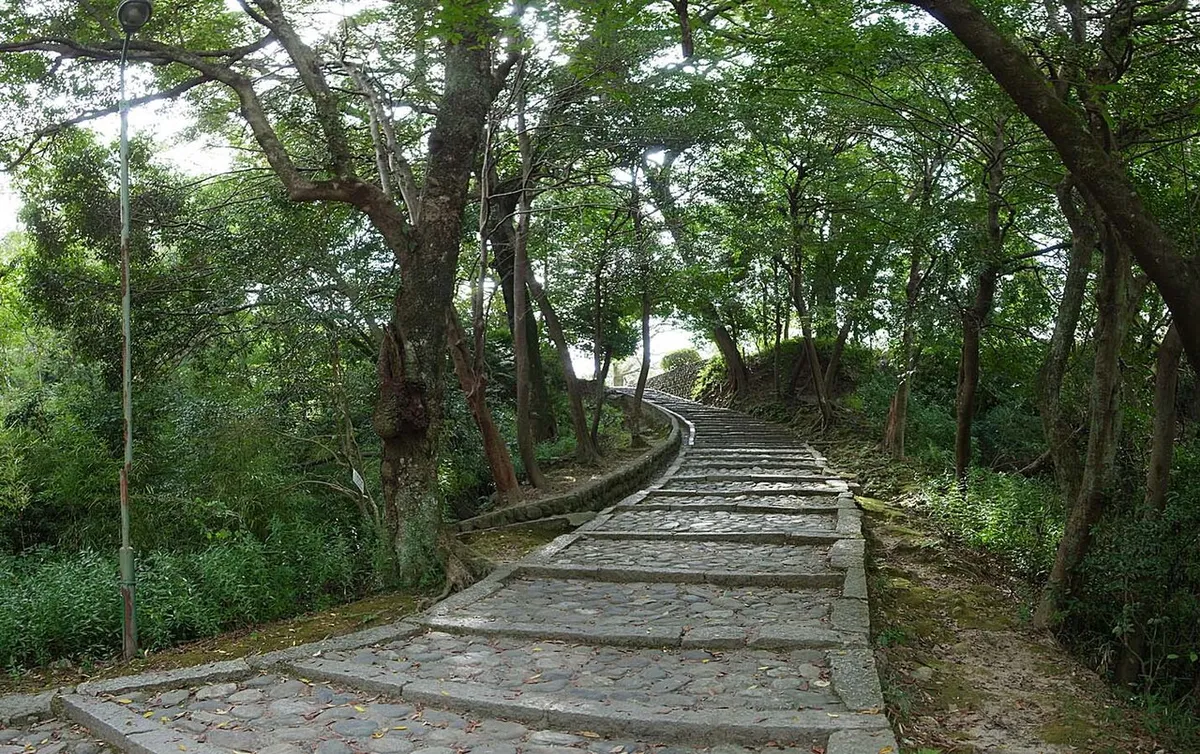
Iga-Ueno Castle

伊賀上野城·Iga-Ueno-jo

C Tourism Score 62/100
B Defense Score 76/100

Japan's tallest stone walls, a ninja museum next door, and the ghost of a seven-story tower that a typhoon stole — Iga-Ueno is one of Japan's most undervisited castle surprises.

#47 — 100 Famous Castles Reconstructed
Iga-Ueno Castle (伊賀上野城)
Photo:z tanuki/Wikimedia Commons/CC BY 3.0

Quick Facts

Quick Facts

Admission
¥600

¥300

Hours
09:00 – 17:00

Last entry 16:45

Nearest Station
Ueno-shi Station (Iga Railway Iga Line)
Walk from Station
10 min walk
Time Needed
2.5–3 hours (castle tower + walls walk + Ninja Museum)

Admission covers the main tower museum. Children (elementary school age) ¥300. The stone walls and castle grounds are freely accessible. The adjacent Iga-ryu Ninja Museum has a separate entrance fee.

Defense Overview

Defense Overview

Why Iga-Ueno Castle was hard to attack

This castle is hard to attack because it combines a raised core with defended outer space with enough defensive depth to slow attackers before the center.

An attacker would not get a simple direct approach to the center. They would have to cross water barriers or moat lines and push through successive outer areas before the core.

Overall score

76/100

Estimated range

70–82

Confidence

A

Strong multi-source support

This is a site-original comparison score for learning and comparison, not a reconstruction of one historical battle.

Radar view

Terrain 15/20 Entrance 14/20 Internal 16/20 Siege 16/20 Oversight 15/20
How this estimate was built+

This estimate combines broad terrain, approach, layout, and route-control signals. It is meant to explain the castle's defensive logic in plain English, not reconstruct a single historical attack.

Terrain Advantage

How much the terrain itself seems to help: height, slope, ridges, cliffs, water edges, and limited approach directions.

15/20

Entrance Defense

How awkward and dangerous the first entry looks: gates, bridge or moat crossings, chokepoints, and forced turns.

14/20

Internal Complexity

How hard it seems to keep pushing after entry: layered baileys, depth, compartmentalization, and repeated defensive lines.

16/20

Siege Endurance

A rough sense of long-hold potential: moats, water access, space, storage plausibility, and defensive staying power.

16/20

Strategic Oversight

How much the castle appears to command nearby roads, plains, rivers, basins, harbors, or town approaches.

15/20

Why Visit

Iga-Ueno offers something rare: genuinely extraordinary castle remains (the 30-meter stone walls are among Japan's most impressive) combined with excellent adjacent tourism (the Iga-ryu Ninja Museum is one of Japan's best). The combination is greater than the sum of its parts. The main tower itself is a modest 1935 reconstruction, but standing at the base of the western walls and looking up is an experience that rivals standing beneath the walls of Himeji. Slightly off the main tourist routes but absolutely worth the Iga Railway ride from JR Iga-Ueno.

Highlights

1

Japan's Tallest Stone Walls — 30 Meters of Vertical Masonry

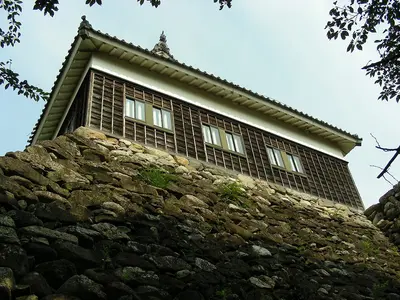
The stone walls (ishigaki) on the western side of Iga-Ueno Castle are approximately 30 meters tall — among the tallest surviving castle stone walls in Japan. Designed by Todo Takatora, one of the greatest castle builders of the era, these walls rise almost vertically from the base with a dramatic inward curve at the top. Standing at the base and looking up is one of the most viscerally impressive experiences any Japanese castle can offer.
2

Todo Takatora's Masterwork That Never Finished

Todo Takatora, the master castle builder who also designed Imabari, Uwajima, and Tsu Castle, began transforming Iga-Ueno into a massive new castle in 1608. He was building a seven-story main tower — which would have been among the tallest in Japan — when a typhoon in 1612 knocked the nearly-completed tower down. Takatora was then summoned to Edo for the construction of the shogunal capital and never returned to finish. Only the extraordinary stone walls remain as testimony to what might have been.

3

Ninja Museum Next Door

The Iga-ryu Ninja Museum sits immediately adjacent to the castle park — and Iga is genuinely the historical heartland of ninja culture, not a theme park invention. The Iga region produced professional shinobi agents who served daimyo across Japan during the Sengoku period. The museum has a ninja house with hidden doors and trick floors, weapon displays, and live ninja demonstrations. The castle and the museum together make Iga-Ueno one of the most complete days in all of central Japan.

Structure Details

Visitor tip

Begin by walking around the outside base of the stone walls before entering the castle grounds — approach from the west first to experience the full 30-meter height of the walls from below. Then enter the park, visit the main tower museum, and plan at least an hour for the adjacent Iga-ryu Ninja Museum across the street.

Castle type

Hill castle

Hill-top flatland castle — built on a low hill (Ueno Plateau) with the dramatic stone walls providing the primary defensive impression

Layout type

Linked compound layout

Compound style — main compound on the hilltop with subsidiary compounds on lower terraces

Main tower

Pre-war wooden reconstruction (1935) — this is a pre-war wooden reconstruction, built through the initiative of Kawasaki Katsu, a local politician and castle enthusiast who personally funded the project. Three stories, built in traditional style though without the benefit of the detailed historical research methods used in more recent reconstructions. Notably, this wooden tower predates the postwar concrete reconstruction era.

17m3 floors, 1 below

Stone walls

Natural stone stacking

The stone walls of Iga-Ueno are the castle's defining feature and one of the great engineering achievements of the Sengoku-Edo transition period. The western walls reach approximately 30 meters in height — among the tallest castle stone walls in Japan. Todo Takatora used massive stones fitted with great precision in a near-vertical face with the characteristic angled base flare. Walking around the castle perimeter to experience all faces of these walls is essential.

Moats

A moat system on the northern and eastern approaches. The dramatic western cliff faces of the stone walls served as a natural 'moat' — the vertical drop made that face effectively unassailable.

Key defensive features

30-Meter Western Stone Walls

The western stone walls are approximately 30 meters of near-vertical masonry — among Japan's tallest castle walls. The design by Todo Takatora combines the practical (no foothold for climbers, no angle of approach) with the psychological (the sheer visual mass is intended to intimidate). Looking up from the base, the walls seem to lean outward over you.

Ueno Plateau Position

The castle sits on the Ueno Plateau, a natural elevated area above the surrounding basin of the Iga region. The elevated position provides clear views over all approach routes and adds to the already formidable height of the stone walls.

Engineered for Largest Tower in Japan

The stone walls and overall layout were designed to support a planned seven-story main tower that would have been one of the tallest in Japan. The stone base platform visible today is sized for that enormous structure. The 1935 three-story reconstruction sits on a platform built for something three times larger.

The Story of Iga-Ueno Castle

Originally built 1585 / Oda Nobukatsu (initial castle)
Current form 1608 / Todo Takatora (stone walls and new castle design)
    1585

    Oda Nobukatsu (Nobunaga's second son) builds a castle at Ueno in Iga Province. The Iga region had been violently pacified by Nobunaga a few years earlier (the Tensho Iga War, 1581), and the castle serves as a control point over this newly-subdued territory.

    1608

    Todo Takatora, a master castle builder and Tokugawa ally, takes control of Iga Province and begins a radical transformation of the castle. He designs entirely new stone walls of unprecedented height — approximately 30 meters on the western face — and lays the foundation for a seven-story main tower that would rival the largest castles in Japan.

    1612

    A powerful typhoon destroys the nearly-completed seven-story main tower during construction — reportedly toppling it just before completion. The tower is never rebuilt; Takatora is summoned to assist with the construction of Edo and the Iga-Ueno project is effectively suspended.

    1615

    The Tokugawa shogunate issues the 'One Castle per Domain' edict, preventing any further castle construction or expansion. Without a main tower, Iga-Ueno's compound is maintained but never completed as originally envisioned.

    1935

    Kawasaki Katsu, a local politician and wealthy castle enthusiast, personally funds the construction of a three-story wooden tower on the honmaru platform. The tower is built using traditional techniques and remains standing today — one of the few pre-war wooden castle reconstructions in Japan.

In Pop Culture

Film

Numerous ninja films and anime

As the historical heartland of Iga-ryu ninja, Iga-Ueno and its surroundings appear in the background of countless Japanese ninja films, anime, and manga. The city itself has embraced the ninja identity comprehensively.

Did You Know?

  • The poet Matsuo Basho was born in Iga-Ueno in 1644 — in the same castle town as Japan's most famous ninja tradition. His birthplace is preserved in the city, and Iga-Ueno is one of the few places that can claim both Japan's most literary poet and its most famous covert warriors as hometown figures.
  • The 30-meter stone walls were designed by Todo Takatora, who also built the stone walls at Imabari, Uwajima, and Tsu — he is sometimes called 'the best castle builder in Japan' and specialized in dramatic, near-vertical stone work. Iga-Ueno's western walls are arguably his most impressive surviving work.
  • The typhoon that destroyed the seven-story tower in 1612 is specifically recorded in historical sources as occurring while the tower was nearly finished — one of Japanese history's great 'what ifs.' Had it been completed, Iga-Ueno would have been among Japan's most impressive castles. Only the stone walls hint at the scale of what was planned.
  • The Iga-ryu Ninja Museum next to the castle is not just a tourist attraction — it preserves genuine historical artifacts and documents related to the Iga ninja tradition, including actual period weapons, scrolls, and detailed accounts of shinobi techniques. The live demonstrations are theatrical but based on historically documented practices.

Score Breakdown

Tourism Score

C 62/100
  • Accessibility 11 /20
  • Foreign-Friendly 13 /20
  • Historical Value 14 /20
  • Visual Impact 14 /20
  • Facilities 10 /20

Defense Score

B 76/100
  • Terrain Advantage 15 /20
  • Entrance Defense 14 /20
  • Internal Complexity 16 /20
  • Siege Endurance 16 /20
  • Strategic Oversight 15 /20

Planning Your Visit

Best Time to Visit

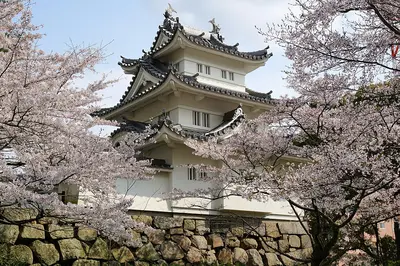
Spring (cherry blossom season) is famous — the pink blossoms against the massive grey stone walls is one of the most striking castle views in Japan. Autumn for clear weather. The Ninja Festival in April is popular.

Time Needed

2.5–3 hours (castle tower + walls walk + Ninja Museum)

Insider Tip

Walk around the full perimeter of the castle to appreciate all faces of the stone walls — the western face is the most famous but the northern walls and corner angles are equally impressive from different positions. Then cross to the Iga-ryu Ninja Museum for the ninja house tour (separate guide takes you through the hidden mechanisms) and the outdoor demonstration. Don't miss the museum's actual historical artifact collection — it's small but serious.

Map

Getting There

Nearest station: Ueno-shi Station (Iga Railway Iga Line)
Walk from station: 10 min walk
Parking: Paid parking available near the castle park.

Admission

Adult¥600
Child¥300

Admission covers the main tower museum. Children (elementary school age) ¥300. The stone walls and castle grounds are freely accessible. The adjacent Iga-ryu Ninja Museum has a separate entrance fee.

Opening Hours

Open09:00 – 17:00
Last entry16:45

Open year-round. Closed December 29 to January 1.

Facilities

  • – English guides
  • – Audio guide
  • – Wheelchair access
  • ✓ Restrooms
  • ✓ Gift shop
  • ✓ Food nearby

Nearby Castles

Featured in collections

FAQ

Frequently Asked Questions

How do I get to Iga-Ueno Castle?

The nearest station is Ueno-shi Station (Iga Railway Iga Line). From there it is about 10 minutes on foot.

How much does Iga-Ueno Castle cost to enter?

Adult admission is ¥600 and child admission is ¥300.

Is Iga-Ueno Castle worth visiting?

Iga-Ueno offers something rare: genuinely extraordinary castle remains (the 30-meter stone walls are among Japan's most impressive) combined with excellent adjacent tourism (the Iga-ryu Ninja Museum is one of Japan's best). The combination is greater than the sum of its parts. The main tower itself is a modest 1935 reconstruction, but standing at the base of the western walls and looking up is an experience that rivals standing beneath the walls of Himeji. Slightly off the main tourist routes but absolutely worth the Iga Railway ride from JR Iga-Ueno.

What are the opening hours of Iga-Ueno Castle?

09:00 to 17:00, last entry 16:45.

How long should I spend at Iga-Ueno Castle?

Plan for about 2.5–3 hours (castle tower + walls walk + Ninja Museum), depending on how closely you want to explore the grounds.