
Ne Castle

根城·Ne-jo

F Tourism Score 35/100
D Defense Score 59/100

Japan's most evocative medieval castle compound reconstruction — thatched-roof buildings and earthwork walls that bring the 14th century to life.

#5 — 100 Famous Castles Ruins
Ne Castle (根城)
Photo:David Wilson/Wikimedia Commons/CC BY 2.0

Quick Facts

Quick Facts

Admission
¥250

¥0

Hours
09:00 – 17:00

Last entry 16:30

Nearest Station
Hachinohe Station (JR Tohoku Shinkansen / Hachinohe Line)
Walk from Station
30 min walk

Bus also available

Time Needed
1.5–2 hours (compound + Hachinohe City Museum)

Children (junior high and under) free. High school/university students ¥150.

Defense Overview

Defense Overview

Why Ne Castle was hard to attack

This castle is hard to attack because attackers have to work through successive outer spaces before the core instead of getting a direct run at the core.

An attacker would not simply arrive at the center on open flat ground. They would have to cross water barriers or moat lines and face more defensive depth after the first line.

Overall score

59/100

Estimated range

53–65

Confidence

B

Usable estimate with some inference

This is a site-original comparison score for learning and comparison, not a reconstruction of one historical battle.

Radar view

Terrain 10/20 Entrance 10/20 Internal 16/20 Siege 13/20 Oversight 10/20
How this estimate was built+

This estimate combines broad terrain, approach, layout, and route-control signals. It is meant to explain the castle's defensive logic in plain English, not reconstruct a single historical attack.

Terrain Advantage

How much the terrain itself seems to help: height, slope, ridges, cliffs, water edges, and limited approach directions.

10/20

Entrance Defense

How awkward and dangerous the first entry looks: gates, bridge or moat crossings, chokepoints, and forced turns.

10/20

Internal Complexity

How hard it seems to keep pushing after entry: layered baileys, depth, compartmentalization, and repeated defensive lines.

16/20

Siege Endurance

A rough sense of long-hold potential: moats, water access, space, storage plausibility, and defensive staying power.

13/20

Strategic Oversight

How much the castle appears to command nearby roads, plains, rivers, basins, harbors, or town approaches.

10/20

Why Visit

Ne Castle appeals to a specific type of visitor: one who wants to understand what medieval Japanese castles truly looked like before the famous stone-wall era. The reconstructed thatched buildings and wooden palisades are rare anywhere in Japan, and they illuminate an aspect of castle history that the more famous stone-and-tile reconstructions completely obscure. If you are in the Hachinohe area and have any interest in Japanese medieval history, this is genuinely worth the visit.

Highlights

1

Japan's Most Authentic Medieval Compound Reconstruction

Ne Castle is not a stone tower reconstruction — it is something far rarer: a painstakingly accurate reconstruction of a 14th-century medieval Japanese castle compound, complete with thatched-roof buildings, earthen walls, and wooden fences built using traditional techniques. Where most 'reconstructed' castles offer concrete towers, Ne Castle recreates the lived experience of a medieval Japanese warrior's headquarters exactly as it would have appeared in the 1300s.
2

The Nanbu Clan's Northern Stronghold

Founded in 1334 by Nanbu Moriyoshi, Ne Castle served as the headquarters of the powerful Nanbu clan for over 200 years, controlling the northern tip of Honshu. The Nanbu clan's grip on this remote frontier region gave them dominance over the fur trade, horses, and gold that flowed from the lands at the edge of the Japanese world. Ne Castle's isolation reflects both the clan's remote power and the harsh realities of medieval frontier governance.

3

Thatched Roofs and Living History

The reconstructed compound features the main hall (honmaru), workshops, a forge, a stable, a garden, and watchtowers — all built with thatched roofs and rough-hewn timber that evoke 14th-century construction methods. Staff demonstrate traditional crafts seasonally. It is one of the most evocative medieval castle experiences in the Tohoku region, though it requires genuine historical interest to appreciate.

Structure Details

Visitor tip

Ne Castle is a specialist interest site — come here if you want to understand what medieval Japanese castles actually looked like before the stone-wall era. The reconstructed buildings with thatched roofs are genuinely rare and historically illuminating. Combine with the adjacent Hachinohe City Museum for context on the Nanbu clan and the region's medieval history.

Castle type

Flatland castle

Flatland castle — built on a slight natural rise in flat terrain near the Mabechi River

Layout type

Linked compound layout

Compound style — main compound with subsidiary enclosures linked by earthen banks and wooden palisades

Main tower

Reconstructed medieval compound buildings — the earthwork outlines of the original castle survive, with the main compound (honmaru) reconstructed using medieval building techniques including thatched-roof halls, workshops, and palisades. No tenshu tower ever existed; this is a medieval fortified residence type.

Stone walls

Earthen walls

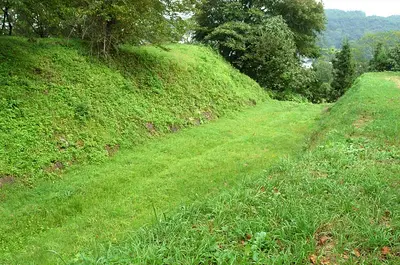
The castle's defenses consisted of earthen banks and moats rather than stone walls, reflecting 14th-century construction methods before the widespread adoption of stone ishigaki. The reconstructed compound faithfully reproduces these earthen enclosures with wooden palisades along the top.

Moats

Earthen moats encircled the various compounds of the castle. Partial traces of the outer moat system survive around the reconstructed area.

Key defensive features

Earthwork and Palisade Defense

The castle relied on earthen banks topped with wooden palisades for its primary defenses — the characteristic approach of medieval Japanese military architecture before the Sengoku-era adoption of stone walls. The reconstructed compound clearly shows this system.

River Approach Position

The castle's position near the Mabechi River provided a natural defensive water barrier on one approach, supplementing the earthwork defenses on other sides.

The Story of Ne Castle

Originally built 1334 / Nanbu Moriyoshi
Current form 1334 / Nanbu clan
    1334

    Nanbu Moriyoshi establishes Ne Castle as the headquarters of the Nanbu clan in the northern Tohoku region, following the Kemmu Restoration that briefly restored imperial rule to Japan.

    1392

    The Nanbu clan consolidates its control over the northern Tohoku region, using Ne Castle as the political and military hub for governance of a vast frontier territory.

    1546

    The Nanbu clan moves its primary headquarters from Ne Castle to Sannohe, reflecting shifts in political priorities. Ne Castle gradually declines in importance but remains a secondary base.

    1627

    Ne Castle is finally abandoned as the Nanbu domain is reorganized under Tokugawa oversight. The earthworks are left to the elements.

    1982

    Archaeological excavations begin systematic investigation of the castle site, uncovering the full extent of the earthwork system and establishing the basis for eventual reconstruction of the main compound.

    1994

    The reconstructed main compound opens to the public, with thatched-roof buildings built using medieval construction techniques. The adjacent Hachinohe City Museum opens alongside, providing historical context.

Did You Know?

  • Ne Castle is one of the few castle sites in Japan where you can see a reconstruction of medieval-era (rather than Edo-era) castle architecture — the thatched-roof buildings and palisade walls represent a type of fortification that virtually no other site reconstructs in such detail.
  • The Nanbu clan that ruled from Ne Castle is one of the longest-lasting samurai dynasties in Japanese history — a branch of the clan governed the Morioka domain all the way through the Edo period, over 500 years after the castle's founding.
  • Archaeological excavations at the site uncovered artifacts including wooden tools, ceramics, iron weapons, and organic materials preserved in the moat fill — providing unusually detailed evidence of daily life in a 14th-century Japanese castle compound.

Score Breakdown

Tourism Score

F 35/100
  • Accessibility 9 /20
  • Foreign-Friendly 4 /20
  • Historical Value 13 /20
  • Visual Impact 6 /20
  • Facilities 3 /20

Defense Score

D 59/100
  • Terrain Advantage 10 /20
  • Entrance Defense 10 /20
  • Internal Complexity 16 /20
  • Siege Endurance 13 /20
  • Strategic Oversight 10 /20

Planning Your Visit

Best Time to Visit

Late April to May (spring greenery enhances the medieval atmosphere). Autumn is also pleasant. Avoid winter for comfort.

Time Needed

1.5–2 hours (compound + Hachinohe City Museum)

Insider Tip

Spend time in the reconstructed forge and workshop areas — these are the most unusual spaces in the compound and give a tangible sense of the castle as a functioning military-industrial complex rather than just a residence. The adjacent Hachinohe City Museum is included in the ¥250 entry fee and provides essential context on the Nanbu clan and the region's history.

Map

Getting There

Nearest station: Hachinohe Station (JR Tohoku Shinkansen / Hachinohe Line)
Walk from station: 30 min walk
Bus: Bus from Hachinohe Station toward Shintoshin area stops near the site. Taxi is more convenient.
Parking: Free parking available at the site.
Accessible with a JR Pass

Admission

Adult¥250
ChildFree

Children (junior high and under) free. High school/university students ¥150.

Opening Hours

Open09:00 – 17:00
Last entry16:30

Closed Mondays (or following Tuesday if Monday is a holiday). Closed December 28–January 4.

Facilities

  • – English guides
  • – Audio guide
  • ✓ Wheelchair access
  • ✓ Restrooms
  • – Gift shop
  • – Food nearby

Nearby Castles

Featured in collections

FAQ

Frequently Asked Questions

How do I get to Ne Castle?

The nearest station is Hachinohe Station (JR Tohoku Shinkansen / Hachinohe Line). From there it is about 30 minutes on foot. Bus from Hachinohe Station toward Shintoshin area stops near the site. Taxi is more convenient.

How much does Ne Castle cost to enter?

Adult admission is ¥250 and child admission is ¥0.

Is Ne Castle worth visiting?

Ne Castle appeals to a specific type of visitor: one who wants to understand what medieval Japanese castles truly looked like before the famous stone-wall era. The reconstructed thatched buildings and wooden palisades are rare anywhere in Japan, and they illuminate an aspect of castle history that the more famous stone-and-tile reconstructions completely obscure. If you are in the Hachinohe area and have any interest in Japanese medieval history, this is genuinely worth the visit.

What are the opening hours of Ne Castle?

09:00 to 17:00, last entry 16:30.

How long should I spend at Ne Castle?

Plan for about 1.5–2 hours (compound + Hachinohe City Museum), depending on how closely you want to explore the grounds.