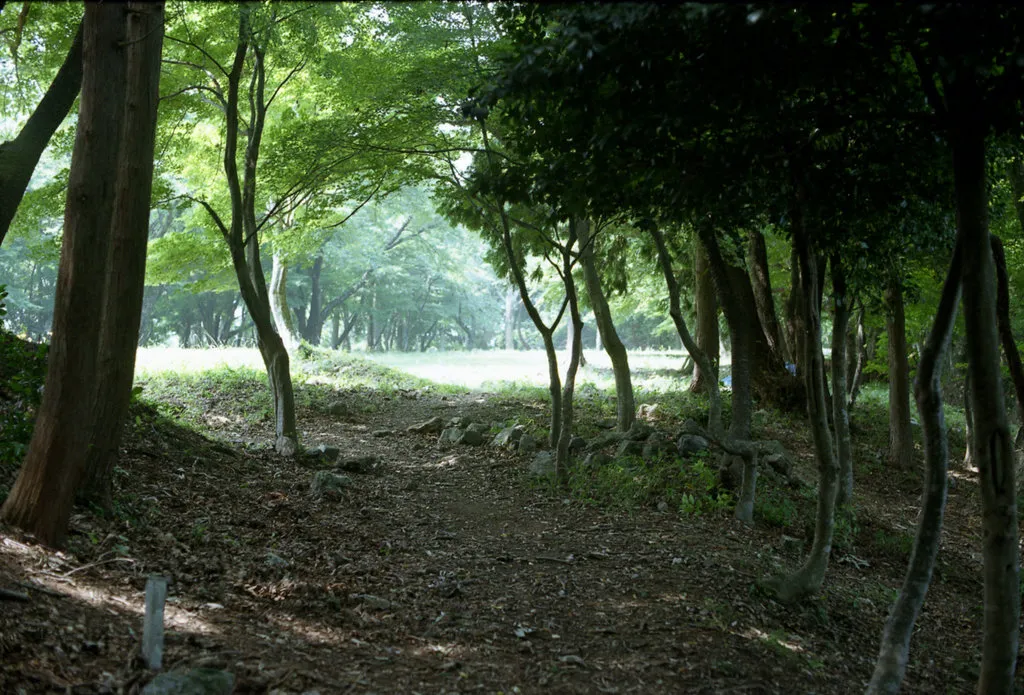
Odani Castle

小谷城·Odani-jo

F Tourism Score 35/100
A Defense Score 81/100

Where Nobunaga's sister lived, loved, and lost — the mountain castle of the doomed Azai clan, with one of the great tragic stories of the Sengoku era.

#49 — 100 Famous Castles Ruins
Odani Castle (小谷城)
Photo:shikabane taro/Wikimedia Commons/CC BY 3.0

Quick Facts

Quick Facts

Admission
Free Free
Hours
00:00 – 23:59
Nearest Station
Kawake Station (JR Biwako Line / Hokuriku Main Line)
Walk from Station
40 min walk

Bus also available

Time Needed
2.5–4 hours for full trail including Yamanobu-kuruwa section

Free access to mountain trail and ruins. The Odani Castle History Museum (Sengoku History Museum) at the base has a separate admission of ¥300 for adults.

Defense Overview

Defense Overview

Why Odani Castle was hard to attack

This castle is hard to attack because natural ground and added defensive depth work together to make every push inward more difficult.

An attacker would first have to fight the site itself before reaching the main defenses. They would have to cross water barriers or moat lines, approach through at least some constrained entry space, and face more defensive depth after the first line.

Overall score

81/100

Estimated range

75–87

Confidence

B

Usable estimate with some inference

This is a site-original comparison score for learning and comparison, not a reconstruction of one historical battle.

Radar view

Terrain 19/20 Entrance 18/20 Internal 14/20 Siege 14/20 Oversight 16/20
How this estimate was built+

This estimate combines broad terrain, approach, layout, and route-control signals. It is meant to explain the castle's defensive logic in plain English, not reconstruct a single historical attack.

Terrain Advantage

How much the terrain itself seems to help: height, slope, ridges, cliffs, water edges, and limited approach directions.

19/20

Entrance Defense

How awkward and dangerous the first entry looks: gates, bridge or moat crossings, chokepoints, and forced turns.

18/20

Internal Complexity

How hard it seems to keep pushing after entry: layered baileys, depth, compartmentalization, and repeated defensive lines.

14/20

Siege Endurance

A rough sense of long-hold potential: moats, water access, space, storage plausibility, and defensive staying power.

14/20

Strategic Oversight

How much the castle appears to command nearby roads, plains, rivers, basins, harbors, or town approaches.

16/20

Why Visit

Odani Castle is for visitors who want the emotional weight of Japanese history without the crowds of famous sites. The ruins are genuine, the mountain trail is rewarding, and the story — Oichi, Nagamasa, betrayal, and a golden skull — is one of the most human narratives of the entire Sengoku period. Combine with nearby Nagahama Castle (the lakeshore castle Hideyoshi built in Odani's shadow) for a full day on the northern Lake Biwa history circuit.

Highlights

1

Oichi and the Doomed Alliance

Oda Nobunaga gave his beloved younger sister Oichi in marriage to Azai Nagamasa, lord of Odani Castle, to seal an alliance between the Oda and Azai clans. When Nagamasa chose loyalty to an older alliance over his brother-in-law and sided with Nobunaga's enemy, Asakura Yoshikage, Nobunaga marched north and laid siege to Odani. Oichi was evacuated just before the castle fell — she survived, remarried, and her daughters became some of the most powerful women in Japan. Nagamasa did not.
2

One of the Great Sengoku Mountain Fortresses

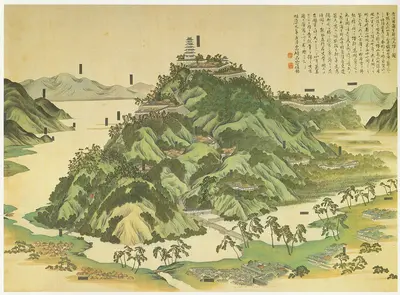
Odani Castle sprawls across an entire mountain ridge above Lake Biwa, with a system of compounds at different elevations connected by defended trails. At its peak it was one of the most sophisticated mountain castle complexes in the Kinai region — a fortress built for war, not ceremony.

3

Views Over Lake Biwa

The upper compounds of the mountain offer sweeping views over Japan's largest lake, Lake Biwa, and the surrounding plains that Azai Nagamasa once controlled. The panorama from the Honmaru summit gives an immediate sense of why this position was so strategically vital in the 16th century.

Structure Details

Visitor tip

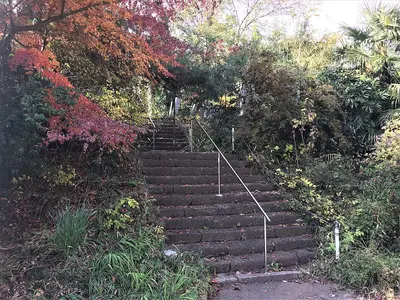
The trail to the summit is steep and takes 40–60 minutes from the base. Many visitors stop at the Kurokane-mon compound level, which has good stone wall remnants and already offers excellent views. For the full experience, continue to the Honmaru summit and the separate Yamanobu-kuruwa compound further along the ridge (Azai Nagamasa's father's area). Sturdy footwear and a walking pole are recommended.

Castle type

Mountain castle

Mountain castle (built on steep mountain terrain, relying on natural topography for defense)

Layout type

Ladder layout

Stepped-tier layout — multiple compounds on successive ridges descending from the summit

Main tower

Ruins only — earthwork platforms and partial stone walls remain; no standing structures

Stone walls

Natural stone stacking

Partial stone walls and earthwork terraces survive on the mountain slopes. The Honmaru summit retains earthwork evidence of the main compound. The most impressive stone walls are visible on the middle compound sections.

Moats

Dry moat ditches carved into the ridgeline divide the successive compounds and prevent attackers from moving freely along the ridge. These karabori (dry moats) are among the most visible surviving features.

Key defensive features

Ridgeline Dry Moats (Karabori)

Deep ditches cut across the ridgeline at intervals between compounds. Unlike water moats, these karabori forced attackers along the ridge to descend and climb repeatedly — breaking momentum and exposing them to fire from above.

Natural Mountain Flanks

The mountain falls away steeply on both the eastern and western sides. Attackers were funneled onto the narrow ridgeline, which was entirely controlled by the castle's successive gate-barrier system.

Lake Biwa Visibility

From the summit, defenders could observe enemy fleet movements on Lake Biwa far below — critical intelligence in an age when armies moved along lake and river routes as readily as roads.

The Story of Odani Castle

Originally built 1525 / Azai Sukemasa
Current form 1560 / Azai Nagamasa (expanded)
    1525

    Azai Sukemasa, founder of the Azai clan's rise to power in northern Omi Province, establishes the first fortifications on Odani Mountain as the clan's base of operations. Over the following decades, the Azai expand their control and the castle grows in complexity.

    1560

    Azai Nagamasa inherits leadership of the clan and expands Odani Castle into a sophisticated multi-compound mountain fortress. Under Nagamasa, the Azai reach their peak power, controlling much of northern Omi Province and commanding the critical routes between Kyoto and the Hokuriku region.

    1568

    Oda Nobunaga marches on Kyoto to install Ashikaga Yoshiaki as shogun. To secure the northern flank of his campaign, Nobunaga gives his younger sister Oichi in marriage to Azai Nagamasa, sealing an alliance between the two clans. Odani becomes the home of one of the most famous women in Japanese history.

    1570

    Azai Nagamasa breaks with Nobunaga when Nobunaga moves against the Asakura clan of Echizen — the Azai's longtime allies. Nagamasa honors his prior obligation and sides with the Asakura against his own brother-in-law, triggering years of brutal warfare. Before doing so, he reportedly sent a messenger warning Oichi's brother of the betrayal, allowing Nobunaga to escape ambush.

    1573

    Nobunaga defeats the Asakura clan in Echizen, then turns south to besiege Odani. After months of isolation and the fall of the outer compounds, Nagamasa negotiates the evacuation of Oichi and their children before the final assault. Azai Nagamasa commits suicide. His skull, according to later accounts, was lacquered in gold and used as a sake cup by Nobunaga.

    1573

    With Nagamasa's death, the Azai clan is extinguished. Nobunaga gives the northern Omi domain to Toyotomi Hideyoshi (then still known as Kinoshita Tokichiro), who builds Nagahama Castle on the lakeshore below — a deliberate contrast to Odani's mountain austerity. Odani is abandoned and falls into ruin.

In Pop Culture

other

Edo period plays and modern novels

Oichi's story — the beautiful sister caught between her brother Nobunaga and her husband Nagamasa — has been dramatized continuously in Japanese culture since the 16th century. The love story aspect has made Odani Castle one of the most romantically associated castle sites in Japan.

TV

NHK Taiga dramas (multiple)

Azai Nagamasa, Oichi, and the fall of Odani Castle appear in numerous NHK historical dramas covering the Sengoku period. Oichi is one of the most frequently portrayed women in Japanese period drama.

Did You Know?

  • Oichi's three daughters born at Odani Castle — Chacha (later Yodo-dono), Hatsu, and Go — became respectively the mother of Toyotomi Hideyori (and concubine of Hideyoshi), wife of Kyogoku Takatsugu, and wife of Tokugawa Hidetada (the second shogun). Three daughters, three of the most powerful families in Japan.
  • The story of Nagamasa reportedly sending advance warning to Nobunaga before betraying him in 1570 — through a bundle of arrows delivered to Oichi with a note tied around them — is one of the most famous romantic anecdotes of the Sengoku period, though its historical accuracy is debated.
  • Odani Castle's mountain (Odani-yama, 495m) overlooks the route that became the modern JR Biwako Line — the main railway connecting Kyoto and Nagoya along the lake shore. Every Shinkansen passing through Maibara runs within sight of the mountain where the Azai clan made their last stand.

Score Breakdown

Tourism Score

F 35/100
  • Accessibility 4 /20
  • Foreign-Friendly 4 /20
  • Historical Value 15 /20
  • Visual Impact 8 /20
  • Facilities 4 /20

Defense Score

A 81/100
  • Terrain Advantage 19 /20
  • Entrance Defense 18 /20
  • Internal Complexity 14 /20
  • Siege Endurance 14 /20
  • Strategic Oversight 16 /20

Planning Your Visit

Best Time to Visit

Spring (late March to early May) for fresh greenery on the mountain trail. Autumn (October–November) for foliage. The summer views over Lake Biwa are spectacular but the trail is hot and humid. Winter access is possible but trail conditions can be dangerous.

Time Needed

2.5–4 hours for full trail including Yamanobu-kuruwa section

Insider Tip

Visit the small Sengoku History Museum at the mountain base before climbing — the scale model of the castle's compound layout makes the scattered mountain ruins much easier to interpret as a coherent fortress. Without the model, many visitors reach the summit unsure what they're looking at.

Map

Getting There

Nearest station: Kawake Station (JR Biwako Line / Hokuriku Main Line)
Walk from station: 40 min walk
Bus: Seasonal shuttle bus from Kawake Station to the castle trail entrance operates during peak tourist seasons. Check local schedules.
Parking: Free parking at the base of the mountain near the History Museum.
Accessible with a JR Pass

Admission

Free

Free access to mountain trail and ruins. The Odani Castle History Museum (Sengoku History Museum) at the base has a separate admission of ¥300 for adults.

Opening Hours

Open00:00 – 23:59

Mountain trails accessible during daylight hours year-round. The trail is steep and requires appropriate footwear. The History Museum at the base is open 9:00–17:00, closed Mondays.

Facilities

  • – English guides
  • – Audio guide
  • – Wheelchair access
  • ✓ Restrooms
  • ✓ Gift shop
  • ✓ Food nearby

Nearby Castles

Featured in collections

FAQ

Frequently Asked Questions

How do I get to Odani Castle?

The nearest station is Kawake Station (JR Biwako Line / Hokuriku Main Line). From there it is about 40 minutes on foot. Seasonal shuttle bus from Kawake Station to the castle trail entrance operates during peak tourist seasons. Check local schedules.

How much does Odani Castle cost to enter?

Odani Castle is free to enter.

Is Odani Castle worth visiting?

Odani Castle is for visitors who want the emotional weight of Japanese history without the crowds of famous sites. The ruins are genuine, the mountain trail is rewarding, and the story — Oichi, Nagamasa, betrayal, and a golden skull — is one of the most human narratives of the entire Sengoku period. Combine with nearby Nagahama Castle (the lakeshore castle Hideyoshi built in Odani's shadow) for a full day on the northern Lake Biwa history circuit.

What are the opening hours of Odani Castle?

00:00 to 23:59.

How long should I spend at Odani Castle?

Plan for about 2.5–4 hours for full trail including Yamanobu-kuruwa section, depending on how closely you want to explore the grounds.