Azuchi Castle

安土城·Azuchi-jo

D Tourism Score 55/100
A Defense Score 86/100

The most historically important castle in Japan — Nobunaga's revolutionary 1579 masterpiece that invented the Japanese castle as we know it, gone after three years, its foundations still visible under the trees.

#51 — 100 Famous Castles Ruins
Azuchi Castle (安土城)
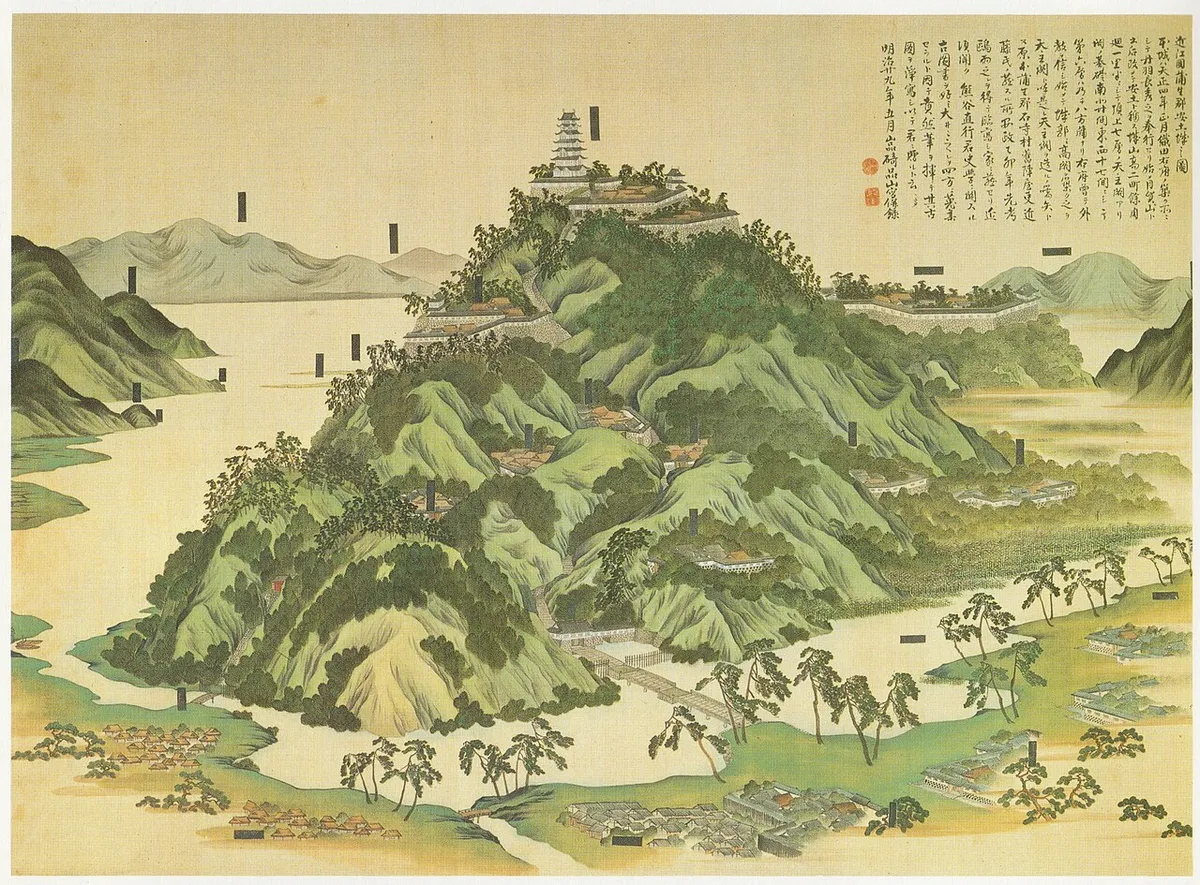
Photo:Iwasaki Ōu 岩崎鴎雨/Wikimedia Commons/Public domain

Quick Facts

Quick Facts

Admission
¥700

¥200

Hours
08:30 – 17:00

Last entry 16:00

Nearest Station
Azuchi Station (JR Biwako Line)
Walk from Station
20 min walk
Time Needed
2–3 hours including castle trail and optional Archaeological Museum at the base

High school students and under ¥200.

Defense Overview

Defense Overview

Why Azuchi Castle was hard to attack

This castle is hard to attack because it combines high ground and difficult natural access with a controlled route inward.

An attacker would first have to fight the site itself before reaching the main defenses. They would have to cross water barriers or moat lines, approach through at least some constrained entry space, face more defensive depth after the first line, and do so under a position that also watches the surrounding routes.

Overall score

86/100

Estimated range

80–92

Confidence

A

Strong multi-source support

This is a site-original comparison score for learning and comparison, not a reconstruction of one historical battle.

Radar view

Terrain 19/20 Entrance 18/20 Internal 12/20 Siege 17/20 Oversight 20/20
How this estimate was built+

This estimate combines broad terrain, approach, layout, and route-control signals. It is meant to explain the castle's defensive logic in plain English, not reconstruct a single historical attack.

Terrain Advantage

How much the terrain itself seems to help: height, slope, ridges, cliffs, water edges, and limited approach directions.

19/20

Entrance Defense

How awkward and dangerous the first entry looks: gates, bridge or moat crossings, chokepoints, and forced turns.

18/20

Internal Complexity

How hard it seems to keep pushing after entry: layered baileys, depth, compartmentalization, and repeated defensive lines.

12/20

Siege Endurance

A rough sense of long-hold potential: moats, water access, space, storage plausibility, and defensive staying power.

17/20

Strategic Oversight

How much the castle appears to command nearby roads, plains, rivers, basins, harbors, or town approaches.

20/20

Why Visit

If you understand Japanese castle history, Azuchi is a pilgrimage site. The ruins are modest compared to maintained castles, but the scale of the surviving stone walls and the weight of what happened here — the birth and sudden death of an entirely new architectural tradition — makes it one of the most meaningful sites in the country. The ceremonial staircase you climb today is the same one Nobunaga's vassals climbed to pay tribute. The summit views over the reclaimed lake plain give a ghostly sense of what the completed castle must have looked like from the water.

Highlights

1

The Castle That Changed Everything

Before Azuchi, Japanese castles were primarily military installations — functional, austere, and built for war. Oda Nobunaga's Azuchi Castle (completed 1579) was the first to combine military function with extravagant artistic display: a massive stone base visible for miles, a seven-story tower covered in gold and painted interiors, and formal chambers designed to project the absolute political authority of a man who was remaking Japan. Every castle built after Azuchi — Osaka, Himeji, Fushimi — descends from its revolutionary design concept.
2

Gone in Three Years

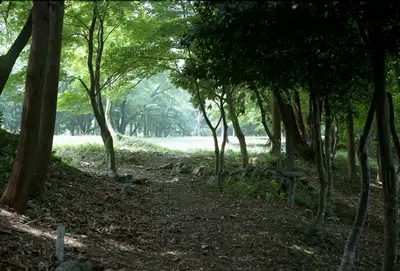
Azuchi Castle was completed in 1579. Nobunaga was assassinated at Honnoji Temple in Kyoto in 1582. Within days, the castle burned — likely set alight by retreating forces or by accident in the chaos. Three years of revolutionary architecture, vanished. What remains are the massive stone foundations, a grand ceremonial staircase, and the profound silence of a hill that once held the most ambitious building in Japan.

3

The Best Stone Walls in Japan (Under the Trees)

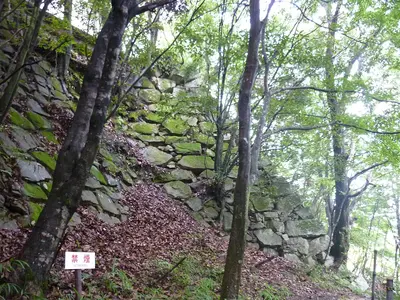
The enormous ishigaki stone walls that supported Azuchi's towers and compounds are still there — overgrown with trees, covered in moss, but structurally intact and in many places more dramatic than the stone walls of maintained castle sites. The combination of monumental stone construction and forest reclamation creates an atmosphere that no rebuilt castle can replicate.

Structure Details

Visitor tip

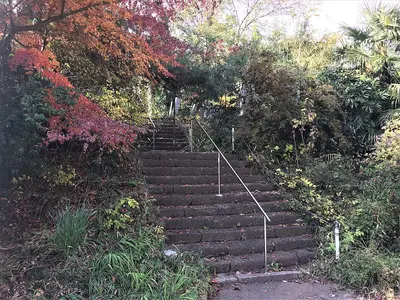
The trail to the summit tenshu platform follows the original grand ceremonial staircase — still largely intact. The climb is steep in places and the stone steps can be slippery when wet. The main tenshu foundation platform at the summit is a wide stone terrace with spectacular views — this is where the most important building in 16th-century Japan once stood. Allow time to explore the compound platforms on the way up; the stone walls on either side of the trail are original 1579 construction.

Castle type

Mountain castle

Mountain castle on low hill above lake — Azuchi-yama hill (199m) originally projected into Lake Biwa before land reclamation changed the landscape

Layout type

Western domain layout

Innovative centralized layout — the main tenshu tower stood on a massive stone platform at the summit, visible from the lake, with ascending compounds on all sides

Main tower

Ruins only — the foundations and stone platform of the main tower survive; the seven-story tower burned in 1582

7 floors, 2 below

Stone walls

Natural stone stacking

The stone walls of Azuchi Castle are among the most impressive in Japan — massive courses of stone supporting terraces and compound platforms at multiple levels. The scale of the engineering (accomplished in a period before the refinements of the Edo period castle-building tradition) reflects the extraordinary resources Nobunaga commanded. Many walls exceed 10 meters in height and are still structurally sound after 450 years.

Key defensive features

Lake Biwa Water Defense (Historical)

When built, Azuchi-yama was a peninsula projecting into Lake Biwa. The castle's stone walls dropped directly to the water on three sides, making it accessible only by boat from those directions and by a single fortified landward approach.

Massive Stone Platform (Tenshu Dai)

The tenshu was built on an enormous stone platform at the summit — structurally the most ambitious single construction of the Sengoku period. The platform elevated the tower above the surrounding compounds and served both military and symbolic purposes: the lord's residence literally rose above all else.

Grand Monumental Staircase

A wide formal stone staircase ascended from the main gate to the upper compounds — unique in Japanese castle design of the period. The staircase was both a defensive feature (attackers exposed on an open slope) and a ceremonial statement (visitors approaching Nobunaga climbed to him).

The Story of Azuchi Castle

Originally built 1576 / Oda Nobunaga
Current form 1579 / Oda Nobunaga (completed)
    1576

    Oda Nobunaga, having expelled the Ashikaga shogunate and brought much of central Japan under his control, begins construction of a new castle on Azuchi-yama, a hill projecting into Lake Biwa. He commands the most advanced military and economic resources in Japan and deploys them all on this single building project.

    1579

    Azuchi Castle is completed. The seven-story tower (tenshu) rises from a massive stone platform at the summit, its exterior decorated with painted sculptures and gold ornamentation. The interiors are covered in paintings by Kano Eitoku — gold-leaf panels depicting Chinese and Japanese landscapes, dragons, tigers, and Confucian sages. It is the most expensive and elaborately decorated building in Japanese history to this point.

    1580

    Nobunaga hosts a grand inspection of the castle for his allies and subordinates — a deliberate display of his power and cultural ambition. A Portuguese Jesuit, Luis Frois, visits and writes a detailed description of the castle: 'This lofty castle is a wonder of the world... its pinnacle reaches the clouds.' His account survives as one of the few firsthand descriptions.

    1582

    Oda Nobunaga is ambushed and killed by his general Akechi Mitsuhide at the Honnoji Temple in Kyoto — the Incident at Honnoji, one of the most dramatic moments in Japanese history. Nobunaga's son Nobuo evacuates Azuchi Castle.

    1582

    Azuchi Castle burns. The cause is disputed — Akechi forces may have burned it deliberately, Nobunaga's own retreating forces may have torched it, or fire may have spread accidentally. The seven-story tower, three years old, is destroyed. The stone walls and foundations survive but the castle is never rebuilt.

    1585

    Sokenji Temple is established on the former castle site by Nobunaga's retainers, partly to venerate Nobunaga's memory. The temple incorporates some of the surviving stone structures and remains on the site today — visitors access the castle ruins through the temple grounds.

In Pop Culture

other

Luis Frois — Historia de Japam

The Portuguese Jesuit missionary Luis Frois wrote the most detailed surviving eyewitness description of Azuchi Castle in the 1580s, including measurements, descriptions of the painted interior chambers, and observations of Nobunaga's court. It is the primary historical source for understanding what the completed castle looked like.

TV

NHK Taiga dramas (Oda Nobunaga)

Azuchi Castle is central to virtually every dramatization of Oda Nobunaga's life — appearing in multiple NHK historical dramas including 'Komyo ga Tsuji,' 'Kirin ga Kuru,' and 'Nobunaga Concerto.' The castle's grandeur and its sudden destruction are recurring dramatic focal points.

Film

Kagemusha (1980)

Akira Kurosawa's film about the Sengoku period depicts the era in which Azuchi Castle was built, evoking the scale of Nobunaga's ambition as a backdrop to the Takeda clan's final defeat.

Did You Know?

  • The painting cycle inside Azuchi Castle's tenshu by master artist Kano Eitoku is considered one of the lost masterpieces of Japanese art history. Eitoku went on to paint for Toyotomi Hideyoshi's castles, but his Azuchi work — destroyed in 1582 — is known only through fragmentary descriptions and later copies of his style.
  • Nobunaga reportedly held a sumo tournament at Azuchi Castle in 1578 that drew competitors from across Japan — and reportedly declared a favorite wrestler the champion over the clearly stronger winner, then changed his mind when the crowd protested. The incident is cited as an example of both his autocratic personality and his curious sense of theater.
  • The stone walls of Azuchi Castle incorporated a number of Buddhist stone grave markers, pagoda fragments, and stone Buddha figures as raw building material — a deliberate provocation against the Buddhist institutions Nobunaga was simultaneously suppressing militarily. The 'statue stones' are visible in the walls today.

Score Breakdown

Tourism Score

D 55/100
  • Accessibility 10 /20
  • Foreign-Friendly 8 /20
  • Historical Value 20 /20
  • Visual Impact 10 /20
  • Facilities 7 /20

Defense Score

A 86/100
  • Terrain Advantage 19 /20
  • Entrance Defense 18 /20
  • Internal Complexity 12 /20
  • Siege Endurance 17 /20
  • Strategic Oversight 20 /20

Planning Your Visit

Best Time to Visit

Spring (late March to early May) for pleasant trail conditions and green forest. Autumn (October–November) for foliage around the stone walls. Avoid midsummer — the forest trail is hot and the site has minimal shade. The atmospheric quality of the ruins is greatest on grey or misty days.

Time Needed

2–3 hours including castle trail and optional Archaeological Museum at the base

Insider Tip

Visit the Azuchi Castle Archaeological Museum before climbing the hill — the reconstructed scale models and architectural drawings give essential context for interpreting the ruins. Many visitors find the ruins underwhelming without understanding what once stood here; with that context, the stone platform at the summit becomes genuinely moving. The museum is easily walkable from the station and the entrance is separate from the castle trail admission.

Map

Getting There

Nearest station: Azuchi Station (JR Biwako Line)
Walk from station: 20 min walk
Parking: Paid parking near the castle entrance (approx. ¥300–500). Multiple lots available.
Accessible with a JR Pass

Admission

Adult¥700
Child¥200

High school students and under ¥200.

Opening Hours

Open08:30 – 17:00
Last entry16:00

Closed during bad weather that makes the stone staircase trail dangerous. Open year-round except occasional closures. The site encompasses the entire Azuchi-yama hill.

Facilities

  • – English guides
  • – Audio guide
  • – Wheelchair access
  • ✓ Restrooms
  • ✓ Gift shop
  • ✓ Food nearby

Nearby Castles

Featured in collections

FAQ

Frequently Asked Questions

How do I get to Azuchi Castle?

The nearest station is Azuchi Station (JR Biwako Line). From there it is about 20 minutes on foot.

How much does Azuchi Castle cost to enter?

Adult admission is ¥700 and child admission is ¥200.

Is Azuchi Castle worth visiting?

If you understand Japanese castle history, Azuchi is a pilgrimage site. The ruins are modest compared to maintained castles, but the scale of the surviving stone walls and the weight of what happened here — the birth and sudden death of an entirely new architectural tradition — makes it one of the most meaningful sites in the country. The ceremonial staircase you climb today is the same one Nobunaga's vassals climbed to pay tribute. The summit views over the reclaimed lake plain give a ghostly sense of what the completed castle must have looked like from the water.

What are the opening hours of Azuchi Castle?

08:30 to 17:00, last entry 16:00.

How long should I spend at Azuchi Castle?

Plan for about 2–3 hours including castle trail and optional Archaeological Museum at the base, depending on how closely you want to explore the grounds.