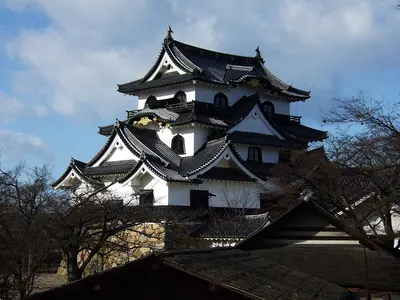
Hachimanyama Castle

八幡山城·Hachimanyama-jo

D Tourism Score 48/100
A Defense Score 85/100

The ten-year castle of Hideyoshi's doomed nephew — summit ruins above the canal town he founded, accessible by ropeway with views over Lake Biwa that explain exactly why the Sengoku era was fought here.

#157 — Continued 100 Castles Ruins
Hachimanyama Castle (八幡山城)
Photo:投稿者が撮影/Wikimedia Commons/Public domain

Quick Facts

Quick Facts

Admission
¥950

¥480

Hours
09:00 – 17:00

Last entry 16:30

Nearest Station
Omihachiman Station (JR Biwako Line)
Walk from Station
30 min walk

Bus also available

Time Needed
2–3 hours including ropeway, castle ruins, and canal town walk below

Ropeway round-trip: Adult ¥950, Child ¥480 (revised Jan 2024). Castle ruins at summit are free; fee is for ropeway.

Defense Overview

Defense Overview

Why Hachimanyama Castle was hard to attack

This castle is hard to attack because it combines high ground and difficult natural access with a controlled route inward.

An attacker would first have to fight the site itself before reaching the main defenses. They would have to cross water barriers or moat lines, face more defensive depth after the first line, and do so under a position that also watches the surrounding routes.

Overall score

85/100

Estimated range

79–91

Confidence

B

Usable estimate with some inference

This is a site-original comparison score for learning and comparison, not a reconstruction of one historical battle.

Radar view

Terrain 19/20 Entrance 17/20 Internal 14/20 Siege 16/20 Oversight 19/20
How this estimate was built+

This estimate combines broad terrain, approach, layout, and route-control signals. It is meant to explain the castle's defensive logic in plain English, not reconstruct a single historical attack.

Terrain Advantage

How much the terrain itself seems to help: height, slope, ridges, cliffs, water edges, and limited approach directions.

19/20

Entrance Defense

How awkward and dangerous the first entry looks: gates, bridge or moat crossings, chokepoints, and forced turns.

17/20

Internal Complexity

How hard it seems to keep pushing after entry: layered baileys, depth, compartmentalization, and repeated defensive lines.

14/20

Siege Endurance

A rough sense of long-hold potential: moats, water access, space, storage plausibility, and defensive staying power.

16/20

Strategic Oversight

How much the castle appears to command nearby roads, plains, rivers, basins, harbors, or town approaches.

19/20

Why Visit

Hachimanyama Castle rewards visitors who combine it with the Omihachiman canal district below — the preserved Edo-period merchant town at the mountain base, founded by the same Hidetsugu who built the castle, creates a complete historical experience. The ropeway makes the summit ruins more accessible than most mountain castles, the views are genuinely spectacular, and the tragic Hidetsugu story adds emotional texture to what is otherwise a modest ruin. An excellent half-day destination paired with Azuchi Castle (a short distance away).

Highlights

1

Views Over Lake Biwa That Explain Everything

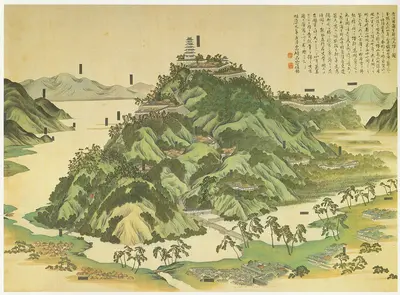
From the summit of Hachimanyama Castle's ruins, the entire strategic picture of the Lake Biwa region unfolds: the lake itself, the mountain ranges, the plains connecting Kyoto and the Hokuriku road, the smoke-smudge outline of distant Azuchi on the far shore. Toyotomi Hidetsugu — Toyotomi Hideyoshi's nephew and briefly his designated heir — built his castle here in 1585 to command this exact view and the territory below it.
2

Hideyoshi's Nephew — and His Downfall

Hachimanyama Castle was the seat of Toyotomi Hidetsugu, whom Hideyoshi adopted as heir when he had no son of his own. In 1593, Hideyoshi's biological son Hideyori was born. Three years later, Hideyoshi ordered Hidetsugu to commit suicide on suspicion of plotting against him — an accusation historians debate. Hidetsugu's family was massacred in Kyoto. Hachimanyama Castle was immediately decommissioned. The castle's short life (1585–1595) mirrors its lord's.

3

The Ropeway Castle

Hachimanyama Castle is one of the few castle sites in Japan accessible by ropeway — a short gondola ride ascends from the old merchant town of Omihachiman to the castle ruins at the summit. The contrast between the quaint, canal-lined town below (a UNESCO-adjacent traditional preservation district) and the panoramic mountain summit above creates one of the more complete tourism experiences among secondary castle sites.

Structure Details

Visitor tip

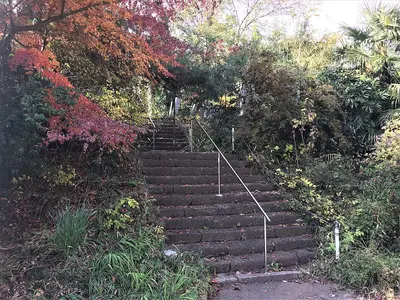
Take the ropeway up (purchase tickets at the base station) and spend time at the summit ruins before taking in the views. The stone walls around the Honmaru area are the most historically impressive element. The summit shrine and various compound areas are clearly marked. Allow time on the descent to walk through the Omihachiman canal district below — the preserved merchant town and castle ruins together form the most complete Sengoku castle-town experience in the Lake Biwa region.

Castle type

Mountain castle

Mountain castle — built on Hachimanyama (Hachiman Mountain, 283m) overlooking Lake Biwa and the Omihachiman canal town below

Layout type

Ladder layout

Stepped-tier layout — compounds on the summit ridge with secondary terraces on descending slopes

Main tower

Ruins only — stone walls, compound earthworks, and ropeway access; no standing structures

Stone walls

Natural stone stacking

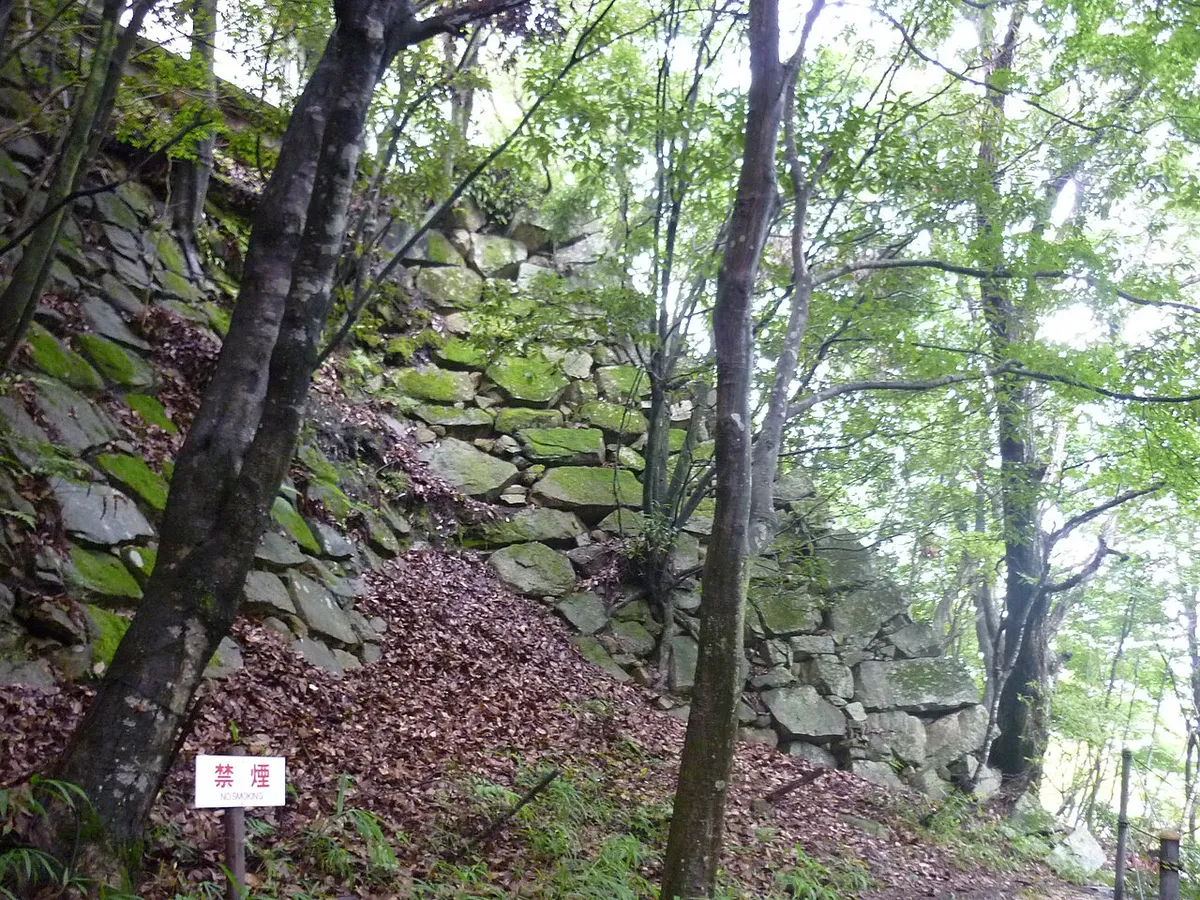
The stone walls of Hachimanyama Castle are relatively well-preserved for a site of its age, with original late-Sengoku ishigaki construction visible around the summit compound area and on the upper slope terraces. The short life of the castle (10 years) means the construction is from a single concentrated period.

Key defensive features

Hachimanyama Natural Elevation (283m)

The mountain provides commanding views over the surrounding lake and plain in all directions. Any approaching army would be visible long before reaching the base of the mountain.

Lake Biwa Water Defense (Eastern)

Lake Biwa's shoreline was historically much closer to Hachimanyama than today — the castle's eastern face was partially protected by the lake itself.

Canal Town Defense

The canal system of Omihachiman town at the mountain base, developed simultaneously with the castle as a planned castle town, served as an additional defensive water network surrounding the mountain approaches.

The Story of Hachimanyama Castle

Originally built 1585 / Toyotomi Hidetsugu
Current form 1585 / Toyotomi Hidetsugu
    1585

    Toyotomi Hidetsugu — Hideyoshi's nephew and adopted heir — is given the Omi domain and begins construction of Hachimanyama Castle on the mountain above Lake Biwa. He simultaneously develops the planned merchant town of Omihachiman at the mountain base, creating a complete castle-town system. Hidetsugu invites merchants from Azuchi (the recently burned castle town) to settle in Omihachiman, establishing the town's commercial character.

    1590

    Hidetsugu participates in Toyotomi Hideyoshi's Odawara campaign, which destroys the Hojo clan and completes the military unification of Japan. Hachimanyama is now the seat of a major Toyotomi regional authority.

    1591

    Toyotomi Hideyoshi formally designates Hidetsugu as his heir and 'Kampaku' (imperial regent) — the highest civilian political title. Hidetsugu's position appears secure. He moves his political administration to Jurakudai in Kyoto while retaining Hachimanyama as a regional base.

    1593

    Toyotomi Yodo-dono (formerly Chacha, daughter of Azai Nagamasa and Oichi) gives birth to Hideyoshi's son, Hideyori. Hideyoshi's disposition toward Hidetsugu begins to change. The succession question, apparently resolved, is reopened by biology.

    1595

    Hideyoshi strips Hidetsugu of his Kampaku title and orders him exiled to Koyasan on Mount Koya. Shortly after, Hideyoshi orders Hidetsugu to commit suicide. He does so at age 28. Hidetsugu's wives, children, and concubines — approximately 30 people — are subsequently executed in Kyoto. Hachimanyama Castle is immediately decommissioned and stripped of materials. The castle's active life was exactly ten years.

In Pop Culture

TV

NHK Taiga dramas (Toyotomi period)

Toyotomi Hidetsugu and the tragedy of his adoption and forced suicide appear in dramatizations of the Toyotomi period — particularly NHK dramas about Hideyoshi's later years and the complicated succession politics surrounding the birth of Hideyori.

Did You Know?

  • The merchant town of Omihachiman that Hidetsugu founded below the castle became one of the most commercially successful castle towns in the Lake Biwa region — the 'Omihachiman merchants' (Omi shonin) were famous throughout Japan during the Edo period as highly skilled traveling merchants. The town Hidetsugu created outlasted his castle by three centuries and its character survives today in the preserved canal district.
  • When Hidetsugu invited merchants from the burned Azuchi Castle town to settle in Omihachiman, he was essentially inheriting the commercial community that Oda Nobunaga had built — Nobunaga's castle was gone but Nobunaga's merchants carried on under the next generation of Toyotomi power.
  • The ropeway that provides access to Hachimanyama Castle ruins was built in 1961, making it one of the earlier tourist ropeway installations at a Japanese castle site. The ropeway station at the summit is located within the former castle compound area — a thoroughly modern intrusion into a 16th-century archaeological site.

Score Breakdown

Tourism Score

D 48/100
  • Accessibility 10 /20
  • Foreign-Friendly 7 /20
  • Historical Value 11 /20
  • Visual Impact 12 /20
  • Facilities 8 /20

Defense Score

A 85/100
  • Terrain Advantage 19 /20
  • Entrance Defense 17 /20
  • Internal Complexity 14 /20
  • Siege Endurance 16 /20
  • Strategic Oversight 19 /20

Planning Your Visit

Best Time to Visit

Spring (cherry blossoms on the mountain in early April) and autumn (October–November foliage) are the most visually dramatic. The Lake Biwa views are best in clear autumn and winter conditions. Avoid high summer heat on the exposed summit.

Time Needed

2–3 hours including ropeway, castle ruins, and canal town walk below

Insider Tip

After descending from the castle, walk through the Omihachiman Hachiman-bori canal district — the preserved merchant streets and waterways Hidetsugu founded are among the best-preserved Edo-period commercial townscapes in the Lake Biwa region. The combination of mountain castle ruins and the living canal town below creates one of the most atmospheric half-day historical experiences in the Kansai region.

Map

Getting There

Nearest station: Omihachiman Station (JR Biwako Line)
Walk from station: 30 min walk
Bus: Bus from Omihachiman Station to 'Osugicho' stop near the ropeway base station. City loop bus available seasonally.
Parking: Free parking at the ropeway base station area.
Accessible with a JR Pass

Admission

Adult¥950
Child¥480

Ropeway round-trip: Adult ¥950, Child ¥480 (revised Jan 2024). Castle ruins at summit are free; fee is for ropeway.

Opening Hours

Open09:00 – 17:00
Last entry16:30

Ropeway operates 9:00–17:00 (last departure 16:30). Closed on Wednesdays (or Thursday if Wednesday is a holiday). Also closed during strong wind conditions for safety.

Facilities

  • – English guides
  • – Audio guide
  • – Wheelchair access
  • ✓ Restrooms
  • ✓ Gift shop
  • ✓ Food nearby

Nearby Castles

Featured in collections

FAQ

Frequently Asked Questions

How do I get to Hachimanyama Castle?

The nearest station is Omihachiman Station (JR Biwako Line). From there it is about 30 minutes on foot. Bus from Omihachiman Station to 'Osugicho' stop near the ropeway base station. City loop bus available seasonally.

How much does Hachimanyama Castle cost to enter?

Adult admission is ¥950 and child admission is ¥480.

Is Hachimanyama Castle worth visiting?

Hachimanyama Castle rewards visitors who combine it with the Omihachiman canal district below — the preserved Edo-period merchant town at the mountain base, founded by the same Hidetsugu who built the castle, creates a complete historical experience. The ropeway makes the summit ruins more accessible than most mountain castles, the views are genuinely spectacular, and the tragic Hidetsugu story adds emotional texture to what is otherwise a modest ruin. An excellent half-day destination paired with Azuchi Castle (a short distance away).

What are the opening hours of Hachimanyama Castle?

09:00 to 17:00, last entry 16:30.

How long should I spend at Hachimanyama Castle?

Plan for about 2–3 hours including ropeway, castle ruins, and canal town walk below, depending on how closely you want to explore the grounds.