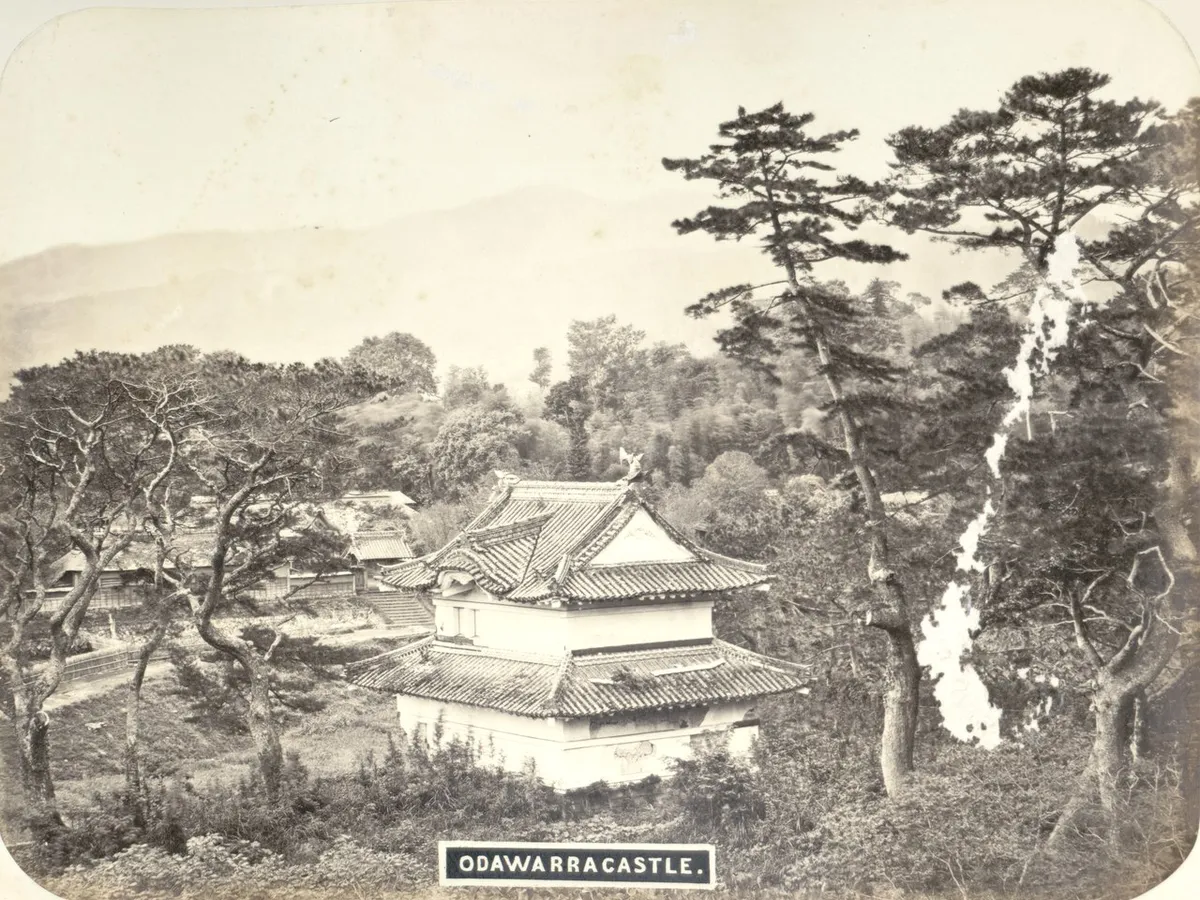
Odawara Castle

小田原城·Odawara-jo

B Tourism Score 72/100
B Defense Score 74/100

The castle that Hideyoshi could not storm — famous less for its tower than for the legendary city-swallowing earthworks and the indecisive council that became a Japanese proverb.

#23 — 100 Famous Castles Reconstructed
Odawara Castle (小田原城)
Photo:Unknown authorUnknown author/Wikimedia Commons/Public domain

Quick Facts

Quick Facts

Admission
¥1,000

¥300

Hours
09:00 – 17:00

Last entry 16:30

Nearest Station
Odawara Station (JR Tokaido Main Line / Tokaido Shinkansen / Odakyu Line)
Walk from Station
10 min walk
Time Needed
1-1.5 hours (castle and museum); add 1 hour for sou-gamae earthwork walking route

Admission increased to ¥1,000 from March 1, 2026 (includes SAMURAI Hall access). Children (elementary) ¥300. Castle park grounds are free.

Defense Overview

Defense Overview

Why Odawara Castle was hard to attack

This castle is hard to attack because it combines a raised core with defended outer space with a controlled route inward.

An attacker would not get a simple direct approach to the center. They would have to cross water barriers or moat lines and face more defensive depth after the first line.

Overall score

74/100

Estimated range

68–80

Confidence

A

Strong multi-source support

This is a site-original comparison score for learning and comparison, not a reconstruction of one historical battle.

Radar view

Terrain 15/20 Entrance 14/20 Internal 16/20 Siege 15/20 Oversight 14/20
How this estimate was built+

This estimate combines broad terrain, approach, layout, and route-control signals. It is meant to explain the castle's defensive logic in plain English, not reconstruct a single historical attack.

Terrain Advantage

How much the terrain itself seems to help: height, slope, ridges, cliffs, water edges, and limited approach directions.

15/20

Entrance Defense

How awkward and dangerous the first entry looks: gates, bridge or moat crossings, chokepoints, and forced turns.

14/20

Internal Complexity

How hard it seems to keep pushing after entry: layered baileys, depth, compartmentalization, and repeated defensive lines.

16/20

Siege Endurance

A rough sense of long-hold potential: moats, water access, space, storage plausibility, and defensive staying power.

15/20

Strategic Oversight

How much the castle appears to command nearby roads, plains, rivers, basins, harbors, or town approaches.

14/20

Why Visit

Odawara Castle is the most convenient major castle day trip from Tokyo — 90 minutes by train and 10 minutes from the station. The concrete tower houses a solid museum covering Hojo clan history and the dramatic 1590 siege. More interesting to history enthusiasts is the surviving sou-gamae earthwork network around the city — request information at the castle about the walking route. The castle park is pleasant for families with a zoo.

Highlights

1

The Castle That Stopped Hideyoshi — Almost

Odawara Castle was the headquarters of the Hojo clan, who ruled the Kanto region for over a century. In 1590, Toyotomi Hideyoshi assembled an army of 200,000 soldiers to besiege it — one of the largest military operations in Japanese history. Rather than assault, Hideyoshi created a vast siege camp with brothels, tea houses, and entertainments and simply waited. After three months, the Hojo surrendered without the castle ever falling by direct assault.
2

Sou-Gamae: The Walls That Swallowed a City

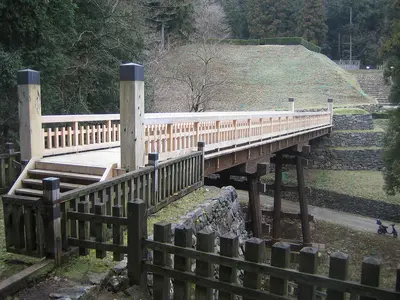
The Hojo clan built one of the most extraordinary defensive systems in Japanese history — the 'sou-gamae,' or comprehensive outer enclosure. Their earthwork walls and moats extended for approximately 9 kilometers around the entire castle town, enclosing not just the castle but the entire city of Odawara within the defensive perimeter. Sections of this vast earthwork system still survive and can be hiked today.

3

Easy Day Trip from Tokyo

Odawara Castle has one of the best location advantages of any Japanese castle — just 90 minutes from central Tokyo on the JR Tokaido Line (even less on the Shinkansen), a short walk from the station, and with a castle park that includes a zoo and playground. It serves as both a serious historical site and a popular family destination.

Structure Details

Visitor tip

The concrete tower contains a decent museum covering the Hojo clan's history and the famous 1590 siege. More historically interesting are the surviving earthworks — ask at the castle about the 'sou-gamae walking route,' which follows remnants of the outer defensive walls through the surrounding neighborhoods. The castle park is pleasant and includes a small zoo.

Castle type

Hill castle

Hill-top flatland castle — the main tower sits on a low natural hill surrounded by the castle town's flat terrain

Layout type

Concentric layout

Enclosure style — concentric moats and earthworks on an exceptionally large scale including the city-enclosing sou-gamae

Main tower

Concrete reconstruction (1960) — the original tenshu was demolished in 1706 during repairs following earthquake damage, with various later reconstructions also lost. The current five-story concrete tower was built in 1960 for Odawara's city promotion.

32m5 floors, 2 below

Stone walls

Natural stone stacking

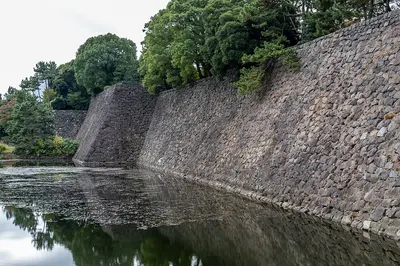
The inner castle compound features stone walls typical of Sengoku-era construction. More remarkable are the vast earthwork walls of the sou-gamae system — these earthen embankments and ditches, built by the Hojo clan over generations, encircled the entire city and represent one of the largest fortification projects of medieval Japan.

Moats

Multiple moat systems survive at different scales: the inner castle moats around the main compound, and remnants of the extensive outer moat network that was part of the sou-gamae city-enclosing system. The Hojo moats were notable for their width and depth.

Key defensive features

Sou-Gamae (Comprehensive City Enclosure)

The Hojo clan's masterwork — a 9-kilometer circuit of earthwork walls, ditches, and moats enclosing the entire castle town. This meant any besieging army had to invest not just the castle but the whole city, massively increasing the resources required. Sections of this earthwork are preserved and hikeable today.

Hojo Clan Strategic Depth

The Hojo maintained multiple secondary castles throughout the Kanto region — Hachioji, Yamanaka, Tsurugashima — creating a strategic defense-in-depth system. An attacking force had to reduce all these outlying positions before approaching Odawara itself.

Three-Month Resistance Against 200,000

The castle withstood Hideyoshi's 200,000-man army for nearly three months in 1590 without being breached — ultimately surrendering through political negotiation, not military defeat. This achievement, against the most powerful army in Japan, demonstrates the effectiveness of Odawara's defensive design.

The Story of Odawara Castle

Originally built 1418 / Omori Yoriharu
Current form 1960 / Odawara City Government
    1418

    The Omori clan builds the original castle on the hill above Odawara, controlling the Tokaido road — the main route between eastern and western Japan.

    1495

    Hojo Soun captures Odawara Castle and begins the rise of the Late Hojo clan (Go-Hojo) to dominance over the Kanto region. Over the next century, successive Hojo lords expand the castle and its outer defenses.

    1560

    The Hojo clan completes the sou-gamae — the comprehensive earthwork enclosure surrounding the entire city. At this point Odawara's total defensive perimeter reaches approximately 9 kilometers.

    1590

    Toyotomi Hideyoshi besieges Odawara with 200,000 soldiers. The Hojo hold out for nearly three months but surrender after Hideyoshi completes Ishigakiyama Ichiya Castle on a commanding hill above the city. The Hojo clan is exterminated; Tokugawa Ieyasu takes control of the Kanto region.

    1706

    The castle tower is demolished for repairs following earthquake damage and not rebuilt, beginning a long period of gradual decline in the castle's physical structures.

    1960

    Odawara City constructs a concrete main tower for the 600th anniversary of the city's founding, designed to match the Hojo-era appearance and housing a museum of local history.

In Pop Culture

TV

Various NHK Taiga dramas on Sengoku period

The Hojo clan and the Odawara siege of 1590 appear in multiple NHK Taiga dramas covering Toyotomi Hideyoshi and the unification of Japan, including 'Komyo ga Tsuji' and 'Go.'

Did You Know?

  • The Odawara council — where the Hojo clan held endless debates about how to respond to Hideyoshi's ultimatum — became so famous for its indecision that the phrase 'Odawara hyojo' (Odawara conference) entered the Japanese language as a term for unproductive deliberation that drags on without resolution.
  • Hideyoshi's Ishigakiyama Ichiya Castle, built on a hill overlooking Odawara during the siege, was constructed in complete secrecy over 80 days. Hideyoshi had all surrounding trees felled simultaneously to reveal the completed stone castle overnight — the dramatic psychological shock was deliberate.
  • The 1590 siege army of 200,000 was one of the largest assembled in Japanese history up to that point. Hideyoshi accompanied the army with entertainers, merchants, and courtiers — turning the siege into a months-long traveling court and demonstrating his absolute confidence in the outcome.
  • Odawara Castle has survived three major earthquakes: the 1703 Genroku earthquake, the 1923 Great Kanto Earthquake (which severely damaged the castle), and numerous others — a reflection of the challenging seismic environment of the Sagami Trough.

Score Breakdown

Tourism Score

B 72/100
  • Accessibility 19 /20
  • Foreign-Friendly 14 /20
  • Historical Value 15 /20
  • Visual Impact 13 /20
  • Facilities 11 /20

Defense Score

B 74/100
  • Terrain Advantage 15 /20
  • Entrance Defense 14 /20
  • Internal Complexity 16 /20
  • Siege Endurance 15 /20
  • Strategic Oversight 14 /20

Planning Your Visit

Best Time to Visit

Spring cherry blossoms are particularly celebrated here — the Odawara Castle Cherry Blossom Festival draws large crowds in late March to early April. Combine with a visit to Hakone (one train stop or a short bus ride away) for a full day trip from Tokyo.

Time Needed

1-1.5 hours (castle and museum); add 1 hour for sou-gamae earthwork walking route

Insider Tip

Take the JR Tokaido Limited Express (not the Shinkansen — you don't need it for this distance) from Tokyo Station to Odawara for the most affordable and practical access. After the castle, walk five minutes to the Odawara fish market for excellent fresh seafood lunch — the city is famous for kamaboko (fish cake) and fresh Sagami Bay catches.

Map

Getting There

Nearest station: Odawara Station (JR Tokaido Main Line / Tokaido Shinkansen / Odakyu Line)
Walk from station: 10 min walk
Parking: Paid parking inside the castle park. Easily reached by train from Tokyo in about 90 minutes.
Accessible with a JR Pass

Admission

Adult¥1,000
Child¥300

Admission increased to ¥1,000 from March 1, 2026 (includes SAMURAI Hall access). Children (elementary) ¥300. Castle park grounds are free.

Opening Hours

Open09:00 – 17:00
Last entry16:30

Open year-round. Closed on December 31 and January 1. Extended cherry blossom season events in spring.

Facilities

  • – English guides
  • – Audio guide
  • ✓ Wheelchair access
  • ✓ Restrooms
  • ✓ Gift shop
  • ✓ Food nearby

Nearby Castles

Featured in collections

FAQ

Frequently Asked Questions

How do I get to Odawara Castle?

The nearest station is Odawara Station (JR Tokaido Main Line / Tokaido Shinkansen / Odakyu Line). From there it is about 10 minutes on foot.

How much does Odawara Castle cost to enter?

Adult admission is ¥1,000 and child admission is ¥300.

Is Odawara Castle worth visiting?

Odawara Castle is the most convenient major castle day trip from Tokyo — 90 minutes by train and 10 minutes from the station. The concrete tower houses a solid museum covering Hojo clan history and the dramatic 1590 siege. More interesting to history enthusiasts is the surviving sou-gamae earthwork network around the city — request information at the castle about the walking route. The castle park is pleasant for families with a zoo.

What are the opening hours of Odawara Castle?

09:00 to 17:00, last entry 16:30.

How long should I spend at Odawara Castle?

Plan for about 1-1.5 hours (castle and museum); add 1 hour for sou-gamae earthwork walking route, depending on how closely you want to explore the grounds.