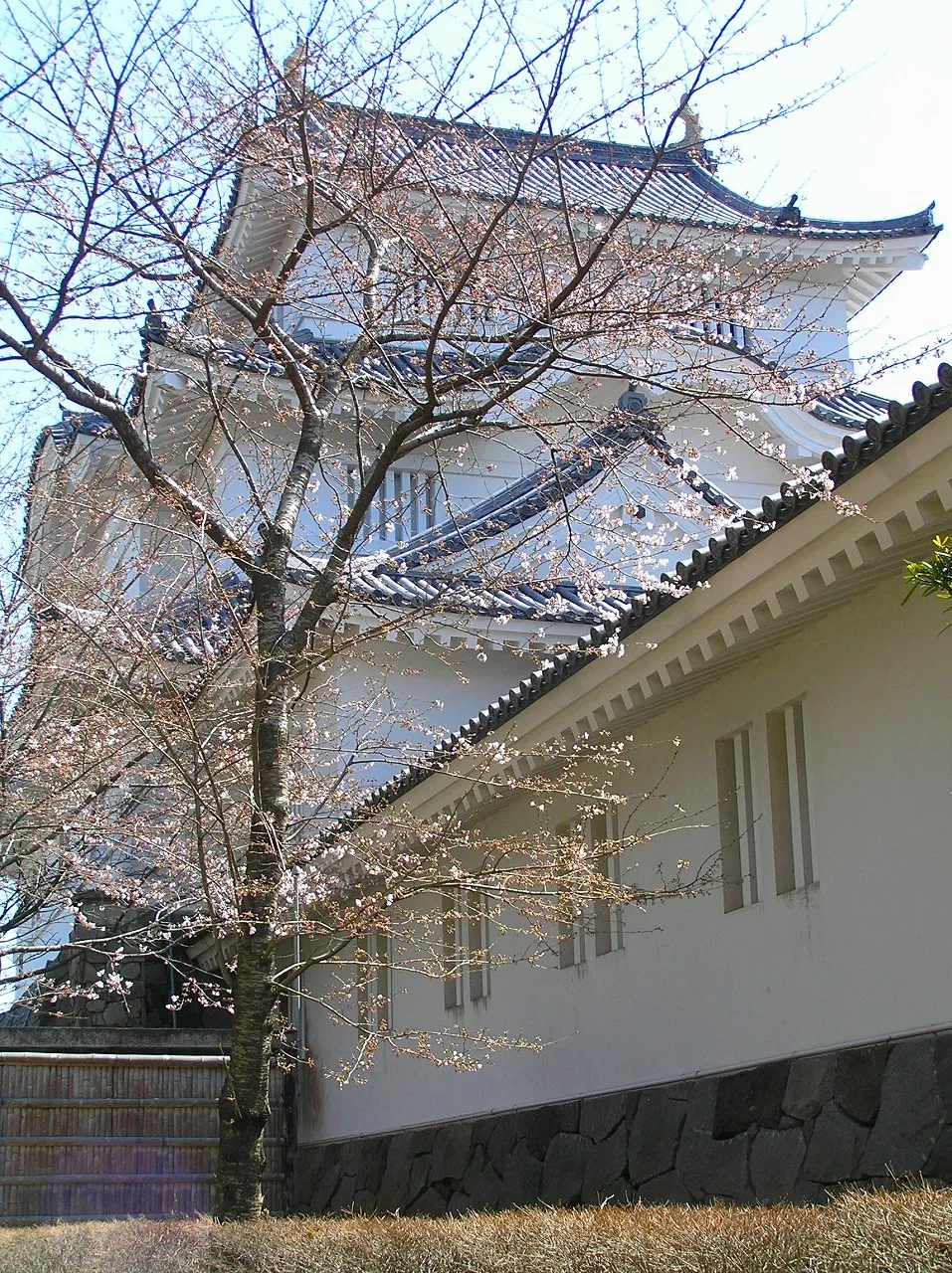
Otaki Castle

大多喜城·Otaki-jo

D Tourism Score 42/100
B Defense Score 76/100

The domain castle of Honda Tadakatsu — Japan's most famous undefeated samurai, who fought 57 battles without receiving a wound.

#124 — Continued 100 Castles Reconstructed
Otaki Castle (大多喜城)
Photo:白蛇の騎士/Wikimedia Commons/CC BY-SA 3.0

Quick Facts

Quick Facts

Admission
¥200

¥0

Hours
09:00 – 16:30

Last entry 16:00

Nearest Station
Otaki Station (Isumi Railway)
Walk from Station
20 min walk
Time Needed
1–1.5 hours.

Children (junior high and under) free. NOTICE: Castle closed for renovation since December 2021; check for reopening status.

Defense Overview

Defense Overview

Why Otaki Castle was hard to attack

This castle is hard to attack because it combines a raised core with defended outer space with enough defensive depth to slow attackers before the center.

An attacker would not get a simple direct approach to the center. They would have to cross water barriers or moat lines and push through successive outer areas before the core.

Overall score

76/100

Estimated range

70–82

Confidence

A

Strong multi-source support

This is a site-original comparison score for learning and comparison, not a reconstruction of one historical battle.

Radar view

Terrain 15/20 Entrance 14/20 Internal 16/20 Siege 16/20 Oversight 15/20
How this estimate was built+

This estimate combines broad terrain, approach, layout, and route-control signals. It is meant to explain the castle's defensive logic in plain English, not reconstruct a single historical attack.

Terrain Advantage

How much the terrain itself seems to help: height, slope, ridges, cliffs, water edges, and limited approach directions.

15/20

Entrance Defense

How awkward and dangerous the first entry looks: gates, bridge or moat crossings, chokepoints, and forced turns.

14/20

Internal Complexity

How hard it seems to keep pushing after entry: layered baileys, depth, compartmentalization, and repeated defensive lines.

16/20

Siege Endurance

A rough sense of long-hold potential: moats, water access, space, storage plausibility, and defensive staying power.

16/20

Strategic Oversight

How much the castle appears to command nearby roads, plains, rivers, basins, harbors, or town approaches.

15/20

Why Visit

Otaki is a pleasant rural castle with a better historical story than most reconstructed-concrete sites. The Honda Tadakatsu connection gives the museum real substance, and the surviving great well is an impressive original feature. The rural Isumi Valley setting is calm and photogenic — the white tower above the forested valley is one of the better castle images in the Kanto region. For samurai history enthusiasts, especially those who know Honda Tadakatsu from video games, dramas, or history reading, the site is genuinely satisfying.

Highlights

1

Honda Tadakatsu's Castle — Japan's Greatest Undefeated Samurai

Otaki Castle was the domain of Honda Tadakatsu, one of the four 'divine generals' of Tokugawa Ieyasu and widely considered the greatest samurai warrior of the Sengoku period. Honda fought in over 57 battles across his career and was never once wounded — an extraordinary record that made him legendary even among contemporaries. Toyotomi Hideyoshi, no stranger to military talent, reportedly said that Honda was 'a samurai among samurai.' The castle tower museum displays Honda artifacts and celebrates his legacy.
2

A White Tower in the Isumi River Valley

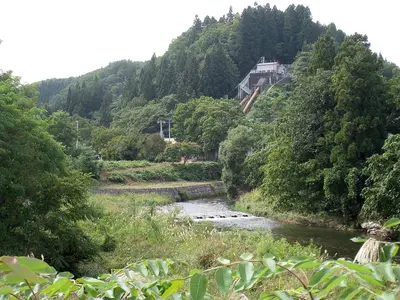
Otaki Castle sits on a promontory above the Isumi River, and the white reconstructed tower rising above the forest is one of the most photogenic castle images in Chiba Prefecture. The rural Isumi Valley setting — well away from the Tokyo sprawl — gives the site a tranquil atmosphere that makes it feel more authentic than many better-known castle towns.

3

The Last Original Well in Chiba

On the castle grounds survives a remarkable original feature: the Otaki-jo Oidono no I (大多喜城大井戸), an enormous well estimated at 20 meters deep that supplied water for the castle's garrison. According to tradition, it was constructed by Honda Tadakatsu himself after he took the castle. It is one of the largest surviving castle wells in the Kanto region and still holds water today.

Structure Details

Visitor tip

A pleasant rural castle visit with a small but interesting museum dedicated to Honda Tadakatsu. The photogenic white tower above the forested valley is the visual draw, and the original well on the grounds is genuinely impressive in scale. The rural Isumi Valley setting is peaceful — very different from the crowded urban castle experiences of Tokyo-area sites.

Castle type

Hill castle

Hill castle — built on a river promontory above the Isumi River, using the river as a natural moat on several sides while the forested hill provided elevation above the valley

Layout type

Linked compound layout

Compound style — honmaru at the promontory summit with secondary compounds on the descending slopes

Main tower

Reconstructed concrete castle tower, built in 1975 and managed by the Chiba Prefectural Museum. The interior is a history museum covering Honda Tadakatsu, Otaki Domain, and the castle's Sengoku history.

3 floors

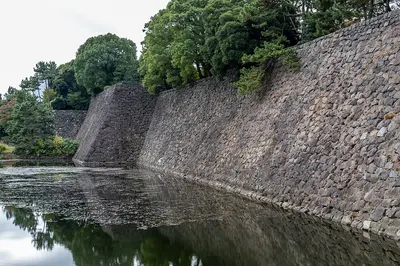
Stone walls

Natural stone stacking

Stone wall remnants survive on the castle promontory, with the original construction reflecting Honda Tadakatsu's improvements to the castle after he received it from Tokugawa Ieyasu. The enormous castle well (Oidono no I) is the most significant surviving original feature.

Moats

The Isumi River formed a natural water barrier on the western and northern sides of the castle promontory. Additional defensive ditches were cut to complete the enclosure on the landward sides.

Key defensive features

Isumi River Natural Moat

The Isumi River wraps around the western and northern faces of the castle promontory, creating a natural water barrier that reduced the perimeter requiring active defense. Any attack from the river-side directions required crossing the river under observation from the castle above.

Promontory Position Above Valley

The castle sits on a projecting promontory above the river valley floor, providing elevation advantage over approaching forces and excellent observation over the valley in both directions. The forested slopes of the promontory provided additional concealment and made climbing under fire extremely difficult.

Honda Tadakatsu's Massive Water Well

The construction of a 20-meter deep well within the honmaru was a critical defensive preparation by Honda Tadakatsu. A castle that could supply its garrison with water internally could withstand a long siege — the well made Otaki fundamentally more siege-resistant than a castle dependent on external water sources.

The Story of Otaki Castle

Originally built 1521 / Masaki Tokishige
Current form 1590 / Honda Tadakatsu
    1521

    The Masaki clan builds the original fortification on the Isumi River promontory. The castle controls the Isumi Valley, an important route through the Boso Peninsula.

    1574

    The里見 (Satomi) clan, powerful lords of the southern Boso Peninsula, take control of Otaki Castle, incorporating it into their eastern Kanto defensive network against the Hojo clan.

    1590

    Following Toyotomi Hideyoshi's destruction of the Hojo clan, Tokugawa Ieyasu is relocated from his original territories to the Kanto region. Ieyasu assigns Honda Tadakatsu — his most trusted general and perhaps the greatest warrior of the age — as lord of Otaki with a 100,000-koku domain. Honda immediately improves the castle, constructing the famous great well and strengthening the fortifications.

    1609

    Honda Tadakatsu retires and is succeeded by his son Honda Tadatomo. The domain continues under Honda family control.

    1617

    Honda Tadakatsu dies at age 74. Despite fighting in over 57 battles and being present at some of the most violent engagements of the Sengoku period — including the Battle of Shizugatake and the Battle of Sekigahara — he never received a significant wound. His death is of natural causes, making his unbroken combat record even more extraordinary in retrospect.

    1871

    Following the Meiji government's abolition of the domain system, Otaki Castle is dismantled. The promontory site reverts to general public land.

    1975

    Chiba Prefecture constructs a concrete castle tower on the honmaru site to serve as a branch of the Chiba Prefectural Museum of History, with a permanent exhibition dedicated to Honda Tadakatsu and the castle's history.

In Pop Culture

TV

Various Sengoku period historical dramas (NHK taiga dramas)

Honda Tadakatsu — one of the most famous warriors of the Sengoku period — appears as a major character in multiple NHK taiga dramas covering Tokugawa Ieyasu and the Battle of Sekigahara period, often depicted as the unbeatable warrior who never took a wound.

game

Samurai Warriors (Sengoku Musou) video game series

Honda Tadakatsu is one of the most iconic characters in the long-running Samurai Warriors action game series, typically depicted as an immovable force of nature carrying his famous spear Tonbokiri. His Otaki Castle domain is referenced in the games' historical framing.

Did You Know?

  • Honda Tadakatsu's famous spear — the Tonbokiri (Dragonfly Cutter) — is one of Japan's three great spears (tenka-san meisou). The name comes from a legend that a dragonfly landed on the blade and was cut in two by its sharpness without any movement of the weapon. The Tonbokiri is now designated an Important Cultural Property and is held by the Todo family. It measures 440cm total length.
  • Toyotomi Hideyoshi's famous assessment of Honda Tadakatsu was: 'Among the samurai of the east, Honda Heihachiro [Tadakatsu] is the finest — a man whose greatness is unmatched.' This was high praise from a man who had seen and commanded most of Japan's greatest warriors. Hideyoshi said this about a man who served his rival Ieyasu, making it a remarkable act of professional respect across enemy lines.
  • The Otaki-jo Oidono no I (great well) on the castle grounds is 20 meters deep and 2.5 meters in diameter — substantial enough to supply the entire castle garrison through a prolonged siege. Honda Tadakatsu, who planned for the possibility of being besieged in the castle, made the well a priority construction project. The well still holds water today, visible from a protective cover on the honmaru platform.

Score Breakdown

Tourism Score

D 42/100
  • Accessibility 5 /20
  • Foreign-Friendly 5 /20
  • Historical Value 11 /20
  • Visual Impact 12 /20
  • Facilities 9 /20

Defense Score

B 76/100
  • Terrain Advantage 15 /20
  • Entrance Defense 14 /20
  • Internal Complexity 16 /20
  • Siege Endurance 16 /20
  • Strategic Oversight 15 /20

Planning Your Visit

Best Time to Visit

Spring (late March–April) for cherry blossoms on the castle hill. The site is never crowded — any time of year provides a relaxed visit. Autumn foliage (October–November) is also beautiful in the Isumi Valley.

Time Needed

1–1.5 hours.

Insider Tip

The castle museum's Honda Tadakatsu exhibition is worth taking time with — the English explanations are limited, but the display of artifacts, armor replicas, and battle records gives a concrete sense of why this man was considered the greatest warrior of his age. The great well (oidono no i) on the honmaru platform is easy to walk past — look for the protective cover over the opening and peer down into a perfectly engineered 20-meter shaft that has held water for 430 years.

Map

Getting There

Nearest station: Otaki Station (Isumi Railway)
Walk from station: 20 min walk
Parking: Free parking at the castle base. The castle is in a small rural town so parking is never an issue.

Admission

Adult¥200
ChildFree

Children (junior high and under) free. NOTICE: Castle closed for renovation since December 2021; check for reopening status.

Opening Hours

Open09:00 – 16:30
Last entry16:00

CLOSED for renovation since December 2021. Check official sources for reopening date.

Facilities

  • – English guides
  • – Audio guide
  • – Wheelchair access
  • ✓ Restrooms
  • ✓ Gift shop
  • ✓ Food nearby

Nearby Castles

Featured in collections

FAQ

Frequently Asked Questions

How do I get to Otaki Castle?

The nearest station is Otaki Station (Isumi Railway). From there it is about 20 minutes on foot.

How much does Otaki Castle cost to enter?

Adult admission is ¥200 and child admission is ¥0.

Is Otaki Castle worth visiting?

Otaki is a pleasant rural castle with a better historical story than most reconstructed-concrete sites. The Honda Tadakatsu connection gives the museum real substance, and the surviving great well is an impressive original feature. The rural Isumi Valley setting is calm and photogenic — the white tower above the forested valley is one of the better castle images in the Kanto region. For samurai history enthusiasts, especially those who know Honda Tadakatsu from video games, dramas, or history reading, the site is genuinely satisfying.

What are the opening hours of Otaki Castle?

09:00 to 16:30, last entry 16:00.

How long should I spend at Otaki Castle?

Plan for about 1–1.5 hours., depending on how closely you want to explore the grounds.