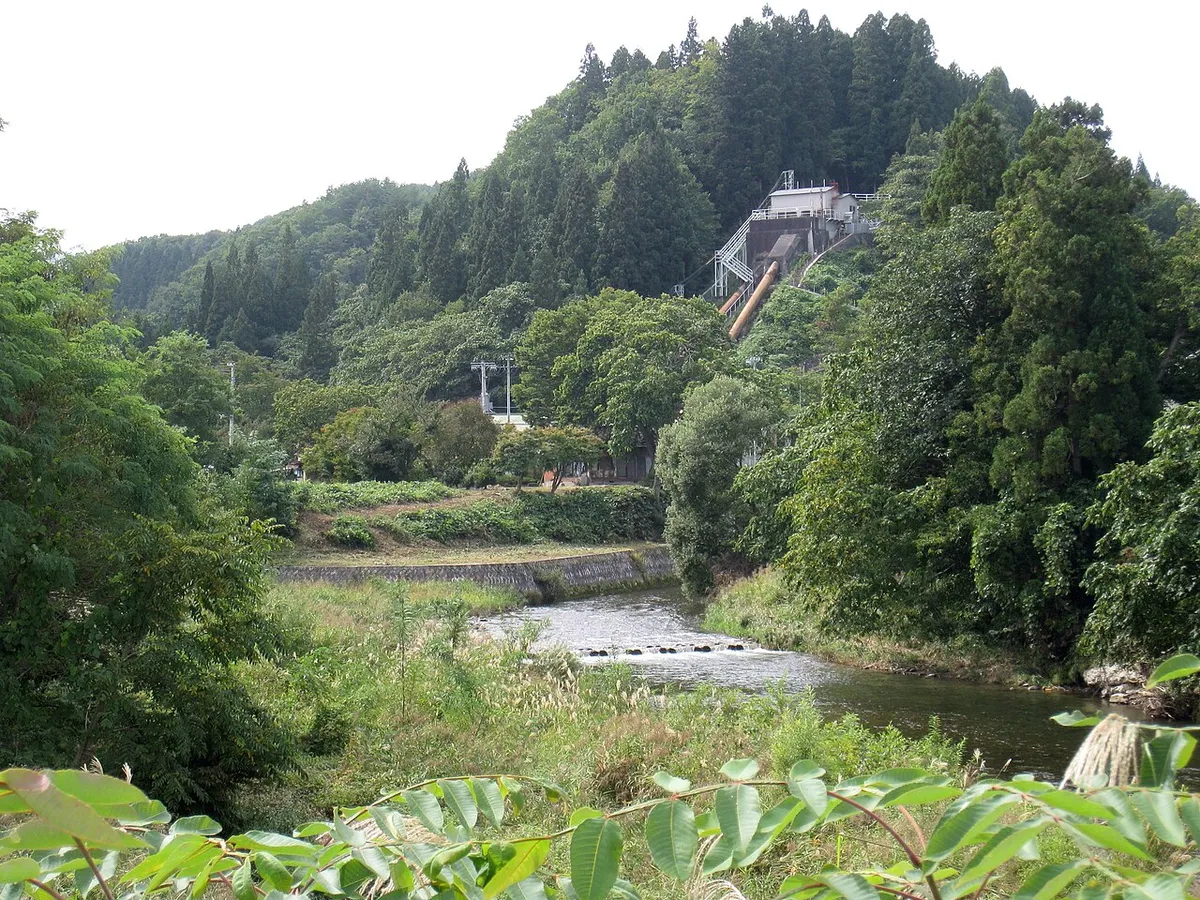
Tateyama Castle

館山城·Tateyama-jo

D Tourism Score 45/100
B Defense Score 73/100

The Satomi clan's coastal stronghold — best known as the setting that inspired Japan's longest classical novel, the 106-volume Hakkenden epic.

#125 — Continued 100 Castles Reconstructed
Tateyama Castle (館山城)
Photo:Nagamati/Wikimedia Commons/CC BY-SA 3.0

Quick Facts

Quick Facts

Admission
¥500

¥300

Hours
09:00 – 16:45

Last entry 16:30

Nearest Station
Tateyama Station (JR Uchibo Line)
Walk from Station
25 min walk

Bus also available

Time Needed
1 to 1.5 hours

Adult ¥500, Child ¥300.

Defense Overview

Defense Overview

Why Tateyama Castle was hard to attack

This castle is hard to attack because it combines a raised core with defended outer space with enough defensive depth to slow attackers before the center.

An attacker would not get a simple direct approach to the center. They would have to cross water barriers or moat lines and push through successive outer areas before the core.

Overall score

73/100

Estimated range

67–79

Confidence

A

Strong multi-source support

This is a site-original comparison score for learning and comparison, not a reconstruction of one historical battle.

Radar view

Terrain 15/20 Entrance 14/20 Internal 16/20 Siege 14/20 Oversight 14/20
How this estimate was built+

This estimate combines broad terrain, approach, layout, and route-control signals. It is meant to explain the castle's defensive logic in plain English, not reconstruct a single historical attack.

Terrain Advantage

How much the terrain itself seems to help: height, slope, ridges, cliffs, water edges, and limited approach directions.

15/20

Entrance Defense

How awkward and dangerous the first entry looks: gates, bridge or moat crossings, chokepoints, and forced turns.

14/20

Internal Complexity

How hard it seems to keep pushing after entry: layered baileys, depth, compartmentalization, and repeated defensive lines.

16/20

Siege Endurance

A rough sense of long-hold potential: moats, water access, space, storage plausibility, and defensive staying power.

14/20

Strategic Oversight

How much the castle appears to command nearby roads, plains, rivers, basins, harbors, or town approaches.

14/20

Why Visit

Tateyama Castle offers the unusual experience of a castle whose fame rests as much on fiction as on history. The Hakkenden Museum inside is genuinely engaging, the hilltop views over Tokyo Bay are excellent, and the town of Tateyama itself is a pleasant destination on the Boso Peninsula with good seafood and beaches. For visitors exploring the Boso Peninsula, this is the castle to prioritize.

Highlights

1

The Castle of Eight Dog Warriors

Tateyama Castle is the home of the Satomi clan — and the setting that inspired one of the greatest works of Japanese literature. Kyokutei Bakin's 'Nanso Satomi Hakkenden' (The Eight Dog Chronicles), published between 1814 and 1842, tells the epic story of eight dog-warrior heroes born to serve the Satomi clan at Tateyama. At 106 volumes it is the longest novel in classical Japanese literature, and its fame has endured into the modern era through manga and anime adaptations.
2

Views Over Tokyo Bay and Beyond

The concrete keep sits atop Shiroyama ('Castle Mountain'), a prominent hill offering panoramic views over Tokyo Bay, the Boso Peninsula coastline, and on clear days Mount Fuji to the west. The elevated position explains why the Satomi clan chose this spot — command of the sea approaches was as important as land defense in this coastal corner of the Kanto region.

3

A Castle Museum Dedicated to Fiction

Inside the keep, the Hakkenden Museum pays tribute to the literary work that made Tateyama Castle famous beyond its actual historical importance. Exhibits trace the story of the eight dog warriors, the history of the Satomi clan, and the career of author Kyokutei Bakin, who spent 28 years writing the epic while going progressively blind — his daughter-in-law transcribed the final volumes at his dictation.

Structure Details

Visitor tip

Tateyama Castle is an accessible hilltop reconstruction with a genuinely interesting museum inside. The climb from the base takes about 15 minutes. The views from the top over Tokyo Bay are a highlight — on clear days you can see Mount Fuji. The Hakkenden Museum is worth engaging with even if you don't know the literary work; the story of Bakin writing 106 volumes while going blind is extraordinary in itself.

Castle type

Hill castle

Hill-top flatland castle — built on a prominent hill (Shiroyama) above the coastal town of Tateyama at the tip of the Boso Peninsula

Layout type

Linked compound layout

Compound style — tiered compounds on the hillside with the main tower at the summit

Main tower

Concrete reconstruction — built in 1982, approximating the Edo-period keep appearance; houses the Hakkenden Museum

4 floors

Stone walls

Natural stone stacking

Some original stone wall sections survive on the slopes of Shiroyama, providing authentic historical texture alongside the 1982 concrete keep reconstruction.

Key defensive features

Shiroyama Hill Commanding the Coastal Approach

The hill rises sharply above the flat coastal plain, giving defenders clear sightlines over the sea approaches from Tokyo Bay and the land routes along the Boso Peninsula.

Steep Natural Slopes

The sides of Shiroyama are steep enough on multiple faces to discourage direct assault — attackers were funneled onto the controlled approach path.

The Story of Tateyama Castle

Originally built 1580 / Satomi Yoshiyori
Current form 1982 / Tateyama City (concrete reconstruction)
    1455

    The Satomi clan establishes control over the southern Boso Peninsula (Awa Province), setting up various strongholds to defend their territory against rivals including the Hojo clan to the north and sea threats from the Inland Sea direction.

    1580

    Satomi Yoshiyori builds Tateyama Castle on Shiroyama as the primary base for the Satomi clan, consolidating their control of the Boso Peninsula tip and its strategic sea approaches.

    1590

    Toyotomi Hideyoshi's Odawara Campaign sweeps through the Kanto. The Satomi clan, allied with the Hojo, lose their territories. Tateyama Castle comes under Tokugawa authority and is administered by successive Tokugawa-aligned lords.

    1614

    Rizo clan takes over Tateyama domain. The castle serves as the administrative center of a small Tokugawa domain through the Edo period, with no military action.

    1814

    Kyokutei Bakin begins publication of Nanso Satomi Hakkenden, his epic novel set in and around the Satomi clan's Tateyama domain. The work will take 28 years to complete and run to 106 volumes — the longest novel in classical Japanese literature.

    1871

    Meiji abolition of domains. Castle structures are dismantled over subsequent decades.

    1982

    Tateyama City constructs a concrete keep on Shiroyama, incorporating the Hakkenden Museum inside. The reconstruction is explicitly themed around the literary legacy rather than historical authenticity.

In Pop Culture

other

Nanso Satomi Hakkenden

The 1814–1842 novel by Kyokutei Bakin — the longest work in classical Japanese literature at 106 volumes — is set in the world of the Satomi clan and Tateyama Castle. Numerous manga, anime, and TV drama adaptations have kept the story alive through the 20th and 21st centuries.

anime

Hakkenden: Eight Dogs of the East (anime)

2013 anime adaptation of the Hakkenden story, one of several modern anime retellings of Bakin's epic that have introduced the Tateyama/Satomi connection to new generations.

Did You Know?

  • Kyokutei Bakin, author of the Hakkenden epic, went completely blind during the writing of the final volumes. Unable to see, he dictated the remaining text to his daughter-in-law Omichi, who transcribed it by hand. Bakin completed the 106-volume work in 1842 — a feat of literary determination comparable to Milton composing Paradise Lost while blind.
  • The eight dog warriors of the Hakkenden each embody one of the eight Confucian virtues: humanity, righteousness, courtesy, wisdom, loyalty, faith, filial piety, and service. Each warrior carries a crystal bead inscribed with their virtue — a narrative device that became one of the most imitated in Japanese storytelling.
  • Tateyama is at the very tip of the Boso Peninsula, which forms the eastern arm of Tokyo Bay. The castle hill at Tateyama is one of the first elevated points visible to ships entering Tokyo Bay from the Pacific — its strategic significance as a coastal lookout is immediately obvious from the summit.

Score Breakdown

Tourism Score

D 45/100
  • Accessibility 9 /20
  • Foreign-Friendly 4 /20
  • Historical Value 12 /20
  • Visual Impact 11 /20
  • Facilities 9 /20

Defense Score

B 73/100
  • Terrain Advantage 15 /20
  • Entrance Defense 14 /20
  • Internal Complexity 16 /20
  • Siege Endurance 14 /20
  • Strategic Oversight 14 /20

Planning Your Visit

Best Time to Visit

Spring and autumn are ideal. Summer is popular for beach tourism in the area but the castle itself can be visited year-round. Clear winter days offer the best chance of seeing Mount Fuji from the summit.

Time Needed

1 to 1.5 hours

Insider Tip

The Boso Peninsula is a classic Tokyo day trip or overnight destination — combine Tateyama Castle with a visit to Cape Shirahama or the Nokogiriyama (Saw Mountain) Giant Buddha, accessible on the JR Uchibo Line. The local seafood, particularly fresh-caught fish, is outstanding and cheap compared to Tokyo.

Map

Getting There

Nearest station: Tateyama Station (JR Uchibo Line)
Walk from station: 25 min walk
Bus: Local bus from Tateyama Station toward Shiroyama (castle hill) area. Taxi also available.
Parking: Parking available at the castle base. Free.
Accessible with a JR Pass

Admission

Adult¥500
Child¥300

Adult ¥500, Child ¥300.

Opening Hours

Open09:00 – 16:45
Last entry16:30

Closed every Monday (next day if Monday is a holiday). Closed December 28–January 4.

Facilities

  • – English guides
  • – Audio guide
  • – Wheelchair access
  • ✓ Restrooms
  • ✓ Gift shop
  • ✓ Food nearby

Nearby Castles

Featured in collections

FAQ

Frequently Asked Questions

How do I get to Tateyama Castle?

The nearest station is Tateyama Station (JR Uchibo Line). From there it is about 25 minutes on foot. Local bus from Tateyama Station toward Shiroyama (castle hill) area. Taxi also available.

How much does Tateyama Castle cost to enter?

Adult admission is ¥500 and child admission is ¥300.

Is Tateyama Castle worth visiting?

Tateyama Castle offers the unusual experience of a castle whose fame rests as much on fiction as on history. The Hakkenden Museum inside is genuinely engaging, the hilltop views over Tokyo Bay are excellent, and the town of Tateyama itself is a pleasant destination on the Boso Peninsula with good seafood and beaches. For visitors exploring the Boso Peninsula, this is the castle to prioritize.

What are the opening hours of Tateyama Castle?

09:00 to 16:45, last entry 16:30.

How long should I spend at Tateyama Castle?

Plan for about 1 to 1.5 hours, depending on how closely you want to explore the grounds.