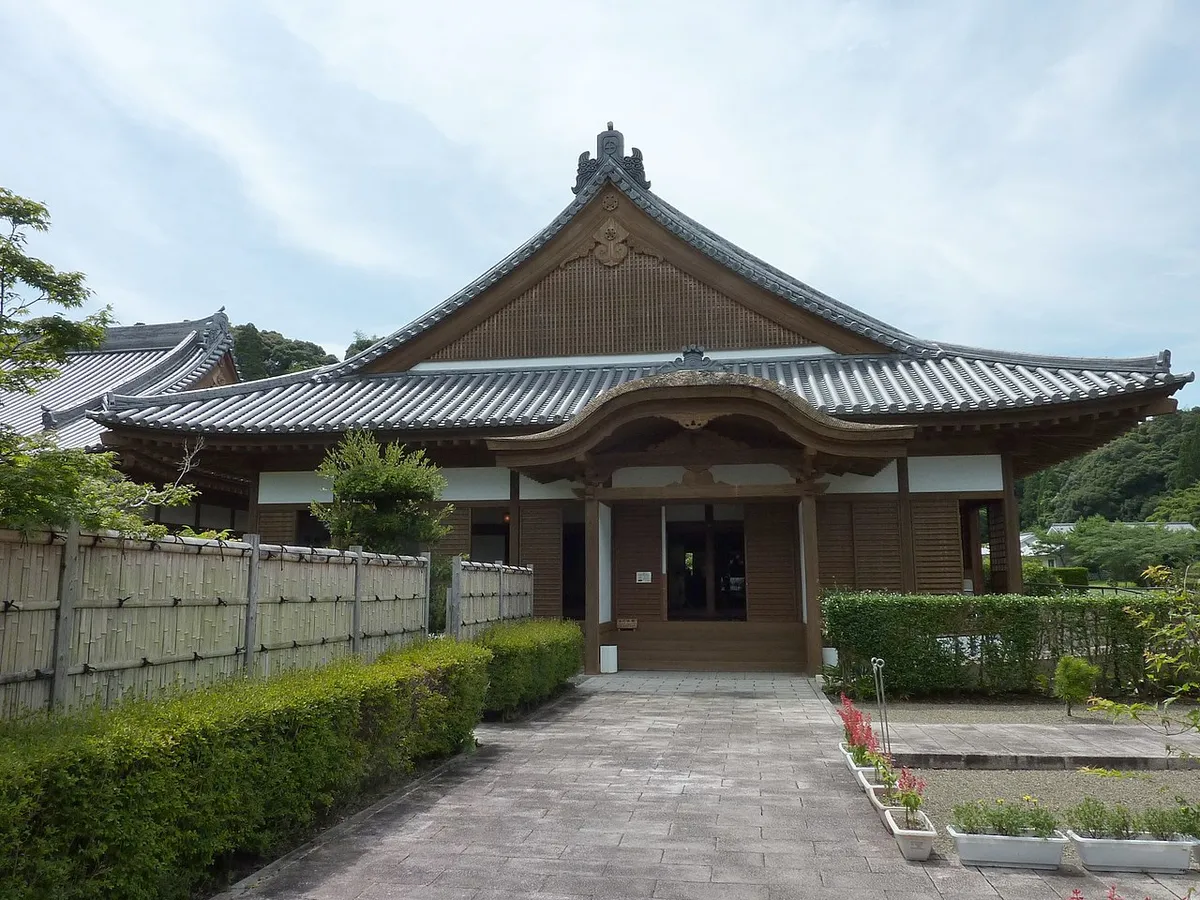
Sadowara Castle

佐土原城·Sadowara-jo

F Tourism Score 32/100
A Defense Score 88/100

A Shimazu branch castle guarding the northeastern frontier of the most formidable samurai clan in Kyushu, with views to the Pacific from the mountain summit.

#191 — Continued 100 Castles Ruins
Sadowara Castle (佐土原城)
Photo:ja:User:Sanjo/Wikimedia Commons/CC BY-SA 3.0

Quick Facts

Quick Facts

Admission
Free Free
Hours
00:00 – 23:59
Nearest Station
Sadowara Station (JR Nippo Main Line)
Walk from Station
30 min walk
Time Needed
1.5–2 hours including mountain walk and summit.

Free admission to the castle ruins and park. A small history museum (Sadowara History and Folklore Museum) near the base charges a small fee for its collection but the castle mountain itself is free.

Defense Overview

Defense Overview

Why Sadowara Castle was hard to attack

This castle is hard to attack because it combines high ground and difficult natural access with a controlled route inward.

An attacker would first have to fight the site itself before reaching the main defenses. They would have to cross water barriers or moat lines, face more defensive depth after the first line, and do so under a position that also watches the surrounding routes.

Overall score

88/100

Estimated range

82–94

Confidence

B

Usable estimate with some inference

This is a site-original comparison score for learning and comparison, not a reconstruction of one historical battle.

Radar view

Terrain 19/20 Entrance 17/20 Internal 17/20 Siege 16/20 Oversight 19/20
How this estimate was built+

This estimate combines broad terrain, approach, layout, and route-control signals. It is meant to explain the castle's defensive logic in plain English, not reconstruct a single historical attack.

Terrain Advantage

How much the terrain itself seems to help: height, slope, ridges, cliffs, water edges, and limited approach directions.

19/20

Entrance Defense

How awkward and dangerous the first entry looks: gates, bridge or moat crossings, chokepoints, and forced turns.

17/20

Internal Complexity

How hard it seems to keep pushing after entry: layered baileys, depth, compartmentalization, and repeated defensive lines.

17/20

Siege Endurance

A rough sense of long-hold potential: moats, water access, space, storage plausibility, and defensive staying power.

16/20

Strategic Oversight

How much the castle appears to command nearby roads, plains, rivers, basins, harbors, or town approaches.

19/20

Why Visit

Sadowara Castle is a peaceful mountain walk with stone wall remnants, compound earthworks, and good views over the Miyazaki coastal plain to the Pacific Ocean. The historical interest is the Shimazu clan connection — one of the greatest samurai powers in Japanese history, and the branch family at Sadowara participated in events ranging from the unification of Kyushu to the invasion of Korea. For visitors in Miyazaki city who want a half-morning castle experience beyond the main city attractions, Sadowara is a satisfying and uncrowded option.

Highlights

1

A Shimazu Branch Castle on Miyazaki's Coastal Plain

Sadowara Castle was the seat of the Sadowara-Shimazu, a branch family of the great Shimazu clan — the most powerful daimyo in Kyushu and one of the most formidable in Japan. While the main Shimazu ruled from Kagoshima's Tsurumaru Castle, the Sadowara branch controlled the northeastern frontier of Shimazu territory, overseeing the coastal Hyuga Province from this mountain castle. The branch family maintained independence of character within the Shimazu clan system for centuries.
2

Mountain Castle With Coastal Views

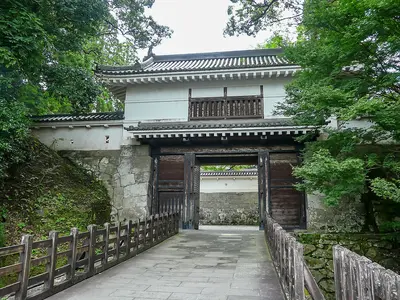
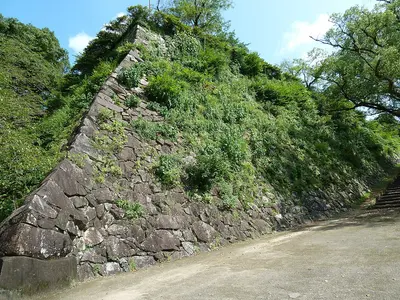
Sadowara Castle sits on a mountain above the Sadowara plain, with views stretching to the Pacific Ocean and the Miyazaki coastal plain. The castle ruins include surviving stone walls on the mountain slopes, compound earthworks, and — at the summit honmaru — panoramic views that explain why the Shimazu chose this particular peak as their northeastern observation post. The approach through the mountain forest is pleasant and the ruins are well-maintained.

3

Shimazu Iehisa and the Bunroku Campaign

The Sadowara branch lord Shimazu Iehisa fought in Toyotomi Hideyoshi's 1592 invasion of Korea (the Bunroku Campaign), serving under the main Shimazu force. This connection to the continental campaigns places Sadowara within the broader narrative of the most ambitious Japanese military operation before the 20th century — the Shimazu branch contribution to an operation that stretched from Kyushu across the Korea Strait.

Structure Details

Visitor tip

Sadowara Castle is a mountain ruins site requiring a 30–45 minute walk to the summit. The stone wall remnants and mountain forest are the attractions. The history (Shimazu branch clan, connection to the continental campaigns, role as Kyushu's northeastern frontier defense) is more compelling than the physical ruins. Come for the walk, the mountain views over the coastal plain, and the Shimazu connection. The history museum at the base is worth a quick visit for context.

Castle type

Mountain castle

Mountain castle — built on a mountain ridge above the Sadowara plain in Hyuga Province (modern Miyazaki), using the mountain's natural elevation and the coastal plain views for observation and defensive advantage

Layout type

Linked compound layout

Compound style — compounds arranged along the mountain ridge, with the honmaru at the summit and secondary compounds descending the ridge toward the castle town below

Main tower

Complete ruins — no structures survive above ground. Stone wall remnants (ishigaki) on the mountain slopes are the primary surviving architectural features alongside earthwork compound terracing.

Stone walls

Natural stone stacking

Stone wall remnants survive on several sections of the castle mountain, particularly on the mid-slope compounds. The Shimazu clan was known for capable castle construction, and the Sadowara stone walls reflect this family engineering tradition. The honmaru platform at the summit retains its earthwork character with some stonework.

Key defensive features

Mountain Elevation Above Coastal Plain

The castle mountain rises prominently above the Sadowara coastal plain, providing defenders with commanding views over all approach routes from the coast and interior. The Pacific Ocean is visible from the summit on clear days — giving defenders advance warning of any coastal movement as well as land approaches.

Ridge Compound Layout

The compounds are arranged along the mountain ridge, requiring any attacker to fight through multiple compound lines in sequence while climbing uphill and under fire from higher positions. The ridge layout maximizes the defensive advantage of height at every stage of the approach.

Shimazu Northeastern Frontier Defense

Sadowara Castle's position at the northeastern edge of Shimazu territory gave it a frontier defense role — it was the first point of resistance against any force approaching from Hyuga Province toward the Shimazu heartland in Satsuma. The castle's strength was as much strategic (deterrence) as tactical (fortification).

The Story of Sadowara Castle

Originally built 1337 / Shimazu Sadahisa
Current form 1570 / Sadowara-Shimazu clan
    1337

    Shimazu Sadahisa, a member of the Shimazu clan, establishes a base at Sadowara on the Hyuga coastal plain. The site controls the northeastern approaches to the Shimazu clan's Satsuma heartland and the important coastal route of Hyuga Province.

    1484

    The Sadowara branch of the Shimazu clan is formally established, with Sadowara Castle as the branch family's seat. The Sadowara-Shimazu will maintain this position as a distinct branch within the larger Shimazu clan system for the next four centuries.

    1570

    The castle is expanded and strengthened to its final form as the Shimazu clan reaches the peak of its power under Shimazu Yoshihisa, who campaigns to unify all of Kyushu under Shimazu control. Sadowara's role as the clan's northeastern frontier stronghold becomes more critical.

    1587

    Toyotomi Hideyoshi's Kyushu campaign reduces the Shimazu — who had nearly unified Kyushu — back to their Satsuma and Hyuga provinces. The main Shimazu submit; Sadowara, as a branch castle, falls within the redistributed Shimazu territory.

    1592

    Shimazu Iehisa, lord of the Sadowara branch, participates in Toyotomi Hideyoshi's Bunroku Campaign — the invasion of Korea. The Sadowara-Shimazu's participation in this continental operation connects the small Miyazaki mountain castle to one of the most ambitious military enterprises in Japanese history.

    1600

    The Shimazu clan's complex position at the Battle of Sekigahara — they fight for the western forces but escape punishment through a legendary fighting retreat — allows them to retain their domains. Sadowara continues as the branch family's seat under Tokugawa oversight.

    1871

    The Meiji government abolishes the domain system. Sadowara Domain is merged into Miyazaki Prefecture. The castle is dismantled as part of the general demilitarization of former castle sites.

In Pop Culture

TV

NHK taiga dramas covering the Shimazu clan

The Shimazu clan — whose main family ruled from Kagoshima — appears in multiple NHK historical dramas as one of the great Sengoku powers of Kyushu. The Sadowara branch appears in the broader Shimazu clan narrative.

game

Sengoku Basara and similar action games featuring Shimazu warriors

The Shimazu clan's fierce fighting reputation makes them popular subjects in Sengoku-themed action and strategy games. The Sadowara branch contributes to the clan's overall historical presence in this genre.

Did You Know?

  • The Shimazu clan's survival after the Battle of Sekigahara (1600) — despite fighting for the losing western forces — is one of the most dramatic escape stories in Japanese history. When the western forces collapsed, the Shimazu forces executed a fighting retreat directly through the victorious eastern army's lines, a bold act of military audacity that stunned observers. Tokugawa Ieyasu, impressed by their fighting ability and unwilling to commit to the full effort required to destroy such formidable warriors, allowed the Shimazu to retain their domains. The Sadowara branch was part of this story.
  • Sadowara was incorporated into Miyazaki City in 2010, ending its existence as a separate municipality. The historical identity of Sadowara as a distinct place — centered on its Shimazu branch castle heritage — is maintained through the local history museum and the castle mountain park, even as the administrative entity 'Sadowara' has merged into the larger city.
  • The view from Sadowara Castle's summit on a clear day extends to the Pacific Ocean — a reminder that the Shimazu clan, at the height of their power in the 1580s, controlled most of Kyushu including its Pacific coast from Hyuga to Satsuma. The continental expeditions of the 1590s were conceived and launched by lords who could see the ocean from their castles. The sea was always the next frontier.

Score Breakdown

Tourism Score

F 32/100
  • Accessibility 4 /20
  • Foreign-Friendly 3 /20
  • Historical Value 11 /20
  • Visual Impact 8 /20
  • Facilities 6 /20

Defense Score

A 88/100
  • Terrain Advantage 19 /20
  • Entrance Defense 17 /20
  • Internal Complexity 17 /20
  • Siege Endurance 16 /20
  • Strategic Oversight 19 /20

Planning Your Visit

Best Time to Visit

October–April for comfortable walking temperatures. Avoid the summer heat and typhoon season (July–September). Spring (March–April) and autumn (October–November) offer the most pleasant conditions for the mountain walk.

Time Needed

1.5–2 hours including mountain walk and summit.

Insider Tip

The history museum at the castle base (small admission fee) provides useful context on the Sadowara-Shimazu branch clan before you make the mountain walk — knowing the family history makes the stone walls and compound terracing more meaningful when you arrive at the ruins. The summit view toward the Pacific is the payoff: stand there and consider that the Shimazu branch lords who stood on this same spot in the 1580s could see the sea routes toward Korea where they would fight within a decade.

Map

Getting There

Nearest station: Sadowara Station (JR Nippo Main Line)
Walk from station: 30 min walk
Parking: Free parking at the base of the castle mountain.
Accessible with a JR Pass

Admission

Free

Free admission to the castle ruins and park. A small history museum (Sadowara History and Folklore Museum) near the base charges a small fee for its collection but the castle mountain itself is free.

Opening Hours

Open00:00 – 23:59

Castle mountain ruins open year-round at all hours. The history museum has regular opening hours (check locally). Best visited in clear weather for views from the mountain summit. Avoid during typhoon season (August–September) when paths may be hazardous.

Facilities

  • – English guides
  • – Audio guide
  • – Wheelchair access
  • ✓ Restrooms
  • – Gift shop
  • – Food nearby

Nearby Castles

Featured in collections

FAQ

Frequently Asked Questions

How do I get to Sadowara Castle?

The nearest station is Sadowara Station (JR Nippo Main Line). From there it is about 30 minutes on foot.

How much does Sadowara Castle cost to enter?

Sadowara Castle is free to enter.

Is Sadowara Castle worth visiting?

Sadowara Castle is a peaceful mountain walk with stone wall remnants, compound earthworks, and good views over the Miyazaki coastal plain to the Pacific Ocean. The historical interest is the Shimazu clan connection — one of the greatest samurai powers in Japanese history, and the branch family at Sadowara participated in events ranging from the unification of Kyushu to the invasion of Korea. For visitors in Miyazaki city who want a half-morning castle experience beyond the main city attractions, Sadowara is a satisfying and uncrowded option.

What are the opening hours of Sadowara Castle?

00:00 to 23:59.

How long should I spend at Sadowara Castle?

Plan for about 1.5–2 hours including mountain walk and summit., depending on how closely you want to explore the grounds.