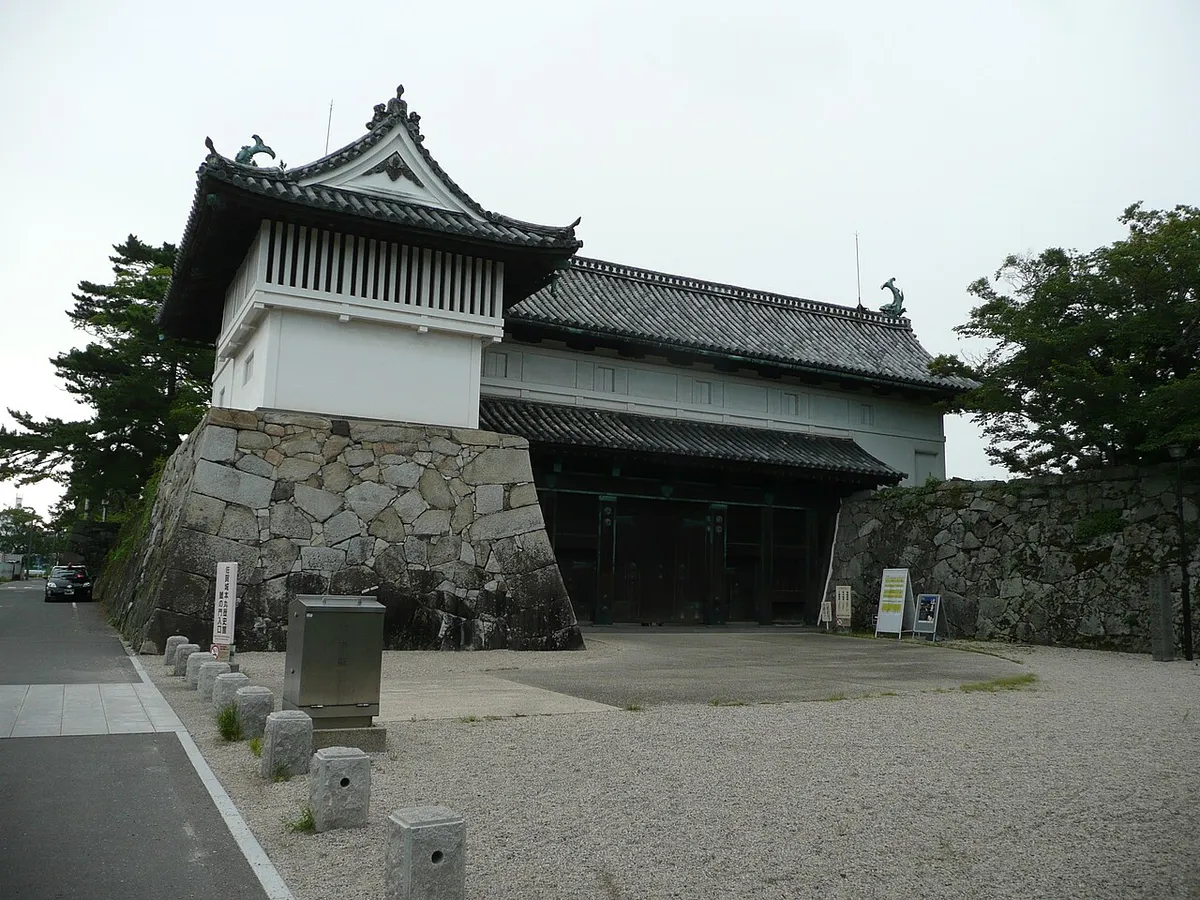
Saga Castle

佐賀城·Saga-jo

D Tourism Score 48/100
C Defense Score 66/100

A flatland castle with minimal surviving defenses, but its reconstructed wooden palace is Japan's largest of its kind — and the Nabeshima clan's story quietly shaped modern Japan.

#89 — 100 Famous Castles Ruins
Saga Castle (佐賀城)
Photo:上条ジョー/Wikimedia Commons/CC BY-SA 3.0

Quick Facts

Quick Facts

Admission
Free Free
Hours
09:30 – 18:00

Last entry 17:30

Nearest Station
Saga Station (JR Nagasaki Main Line)
Walk from Station
20 min walk

Bus also available

Time Needed
1–1.5 hours

The Honmaru Goten (main palace, reconstructed 2004) is free to enter. The surrounding grounds are open at all times.

Defense Overview

Defense Overview

Why Saga Castle was hard to attack

This castle is hard to attack because it combines managed outer defenses on relatively level ground with enough defensive depth to slow attackers before the center.

An attacker would not simply arrive at the center on open flat ground. They would have to cross water barriers or moat lines, approach through at least some constrained entry space, and push through successive outer areas before the core.

Overall score

66/100

Estimated range

60–72

Confidence

B

Usable estimate with some inference

This is a site-original comparison score for learning and comparison, not a reconstruction of one historical battle.

Radar view

Terrain 10/20 Entrance 12/20 Internal 15/20 Siege 16/20 Oversight 13/20
How this estimate was built+

This estimate combines broad terrain, approach, layout, and route-control signals. It is meant to explain the castle's defensive logic in plain English, not reconstruct a single historical attack.

Terrain Advantage

How much the terrain itself seems to help: height, slope, ridges, cliffs, water edges, and limited approach directions.

10/20

Entrance Defense

How awkward and dangerous the first entry looks: gates, bridge or moat crossings, chokepoints, and forced turns.

12/20

Internal Complexity

How hard it seems to keep pushing after entry: layered baileys, depth, compartmentalization, and repeated defensive lines.

15/20

Siege Endurance

A rough sense of long-hold potential: moats, water access, space, storage plausibility, and defensive staying power.

16/20

Strategic Oversight

How much the castle appears to command nearby roads, plains, rivers, basins, harbors, or town approaches.

13/20

Why Visit

Saga Castle is not visually dramatic — the flat terrain, absent main tower, and modest stone walls make it one of the less spectacular castle sites in Japan. But the Honmaru Goten reconstruction is genuinely impressive: walking through full-scale tatami halls and administrative chambers gives a rare sense of castle interior life. The historical narrative — Japan's first reverberatory furnace, the Hagakure, the Meiji modernizers, the 1874 rebellion — is rich material. A worthwhile stop for history-focused visitors, especially combined with Yoshinogari Historical Park (a major Yayoi period site) nearby.

Highlights

1

The Reconstructed Honmaru Goten — Japan's Largest Palace Reconstruction

In 2004, the Honmaru Goten — the lord's main residential and administrative palace — was reconstructed in full-scale wood on its original footprint. At approximately 2,500 square meters, it is the largest wooden castle palace reconstruction in Japan. Visitors can walk through tatami halls, reception rooms, and administrative chambers as they existed in the mid-Edo period, all furnished and presented as living history.
2

Nabeshima Clan and the Meiji Restoration

Saga domain under the Nabeshima clan was one of the key engines of Japan's modernization. The Nabeshima lords aggressively acquired Western technology — Saga built Japan's first reverberatory furnace (for casting Western-style cannon), pioneered steam engines, and produced many of the Meiji government's leading figures, including Okuma Shigenobu (founder of Waseda University) and Eto Shinpei. Saga men punched far above their domain's size in shaping modern Japan.

3

Saga Rebellion of 1874

Just six years after the Meiji Restoration, Saga was the site of Japan's first major samurai uprising — the Saga Rebellion of 1874, led by former Meiji government minister Eto Shinpei. Eto, disillusioned with government policies, returned to Saga and led an armed revolt of former samurai. It was suppressed within weeks. The castle town was a key flashpoint, making Saga a pivotal location in the violent early years of the Meiji era.

Structure Details

Visitor tip

Head directly to the Honmaru Goten — the reconstructed wooden palace is the main attraction and provides genuine historical atmosphere. Walk through the tatami rooms and imagine the administrative life of the Nabeshima domain. The moat around the compound is pleasant to walk along.

Castle type

Flatland castle

Flatland castle — built on completely flat terrain in the Saga Plain of western Kyushu, relying entirely on water moats for defense

Layout type

Concentric layout

Enclosure style — concentric compounds with extensive moat system on flat terrain

Main tower

Ruins with reconstruction — the main tower is lost. The Honmaru Goten (main palace building) has been reconstructed in wood (2004) on the original foundations. Stone walls and moat system partially survive.

Stone walls

Natural stone stacking

Stone walls at Saga Castle are relatively low compared to mountain castles — the flat terrain made high walls less practical. The wide moats were the primary defensive mechanism. A section of original stone wall and the moat are preserved around the Honmaru compound.

Moats

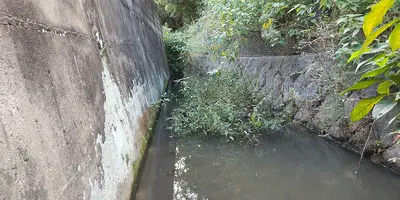
Wide water moats remain around the main compound. Saga Castle relied heavily on its extensive moat network in the flat Saga Plain — water, not walls, was the primary defense. The inner moat around the Honmaru is well-preserved.

Key defensive features

Wide Water Moats

On completely flat terrain with no natural elevation, Saga Castle relied on wide, deep water moats as its primary defense. The moat system was designed to slow any attacking force and channel attackers toward defended gate positions.

Saga Plain Flooding

The castle's location in the wet Saga Plain — an area prone to seasonal flooding — was itself a defensive resource. In times of crisis, water management in the flat plain could be used to obstruct enemy movement.

The Story of Saga Castle

Originally built 1602 / Nabeshima Katsushige
Current form 1726 / Nabeshima Yoshishige (post-fire rebuild)
    1591

    Ryuzoji Takanobu's successor Nabeshima Naoshige consolidates control of Hizen Province. Construction of a castle at Saga begins on the foundations of the earlier Murakami-jo.

    1602

    Nabeshima Katsushige, son of Naoshige, substantially reconstructs and expands the castle. The Nabeshima clan formally establishes Saga Castle as their domain headquarters.

    1726

    A major fire destroys the main tower (tenshu). It is never rebuilt. The Honmaru Goten (main palace) continues to serve as the domain's administrative center in the main tower's absence.

    1874

    The Saga Rebellion — Japan's first major samurai uprising of the Meiji era — erupts. Former government minister Eto Shinpei leads dissatisfied former samurai in armed revolt. The rebellion is suppressed by government forces within weeks; Eto is captured, tried, and executed.

    2004

    The Honmaru Goten is reconstructed in wood on its original Honmaru foundations, based on detailed historical records and archaeological excavation. At approximately 2,500 sq m, it becomes the largest wooden castle palace reconstruction in Japan.

In Pop Culture

TV

Segodon (NHK Taiga Drama, 2018)

This NHK drama about Saigo Takamori's role in the Meiji Restoration references Saga domain's technological innovations — the reverberatory furnace and cannon production that influenced the Meiji military buildup.

Did You Know?

  • Saga domain built Japan's first reverberatory furnace in 1850 — a technology for casting high-quality iron cannon copied from a Dutch technical manual. This made Saga one of the most militarily modern domains in Japan before the Meiji Restoration, and Saga cannon were used in the Boshin War.
  • The Hagakure — the famous samurai philosophical text ('the way of the samurai is found in death') — was written by Yamamoto Tsunetomo, a retainer of Saga domain (Nabeshima clan), in the early 18th century. It represents the Saga samurai ethos of total loyalty to one's lord.
  • Despite producing many Meiji-era modernizers, Saga was also the site of one of the first violent reactions against Meiji policies. The 1874 Saga Rebellion (just 6 years after the Restoration) showed how deeply the loss of samurai status cut even in a domain that had supported the imperial cause.

Score Breakdown

Tourism Score

D 48/100
  • Accessibility 11 /20
  • Foreign-Friendly 9 /20
  • Historical Value 14 /20
  • Visual Impact 7 /20
  • Facilities 7 /20

Defense Score

C 66/100
  • Terrain Advantage 10 /20
  • Entrance Defense 12 /20
  • Internal Complexity 15 /20
  • Siege Endurance 16 /20
  • Strategic Oversight 13 /20

Planning Your Visit

Best Time to Visit

Any time of year — no major seasonal draw, but spring and autumn are pleasant for the moat walk.

Time Needed

1–1.5 hours

Insider Tip

Inside the Honmaru Goten, look for the detailed historical panels about the Nabeshima clan's technology program — the reverberatory furnace story is fascinating and largely unknown outside Japan. Then check if the nearby Saga Prefectural Museum is open; its collection on Arita porcelain (produced in Saga domain and exported to Europe by the Dutch) is excellent.

Map

Getting There

Nearest station: Saga Station (JR Nagasaki Main Line)
Walk from station: 20 min walk
Bus: City bus from Saga Station to the castle area. Alternatively, a pleasant 20-minute walk through the city.
Parking: Free parking available at the castle grounds.
Accessible with a JR Pass

Admission

Free

The Honmaru Goten (main palace, reconstructed 2004) is free to enter. The surrounding grounds are open at all times.

Opening Hours

Open09:30 – 18:00
Last entry17:30

Honmaru Goten open Tuesday–Sunday. Closed Mondays (or following day if Monday is a holiday) and year-end.

Facilities

  • – English guides
  • – Audio guide
  • ✓ Wheelchair access
  • ✓ Restrooms
  • ✓ Gift shop
  • ✓ Food nearby

Nearby Castles

Featured in collections

FAQ

Frequently Asked Questions

How do I get to Saga Castle?

The nearest station is Saga Station (JR Nagasaki Main Line). From there it is about 20 minutes on foot. City bus from Saga Station to the castle area. Alternatively, a pleasant 20-minute walk through the city.

How much does Saga Castle cost to enter?

Saga Castle is free to enter.

Is Saga Castle worth visiting?

Saga Castle is not visually dramatic — the flat terrain, absent main tower, and modest stone walls make it one of the less spectacular castle sites in Japan. But the Honmaru Goten reconstruction is genuinely impressive: walking through full-scale tatami halls and administrative chambers gives a rare sense of castle interior life. The historical narrative — Japan's first reverberatory furnace, the Hagakure, the Meiji modernizers, the 1874 rebellion — is rich material. A worthwhile stop for history-focused visitors, especially combined with Yoshinogari Historical Park (a major Yayoi period site) nearby.

What are the opening hours of Saga Castle?

09:30 to 18:00, last entry 17:30.

How long should I spend at Saga Castle?

Plan for about 1–1.5 hours, depending on how closely you want to explore the grounds.