Fukuoka Castle

福岡城·Fukuoka-jo

D Tourism Score 58/100
C Defense Score 68/100

One of Kyushu's largest castle complexes, now a cherry blossom park overlooking the bay where the Mongol armadas once appeared on the horizon.

#85 — 100 Famous Castles Ruins
Fukuoka Castle (福岡城)
Photo:Hirho/Wikimedia Commons/CC BY-SA 4.0

Quick Facts

Quick Facts

Admission
Free Free
Hours
null – null
Nearest Station
Akasaka Station or Ohori-koen Station (Fukuoka City Subway Kuko Line)
Walk from Station
10 min walk

Bus also available

Time Needed
1–1.5 hours

The castle grounds (Maizuru Park) are freely accessible. The Fukuoka Castle Museum inside the park charges a small fee. Turret interior access may have nominal fees on open days.

Defense Overview

Defense Overview

Why Fukuoka Castle was hard to attack

This castle is hard to attack because it combines a raised core with defended outer space with enough defensive depth to slow attackers before the center.

An attacker would not get a simple direct approach to the center. They would have to cross water barriers or moat lines and push through successive outer areas before the core.

Overall score

68/100

Estimated range

62–74

Confidence

B

Usable estimate with some inference

This is a site-original comparison score for learning and comparison, not a reconstruction of one historical battle.

Radar view

Terrain 14/20 Entrance 14/20 Internal 15/20 Siege 13/20 Oversight 12/20
How this estimate was built+

This estimate combines broad terrain, approach, layout, and route-control signals. It is meant to explain the castle's defensive logic in plain English, not reconstruct a single historical attack.

Terrain Advantage

How much the terrain itself seems to help: height, slope, ridges, cliffs, water edges, and limited approach directions.

14/20

Entrance Defense

How awkward and dangerous the first entry looks: gates, bridge or moat crossings, chokepoints, and forced turns.

14/20

Internal Complexity

How hard it seems to keep pushing after entry: layered baileys, depth, compartmentalization, and repeated defensive lines.

15/20

Siege Endurance

A rough sense of long-hold potential: moats, water access, space, storage plausibility, and defensive staying power.

13/20

Strategic Oversight

How much the castle appears to command nearby roads, plains, rivers, basins, harbors, or town approaches.

12/20

Why Visit

Fukuoka Castle Ruins (Maizuru Park) offer an atmospheric urban castle experience in the heart of one of Japan's most livable and food-rich cities. The stone walls and tenshu-dai are more substantial than many expect, and the hilltop views over Hakata Bay carry genuine historical weight. The cherry blossoms in spring make this one of Fukuoka's best outdoor experiences. As a free site in a city you should be visiting for the food anyway, the castle is an easy add to any Fukuoka itinerary.

Highlights

1

One of Kyushu's Largest Castle Complexes

Fukuoka Castle — also known as Maizuru Castle — was among the largest castle constructions in all of Kyushu. Built by Kuroda Nagamasa after the Battle of Sekigahara, it once encompassed 47 turrets, multiple gate towers, and extensive stone walls across Fukuoka Hill. Even in ruin, the scale of the remaining ishigaki (stone walls) makes clear why this was a castle of serious strategic ambition.
2

Overlooking Hakata Bay — Gateway to the Continent

The castle's hilltop position gave commanding views across Hakata Bay — historically Japan's most important maritime gateway to Korea and China. The Kuroda clan, as lords of Fukuoka domain, controlled the trade and diplomatic gateway that had shaped northern Kyushu since the Mongol invasions of the 13th century. Standing on the castle hill today, the same bay stretches out to the northwest.

3

Cherry Blossoms at Maizuru Park

The castle ruins are now Maizuru Park, one of Fukuoka's premier cherry blossom destinations. In late March and early April, hundreds of cherry trees bloom across the former castle grounds, with the surviving stone walls and turret platforms providing the backdrop. For a brief spring window, this is one of the most atmospheric castle ruin park experiences in Kyushu.

Structure Details

Visitor tip

Enter through Maizuru Park's main gate and head uphill toward the tenshu-dai (main tower platform). The stone walls along the path are impressive even in ruin. From the top platform, scan the view northward toward Hakata Bay — this is the view the Kuroda lords maintained over their strategic domain.

Castle type

Hill castle

Hill castle on flat terrain — built on Fukuoka Hill, a low prominence overlooking Hakata Bay and the flat coastal plain

Layout type

Concentric layout

Enclosure style — concentric compounds on the hill with extensive outer fortifications now largely lost

Main tower

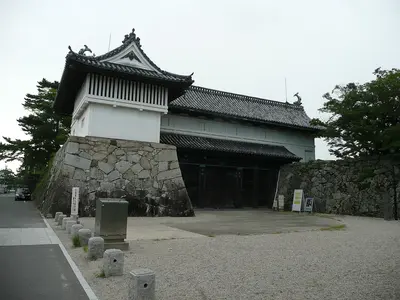
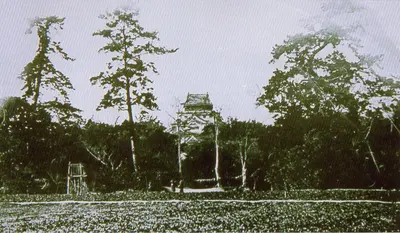
Ruins — the main tower (tenshu) was demolished in the Meiji era. Multiple turrets and gate structures survive or have been partially preserved. Extensive stone walls remain.

Stone walls

Natural stone stacking

Large-scale ishigaki stone walls survive in substantial sections around the main and secondary compounds. The tenshu-dai (main tower foundation platform) is intact and gives a clear sense of the tower's original size.

Moats

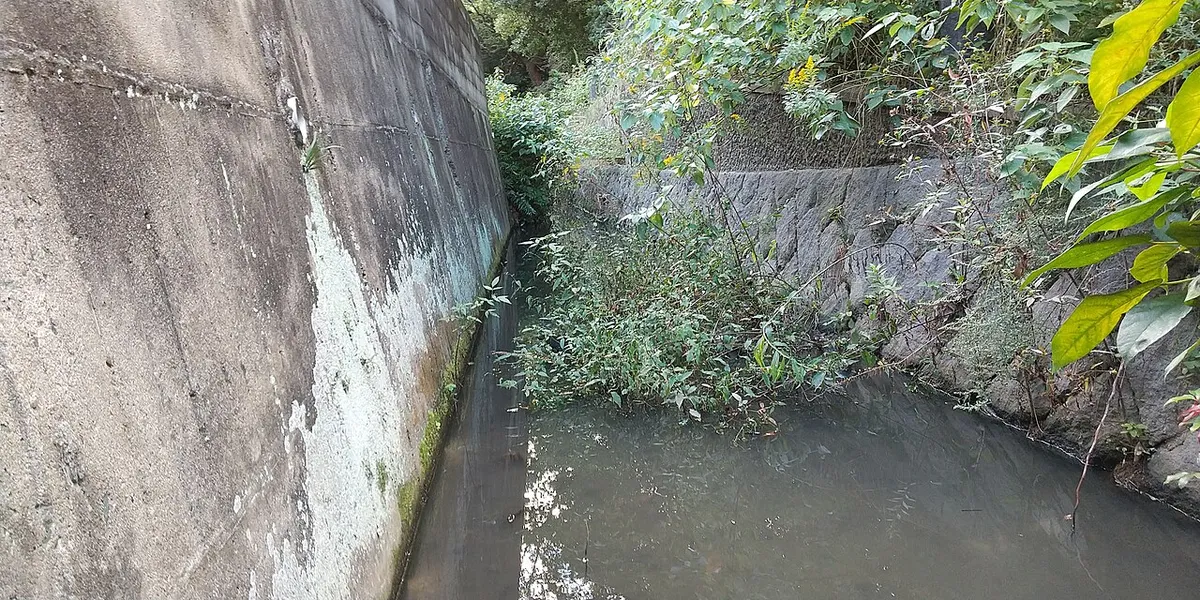
The original castle had extensive outer moats. Ohori Park — now a large ornamental lake park immediately west of the castle — preserves the memory of the former moat and water defenses in its geography.

Key defensive features

Hakata Bay Visibility

The hilltop position gave the garrison complete visual control over Hakata Bay, enabling rapid response to any naval approach. Fukuoka was Japan's front line against potential threats from the Korean peninsula — this visibility was strategically vital.

Ohori Water Defense

The western side of the castle was protected by a large water obstacle — now preserved as Ohori Park's lake — that extended the natural moat system and made approach from that direction extremely difficult.

The Story of Fukuoka Castle

Originally built 1601 / Kuroda Nagamasa
Current form 1607 / Kuroda Nagamasa
    1601

    Kuroda Nagamasa begins construction of Fukuoka Castle after receiving the Chikuzen domain as a reward for his loyalty at the Battle of Sekigahara. He names the city Fukuoka after his ancestral home in Bizen Province.

    1607

    The castle's main construction is completed. At 47 turrets, it is one of the largest castle complexes in Kyushu, reflecting the Kuroda clan's wealth and ambition as gatekeepers of Japan's continental gateway.

    1871

    Following the Meiji Restoration's abolition of feudal domains, Fukuoka Castle is abandoned and its structures begin to be demolished or allowed to decay. The main tower and most turrets are lost over the following decades.

    1957

    The castle site is designated a National Historic Site and becomes Maizuru Park, preserving the remaining stone walls, tenshu-dai, and surviving turret structures.

Did You Know?

  • The name 'Fukuoka' for the city comes from Kuroda Nagamasa's ancestral village — Fukuoka in Bizen Province (modern Okayama). He named his new castle town after his hometown, which is why Fukuoka City has this name rather than the historically dominant 'Hakata' (now the city's eastern commercial district name).
  • Hakata Bay, visible from the castle ruins, is where the Mongol invasions of 1274 and 1281 made landfall. The 'divine winds' (kamikaze) — typhoons that destroyed the Mongol fleets — are among the most famous events in Japanese history, and this coastline was their theatre.
  • Despite its massive original scale of 47 turrets, Fukuoka Castle was never used in actual battle. Like most Edo-period castles, it served primarily as a symbol of domain power and administrative center rather than an active fortress.

Score Breakdown

Tourism Score

D 58/100
  • Accessibility 14 /20
  • Foreign-Friendly 11 /20
  • Historical Value 15 /20
  • Visual Impact 10 /20
  • Facilities 8 /20

Defense Score

C 68/100
  • Terrain Advantage 14 /20
  • Entrance Defense 14 /20
  • Internal Complexity 15 /20
  • Siege Endurance 13 /20
  • Strategic Oversight 12 /20

Planning Your Visit

Best Time to Visit

Late March to early April for cherry blossoms — the ruins at their most beautiful. Autumn (October–November) for foliage and cooler weather. Avoid summer midday heat.

Time Needed

1–1.5 hours

Insider Tip

After the castle, walk down the west side into Ohori Park — the large lake park is the former castle's outer water defense, and the combination of castle hill + lake promenade makes for a pleasant 2-hour circuit. Evening is excellent: the park path around the lake is lit and popular with local walkers, giving you the relaxed Fukuoka atmosphere you came for.

Map

Getting There

Nearest station: Akasaka Station or Ohori-koen Station (Fukuoka City Subway Kuko Line)
Walk from station: 10 min walk
Bus: Multiple city buses stop near Maizuru Park. The castle is very accessible from central Fukuoka.
Parking: Paid parking available at Ohori Park adjacent to the castle grounds.

Admission

Free

The castle grounds (Maizuru Park) are freely accessible. The Fukuoka Castle Museum inside the park charges a small fee. Turret interior access may have nominal fees on open days.

Opening Hours

Open

Maizuru Park open at all times. Museum and turret open days have set hours; check locally.

Facilities

  • – English guides
  • – Audio guide
  • ✓ Wheelchair access
  • ✓ Restrooms
  • – Gift shop
  • ✓ Food nearby

Nearby Castles

Featured in collections

FAQ

Frequently Asked Questions

How do I get to Fukuoka Castle?

The nearest station is Akasaka Station or Ohori-koen Station (Fukuoka City Subway Kuko Line). From there it is about 10 minutes on foot. Multiple city buses stop near Maizuru Park. The castle is very accessible from central Fukuoka.

How much does Fukuoka Castle cost to enter?

Fukuoka Castle is free to enter.

Is Fukuoka Castle worth visiting?

Fukuoka Castle Ruins (Maizuru Park) offer an atmospheric urban castle experience in the heart of one of Japan's most livable and food-rich cities. The stone walls and tenshu-dai are more substantial than many expect, and the hilltop views over Hakata Bay carry genuine historical weight. The cherry blossoms in spring make this one of Fukuoka's best outdoor experiences. As a free site in a city you should be visiting for the food anyway, the castle is an easy add to any Fukuoka itinerary.

What are the opening hours of Fukuoka Castle?

null to null.

How long should I spend at Fukuoka Castle?

Plan for about 1–1.5 hours, depending on how closely you want to explore the grounds.