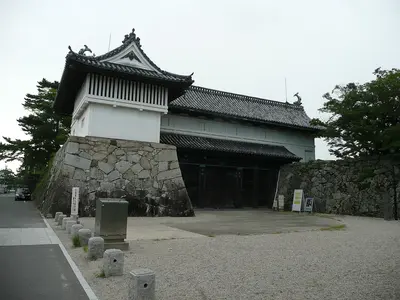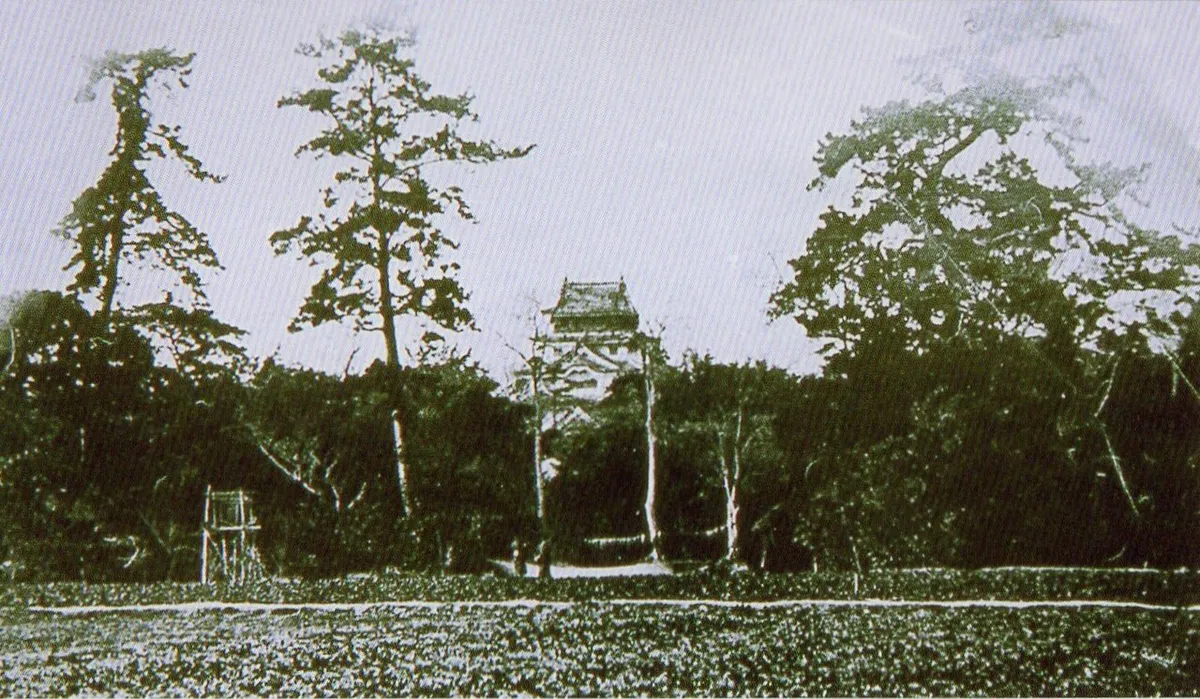
Yanagawa Castle

柳川城·Yanagawa-jo

D Tourism Score 52/100
C Defense Score 67/100

Where the moats became the tourist attraction — Yanagawa's 470 km of castle canals now carry donkobune sightseeing boats through the same water-fortress that once protected the Tachibana clan.

#101 — Continued 100 Castles Ruins
Yanagawa Castle (柳川城)
Photo:Unknown authorUnknown author/Wikimedia Commons/Public domain

Quick Facts

Quick Facts

Admission
Free Free
Hours
00:00 – 23:59
Nearest Station
Nishitetsu-Yanagawa Station (Nishitetsu Tenjin Omuta Line from Fukuoka/Tenjin)
Walk from Station
10 min walk

Bus also available

Time Needed
3–4 hours (boat tour + Ohana villa + lunch)

Castle ruins are free. The famous donkobune canal boat tours are separate (approximately ¥1,500–¥1,800 per person and run by multiple operators).

Defense Overview

Defense Overview

Why Yanagawa Castle was hard to attack

This castle is hard to attack because it combines managed outer defenses on relatively level ground with enough defensive depth to slow attackers before the center.

An attacker would not simply arrive at the center on open flat ground. They would have to cross water barriers or moat lines, approach through at least some constrained entry space, push through successive outer areas before the core, and do so under a position that also watches the surrounding routes.

Overall score

67/100

Estimated range

61–73

Confidence

B

Usable estimate with some inference

This is a site-original comparison score for learning and comparison, not a reconstruction of one historical battle.

Radar view

Terrain 10/20 Entrance 12/20 Internal 15/20 Siege 16/20 Oversight 14/20
How this estimate was built+

This estimate combines broad terrain, approach, layout, and route-control signals. It is meant to explain the castle's defensive logic in plain English, not reconstruct a single historical attack.

Terrain Advantage

How much the terrain itself seems to help: height, slope, ridges, cliffs, water edges, and limited approach directions.

10/20

Entrance Defense

How awkward and dangerous the first entry looks: gates, bridge or moat crossings, chokepoints, and forced turns.

12/20

Internal Complexity

How hard it seems to keep pushing after entry: layered baileys, depth, compartmentalization, and repeated defensive lines.

15/20

Siege Endurance

A rough sense of long-hold potential: moats, water access, space, storage plausibility, and defensive staying power.

16/20

Strategic Oversight

How much the castle appears to command nearby roads, plains, rivers, basins, harbors, or town approaches.

14/20

Why Visit

Yanagawa is one of the most genuinely distinctive castle-town experiences in Japan. The canal boat tour through willow-lined moats is unlike any castle experience elsewhere — slow, quiet, and atmospheric. The castle ruins themselves are modest (a villa occupies the main compound), but the entire city IS the castle's defensive system, and experiencing it by boat makes this viscerally clear. Add the Kitahara Hakushu literary connection, the famous seiro-mushi eel dish, and the Ohana villa garden, and Yanagawa offers a full half-day or day itinerary.

Highlights

1

The Moat System That Became the Attraction

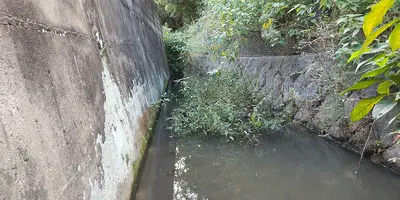
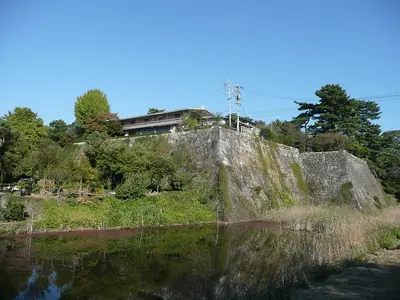
Yanagawa Castle's most famous feature is no longer the castle itself but its water defense system — a vast network of moats and canals that once formed one of the most extensive water-castle complexes in western Japan. Today those same moats are navigated by flat-bottomed donkobune boats, carrying tourists through the willow-lined waterways that once protected the Tachibana clan. The defensive moats became the city's defining tourist experience.
2

The Tachibana Clan's Water Fortress

Yanagawa was the domain castle of the Tachibana clan throughout the Edo period — a family famous for producing Tachibana Muneshige, one of the Seven Spears of Shizugatake and one of the most celebrated generals of the Sengoku era. The castle's multiple water moats, fed by the lowland rivers and irrigation channels of the Chikugo River delta, made it one of the most formidable water fortresses in Kyushu.

3

Poet Kitahara Hakushu's Hometown

Yanagawa is the birthplace of Kitahara Hakushu (1885–1942), one of the most celebrated poets of the Meiji and Taisho eras, whose romantic, symbolist poetry was shaped by the watery landscape of his castle-town childhood. His childhood home is preserved near the castle canals, and his poetry about Yanagawa's water and light is still closely associated with the city.

Structure Details

Visitor tip

The castle ruins are modest — the main draw is the canal boat experience. Take a donkobune boat tour from one of the operators near the station; the hour-long ride through the willow-lined moats is Yanagawa's defining experience. Afterward, visit Ohana (the Tachibana family villa on the former castle site) for the traditional garden and the castle history exhibit.

Castle type

Flatland castle

Flatland castle (built on a low elevated platform amid extensive water moats in the Chikugo River delta)

Layout type

Concentric layout

Ring-style — compounds arranged in concentric rings surrounded by water moats on all sides

Main tower

No tenshu survives — the main tower was demolished in the Meiji era. The castle site is now occupied by Ohana, the Tachibana family villa, and its garden.

Stone walls

Natural stone stacking

Yanagawa's defensive strength lay in its water moats rather than stone walls. The castle occupied a low platform surrounded by concentric water moats fed by the river delta, creating a water fortress that was extremely difficult to assault across open water.

Moats

Multiple concentric water moats fed by the Chikugo River delta network. The outer canal system stretched throughout the castle town and formed an interconnected water defense impossible to bypass without boats. The same canal system now carries tourist donkobune boats.

Key defensive features

Chikugo River Delta Water Network

The castle sat in the Chikugo River delta — a low-lying plain crossed by rivers, channels, and marshes. The castle's builders exploited this water-rich terrain to create a fortress surrounded on all sides by water, making direct assault extremely difficult for any land-based army.

Concentric Canal Moats

Multiple rings of water moats surrounded the castle compounds, each requiring crossing under fire. The width and depth of the moats made portable bridges or pontoons necessary for any assault — complex and time-consuming to deploy under defender fire.

The Story of Yanagawa Castle

Originally built 1558 / Kamachi clan (original fort); developed by Tachibana Muneshige from 1587
Current form 1620 / Tachibana Tadashige
    1558

    The Kamachi clan constructs a fort on the low platform amid the Chikugo River delta — exploiting the natural water network as the primary defense.

    1587

    Tachibana Muneshige, one of the greatest generals of the Sengoku era and a veteran of Shizugatake, receives Yanagawa as his domain from Toyotomi Hideyoshi. He expands the water fortress to its full extent.

    1600

    After the Battle of Sekigahara, Tachibana Muneshige is dispossessed — he had backed the Western forces. Yanagawa passes briefly to Tanaka Yoshimasa.

    1620

    The Tachibana clan is reinstated at Yanagawa by the Tokugawa shogunate (a rare reversal) — a testament to Muneshige's exceptional reputation. The clan expands the castle to its Edo-period mature form.

    1872

    The Meiji government's castle abolition policy sees Yanagawa's towers demolished. The Tachibana family retains their villa (Ohana) on the main compound site.

    1930

    Kitahara Hakushu, Yanagawa's famous poet son born in 1885, dies — but his romantic poetry about the canal waterways and water-light of his hometown has already made Yanagawa's aesthetic identity inseparable from his verse.

In Pop Culture

artwork

Various Meiji-era woodblock prints

Yanagawa's distinctive canal-and-willow landscape was a popular subject for woodblock print artists in the Meiji and Taisho periods, often depicted in combination with Kitahara Hakushu's poetry.

Did You Know?

  • The canal system that now carries tourist donkobune boats is the same water network that formed Yanagawa Castle's primary defense — the tourists are literally floating through a 16th-century military moat system.
  • Tachibana Muneshige is one of the very few daimyo who lost his domain after Sekigahara (backing the losing Western forces) and then had it fully restored by the Tokugawa shogunate — a tribute to his legendary military reputation.
  • Yanagawa's 470 km of canals make it one of the most extensive castle moat networks to have survived in any form in Japan — most castle water systems were filled in during modernization.
  • The eel (unagi) dish 'seiro-mushi' (steamed over rice in a wooden box) is Yanagawa's famous local food, eaten after canal boat tours. The dish became associated with Yanagawa in the Edo period and remains the city's culinary identity.

Score Breakdown

Tourism Score

D 52/100
  • Accessibility 14 /20
  • Foreign-Friendly 9 /20
  • Historical Value 10 /20
  • Visual Impact 11 /20
  • Facilities 8 /20

Defense Score

C 67/100
  • Terrain Advantage 10 /20
  • Entrance Defense 12 /20
  • Internal Complexity 15 /20
  • Siege Endurance 16 /20
  • Strategic Oversight 14 /20

Planning Your Visit

Best Time to Visit

Spring (March–April) for cherry blossoms over the canals — Yanagawa's most iconic image. Autumn for foliage. The boat tours run year-round and are atmospheric in any season.

Time Needed

3–4 hours (boat tour + Ohana villa + lunch)

Insider Tip

The donkobune boat tours are run by multiple competing operators — prices are similar. The tour navigates under dozens of low stone bridges, and at each one the boatman pushes the canopy down flat while the boat slides underneath; watching this coordinated operation is half the entertainment. After the tour, order the seiro-mushi eel at one of the restaurants near the canal — this is Yanagawa's definitive food experience.

Map

Getting There

Nearest station: Nishitetsu-Yanagawa Station (Nishitetsu Tenjin Omuta Line from Fukuoka/Tenjin)
Walk from station: 10 min walk
Bus: Multiple canal boat tour starting points are within walking distance of the station.
Parking: Paid parking lots near the castle site.

Admission

Free

Castle ruins are free. The famous donkobune canal boat tours are separate (approximately ¥1,500–¥1,800 per person and run by multiple operators).

Opening Hours

Open00:00 – 23:59

Ruins are open at all times. Canal boat tours operate daily, weather permitting; reduced schedule in winter.

Facilities

  • – English guides
  • – Audio guide
  • ✓ Wheelchair access
  • ✓ Restrooms
  • ✓ Gift shop
  • ✓ Food nearby

Nearby Castles

Featured in collections

FAQ

Frequently Asked Questions

How do I get to Yanagawa Castle?

The nearest station is Nishitetsu-Yanagawa Station (Nishitetsu Tenjin Omuta Line from Fukuoka/Tenjin). From there it is about 10 minutes on foot. Multiple canal boat tour starting points are within walking distance of the station.

How much does Yanagawa Castle cost to enter?

Yanagawa Castle is free to enter.

Is Yanagawa Castle worth visiting?

Yanagawa is one of the most genuinely distinctive castle-town experiences in Japan. The canal boat tour through willow-lined moats is unlike any castle experience elsewhere — slow, quiet, and atmospheric. The castle ruins themselves are modest (a villa occupies the main compound), but the entire city IS the castle's defensive system, and experiencing it by boat makes this viscerally clear. Add the Kitahara Hakushu literary connection, the famous seiro-mushi eel dish, and the Ohana villa garden, and Yanagawa offers a full half-day or day itinerary.

What are the opening hours of Yanagawa Castle?

00:00 to 23:59.

How long should I spend at Yanagawa Castle?

Plan for about 3–4 hours (boat tour + Ohana villa + lunch), depending on how closely you want to explore the grounds.