Kokura Castle

小倉城·Kokura-jo

C Tourism Score 62/100
C Defense Score 66/100

The castle city that was nearly atomic history — Kokura survives as the backdrop to Miyamoto Musashi's most famous duel and the bomb that went to Nagasaki instead.

#80 — 100 Famous Castles Reconstructed
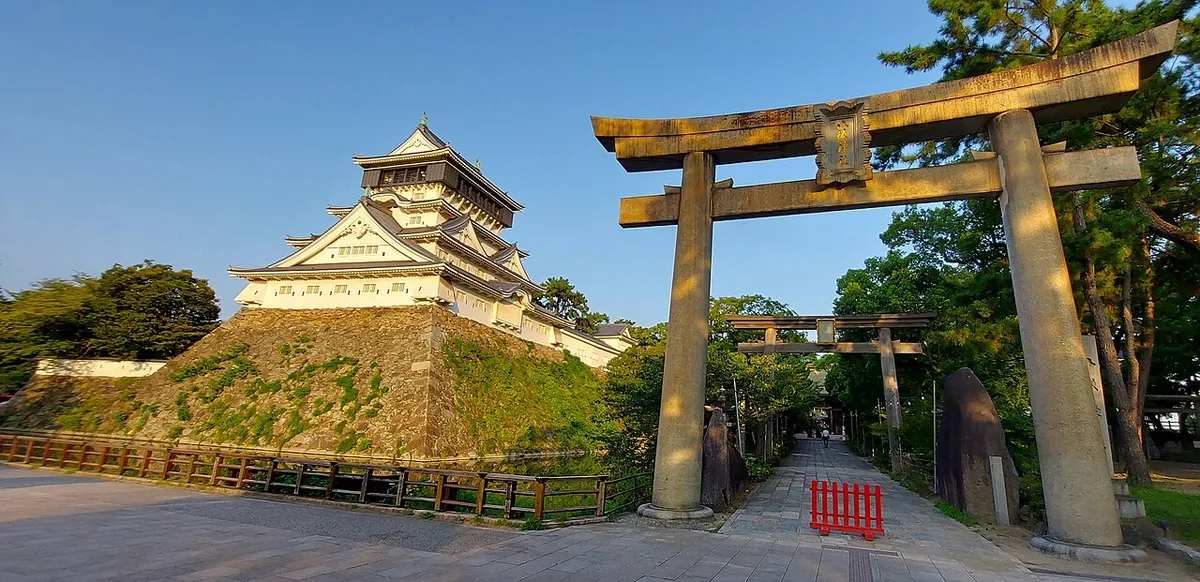
Kokura Castle (小倉城)
Photo:Stjepko Krehula/Wikimedia Commons/CC BY 4.0

Quick Facts

Quick Facts

Admission
¥500

¥200

Hours
09:00 – 20:00

Last entry 19:30

Nearest Station
Kokura Station (JR Kyushu Shinkansen / Sanyo Shinkansen / JR Kagoshima Main Line)
Walk from Station
15 min walk

Bus also available

Time Needed
1–1.5 hours for the tower and moat; add 2 hours for a Ganryujima ferry trip

Non-resident adult ¥500, Kitakyushu resident ¥400 (from April 2026). Middle/high school ¥200, elementary ¥100.

Defense Overview

Defense Overview

Why Kokura Castle was hard to attack

This castle is hard to attack because it combines managed outer defenses on relatively level ground with enough defensive depth to slow attackers before the center.

An attacker would not simply arrive at the center on open flat ground. They would have to cross water barriers or moat lines and push through successive outer areas before the core.

Overall score

66/100

Estimated range

60–72

Confidence

A

Strong multi-source support

This is a site-original comparison score for learning and comparison, not a reconstruction of one historical battle.

Radar view

Terrain 10/20 Entrance 11/20 Internal 16/20 Siege 16/20 Oversight 13/20
How this estimate was built+

This estimate combines broad terrain, approach, layout, and route-control signals. It is meant to explain the castle's defensive logic in plain English, not reconstruct a single historical attack.

Terrain Advantage

How much the terrain itself seems to help: height, slope, ridges, cliffs, water edges, and limited approach directions.

10/20

Entrance Defense

How awkward and dangerous the first entry looks: gates, bridge or moat crossings, chokepoints, and forced turns.

11/20

Internal Complexity

How hard it seems to keep pushing after entry: layered baileys, depth, compartmentalization, and repeated defensive lines.

16/20

Siege Endurance

A rough sense of long-hold potential: moats, water access, space, storage plausibility, and defensive staying power.

16/20

Strategic Oversight

How much the castle appears to command nearby roads, plains, rivers, basins, harbors, or town approaches.

13/20

Why Visit

Kokura Castle offers two compelling reasons to visit beyond the reconstructed tower itself: the Miyamoto Musashi connection (the Ganryujima duel is one of Japan's most famous stories, and the castle was its institutional setting), and the sobering atomic-bomb near-miss story. Both narratives are covered in the tower museum. The castle is easily combined with Kitakyushu's excellent Manga Museum or a ferry trip to Ganryujima island. The Shinkansen access from Kokura Station makes it viable as an easy stop en route between Fukuoka and Hiroshima.

Highlights

1

The Castle That Defeated Miyamoto Musashi

In 1612, the legendary swordsman Miyamoto Musashi — who had already won over sixty duels — was set to fight Sasaki Kojiro at Ganryujima Island near Kokura. Kokura Castle and its lord Hosokawa Tadaoki were the institutional backdrop for this most famous of all Japanese swordfighting duels. Musashi arrived deliberately late, maddening Kojiro, then killed him in a matter of seconds. The duel is immortalized in countless novels, films, and manga — and its setting is inextricably tied to Kokura.
2

A Tower With No Overhanging Eaves

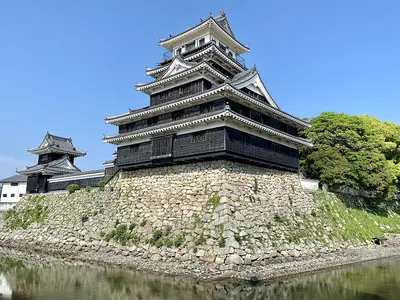
Kokura Castle's reconstruction features a distinctive architectural quirk: the fifth floor lacks the overhanging eaves present on every other Japanese castle tower. This 'karahafu-nashi' (no karabo style) design gives the tower an unusual, almost blunt appearance that puzzles visitors expecting the typical curved roof silhouette. The original tower apparently had this same design — making Kokura architecturally unique among Japanese castle towers.

3

Survived the Atomic Age by Cloud Cover

On August 9, 1945, Kokura was the primary target for the second atomic bomb — not Nagasaki. The B-29 Bockscar made three passes over Kokura but heavy industrial smoke and cloud cover obscured the target. After failing to drop on Kokura, the crew flew to the secondary target: Nagasaki. The bomb that destroyed Nagasaki was meant for Kokura. This historical near-miss is now part of Kokura's identity — locals sometimes say they owe their city to the clouds.

Structure Details

Visitor tip

The reconstructed tower has five floors with a museum that covers the castle's history, the Ganryujima duel, and displays on the Kokura-as-atomic-bomb-target story. The Katsuyama Park setting around the castle is pleasant, with cherry trees lining the moat. Allow about an hour for the tower, then walk the moat perimeter.

Castle type

Flatland castle

Flatland castle — built on flat terrain at the confluence of the Murasaki River and Katsuyama Canal, relying on water defenses

Layout type

Concentric layout

Enclosure style — concentric moats and stone walls on flat terrain

Main tower

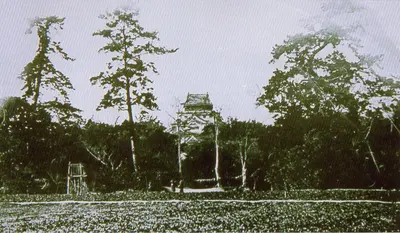
Concrete reconstruction (1959) — the original five-story tower, built in 1602 by Hosokawa Tadaoki, was burned by the Ogasawara domain themselves in 1866 during factional conflict before Meiji forces arrived. The 1959 reconstruction matches the exterior appearance of the original.

29m5 floors, 1 below

Stone walls

Fitted cut-stone masonry

The inner moat and stone walls of the main compound survive from the original castle. The combination of surviving moat and the five-story reconstructed tower creates one of Kyushu's more photogenic castle park settings.

Moats

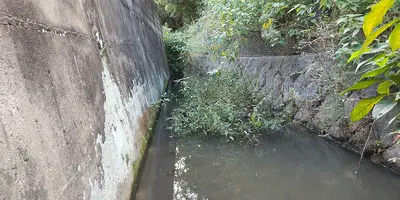
The inner moat surrounding the main compound partially survives, filled with water and reflecting the reconstructed tower. The original castle had extensive outer moats exploiting the surrounding river channels.

Key defensive features

River Confluence Position

The castle was positioned at the confluence of the Murasaki River and a series of tidal channels, creating natural water barriers supplemented by cut moats. Any approach required crossing water, and the castle controlled both river traffic and the land route through northern Kyushu.

Distinctive Fifth-Floor Design

The unusual fifth floor without overhanging eaves was not merely aesthetic — the vertical wall face of the top floor provided different defensive angles for dropping stones or firing on attackers who had somehow reached the base of the tower.

The Story of Kokura Castle

Originally built 1602 / Hosokawa Tadaoki
Current form 1959 / Kitakyushu City Government
    1602

    Hosokawa Tadaoki, rewarded for his role at Sekigahara, constructs the distinctive five-story tower on the Katsuyama hill site. The unusual fifth floor design — lacking the typical overhanging eaves — is a deliberate architectural choice that sets Kokura Castle apart from all other Japanese castle towers.

    1612

    At nearby Ganryujima island (visible from Kokura), Miyamoto Musashi duels and kills Sasaki Kojiro in what becomes the most famous sword duel in Japanese history. The duel is arranged under the auspices of the Hosokawa domain based at Kokura Castle.

    1866

    During the First Choshu Expedition (a Tokugawa shogunate campaign against the increasingly powerful Choshu domain), Choshu forces attack Kokura. As Choshu troops approach, the Ogasawara clan lords of Kokura deliberately burn the castle tower to prevent it from being used by the enemy. The stone walls and foundations survive.

    1945

    Kokura is designated the primary target for the second atomic bomb on August 9. Three bombing runs fail due to cloud cover. The bomb is dropped on Nagasaki instead — Kokura escapes destruction.

    1959

    Kitakyushu City reconstructs the main tower in reinforced concrete to match the exterior of the original. The castle becomes a central feature of the city's identity.

In Pop Culture

novel

Various adaptations of Eiji Yoshikawa's 'Musashi'

Yoshikawa's novel 'Musashi' (1935–1939), the definitive fictional account of Miyamoto Musashi's life, climaxes with the Ganryujima duel associated with Kokura. The novel has been adapted into multiple films, television dramas, and manga — making the Kokura/Ganryujima connection famous across Japanese popular culture.

Did You Know?

  • The phrase 'Kokura's luck' (小倉の幸運 / Kokura no kouun) entered Japanese usage to describe being saved from catastrophe by circumstances beyond one's control — a direct reference to the cloud cover that redirected the second atomic bomb to Nagasaki. Kokura has embraced this history with a mixture of survivor's guilt and genuine recognition of the city's extraordinary fate.
  • Hosokawa Tadaoki, who built Kokura Castle, is unusual among Sengoku lords for his cultural sophistication — he was a master of tea ceremony, calligraphy, and poetry, as well as a skilled general. His wife, Gracia, was a devout Christian convert whose dramatic death (she asked her retainer to kill her rather than be taken hostage) is celebrated as a martyr's story in Japanese Christian history.
  • The Ganryujima duel site is actually Mushima island in the Kanmon Strait, renamed Ganryujima (Ganryu Island, named after Sasaki Kojiro's sword style). Regular tourist ferries run from both Shimonoseki and the Kokura waterfront — a twenty-minute journey to what is now a small wooded island with monuments to both duelists.
  • Kokura Castle was never taken by direct military assault throughout its operational history — the 1866 castle burning was self-inflicted by the Ogasawara clan retreating before Choshu forces. It is one of the ironies of Japanese castle history that many castles were destroyed by their own lords rather than by enemies.

Score Breakdown

Tourism Score

C 62/100
  • Accessibility 17 /20
  • Foreign-Friendly 11 /20
  • Historical Value 13 /20
  • Visual Impact 12 /20
  • Facilities 9 /20

Defense Score

C 66/100
  • Terrain Advantage 10 /20
  • Entrance Defense 11 /20
  • Internal Complexity 16 /20
  • Siege Endurance 16 /20
  • Strategic Oversight 13 /20

Planning Your Visit

Best Time to Visit

Cherry blossom season (late March to early April) for the moat views. The summer evening illumination can be pleasant. Year-round access is easy given Kokura Station's Shinkansen connections.

Time Needed

1–1.5 hours for the tower and moat; add 2 hours for a Ganryujima ferry trip

Insider Tip

Take the ferry from the nearby Kokura waterfront to Ganryujima (Mushima island) — it's a short twenty-minute ride and the island has monuments to both Musashi and Kojiro, quiet wooded paths, and sea views. Few foreign tourists make this trip, and it completes the Kokura experience far better than the tower museum alone.

Map

Getting There

Nearest station: Kokura Station (JR Kyushu Shinkansen / Sanyo Shinkansen / JR Kagoshima Main Line)
Walk from station: 15 min walk
Bus: City bus from Kokura Station. The castle is clearly visible from much of central Kokura.
Parking: Paid parking available adjacent to the castle park. Kokura Station is a major Shinkansen hub — excellent access from Fukuoka, Hiroshima, and Osaka.
Accessible with a JR Pass

Admission

Adult¥500
Child¥200

Non-resident adult ¥500, Kitakyushu resident ¥400 (from April 2026). Middle/high school ¥200, elementary ¥100.

Opening Hours

Open09:00 – 20:00
Last entry19:30

Apr–Oct: 9:00–20:00. Nov–Mar: 9:00–19:00.

Facilities

  • – English guides
  • – Audio guide
  • ✓ Wheelchair access
  • ✓ Restrooms
  • ✓ Gift shop
  • ✓ Food nearby

Nearby Castles

Featured in collections

FAQ

Frequently Asked Questions

How do I get to Kokura Castle?

The nearest station is Kokura Station (JR Kyushu Shinkansen / Sanyo Shinkansen / JR Kagoshima Main Line). From there it is about 15 minutes on foot. City bus from Kokura Station. The castle is clearly visible from much of central Kokura.

How much does Kokura Castle cost to enter?

Adult admission is ¥500 and child admission is ¥200.

Is Kokura Castle worth visiting?

Kokura Castle offers two compelling reasons to visit beyond the reconstructed tower itself: the Miyamoto Musashi connection (the Ganryujima duel is one of Japan's most famous stories, and the castle was its institutional setting), and the sobering atomic-bomb near-miss story. Both narratives are covered in the tower museum. The castle is easily combined with Kitakyushu's excellent Manga Museum or a ferry trip to Ganryujima island. The Shinkansen access from Kokura Station makes it viable as an easy stop en route between Fukuoka and Hiroshima.

What are the opening hours of Kokura Castle?

09:00 to 20:00, last entry 19:30.

How long should I spend at Kokura Castle?

Plan for about 1–1.5 hours for the tower and moat; add 2 hours for a Ganryujima ferry trip, depending on how closely you want to explore the grounds.