Sannohe Castle

三戸城·Sannohe-jo

F Tourism Score 30/100
B Defense Score 74/100

The ancestral headquarters of the Nanbu clan — Tohoku's most powerful northern daimyo — before they moved to Morioka.

#103 — Continued 100 Castles Ruins
Sannohe Castle (三戸城)
Photo:小池 隆/Wikimedia Commons/CC BY 3.0

Quick Facts

Quick Facts

Admission
Free Free
Hours
00:00 – 23:59
Nearest Station
Sannohe Station (IGR Iwate Galaxy Railway)
Walk from Station
25 min walk
Time Needed
45 minutes

The castle ruins and park grounds are free to enter at all times. A small local history museum near the ruins charges a nominal fee for its exhibits on the Nanbu clan.

Defense Overview

Defense Overview

Why Sannohe Castle was hard to attack

This castle is hard to attack because it combines a raised core with defended outer space with enough defensive depth to slow attackers before the center.

An attacker would not get a simple direct approach to the center. They would have to cross water barriers or moat lines and push through successive outer areas before the core.

Overall score

74/100

Estimated range

68–80

Confidence

B

Usable estimate with some inference

This is a site-original comparison score for learning and comparison, not a reconstruction of one historical battle.

Radar view

Terrain 15/20 Entrance 14/20 Internal 16/20 Siege 15/20 Oversight 14/20
How this estimate was built+

This estimate combines broad terrain, approach, layout, and route-control signals. It is meant to explain the castle's defensive logic in plain English, not reconstruct a single historical attack.

Terrain Advantage

How much the terrain itself seems to help: height, slope, ridges, cliffs, water edges, and limited approach directions.

15/20

Entrance Defense

How awkward and dangerous the first entry looks: gates, bridge or moat crossings, chokepoints, and forced turns.

14/20

Internal Complexity

How hard it seems to keep pushing after entry: layered baileys, depth, compartmentalization, and repeated defensive lines.

16/20

Siege Endurance

A rough sense of long-hold potential: moats, water access, space, storage plausibility, and defensive staying power.

15/20

Strategic Oversight

How much the castle appears to command nearby roads, plains, rivers, basins, harbors, or town approaches.

14/20
Why Visit

Sannohe Castle is for dedicated 続100名城 completionists and those interested in Nanbu clan history. The physical site is modest earthwork ruins, but the historical weight is significant: for nearly three centuries, this hilltop was the administrative and military heart of one of Japan's largest northern domains. The cherry blossoms in spring add seasonal appeal.

Highlights

1

The Original Nanbu Clan Seat

Before the Nanbu clan moved their center to Morioka in the 17th century, Sannohe was the ancestral heart of their domain. The Nanbu were one of the most powerful clans in the Tohoku north, ruling a vast territory from the Pacific coast to the interior highlands. Standing at Sannohe Castle — however ruined — means standing at the origin point of that centuries-long rule.

2

A Hilltop Command Over the Nanbu Frontier

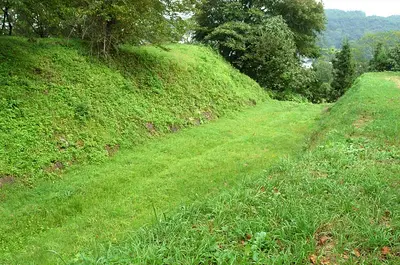
Sannohe Castle occupied a prominent hilltop position overlooking the Mabuchi River valley, giving the Nanbu lords a commanding view over the roads and plains of their territory. The earthwork compounds and trench lines that remain on the hill convey the scale of the original fortification — this was a substantial hilltop fortress, not a minor outpost.

3

Cherry Blossoms and Quiet Ruins

Today Sannohe Castle is a peaceful park, and in spring it becomes one of the prettiest cherry blossom spots in southern Aomori Prefecture. The castle grounds have been maintained with plantings that reward seasonal visitors, making it a pleasant combination of historical atmosphere and natural beauty.

Structure Details

Visitor tip

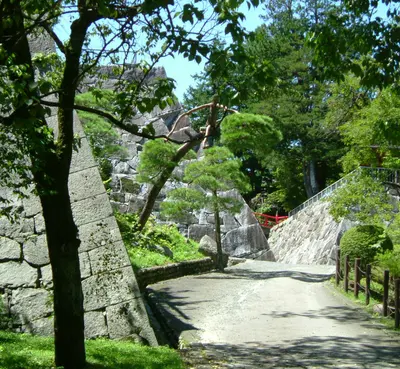
Sannohe Castle is a quiet earthwork ruins site — expect forested hilltop earthwork platforms and ditch traces, not stone walls or reconstructed buildings. The historical significance (original Nanbu clan seat, one of Tohoku's most powerful medieval clans) outweighs the physical spectacle. Spring cherry blossoms make this the best time to visit. Combine with a broader Aomori historical itinerary.

Castle type

Hill castle

Hill-top flatland castle — built on a low isolated hill above the surrounding valley terrain in southern Aomori Prefecture, using the hill's elevation to command approach roads and the Mabuchi River valley

Layout type

Linked compound layout

Compound style — multiple enclosures arranged on the hilltop, with the main compound at the highest point and secondary compounds on lower terraces

Main tower

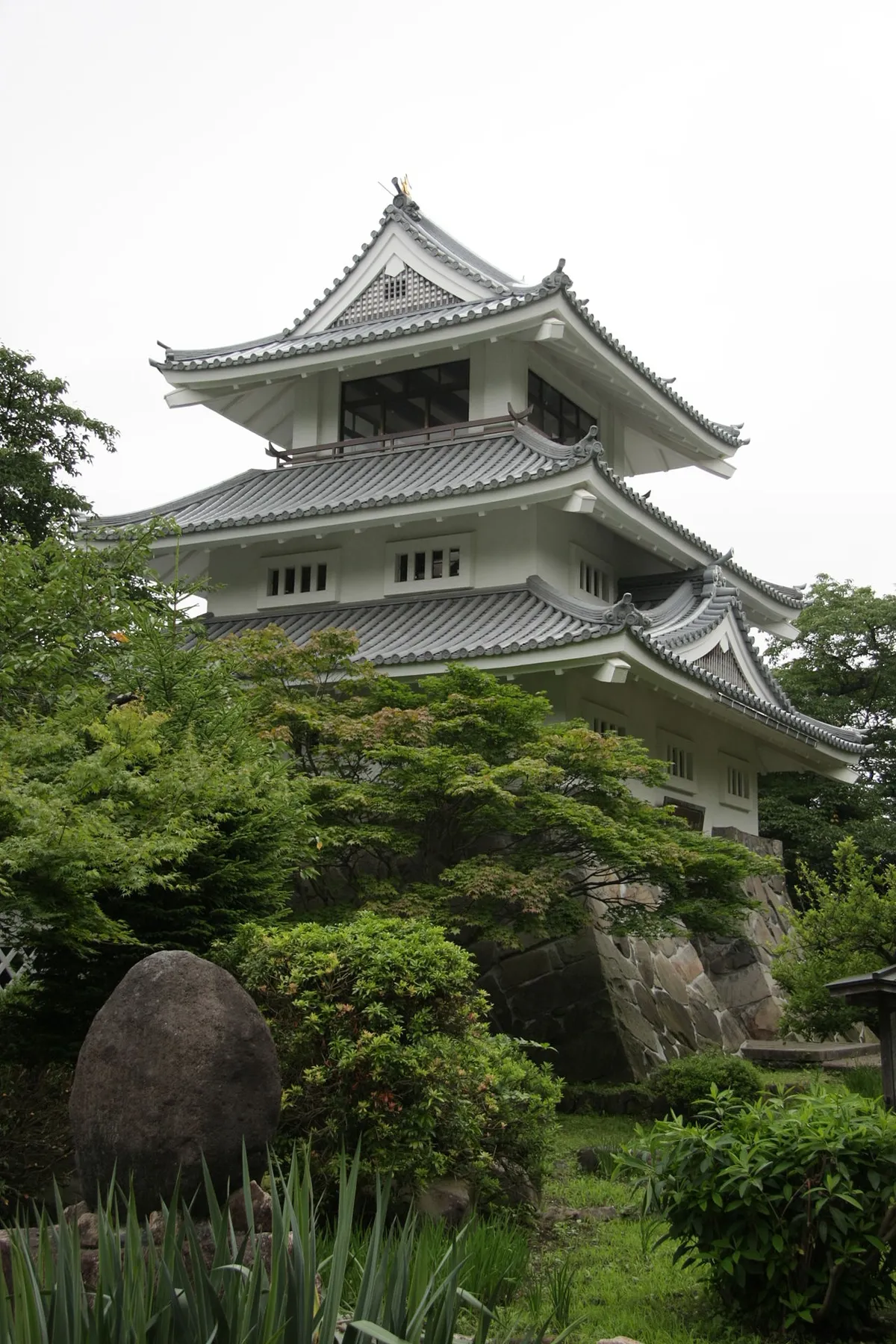
Complete ruins — no original structures survive. The castle site retains earthwork compound platforms and surrounding ditch traces. A simple turret-style structure was reconstructed on the hill as a park feature but is not a historically faithful reproduction.

Stone walls

Earthen walls

The surviving earthwork platforms and ditch traces on the hilltop are the primary physical remnants of Sannohe Castle. The Nanbu clan built in the Tohoku earthwork tradition, where deep ditches (horikiri) cut across ridges and raised earth ramparts (dobashi) defined the compound perimeters. No substantial stone walls were constructed here.

Moats

Earthwork ditches (horikiri and karabori) cut across the hilltop approaches, serving as dry moats to slow attacking forces. The natural slope of the hill on multiple sides provided additional water drainage that amplified the ditch defenses.

Key defensive features

Hilltop Elevation and Valley Command

The castle hill rises above the surrounding valley floor, giving defenders line-of-sight over all approach routes. Any army marching toward Sannohe could be observed from the castle well in advance, allowing the garrison to prepare and send for reinforcements from other Nanbu strongholds.

Earthwork Ditch System (Horikiri)

Deep horikiri — cross-ridge ditches — cut through the hilltop approaches at key intervals, forcing attackers to descend and re-ascend steep earthwork faces under fire from above. These earthen obstacles were the Nanbu clan's primary defensive technique and are still visible on the hilltop today.

Multiple Compound Layers

The castle's renkaku layout placed the honmaru at the summit with secondary compounds cascading down the slopes, so that even if outer compounds fell, the inner compound could continue to resist. Attackers would have to fight through every compound layer in sequence, each higher than the last.

The Story of Sannohe Castle

Originally built 1334 / Nanbu Moroyuki
Current form 1520 / Nanbu clan
    1334

    The Nanbu clan establishes a fortified seat at Sannohe, using the prominent hilltop position to command the southern Aomori interior. Sannohe becomes the primary clan headquarters from which the Nanbu administer their broad Tohoku domain.

    1520

    The castle is expanded to its full form under Nanbu Yasumasa, reflecting the clan's growing power and the increasing military demands of the Sengoku period in the north. Earthwork compounds and ditch systems are systematically constructed.

    1590

    The Nanbu submit to Toyotomi Hideyoshi's authority following his Odawara campaign, which brought all of Japan's daimyo under his dominion. The Nanbu domain is confirmed but their power is now constrained within the Toyotomi system.

    1591

    The Kunohe Rebellion — a revolt by the rival Kunohe clan — shakes the Nanbu domain. Kunohe Masazane rises against Nanbu authority, and Hideyoshi dispatches a punitive force that crushes the rebellion. The episode underscores the tensions within northern Tohoku.

    1600

    Following the Battle of Sekigahara, Tokugawa Ieyasu's victory is confirmed. The Nanbu clan, which had prudently avoided committing to either side, retains its domain in the new Tokugawa order.

    1627

    The Nanbu clan formally relocates its domain headquarters to the newly constructed Morioka Castle, ending Sannohe's role as the primary Nanbu seat after nearly three centuries. The castle gradually falls into disuse and eventually becomes the forested hill park it is today.

    2017

    Sannohe Castle is selected as #103 on the 続日本100名城 (Continued 100 Famous Castles of Japan) list, recognizing its historical importance as the founding seat of the Nanbu clan, one of Tohoku's most powerful medieval daimyo houses.

Did You Know?

  • The name 'Sannohe' (三戸) means 'three households' in Japanese — a reference to the original three founding families who settled this area in the ancient period, long before the Nanbu castle was built.
  • The Nanbu clan's move from Sannohe to Morioka in 1627 was part of a broader Tokugawa-era trend of daimyo consolidating their administration in a single purpose-built castle town rather than maintaining the old mountain-and-hilltop fortifications of the Sengoku period.
  • Despite its ruined state, Sannohe Castle park is famous locally for its spring cherry blossoms — a combination of historical atmosphere and seasonal natural beauty that draws visitors from across southern Aomori Prefecture.

Score Breakdown

Tourism Score

F 30/100
  • Accessibility 4 /20
  • Foreign-Friendly 3 /20
  • Historical Value 13 /20
  • Visual Impact 5 /20
  • Facilities 5 /20

Defense Score

B 74/100
  • Terrain Advantage 15 /20
  • Entrance Defense 14 /20
  • Internal Complexity 16 /20
  • Siege Endurance 15 /20
  • Strategic Oversight 14 /20

Planning Your Visit

Best Time to Visit

Late April to early May for cherry blossoms. Avoid winter (December–March) when snow and ice make the hilltop paths difficult. Autumn (October) offers pleasant conditions and fall foliage.

Time Needed

45 minutes

Insider Tip

Combine Sannohe with a visit to Kunohe Castle ruins (also 続100名城 #104) — the site of the dramatic 1591 Kunohe Rebellion that shook the entire Nanbu domain. The two castles together tell the story of Nanbu clan power and its internal conflicts in the late Sengoku period.

Map

Getting There

Nearest station: Sannohe Station (IGR Iwate Galaxy Railway)
Walk from station: 25 min walk
Parking: Free parking at Sannohe Castle Park.

Admission

Free

The castle ruins and park grounds are free to enter at all times. A small local history museum near the ruins charges a nominal fee for its exhibits on the Nanbu clan.

Opening Hours

Open00:00 – 23:59

Castle ruins open year-round. The grounds are forested and pleasant in spring (cherry blossoms) and autumn. Winters in Sannohe are cold and snowy; paths can be icy from December through March.

Facilities

  • – English guides
  • – Audio guide
  • – Wheelchair access
  • ✓ Restrooms
  • – Gift shop
  • – Food nearby

Nearby Castles

Featured in collections

FAQ

Frequently Asked Questions

How do I get to Sannohe Castle?

The nearest station is Sannohe Station (IGR Iwate Galaxy Railway). From there it is about 25 minutes on foot.

How much does Sannohe Castle cost to enter?

Sannohe Castle is free to enter.

Is Sannohe Castle worth visiting?

Sannohe Castle is for dedicated 続100名城 completionists and those interested in Nanbu clan history. The physical site is modest earthwork ruins, but the historical weight is significant: for nearly three centuries, this hilltop was the administrative and military heart of one of Japan's largest northern domains. The cherry blossoms in spring add seasonal appeal.

What are the opening hours of Sannohe Castle?

00:00 to 23:59.

How long should I spend at Sannohe Castle?

Plan for about 45 minutes, depending on how closely you want to explore the grounds.