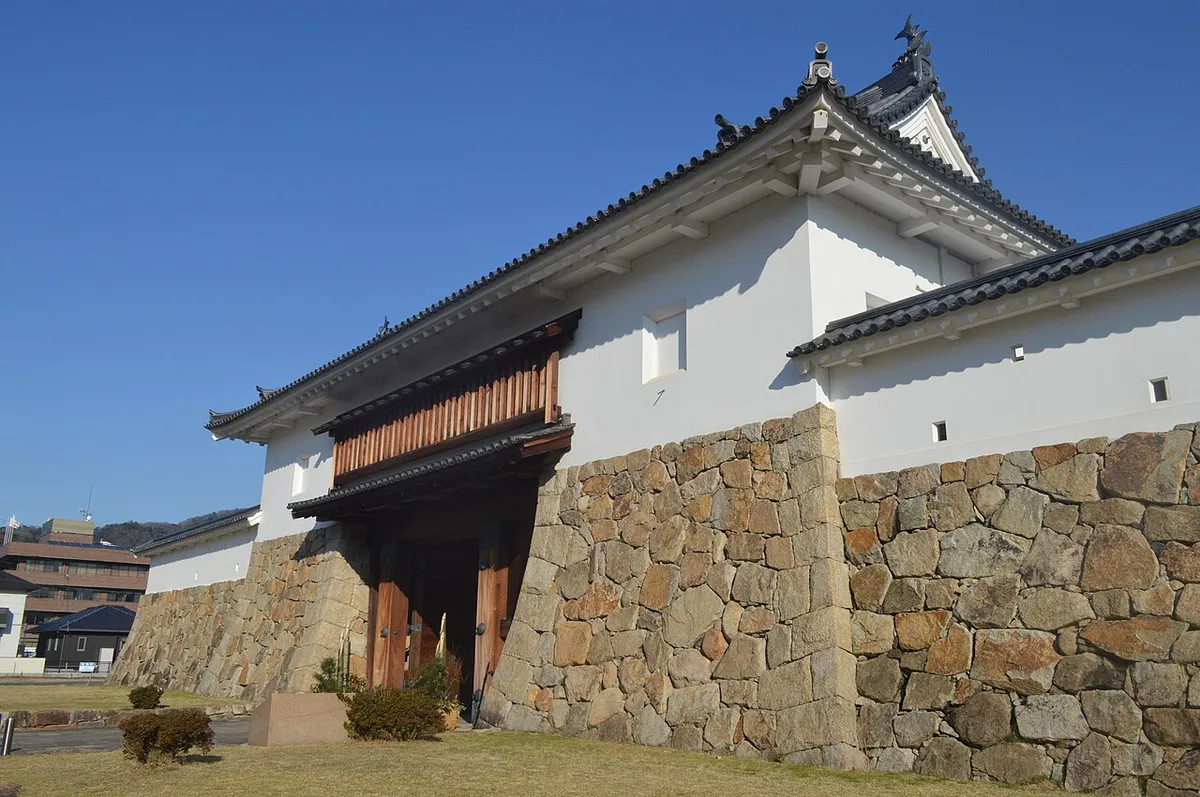
Tanabe Castle

田辺城·Tanabe-jo

F Tourism Score 38/100
C Defense Score 62/100

Where a besieging army of 15,000 stood down because the Emperor wanted to save the defender's classical literary knowledge — Japan's most culturally remarkable castle siege.

#171 — Continued 100 Castles Ruins
Tanabe Castle (田辺城)
Photo:Asturio Cantabrio/Wikimedia Commons/CC BY-SA 4.0

Quick Facts

Quick Facts

Admission
Free Free
Hours
00:00 – 23:59
Nearest Station
Nishi-Maizuru Station (JR Obama Line / Kitakinki Tango Railway)
Walk from Station
15 min walk
Time Needed
45 minutes to 1 hour

Free admission. The ruins are a public park (Maizuru Park). A partially reconstructed turret gate serves as a visual landmark.

Defense Overview

Defense Overview

Why Tanabe Castle was hard to attack

This castle is hard to attack because it combines managed outer defenses on relatively level ground with enough defensive depth to slow attackers before the center.

An attacker would not simply arrive at the center on open flat ground. They would have to cross water barriers or moat lines, approach through at least some constrained entry space, and push through successive outer areas before the core.

Overall score

62/100

Estimated range

56–68

Confidence

B

Usable estimate with some inference

This is a site-original comparison score for learning and comparison, not a reconstruction of one historical battle.

Radar view

Terrain 11/20 Entrance 13/20 Internal 12/20 Siege 14/20 Oversight 12/20
How this estimate was built+

This estimate combines broad terrain, approach, layout, and route-control signals. It is meant to explain the castle's defensive logic in plain English, not reconstruct a single historical attack.

Terrain Advantage

How much the terrain itself seems to help: height, slope, ridges, cliffs, water edges, and limited approach directions.

11/20

Entrance Defense

How awkward and dangerous the first entry looks: gates, bridge or moat crossings, chokepoints, and forced turns.

13/20

Internal Complexity

How hard it seems to keep pushing after entry: layered baileys, depth, compartmentalization, and repeated defensive lines.

12/20

Siege Endurance

A rough sense of long-hold potential: moats, water access, space, storage plausibility, and defensive staying power.

14/20

Strategic Oversight

How much the castle appears to command nearby roads, plains, rivers, basins, harbors, or town approaches.

12/20

Why Visit

Tanabe Castle's physical remains are modest — a park with stone walls and a reconstructed turret gate. But the story of Hosokawa Yusai's siege is one of the most extraordinary in Japanese history. The visit is worth making for the story alone, and the Maizuru area has additional interest through its naval history museum.

Highlights

1

The Siege Where the Defender Wrote Poetry

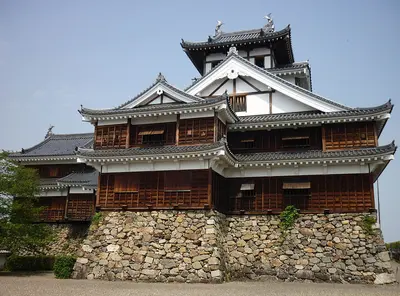
In 1600, Hosokawa Fujitaka (Hosokawa Yusai) held Tanabe Castle with fewer than 500 men against a besieging force of over 15,000. Rather than fighting desperately, the cultured lord spent the siege composing waka poetry and transmitting the secret traditions of Japanese classical literature to the Imperial court. The Emperor himself eventually ordered a ceasefire — not to save the castle, but to save the cultural knowledge its defender possessed.
2

A Ceasefire Called for Classical Literature

Hosokawa Yusai was the foremost authority of his age on the 'Kokin Denjuu' — the secret oral transmission of interpretations of the classical poetry anthology Kokinwakashu. So concerned were the emperor and the court nobles that this literary tradition might die with Yusai in the siege that they sent imperial envoys to negotiate a ceasefire. The besieging army stood down. The cultural tradition was preserved.

3

Sea of Japan Port Castle

Tanabe Castle (present-day Maizuru) controlled a strategic harbor on the Sea of Japan coast — one of the most important port locations in the Tango (northern Kyoto Prefecture) region. The castle's location above the harbor made it an economic and military hub for trade with the Korean peninsula and northern Honshu regions.

Structure Details

Visitor tip

Tanabe Castle is a pleasant park stop with a reconstructed turret gate as the main visual feature. The historical story of Hosokawa Yusai's poetry siege is extraordinary and makes the visit memorable even though the physical remains are modest.

Castle type

Flatland castle

Flatland castle — built on flat terrain near Maizuru harbor on the Sea of Japan coast, controlling the port and coastal approaches

Layout type

Radial layout

Core style — main compound with subsidiary compounds, stone walls and moats on flat coastal terrain

Main tower

Ruins with partial reconstruction — a turret gate (yaguramon) has been reconstructed on original foundations; all other structures demolished in Meiji period

Stone walls

Natural stone stacking

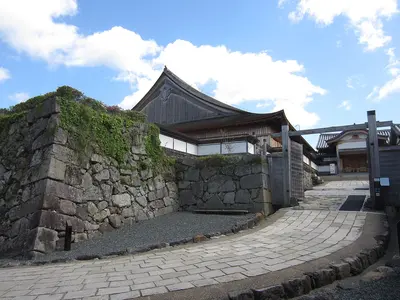
Sections of original nozurazumi stone walls survive in the park around the castle site. The reconstructed turret gate provides a visual focal point and is built on the original foundation location.

Moats

Water moats on the flat coastal terrain created the primary defensive perimeter.

Key defensive features

Harbor Control

The castle's position controlling Maizuru harbor gave it strategic and economic importance far beyond its modest physical scale.

Water Moat System

The flat coastal terrain required a constructed water moat system to compensate for the absence of natural defensive terrain.

The Story of Tanabe Castle

Originally built 1579 / Hosokawa Fujitaka (Hosokawa Yusai)
Current form 1600 / Hosokawa Fujitaka
    1579

    Hosokawa Fujitaka (Hosokawa Yusai) — one of the most cultured men of the Sengoku period, simultaneously poet, tea master, and military commander — establishes Tanabe Castle at Maizuru on Oda Nobunaga's order to control the Tango region.

    1600

    As the country splits before Sekigahara, Hosokawa Yusai commits to the Tokugawa side. The Western forces send over 15,000 men to besiege Tanabe Castle, which Yusai holds with fewer than 500. Rather than surrender immediately, the 60-year-old lord decides to make a stand.

    1600

    Emperor Go-Yozei sends imperial envoys to both sides, expressing concern that Hosokawa Yusai — the supreme authority on the Kokin Denjuu — might die in battle. The Western forces agree to negotiate. After approximately two months of siege, Yusai surrenders on honorable terms.

    1871

    Tanabe Castle's wooden structures are demolished in the Meiji period. The stone walls remain in the park. The turret gate is later reconstructed based on historical records.

In Pop Culture

TV

Kirin ga Kuru (NHK Taiga Drama, 2020)

The NHK Taiga Drama covering Akechi Mitsuhide's era touched on the Hosokawa family story.

other

Various Sengoku historical novels

The extraordinary story of an imperial ceasefire called to preserve classical literature has inspired multiple historical novels and dramatizations.

Did You Know?

  • The 1600 siege of Tanabe Castle is one of the most remarkable episodes in Japanese cultural history — an army of 15,000 agreeing to stand down because the defender was too culturally important to kill.
  • Hosokawa Yusai is considered one of the greatest Renaissance men of the Sengoku period — simultaneously a skilled military commander, a master of waka poetry, an authority on classical literature, a practitioner of the tea ceremony, and a Noh performance expert.
  • The Kokin Denjuu that Yusai preserved through the siege are the secret oral traditions explaining the correct interpretation of the Kokinwakashu, the imperially commissioned 10th-century poetry anthology foundational to Japanese literary culture.

Score Breakdown

Tourism Score

F 38/100
  • Accessibility 9 /20
  • Foreign-Friendly 5 /20
  • Historical Value 13 /20
  • Visual Impact 7 /20
  • Facilities 4 /20

Defense Score

C 62/100
  • Terrain Advantage 11 /20
  • Entrance Defense 13 /20
  • Internal Complexity 12 /20
  • Siege Endurance 14 /20
  • Strategic Oversight 12 /20

Planning Your Visit

Best Time to Visit

Year-round. Spring cherry blossoms in the park are popular locally.

Time Needed

45 minutes to 1 hour

Insider Tip

Read about Hosokawa Yusai before visiting — the physical site is modest, but if you know the story of the poetry siege and the imperial ceasefire, the park becomes a stage for one of history's strangest military episodes.

Map

Getting There

Nearest station: Nishi-Maizuru Station (JR Obama Line / Kitakinki Tango Railway)
Walk from station: 15 min walk
Parking: Parking available at Maizuru Park adjacent to castle ruins.
Accessible with a JR Pass

Admission

Free

Free admission. The ruins are a public park (Maizuru Park). A partially reconstructed turret gate serves as a visual landmark.

Opening Hours

Open00:00 – 23:59

Open at all times as public parkland. Cherry blossoms popular in spring.

Facilities

  • – English guides
  • – Audio guide
  • ✓ Wheelchair access
  • ✓ Restrooms
  • – Gift shop
  • ✓ Food nearby

Nearby Castles

Featured in collections

FAQ

Frequently Asked Questions

How do I get to Tanabe Castle?

The nearest station is Nishi-Maizuru Station (JR Obama Line / Kitakinki Tango Railway). From there it is about 15 minutes on foot.

How much does Tanabe Castle cost to enter?

Tanabe Castle is free to enter.

Is Tanabe Castle worth visiting?

Tanabe Castle's physical remains are modest — a park with stone walls and a reconstructed turret gate. But the story of Hosokawa Yusai's siege is one of the most extraordinary in Japanese history. The visit is worth making for the story alone, and the Maizuru area has additional interest through its naval history museum.

What are the opening hours of Tanabe Castle?

00:00 to 23:59.

How long should I spend at Tanabe Castle?

Plan for about 45 minutes to 1 hour, depending on how closely you want to explore the grounds.