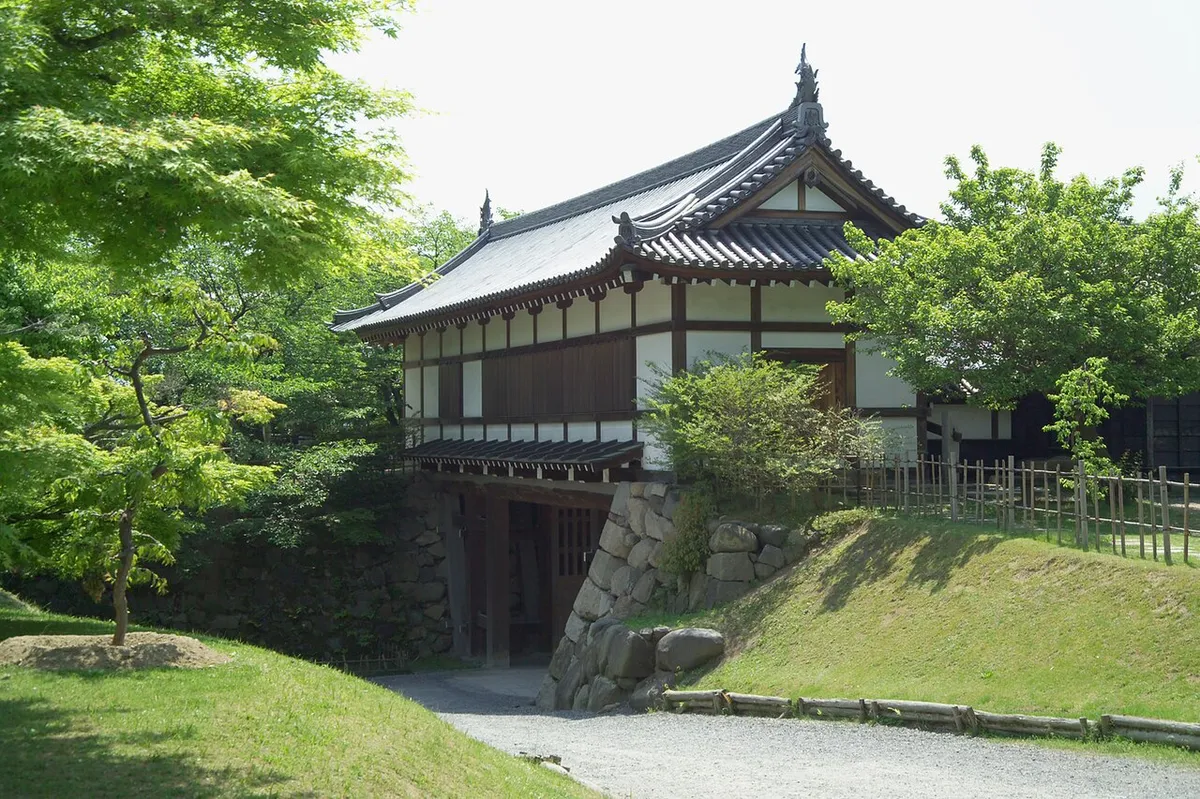
Yamato-Koriyama Castle

大和郡山城·Yamato-Koriyama-jo

D Tourism Score 45/100
C Defense Score 66/100

The castle where Buddhist gravestones became wall filler — and where goldfish became the local industry because samurai needed a respectable side job.

#55 — 100 Famous Castles Ruins
Yamato-Koriyama Castle (大和郡山城)
Photo:Fg2/Wikimedia Commons/Public domain

Quick Facts

Quick Facts

Admission
Free Free
Hours
09:00 – 17:00

Last entry 16:30

Nearest Station
Kintetsu Koriyama Station (Kintetsu Kashihara Line) or JR Koriyama Station (JR Yamatoji Line)
Walk from Station
10 min walk
Time Needed
1–1.5 hours for ruins and sakasama Jizo section

Castle ruins park is free to enter. The partially reconstructed tower (Tenshudai) and inner compound are freely accessible. A small visitor center has nominal entry fee.

Defense Overview

Defense Overview

Why Yamato-Koriyama Castle was hard to attack

This castle is hard to attack because it combines managed outer defenses on relatively level ground with enough defensive depth to slow attackers before the center.

An attacker would not simply arrive at the center on open flat ground. They would have to cross water barriers or moat lines, push through successive outer areas before the core, and do so under a position that also watches the surrounding routes.

Overall score

66/100

Estimated range

60–72

Confidence

B

Usable estimate with some inference

This is a site-original comparison score for learning and comparison, not a reconstruction of one historical battle.

Radar view

Terrain 10/20 Entrance 11/20 Internal 15/20 Siege 16/20 Oversight 14/20
How this estimate was built+

This estimate combines broad terrain, approach, layout, and route-control signals. It is meant to explain the castle's defensive logic in plain English, not reconstruct a single historical attack.

Terrain Advantage

How much the terrain itself seems to help: height, slope, ridges, cliffs, water edges, and limited approach directions.

10/20

Entrance Defense

How awkward and dangerous the first entry looks: gates, bridge or moat crossings, chokepoints, and forced turns.

11/20

Internal Complexity

How hard it seems to keep pushing after entry: layered baileys, depth, compartmentalization, and repeated defensive lines.

15/20

Siege Endurance

A rough sense of long-hold potential: moats, water access, space, storage plausibility, and defensive staying power.

16/20

Strategic Oversight

How much the castle appears to command nearby roads, plains, rivers, basins, harbors, or town approaches.

14/20

Why Visit

Yamato-Koriyama delivers genuine surprise for a free-admission ruin. The 'sakasama Jizo' stone wall section is one of the strangest and most memorable details in Japanese castle history — upside-down guardian deity statues used as construction rubble, still visible in the walls after 440 years. The goldfish city identity adds another layer of delightful incongruity. The cherry blossom moat reflection is among the most beautiful spring scenes in the Kinai region. For Nara visitors, it's an easy 15-minute train ride that adds a very different experience to the usual temple circuit.

Highlights

1

Jizo Stones in the Castle Walls

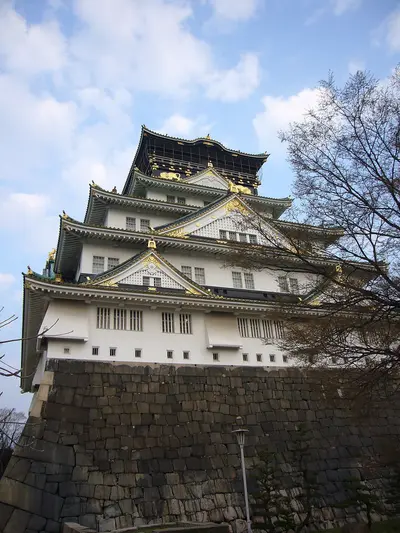
Yamato-Koriyama Castle has one of Japanese castle history's most disturbing secrets embedded in its walls: when construction materials ran short, builders incorporated tombstones, stone lanterns, and carved Buddhist Jizo statues from local temples and cemeteries. The faces of Jizo figures — the bodhisattva who protects travelers and children — are visible jutting from the stone walls, deliberately turned face-down or sideways when used as filler. Locals call this section 'sakasama Jizo' (upside-down Jizo). It remains in the walls today.
2

The Goldfish Capital of Japan

Yamato-Koriyama is famous throughout Japan as the nation's top goldfish-farming city, a tradition dating back to the Edo period when the ruling Yanagisawa clan reportedly encouraged goldfish cultivation as a side occupation for low-ranking samurai. Today the city produces a significant portion of Japan's ornamental goldfish, and goldfish motifs appear everywhere — in shop signs, manhole covers, and city decorations. The incongruity of castle ruins surrounded by goldfish farms is entirely real.

3

Toyotomi Hidenaga's Showcase Castle

Yamato-Koriyama Castle was massively expanded by Toyotomi Hidenaga — the younger brother of Toyotomi Hideyoshi — who made it one of the most imposing fortifications in the Kinai region. After Sekigahara, the castle passed through several lords before gradually declining. The partial tower reconstruction and the atmospheric cherry blossom season make it a worthwhile Nara-area visit for castle enthusiasts.

Structure Details

Visitor tip

The castle is most famous for the 'sakasama Jizo' (upside-down Jizo stones) in the north wall — ask at the entrance about their location, as they're easy to miss without guidance. The moat reflection on cherry blossom days is one of Japan's loveliest castle park scenes. Free admission makes this an easy addition to a Nara or Osaka day trip.

Castle type

Flatland castle

Flatland castle — built on low ground in the Yamato Basin (Nara Plain), relying on moats and earthworks rather than natural elevation

Layout type

Concentric layout

Enclosure style — concentric moats and stone-walled compounds on flat Nara Basin terrain

Main tower

Partial reconstruction — the tenshu-dai (main tower stone foundation) has been partially restored, and the base structure is visible, but no full tower reconstruction exists. The ruins include several surviving original stone walls in excellent condition.

Stone walls

Natural stone stacking

The stone walls of Yamato-Koriyama are significant for two reasons: sections in good original condition demonstrate high-quality late-Sengoku construction, and the 'sakasama Jizo' section (upside-down Jizo stones used as fill) is one of the most unusual and discussed stone wall features in Japanese castle history — a reminder that rapid castle construction in the Sengoku era was not always conducted with respect for pre-existing religious materials.

Moats

Extensive moats and water features still surround the castle ruins. The inner moat is well-preserved and filled with water — the reflection of the ruins and cherry trees in the moat is the classic Yamato-Koriyama springtime image.

Key defensive features

Extensive Moat System

The flat Nara Basin terrain meant that water moats were the primary defensive system — multiple concentric moats surrounded the compounds. The water table in this agricultural area made moat construction straightforward and maintenance reliable.

Kinai Crossroads Position

Yamato-Koriyama sits at a crossroads in the Nara Basin, controlling routes between Nara, Osaka, and the Yoshino mountain region. During the Sengoku period, control of this agricultural lowland was essential for feeding armies and taxing trade.

The Story of Yamato-Koriyama Castle

Originally built 1580 / Tsutsui Junkeii
    1580

    Tsutsui Junkeii begins construction of a substantial castle at Koriyama, establishing control over the Yamato Basin under Oda Nobunaga's authority.

    1585

    Toyotomi Hidenaga — Hideyoshi's younger brother — takes control of Yamato Province and massively expands the castle, adding impressive stone walls, multiple compounds, and a large main tower. Under Hidenaga, Yamato-Koriyama becomes one of the most imposing castles in the Kinai region.

    1590

    Hidenaga dies without an heir. The castle passes through several lords over subsequent decades. After Sekigahara, the Mizuno and later the Yanagisawa clans govern the domain.

    1724

    The Yanagisawa clan, transferred from Kai Province, establishes itself at Yamato-Koriyama. Under Yanagisawa governance, the goldfish cultivation tradition develops — low-ranking samurai supplement their incomes by raising ornamental goldfish in the moats and nearby ponds, a practice that eventually makes Yamato-Koriyama Japan's leading goldfish production area.

    1873

    The Meiji government orders castle demolition. The tower and most wooden structures are dismantled. The stone walls, foundations, and moat system survive.

Did You Know?

  • The 'sakasama Jizo' (upside-down Jizo statues) in the castle walls are the most discussed single feature of Yamato-Koriyama Castle — Buddhist statues deliberately incorporated face-down into stone walls was considered shocking even at the time, and the stones remain visible today as a testament to the pragmatic ruthlessness of rapid Sengoku-era castle construction.
  • Yamato-Koriyama produces approximately 50% of Japan's commercially sold goldfish and is considered the founding city of Japanese ornamental goldfish culture. The goldfish-as-castle-town-industry connection originated when Edo-period samurai, forbidden by status from engaging in agriculture or trade, found that goldfish cultivation was classified separately and thus acceptable as a side occupation.
  • The Yanagisawa clan who developed the goldfish tradition at Yamato-Koriyama were formerly associated with Yanagisawa Yoshiyasu — the favorite of Shogun Tokugawa Tsunayoshi, whose close relationship with the shogun was the source of enormous political controversy (and considerable innuendo) in the early Edo period. Yoshiyasu's descendants governed Yamato-Koriyama peacefully for over 150 years.
  • The castle moats are part of Yamato-Koriyama's goldfish farming infrastructure even today — the traditional water management systems that fed the moats were adapted for goldfish cultivation, creating a continuous functional connection between the castle's water engineering and the city's modern industry.

Score Breakdown

Tourism Score

D 45/100
  • Accessibility 13 /20
  • Foreign-Friendly 7 /20
  • Historical Value 14 /20
  • Visual Impact 7 /20
  • Facilities 4 /20

Defense Score

C 66/100
  • Terrain Advantage 10 /20
  • Entrance Defense 11 /20
  • Internal Complexity 15 /20
  • Siege Endurance 16 /20
  • Strategic Oversight 14 /20

Planning Your Visit

Best Time to Visit

Cherry blossom season (late March to early April) is prime — the moat reflection is famous. The goldfish festival (summer) adds local color. Free admission makes any season worthwhile.

Time Needed

1–1.5 hours for ruins and sakasama Jizo section

Insider Tip

The 'sakasama Jizo' stones are in the north wall of the tenshu-dai area — look for stone faces turned sideways or downward in the wall face. There is usually a small explanatory sign in Japanese; the stones themselves are obvious once you know where to look and what to look for. A Jizo face emerging from a castle wall is not easily mistaken for ordinary masonry.

Map

Getting There

Nearest station: Kintetsu Koriyama Station (Kintetsu Kashihara Line) or JR Koriyama Station (JR Yamatoji Line)
Walk from station: 10 min walk
Parking: Parking available near the castle park. Easy day trip from Nara (15 minutes) or Osaka (30 minutes by Kintetsu).
Accessible with a JR Pass

Admission

Free

Castle ruins park is free to enter. The partially reconstructed tower (Tenshudai) and inner compound are freely accessible. A small visitor center has nominal entry fee.

Opening Hours

Open09:00 – 17:00
Last entry16:30

Castle park open year-round. Cherry blossom season (late March to early April) is extremely popular with long visiting hours.

Facilities

  • – English guides
  • – Audio guide
  • ✓ Wheelchair access
  • ✓ Restrooms
  • – Gift shop
  • ✓ Food nearby

Nearby Castles

Featured in collections

FAQ

Frequently Asked Questions

How do I get to Yamato-Koriyama Castle?

The nearest station is Kintetsu Koriyama Station (Kintetsu Kashihara Line) or JR Koriyama Station (JR Yamatoji Line). From there it is about 10 minutes on foot.

How much does Yamato-Koriyama Castle cost to enter?

Yamato-Koriyama Castle is free to enter.

Is Yamato-Koriyama Castle worth visiting?

Yamato-Koriyama delivers genuine surprise for a free-admission ruin. The 'sakasama Jizo' stone wall section is one of the strangest and most memorable details in Japanese castle history — upside-down guardian deity statues used as construction rubble, still visible in the walls after 440 years. The goldfish city identity adds another layer of delightful incongruity. The cherry blossom moat reflection is among the most beautiful spring scenes in the Kinai region. For Nara visitors, it's an easy 15-minute train ride that adds a very different experience to the usual temple circuit.

What are the opening hours of Yamato-Koriyama Castle?

09:00 to 17:00, last entry 16:30.

How long should I spend at Yamato-Koriyama Castle?

Plan for about 1–1.5 hours for ruins and sakasama Jizo section, depending on how closely you want to explore the grounds.