Akita Castle

秋田城·Akita-jo

F Tourism Score 30/100
C Defense Score 63/100

Japan's oldest castle by date — an 8th-century Nara imperial frontier garrison on the Japan Sea coast, 700 years older than any samurai-era castle.

#106 — Continued 100 Castles Ruins
Akita Castle (秋田城)
Photo:掬茶/Wikimedia Commons/CC BY-SA 4.0

Quick Facts

Quick Facts

Admission
Free Free
Hours
09:00 – 16:30

Last entry 16:00

Nearest Station
Akita Station (JR Akita Shinkansen / JR Ou Main Line)
Walk from Station
50 min walk

Bus also available

Time Needed
1 hour (including museum)

Free admission to ruins and reconstructed facilities. Adjacent Akita Castle Museum charges an entrance fee. The site is a National Historic Site.

Defense Overview

Defense Overview

Why Akita Castle was hard to attack

This castle is hard to attack because attackers have to cross barriers and then keep working through constrained entry points before the core.

An attacker would not simply arrive at the center on open flat ground. They would have to cross water barriers or moat lines, pass tighter turns and chokepoints, and push through successive outer areas before the core.

Overall score

63/100

Estimated range

57–69

Confidence

B

Usable estimate with some inference

This is a site-original comparison score for learning and comparison, not a reconstruction of one historical battle.

Radar view

Terrain 11/20 Entrance 15/20 Internal 12/20 Siege 13/20 Oversight 12/20
How this estimate was built+

This estimate combines broad terrain, approach, layout, and route-control signals. It is meant to explain the castle's defensive logic in plain English, not reconstruct a single historical attack.

Terrain Advantage

How much the terrain itself seems to help: height, slope, ridges, cliffs, water edges, and limited approach directions.

11/20

Entrance Defense

How awkward and dangerous the first entry looks: gates, bridge or moat crossings, chokepoints, and forced turns.

15/20

Internal Complexity

How hard it seems to keep pushing after entry: layered baileys, depth, compartmentalization, and repeated defensive lines.

12/20

Siege Endurance

A rough sense of long-hold potential: moats, water access, space, storage plausibility, and defensive staying power.

13/20

Strategic Oversight

How much the castle appears to command nearby roads, plains, rivers, basins, harbors, or town approaches.

12/20

Why Visit

Akita Castle is for the serious history traveler who wants to understand the full sweep of Japanese castle history — not just the Sengoku period. The reconstructed gate and palisade bring 733 AD to life in a way that few other sites can. The famous excavated toilet facility is genuinely fascinating. Combine with Kubota Castle (Akita's samurai-era castle) to see how the city's military history spans 1,300 years.

Highlights

1

Japan's Oldest Castle by Date

Akita Castle (then called Dewa-no-ki or Ideha-no-ki) was established in 733 AD — making it the oldest castle in Japan by historical record. Built as an imperial frontier garrison to control the Emishi and Mishihase peoples of the Japan Sea coast, it predates the castles of the samurai age by over 700 years. This is where Japanese civilization reached westward Tohoku.
2

A Toilet That Changed History

Excavations at Akita Castle uncovered a remarkably sophisticated wooden toilet facility dating to the Nara period (8th century). The discovery proved that 8th-century Akita Castle had running-water lavatory systems — a plumbing sophistication unexpected at such a remote frontier outpost. The reconstructed toilet facility is now one of the site's most discussed exhibits.

3

Gate and Fence Reconstructed on Original Foundations

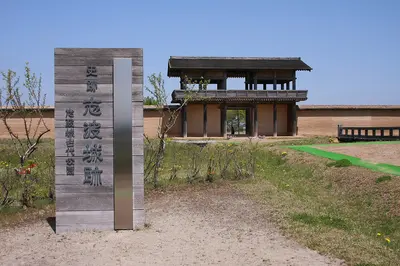
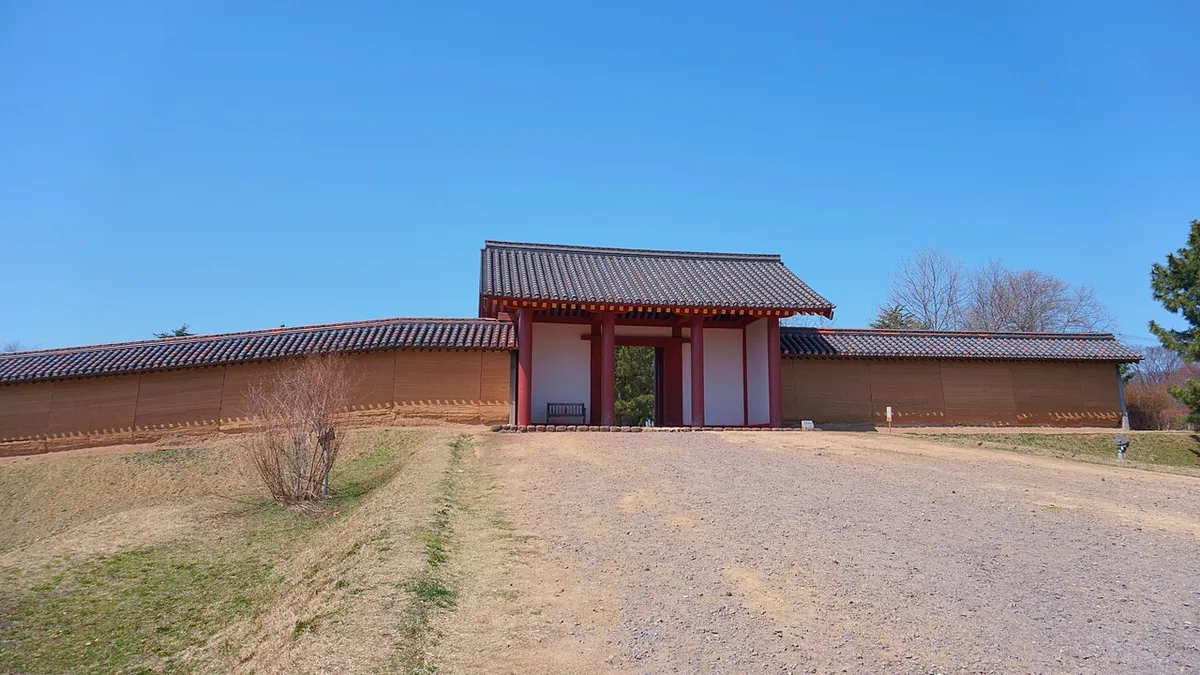
Based on meticulous archaeological excavation, the outer gate complex and sections of the wooden palisade fence have been reconstructed on their original Nara-period foundations. The reconstruction is scientifically rigorous — an unusual opportunity to see 8th-century Japanese frontier architecture in physical form.

Structure Details

Visitor tip

The main visual attraction is the reconstructed outer gate and palisade fence — walk through the gate for the best impression of 8th-century frontier architecture. Don't miss the reconstructed toilet facility, which is more interesting than it sounds and illustrates the sophistication of Nara-period engineering. The museum explains the Emishi and Mishihase frontier context in detail.

Castle type

Flatland castle

Flatland castle (ancient imperial garrison on flat terrain above Omono River, with earthen embankments and wooden palisades)

Layout type

Enclosure layout

Square enclosure style — Chinese-influenced administrative layout with central government compound

Main tower

Ruins with partial reconstruction — outer gate complex and palisade fence reconstructed on original Nara-period foundations

Stone walls

Earthen walls

The outer perimeter followed the Chinese tang-style garrison design: earthen embankments topped by a wooden palisade fence, with formal gate complexes on each side. The design reflects direct continental Chinese influence on Nara-period Japanese military architecture.

Moats

A perimeter moat surrounded the outer earthwork walls, forming part of the formal defensive layout of this imperial frontier garrison.

Key defensive features

Hilltop Position Above River

Akita Castle was built on a naturally elevated position above the Omono River, providing commanding views of the surrounding flat coastal plain and the river approach from the south.

Reconstructed Gate Complex

The formal Chinese-style gate complex, with its raised gate tower and flanking fence sections, provided a formal defensive and symbolic entrance to the imperial administrative center.

The Story of Akita Castle

Originally built 733 / Imperial Yamato state (Nara court)
Current form 733 / Nara imperial government
    733

    Akita Castle (then called Ideha-no-ki, later Dewa-no-ki) is established as the northernmost Japan Sea coast garrison of the Nara imperial government. Its mission is to control the Emishi people of the interior and the Mishihase people of the coastal north — peoples who resisted Yamato imperial authority.

    780

    The Emishi War intensifies. Akita Castle comes under significant threat during the major Emishi uprising that shakes the entire Tohoku frontier. Imperial forces struggle to maintain control of the northern garrisons.

    802

    Sakanoue no Tamuramaro's great Emishi campaign brings renewed imperial control to the Tohoku frontier. Akita Castle's role is consolidated as a permanent administrative center for the Dewa provincial government.

    878

    A major Emishi revolt (the Gangyou no Ran) results in the burning of Akita Castle's government buildings. The castle is subsequently rebuilt, demonstrating the ongoing importance of the site to imperial control of the Japan Sea coast.

    939

    As the central imperial government weakens and local warrior clans begin to dominate the provinces, Akita Castle gradually loses its role as an imperial frontier garrison. The site is eventually abandoned as the administrative center shifts.

In Pop Culture

TV

NHK historical documentaries on Tohoku frontier history

Akita Castle is regularly featured in NHK historical documentaries covering the Emishi people, the Nara period frontier, and the origins of the samurai class in Tohoku.

Did You Know?

  • Akita Castle is the oldest castle in Japan by date — established in 733 AD, it predates the great samurai castles of the Sengoku period by over 800 years. Most Japanese 'castle' enthusiasts focus on the Sengoku period, making Akita Castle an overlooked historical gem.
  • The Mishihase people mentioned in historical records about Akita Castle's founding are believed by some historians to be ancestors of the Ainu people of Hokkaido — making Akita Castle a surprisingly early frontier with what may be Ainu ancestral territory.
  • The excavated toilet facility at Akita Castle is considered one of the most remarkable archaeological finds at any Japanese castle site. Analysis of the 1,200-year-old waste found in the toilet pit revealed details about the Nara-period garrison diet — including parasites that indicate the soldiers were eating raw fish, surprising evidence of ancient Japanese food culture at this remote frontier.

Score Breakdown

Tourism Score

F 30/100
  • Accessibility 5 /20
  • Foreign-Friendly 2 /20
  • Historical Value 14 /20
  • Visual Impact 5 /20
  • Facilities 4 /20

Defense Score

C 63/100
  • Terrain Advantage 11 /20
  • Entrance Defense 15 /20
  • Internal Complexity 12 /20
  • Siege Endurance 13 /20
  • Strategic Oversight 12 /20

Planning Your Visit

Best Time to Visit

Late spring through autumn for best site conditions. The reconstructed structures are attractive in any season.

Time Needed

1 hour (including museum)

Insider Tip

The reconstructed toilet facility (benjo) is a must-see — visitors regularly underestimate how interesting 8th-century plumbing engineering can be. The interpretive displays at the adjacent museum are thorough, though mostly in Japanese.

Map

Getting There

Nearest station: Akita Station (JR Akita Shinkansen / JR Ou Main Line)
Walk from station: 50 min walk
Bus: City bus from Akita Station to Terauchi bus stop near the castle site. Taxi recommended for direct access.
Parking: Free parking at the Akita Castle Historical Site.
Accessible with a JR Pass

Admission

Free

Free admission to ruins and reconstructed facilities. Adjacent Akita Castle Museum charges an entrance fee. The site is a National Historic Site.

Opening Hours

Open09:00 – 16:30
Last entry16:00

The reconstructed facilities area has set hours. The outer ruins are accessible at all times as a park.

Facilities

  • – English guides
  • – Audio guide
  • ✓ Wheelchair access
  • ✓ Restrooms
  • – Gift shop
  • – Food nearby

Nearby Castles

Featured in collections

FAQ

Frequently Asked Questions

How do I get to Akita Castle?

The nearest station is Akita Station (JR Akita Shinkansen / JR Ou Main Line). From there it is about 50 minutes on foot. City bus from Akita Station to Terauchi bus stop near the castle site. Taxi recommended for direct access.

How much does Akita Castle cost to enter?

Akita Castle is free to enter.

Is Akita Castle worth visiting?

Akita Castle is for the serious history traveler who wants to understand the full sweep of Japanese castle history — not just the Sengoku period. The reconstructed gate and palisade bring 733 AD to life in a way that few other sites can. The famous excavated toilet facility is genuinely fascinating. Combine with Kubota Castle (Akita's samurai-era castle) to see how the city's military history spans 1,300 years.

What are the opening hours of Akita Castle?

09:00 to 16:30, last entry 16:00.

How long should I spend at Akita Castle?

Plan for about 1 hour (including museum), depending on how closely you want to explore the grounds.