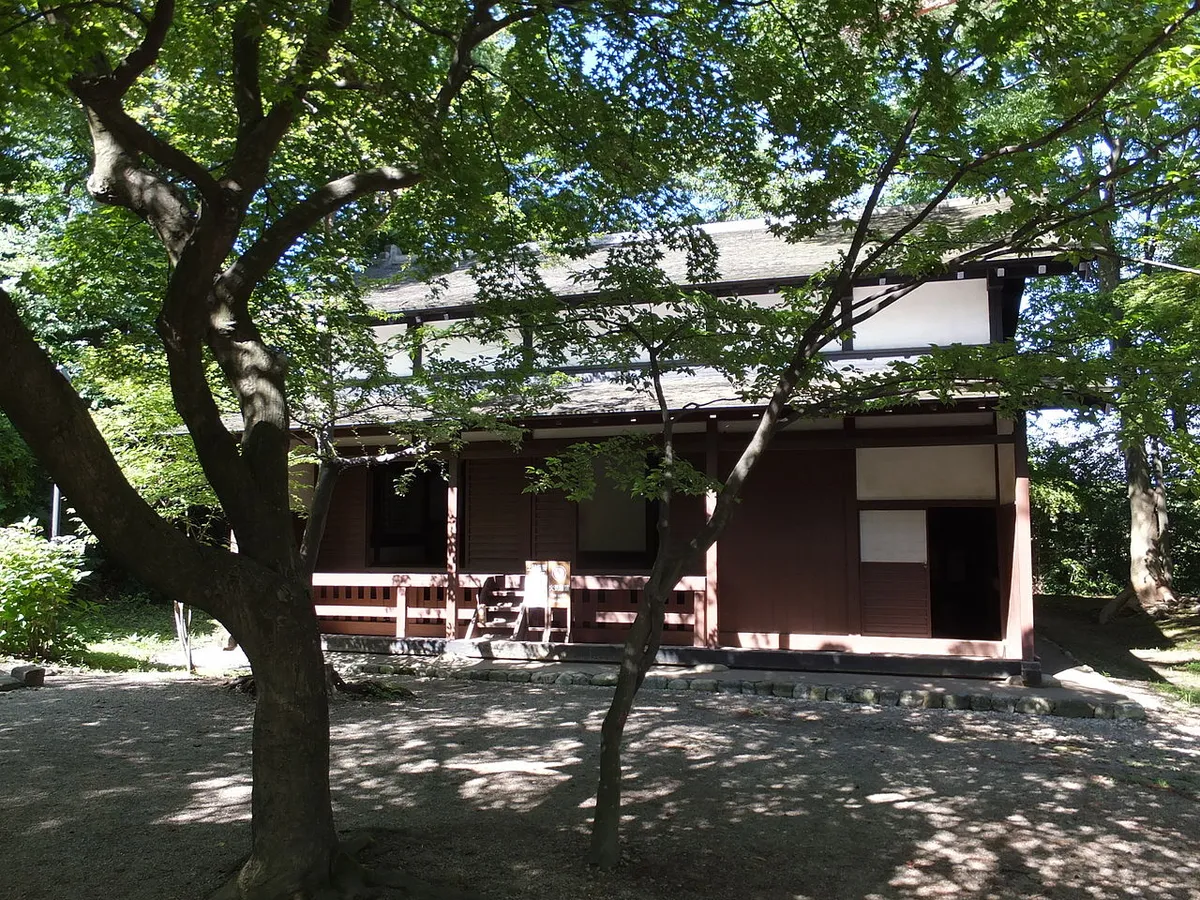
Kubota Castle (Akita Castle)

久保田城(秋田城)·Kubota-jo

D Tourism Score 45/100
B Defense Score 74/100

The castle deliberately built without a tower — Kubota's modesty was a political survival strategy, and today the grounds are simply Akita's best park.

#9 — 100 Famous Castles Ruins
Kubota Castle (Akita Castle) (久保田城(秋田城))
Photo:掬茶/Wikimedia Commons/CC BY-SA 3.0

Quick Facts

Quick Facts

Admission
¥150

¥0

Hours
05:00 – 22:00
Nearest Station
Akita Station (JR Akita Shinkansen / Ou Main Line)
Walk from Station
15 min walk

Bus also available

Time Needed
1 hour

Osumi Yagura turret: ¥150 (high school and under free). Senshu Park grounds are free. Turret open Apr–Dec only.

Defense Overview

Defense Overview

Why Kubota Castle (Akita Castle) was hard to attack

This castle is hard to attack because it combines a raised core with defended outer space with a controlled route inward.

An attacker would not get a simple direct approach to the center. They would have to cross water barriers or moat lines and face more defensive depth after the first line.

Overall score

74/100

Estimated range

68–80

Confidence

B

Usable estimate with some inference

This is a site-original comparison score for learning and comparison, not a reconstruction of one historical battle.

Radar view

Terrain 15/20 Entrance 14/20 Internal 17/20 Siege 14/20 Oversight 14/20
How this estimate was built+

This estimate combines broad terrain, approach, layout, and route-control signals. It is meant to explain the castle's defensive logic in plain English, not reconstruct a single historical attack.

Terrain Advantage

How much the terrain itself seems to help: height, slope, ridges, cliffs, water edges, and limited approach directions.

15/20

Entrance Defense

How awkward and dangerous the first entry looks: gates, bridge or moat crossings, chokepoints, and forced turns.

14/20

Internal Complexity

How hard it seems to keep pushing after entry: layered baileys, depth, compartmentalization, and repeated defensive lines.

17/20

Siege Endurance

A rough sense of long-hold potential: moats, water access, space, storage plausibility, and defensive staying power.

14/20

Strategic Oversight

How much the castle appears to command nearby roads, plains, rivers, basins, harbors, or town approaches.

14/20

Why Visit

Kubota Castle is an honest minor attraction: a pleasant park on a low hill with earthwork remnants, a reconstructed turret, and good cherry blossom views. It's worth visiting if you are in Akita city, but not worth a special journey. The most interesting thing about it is what's missing — the intentional absence of a tenshu tower says something specific about the Satake clan's political self-presentation under Tokugawa rule that most castle visitors find genuinely thought-provoking once they hear the story.

Highlights

1

The Castle That Never Had a Tower

Kubota Castle is unusual among major Japanese castles in that it was never built with a tenshu (main tower keep). The Satake clan, who built and occupied it throughout the Edo period, chose instead to construct a network of turrets and administrative buildings — a deliberately understated approach, possibly to avoid appearing too powerful and attracting Shogunate suspicion. The result is a castle defined entirely by its earthworks, moats, and auxiliary structures rather than a central tower.
2

Senshu Park: The Living Castle Ground

The former castle grounds are now Senshu Park — Akita city's central park and cherry blossom destination. The earthworks, moat remnants, and wooded hills that formed the castle's physical structure survive intact as parkland. In spring, the park fills with cherry blossoms and local residents, providing a living continuation of the castle grounds' social function.

3

Reconstructed Turret with City Views

One turret (隅櫓, sumiyagura) has been reconstructed on the Honmaru, providing views over the park and the city of Akita. Though modest in scale compared to castle towers at other sites, the turret is the physical anchor of the castle area and offers a sense of the elevated position the Satake clan commanded over the city they governed for over 250 years.

Structure Details

Visitor tip

Kubota Castle is best appreciated as a pleasant park rather than a dramatic castle experience. Walk up through Senshu Park to the Honmaru for city views from the reconstructed turret. The park is one of Akita city's most enjoyable public spaces, especially in cherry blossom season (late April). Allow 1 hour for a relaxed visit.

Castle type

Hill castle

Hill-top flatland castle — built on a low natural hill (Minegishi Hill) rising from the surrounding flatlands of the Akita plain

Layout type

Linked compound layout

Compound style — multiple compounds arranged on the hillside without a central tower

Main tower

No tenshu ever existed — the castle was deliberately constructed without a main tower keep. One turret has been reconstructed (1989) on the Honmaru.

Stone walls

Earthen walls

Kubota Castle's walls were primarily earthen embankments rather than the stone ishigaki walls seen at most famous castles. This was characteristic of many northern Tohoku castles, where the building materials and traditions differed from those in western Japan. The earthworks survive in the park landscape.

Moats

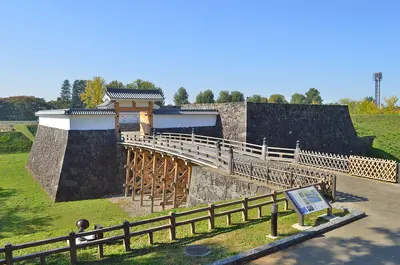
Multiple moats surrounded the castle hill. The inner moat partially survives within Senshu Park, with Otori Pond preserving the moat character within the park landscape.

Key defensive features

Minegishi Hill Elevation

The castle was built on a natural hill in the Akita plain, providing elevation above the surrounding lowlands. While modest by mountain castle standards, the elevation was sufficient to command views in all directions across the flat terrain.

Multiple Moat Rings

The castle was protected by multiple concentric moat rings supplemented by the Asahikawa River on one side. The moats significantly extended the time an attacker would need to reach the castle buildings.

The Story of Kubota Castle (Akita Castle)

Originally built 1604 / Satake Yoshinobu
Current form 1604 / Satake clan
    1600

    After the Battle of Sekigahara, the Satake clan — former lords of Mito domain in Ibaraki — are transferred by Tokugawa Ieyasu to Akita in the far north. The transfer is effectively a demotion and displacement, sending a potentially powerful clan to a remote frontier.

    1604

    Satake Yoshinobu begins construction of Kubota Castle on Minegishi Hill in Akita. Unusually, he deliberately omits a tenshu tower, keeping the castle profile low — likely a calculated political gesture to avoid appearing ambitious under Tokugawa oversight.

    1880

    The Meiji government orders demolition of remaining castle structures. The grounds are converted into Senshu Park, one of Akita's first public green spaces. The park form preserves the castle's physical geography without maintaining castle buildings.

    1989

    A corner turret is reconstructed on the Honmaru using historical records, restoring a physical castle presence to the park after over a century without any structures. The reconstruction is modest in scale but provides a tangible connection to the castle's history.

Did You Know?

  • Kubota Castle is one of the few major Japanese castles that never had a tenshu (main tower keep). The Satake clan's decision to omit the tower is interpreted by historians as a deliberate political calculation — building a prominent tower could have been read as a sign of ambition under Tokugawa surveillance.
  • The Satake clan ruled Akita domain continuously from 1602 until the Meiji Restoration in 1868 — over 260 years — making them one of the most stable daimyo lineages of the Edo period. Their non-confrontational approach (starting with the tower-less castle design) may have contributed to this longevity.
  • Senshu Park, on the former castle grounds, is one of Japan's 100 Famous Cherry Blossom Spots. The hilltop position and mature cherry trees create excellent blossom viewing conditions in late April.

Score Breakdown

Tourism Score

D 45/100
  • Accessibility 14 /20
  • Foreign-Friendly 7 /20
  • Historical Value 9 /20
  • Visual Impact 8 /20
  • Facilities 7 /20

Defense Score

B 74/100
  • Terrain Advantage 15 /20
  • Entrance Defense 14 /20
  • Internal Complexity 17 /20
  • Siege Endurance 14 /20
  • Strategic Oversight 14 /20

Planning Your Visit

Best Time to Visit

Late April for cherry blossoms — Senshu Park is one of Akita's best sakura destinations. Pleasant in summer; accessible year-round.

Time Needed

1 hour

Insider Tip

Ask yourself, as you stand on the Honmaru looking around: why is there no tower here? The answer — a deliberate political calculation by the Satake clan to avoid appearing too powerful — is the most interesting thing about the site, and it's not obvious unless someone tells you.

Map

Getting There

Nearest station: Akita Station (JR Akita Shinkansen / Ou Main Line)
Walk from station: 15 min walk
Bus: Short walk or bus from Akita Station. Akita is a Shinkansen stop.
Parking: Parking available in Senshu Park.
Accessible with a JR Pass

Admission

Adult¥150
ChildFree

Osumi Yagura turret: ¥150 (high school and under free). Senshu Park grounds are free. Turret open Apr–Dec only.

Opening Hours

Open05:00 – 22:00

Senshu Park: approx 5:00–22:00 year-round. Osumi Yagura turret: 9:30–17:00, Apr–Dec only (closed Jan–Mar).

Facilities

  • – English guides
  • – Audio guide
  • ✓ Wheelchair access
  • ✓ Restrooms
  • – Gift shop
  • ✓ Food nearby

Nearby Castles

Featured in collections

FAQ

Frequently Asked Questions

How do I get to Kubota Castle (Akita Castle)?

The nearest station is Akita Station (JR Akita Shinkansen / Ou Main Line). From there it is about 15 minutes on foot. Short walk or bus from Akita Station. Akita is a Shinkansen stop.

How much does Kubota Castle (Akita Castle) cost to enter?

Adult admission is ¥150 and child admission is ¥0.

Is Kubota Castle (Akita Castle) worth visiting?

Kubota Castle is an honest minor attraction: a pleasant park on a low hill with earthwork remnants, a reconstructed turret, and good cherry blossom views. It's worth visiting if you are in Akita city, but not worth a special journey. The most interesting thing about it is what's missing — the intentional absence of a tenshu tower says something specific about the Satake clan's political self-presentation under Tokugawa rule that most castle visitors find genuinely thought-provoking once they hear the story.

What are the opening hours of Kubota Castle (Akita Castle)?

05:00 to 22:00.

How long should I spend at Kubota Castle (Akita Castle)?

Plan for about 1 hour, depending on how closely you want to explore the grounds.