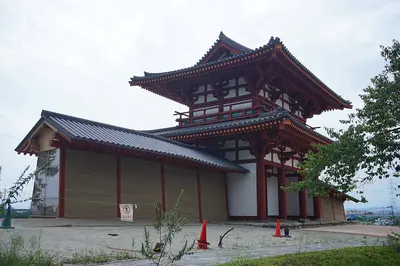
Shiwa Castle

志波城·Shiwa-jo

F Tourism Score 28/100
D Defense Score 55/100

Japan's northernmost ancient imperial frontier fort — built in 803 AD to project Yamato power into the Emishi heartland of what is now Iwate.

#108 — Continued 100 Castles Ruins
Shiwa Castle (志波城)
Photo:小池 隆/Wikimedia Commons/CC BY 3.0

Quick Facts

Quick Facts

Admission
Free Free
Hours
00:00 – 23:59
Nearest Station
Morioka Station (JR Tohoku Shinkansen / JR Tohoku Main Line)
Walk from Station
40 min walk

Bus also available

Time Needed
30-45 minutes

Free admission. The reconstructed outer palisade and earthworks are a public park. An adjacent historical museum charges a small fee.

Defense Overview

Defense Overview

Why Shiwa Castle was hard to attack

This castle is hard to attack because it combines managed outer defenses on relatively level ground with enough defensive depth to slow attackers before the center.

An attacker would not simply arrive at the center on open flat ground. They would have to cross water barriers or moat lines and push through successive outer areas before the core.

Overall score

55/100

Estimated range

49–61

Confidence

B

Usable estimate with some inference

This is a site-original comparison score for learning and comparison, not a reconstruction of one historical battle.

Radar view

Terrain 10/20 Entrance 10/20 Internal 12/20 Siege 13/20 Oversight 10/20
How this estimate was built+

This estimate combines broad terrain, approach, layout, and route-control signals. It is meant to explain the castle's defensive logic in plain English, not reconstruct a single historical attack.

Terrain Advantage

How much the terrain itself seems to help: height, slope, ridges, cliffs, water edges, and limited approach directions.

10/20

Entrance Defense

How awkward and dangerous the first entry looks: gates, bridge or moat crossings, chokepoints, and forced turns.

10/20

Internal Complexity

How hard it seems to keep pushing after entry: layered baileys, depth, compartmentalization, and repeated defensive lines.

12/20

Siege Endurance

A rough sense of long-hold potential: moats, water access, space, storage plausibility, and defensive staying power.

13/20

Strategic Oversight

How much the castle appears to command nearby roads, plains, rivers, basins, harbors, or town approaches.

10/20

Why Visit

Shiwa Castle is for history enthusiasts who want to understand Japan before the samurai era. This is not a Sengoku castle — it's an 8th-century Chinese-style imperial garrison, predating the castle-building traditions most visitors associate with Japan by 700 years. The partially reconstructed palisade section is genuinely evocative, and the archaeological context is fascinating. Combine with Morioka Castle for a complete picture of Iwate's military history across 1,200 years.

Highlights

1

Japan's Northernmost Ancient Frontier Fort

Shiwa Castle was built in 803 AD by imperial order as the northernmost fortified outpost of the Yamato state — a massive palisaded frontier garrison meant to pacify and control the Emishi people of the Tohoku interior. It was not a castle in the medieval sense but a Chinese-style administrative fortress (kofu), sprawling across over 75 hectares with a formal government compound at its center.
2

A City Within a Fort

Unlike the compact hilltop castles of the Sengoku period, Shiwa was a planned administrative complex with government offices, warehouses, barracks, and religious facilities arranged on a grid within a massive earthen embankment. It was essentially a frontier colonial capital, built to project Yamato state power into the Emishi heartland of what is now Iwate Prefecture.

3

Partially Reconstructed Outer Walls

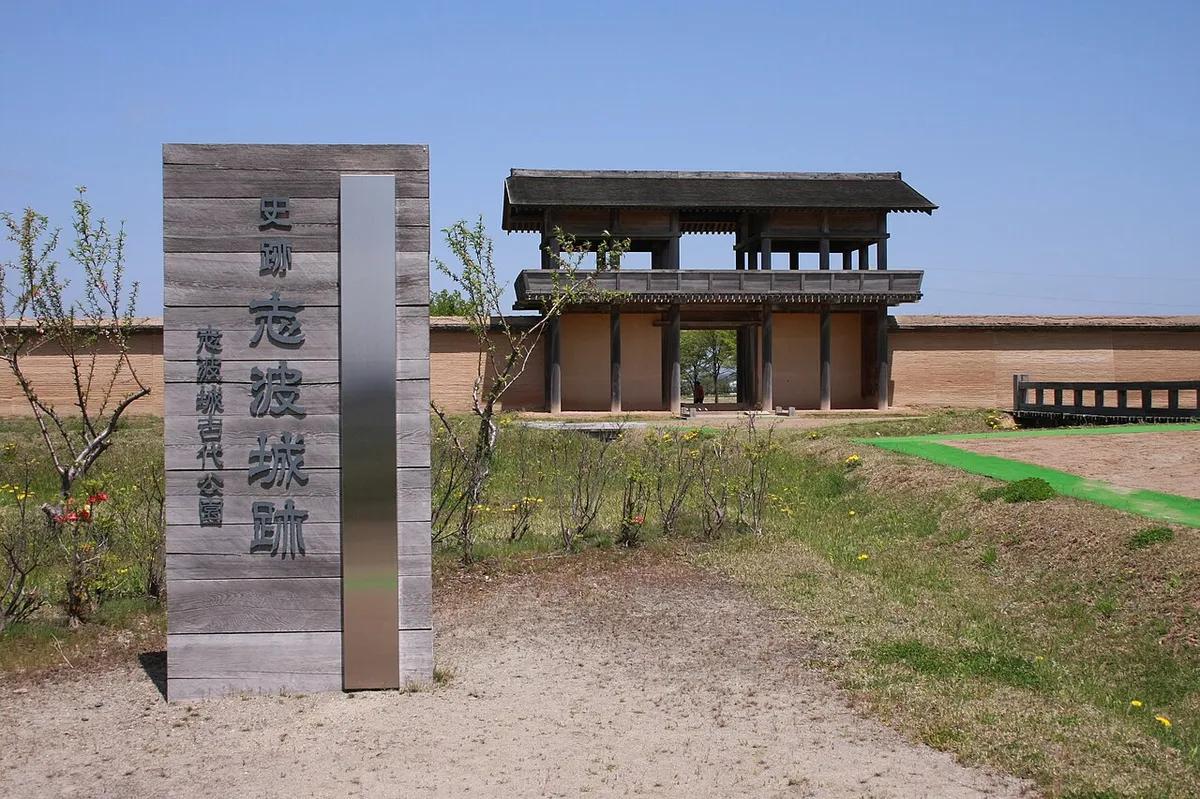
Excavations in the late 20th century revealed the full extent of the original earthwork walls and palisades. A section of the outer embankment and wooden palisade fence has been carefully reconstructed on the original foundations, giving visitors a rare physical impression of what an 8th-century Japanese imperial frontier fort actually looked like.

Structure Details

Visitor tip

Shiwa Castle is primarily an archaeological site — most visitors come for the historical significance rather than dramatic visual impact. The reconstructed section of palisade near the parking area is photogenic and gives a clear impression of the ancient construction. A small interpretive display explains the Emishi frontier context. Combine with nearby Morioka Castle (a later samurai-era site) for a full day of Iwate castle history.

Castle type

Flatland castle

Flatland castle (frontier garrison fort built on flat terrain with earthen embankments and wooden palisades)

Layout type

Enclosure layout

Square enclosure style — Chinese-influenced grid layout with government compound at center surrounded by square earthen ramparts

Main tower

Ruins — only earthworks survive; outer palisade partially reconstructed on original foundations

Stone walls

Earthen walls

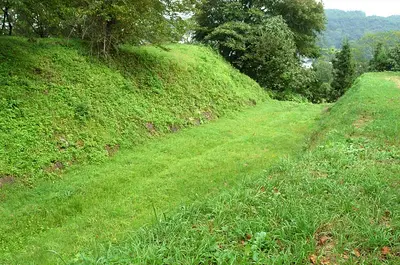
The outer perimeter consisted of large earthen embankments (dogaki) topped with a wooden stockade fence. Unlike later samurai castles, there were no stone walls — this was 8th-century construction technology, closer to Chinese Tang dynasty military architecture than anything from the Sengoku period.

Moats

A moat surrounded the outer embankment perimeter, part of the formal defensive design of this imperial frontier garrison.

Key defensive features

Massive Earthen Perimeter

The outer earthwork walls enclosed over 75 hectares — an enormous area by any standard. The sheer scale of the enclosure made it a formidable frontier installation capable of housing a substantial garrison force.

Wooden Palisade on Embankments

A continuous wooden stockade fence topped the earthen embankments, providing the defenders with a protected firing platform around the entire perimeter.

The Story of Shiwa Castle

Originally built 803 / Sakanoue no Tamuramaro (imperial command)
Current form 803 / Imperial Yamato state
    803

    Sakanoue no Tamuramaro, the great imperial general famous for his Emishi campaigns, oversees the construction of Shiwa Castle on imperial order. It becomes the northernmost permanent fortification of the Yamato state, designed to consolidate control over the Emishi frontier region of Mutsu Province.

    811

    Military operations in the Tohoku region wind down following the substantial pacification of Emishi resistance. Shiwa Castle's role shifts from active frontier garrison to administrative center for the region.

    820

    Shiwa Castle is abandoned following a decision to relocate administrative functions to the newly established Tokutan Castle further south. The massive complex is left to decay, and its earthen walls gradually become indistinguishable from the natural landscape over the following centuries.

    1982

    Archaeological excavations begin to uncover the original layout of Shiwa Castle. The discoveries reveal the remarkable scale and Chinese-influenced design of the 8th-century frontier installation, leading to its designation as a National Historic Site.

In Pop Culture

TV

NHK Taiga Drama — Sakanoue no Tamuramaro coverage

Various NHK historical programs covering the Emishi campaigns and Sakanoue no Tamuramaro have featured Shiwa Castle as a key site in the history of Japan's northern frontier.

Did You Know?

  • Sakanoue no Tamuramaro, the general who built Shiwa Castle, is often considered Japan's first true shogun — he was the original model for the military commander wielding power on behalf of the emperor. His Emishi campaigns established the template for Japanese military expansion into the Tohoku region.
  • The Emishi people whom Shiwa Castle was built to control are still not fully understood by historians — they may have been a distinct ethnic group, a cultural group, or simply people who resisted Yamato imperial authority. Their resistance lasted over a century before the frontier was finally consolidated.
  • The scale of Shiwa Castle — over 75 hectares — dwarfs even the largest medieval samurai castles. Its Chinese Tang dynasty-influenced design is completely different from anything built in later periods, making it one of the most architecturally unusual sites in Japanese castle history.

Score Breakdown

Tourism Score

F 28/100
  • Accessibility 5 /20
  • Foreign-Friendly 2 /20
  • Historical Value 12 /20
  • Visual Impact 5 /20
  • Facilities 4 /20

Defense Score

D 55/100
  • Terrain Advantage 10 /20
  • Entrance Defense 10 /20
  • Internal Complexity 12 /20
  • Siege Endurance 13 /20
  • Strategic Oversight 10 /20

Planning Your Visit

Best Time to Visit

Spring through autumn. The site is pleasant in summer, but the flat terrain means no dramatic foliage backdrop. Avoid deep winter as the site has minimal shelter.

Time Needed

30-45 minutes

Insider Tip

The reconstructed palisade section near the entrance is the photo highlight — it's more substantial than most visitors expect from an 8th-century ruin. The National Historic Site designation means the site is well-maintained and signposted, though English interpretation is limited.

Map

Getting There

Nearest station: Morioka Station (JR Tohoku Shinkansen / JR Tohoku Main Line)
Walk from station: 40 min walk
Bus: City bus from Morioka Station to the Shiwa Castle ruins area. Taxi recommended for direct access.
Parking: Free parking at the Shiwa Castle Historical Park.
Accessible with a JR Pass

Admission

Free

Free admission. The reconstructed outer palisade and earthworks are a public park. An adjacent historical museum charges a small fee.

Opening Hours

Open00:00 – 23:59

Outdoor ruins accessible at all times. Museum hours vary seasonally.

Facilities

  • – English guides
  • – Audio guide
  • ✓ Wheelchair access
  • ✓ Restrooms
  • – Gift shop
  • – Food nearby

Nearby Castles

Featured in collections

FAQ

Frequently Asked Questions

How do I get to Shiwa Castle?

The nearest station is Morioka Station (JR Tohoku Shinkansen / JR Tohoku Main Line). From there it is about 40 minutes on foot. City bus from Morioka Station to the Shiwa Castle ruins area. Taxi recommended for direct access.

How much does Shiwa Castle cost to enter?

Shiwa Castle is free to enter.

Is Shiwa Castle worth visiting?

Shiwa Castle is for history enthusiasts who want to understand Japan before the samurai era. This is not a Sengoku castle — it's an 8th-century Chinese-style imperial garrison, predating the castle-building traditions most visitors associate with Japan by 700 years. The partially reconstructed palisade section is genuinely evocative, and the archaeological context is fascinating. Combine with Morioka Castle for a complete picture of Iwate's military history across 1,200 years.

What are the opening hours of Shiwa Castle?

00:00 to 23:59.

How long should I spend at Shiwa Castle?

Plan for about 30-45 minutes, depending on how closely you want to explore the grounds.