Tagajo

多賀城·Tagajo

F Tourism Score 35/100
C Defense Score 62/100

Not a medieval castle but ancient Japan's northern frontier capital (724 AD) — earthwork ruins of the imperial outpost from which Japan conquered Tohoku.

#8 — 100 Famous Castles Ruins
Tagajo (多賀城)
Photo:掬茶/Wikimedia Commons/CC BY-SA 4.0

Quick Facts

Quick Facts

Admission
Free Free
Hours
00:00 – 23:59
Nearest Station
Kokufu-Tagajo Station (JR Senseki Line)
Walk from Station
15 min walk
Time Needed
2–2.5 hours (ruins walk + Tohoku Historical Museum)

The Tagajo ruins park is free. The adjacent Tohoku Historical Museum has separate admission (adults ¥460).

Defense Overview

Defense Overview

Why Tagajo was hard to attack

This castle is hard to attack because it combines managed outer defenses on relatively level ground with a controlled route inward.

An attacker would not simply arrive at the center on open flat ground. They would have to cross water barriers or moat lines, approach through at least some constrained entry space, and face more defensive depth after the first line.

Overall score

62/100

Estimated range

56–68

Confidence

B

Usable estimate with some inference

This is a site-original comparison score for learning and comparison, not a reconstruction of one historical battle.

Radar view

Terrain 10/20 Entrance 12/20 Internal 13/20 Siege 15/20 Oversight 12/20
How this estimate was built+

This estimate combines broad terrain, approach, layout, and route-control signals. It is meant to explain the castle's defensive logic in plain English, not reconstruct a single historical attack.

Terrain Advantage

How much the terrain itself seems to help: height, slope, ridges, cliffs, water edges, and limited approach directions.

10/20

Entrance Defense

How awkward and dangerous the first entry looks: gates, bridge or moat crossings, chokepoints, and forced turns.

12/20

Internal Complexity

How hard it seems to keep pushing after entry: layered baileys, depth, compartmentalization, and repeated defensive lines.

13/20

Siege Endurance

A rough sense of long-hold potential: moats, water access, space, storage plausibility, and defensive staying power.

15/20

Strategic Oversight

How much the castle appears to command nearby roads, plains, rivers, basins, harbors, or town approaches.

12/20

Why Visit

Tagajo is for visitors interested in ancient Japanese history rather than castle architecture. The site represents a completely different period — the Nara/Heian imperial expansion into Tohoku — and requires a different interpretive framework than any medieval castle. The adjacent Tohoku Historical Museum is genuinely excellent and one of the best regional history museums in Japan, with superb artifacts from ancient Tohoku including Emishi material culture. The combination of ruins and museum makes a half-day of real historical depth. Easily reached from Sendai on the JR Senseki Line.

Highlights

1

724 AD: Japan's Ancient Northern Frontier Headquarters

Tagajo is not a medieval castle — it is an ancient government headquarters established in 724 AD as the administrative and military center for Japan's expansion into the northern Tohoku region. It served as the seat of the Mutsu Province governor for nearly 200 years and the base of operations for military campaigns against the Emishi people who inhabited northern Honshu. This is Japanese frontier history from over 1,300 years ago.
2

The Tagajo Monument: Japan's Most Important Inscription

The site contains one of Japan's most historically significant stone inscriptions — the Tagajo Monument (724 AD), which records the distances to Kyoto, the Balhae Kingdom (in what is now Korea), and the eastern and northern extremities of Japan. This inscription is one of the Three Ancient Monuments of Japan and provides an extraordinary window into how the ancient Japanese state conceived of its geography and extent.

3

Earthworks of Empire

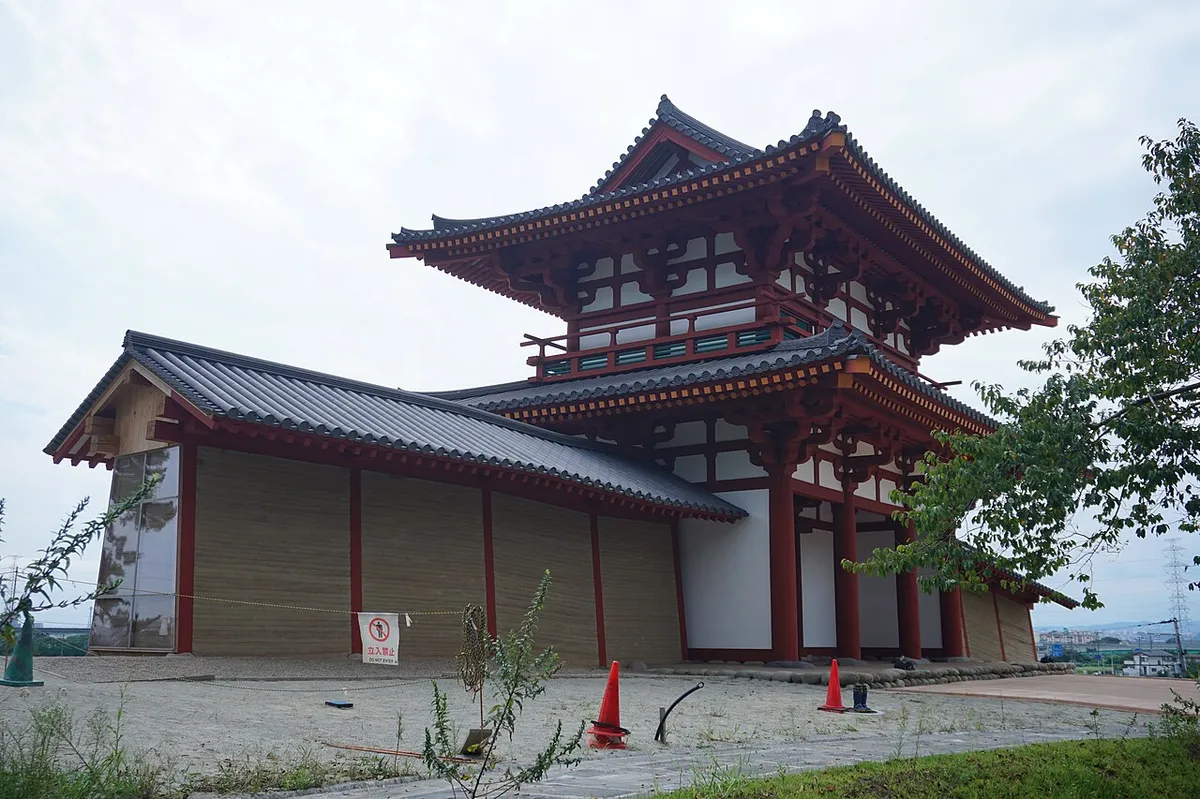
The surviving earthworks — raised platforms, embankments, and foundation stones of ancient government buildings — spread across a broad flat site. Archaeological excavation has revealed the layout of the governor's hall, administrative buildings, and outer wall gates. Partial reconstructions of the south gate and outer walls give visitors a visual anchor in what is otherwise a field of grass mounds.

Structure Details

Visitor tip

Approach Tagajo as an ancient archaeological site rather than a medieval castle — the frame of reference is Roman frontier forts or Chinese provincial capitals, not Himeji or Matsumoto. The Tohoku Historical Museum next door is excellent and provides essential context for understanding the Emishi conflicts and ancient Tohoku history. The partial south gate reconstruction is the key visual landmark.

Castle type

Flatland castle

Flatland government complex — ancient Nara-period provincial headquarters, not a medieval castle. Earthwork enclosures on slightly elevated terrain.

Layout type

Radial layout

Grid-plan government compound — formal rectangular layout based on Tang dynasty Chinese administrative architecture

Main tower

Ancient ruins — earthwork embankments and foundation stones only. Partial reconstruction of the south outer gate. No medieval tower ever existed.

Stone walls

Earthen walls

The outer enclosure walls were constructed of rammed earth topped with a wooden palisade, following Chinese continental administrative architecture traditions. The partial reconstruction of the south outer gate gives a sense of the original scale. The inner government compound had formal buildings arranged on a north-south axis.

Key defensive features

Earthwork Outer Walls

The rammed earth outer walls with wooden palisade provided a formal defensive perimeter typical of Tang dynasty-influenced government centers. The walls were primarily symbolic of imperial authority as much as military defense.

Elevated Plateau Position

The site sits on a slightly elevated plateau above the Sendai coastal plain, providing visibility over the surrounding terrain. In the 8th century, this elevation provided meaningful tactical advantage over the flat approaches.

The Story of Tagajo

Originally built 724 / Ono no Azumahito (imperial governor)
Current form 780 / Rebuilt after Emishi attack
    724

    Tagajo is established by the Nara imperial government as the headquarters of Mutsu Province — the Japanese state's administrative and military base for the northern frontier. Ono no Azumahito oversees its construction, modeled on Tang dynasty Chinese provincial administrative centers.

    762

    A monument stone (the Tagajo Monument) is erected recording the site's establishment date and distances to key locations. This inscription becomes one of Japan's most important ancient texts.

    780

    The Emishi leader Korehari no Azamaro leads a major revolt, attacking and burning Tagajo. The facility is rebuilt and continues operating but the incident demonstrates the limits of Japanese control in northern Tohoku.

    801

    The great general Sakanoue no Tamuramaro leads major campaigns against the Emishi from Tagajo as his forward base, pushing Japanese control further north. He is later deified as a god of war.

    869

    The Jogan earthquake and tsunami — one of the largest in recorded Japanese history — devastates the Sendai coastal plain and likely damages Tagajo. The facility goes into decline and is eventually abandoned in the early 10th century.

Did You Know?

  • The Tagajo Monument is one of the Three Ancient Monuments of Japan (Nihon Sandai Hibun), alongside the Nasu Kokuzou Monument and the Tsukinowa Monument. These three inscriptions are regarded as the most important surviving written documents from ancient Japan outside of court chronicles.
  • Tagajo was attacked and burned by Emishi forces in 780 AD — the Emishi Revolt (Korehari no Azamaro's Revolt). The Emishi were the indigenous people of northern Honshu who resisted Japanese imperial expansion for centuries; their ultimate defeat and assimilation is one of the foundational events of Japanese history.
  • The 2011 Tohoku earthquake and tsunami caused significant damage to the modern city of Tagajo — the ancient ruins site, sitting on slightly higher ground, was not directly inundated but the surrounding area suffered severe tsunami damage. The disaster tragically echoed the 869 Jogan tsunami that likely contributed to Tagajo's original decline 1,142 years earlier.

Score Breakdown

Tourism Score

F 35/100
  • Accessibility 9 /20
  • Foreign-Friendly 5 /20
  • Historical Value 13 /20
  • Visual Impact 4 /20
  • Facilities 4 /20

Defense Score

C 62/100
  • Terrain Advantage 10 /20
  • Entrance Defense 12 /20
  • Internal Complexity 13 /20
  • Siege Endurance 15 /20
  • Strategic Oversight 12 /20

Planning Your Visit

Best Time to Visit

Spring and autumn for pleasant weather at the outdoor ruins. The site is accessible year-round with no seasonal restrictions.

Time Needed

2–2.5 hours (ruins walk + Tohoku Historical Museum)

Insider Tip

Spend most of your time in the Tohoku Historical Museum rather than the ruins — the museum provides the historical framework that makes the earthworks meaningful. Find the Tagajo Monument replica in the museum and understand the distances inscribed on it: the ancient Japanese imagined their world from this frontier outpost in 724 AD, and the inscription tells you how they thought about their place in East Asia. Then walk to the actual monument site outside.

Map

Getting There

Nearest station: Kokufu-Tagajo Station (JR Senseki Line)
Walk from station: 15 min walk
Parking: Free parking at the ruins site.
Accessible with a JR Pass

Admission

Free

The Tagajo ruins park is free. The adjacent Tohoku Historical Museum has separate admission (adults ¥460).

Opening Hours

Open00:00 – 23:59

The outdoor ruins are accessible year-round. The interpretive signage and paths are well-maintained. The Tohoku Historical Museum has regular opening hours (closed Mondays).

Facilities

  • – English guides
  • – Audio guide
  • ✓ Wheelchair access
  • ✓ Restrooms
  • – Gift shop
  • – Food nearby

Nearby Castles

Featured in collections

FAQ

Frequently Asked Questions

How do I get to Tagajo?

The nearest station is Kokufu-Tagajo Station (JR Senseki Line). From there it is about 15 minutes on foot.

How much does Tagajo cost to enter?

Tagajo is free to enter.

Is Tagajo worth visiting?

Tagajo is for visitors interested in ancient Japanese history rather than castle architecture. The site represents a completely different period — the Nara/Heian imperial expansion into Tohoku — and requires a different interpretive framework than any medieval castle. The adjacent Tohoku Historical Museum is genuinely excellent and one of the best regional history museums in Japan, with superb artifacts from ancient Tohoku including Emishi material culture. The combination of ruins and museum makes a half-day of real historical depth. Easily reached from Sendai on the JR Senseki Line.

What are the opening hours of Tagajo?

00:00 to 23:59.

How long should I spend at Tagajo?

Plan for about 2–2.5 hours (ruins walk + Tohoku Historical Museum), depending on how closely you want to explore the grounds.