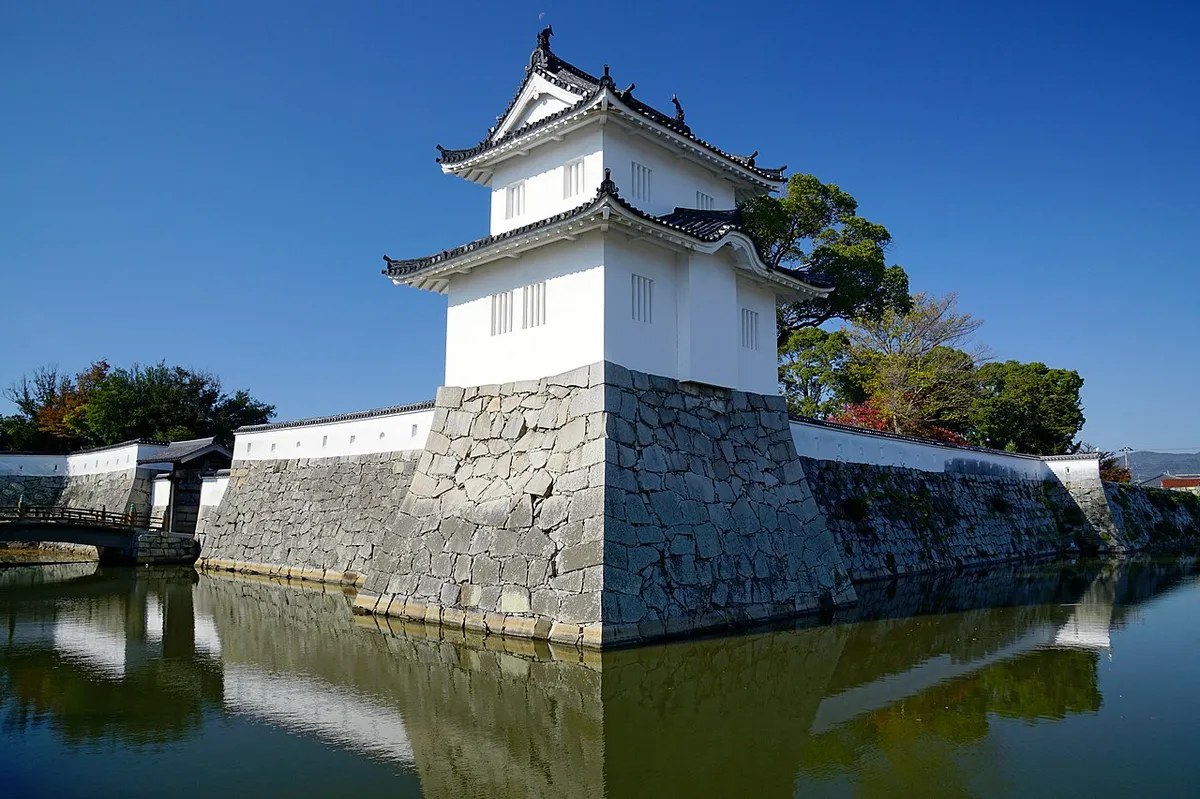
Ako Castle

赤穂城·Ako-jo

D Tourism Score 50/100
C Defense Score 60/100

The castle that launched Japan's most famous loyalty story — the 47 ronin began and ended their journey here, and December 14 in Ako is one of Japan's most atmospheric historical commemorations.

#60 — 100 Famous Castles Ruins
Ako Castle (赤穂城)
Photo:663highland/Wikimedia Commons/CC BY 2.5

Quick Facts

Quick Facts

Admission
Free Free
Hours
null – null
Nearest Station
Ako Station (JR Ako Line)
Walk from Station
20 min walk

Bus also available

Time Needed
1.5–2 hours (castle + Oishi Shrine + castle town walk)

Ako Castle (Ako Joshi) park is freely accessible. The main gate (Honmaru Otemon) and several turrets have been partially reconstructed and can be viewed and entered. No admission fee for the park. The Ako City Historical Museum near the castle charges a small entrance fee.

Defense Overview

Defense Overview

Why Ako Castle was hard to attack

This castle is hard to attack because attackers have to work across water barriers before pressing inward instead of getting a direct run at the core.

An attacker would not simply arrive at the center on open flat ground. They would have to cross water barriers or moat lines, approach through at least some constrained entry space, and push through successive outer areas before the core.

Overall score

60/100

Estimated range

54–66

Confidence

B

Usable estimate with some inference

This is a site-original comparison score for learning and comparison, not a reconstruction of one historical battle.

Radar view

Terrain 10/20 Entrance 12/20 Internal 15/20 Siege 13/20 Oversight 10/20
How this estimate was built+

This estimate combines broad terrain, approach, layout, and route-control signals. It is meant to explain the castle's defensive logic in plain English, not reconstruct a single historical attack.

Terrain Advantage

How much the terrain itself seems to help: height, slope, ridges, cliffs, water edges, and limited approach directions.

10/20

Entrance Defense

How awkward and dangerous the first entry looks: gates, bridge or moat crossings, chokepoints, and forced turns.

12/20

Internal Complexity

How hard it seems to keep pushing after entry: layered baileys, depth, compartmentalization, and repeated defensive lines.

15/20

Siege Endurance

A rough sense of long-hold potential: moats, water access, space, storage plausibility, and defensive staying power.

13/20

Strategic Oversight

How much the castle appears to command nearby roads, plains, rivers, basins, harbors, or town approaches.

10/20

Why Visit

Ako Castle's physical remains are modest — partial stone walls, reconstructed gates, an unfilled tenshu-dai — but the Chushingura historical atmosphere is immensely powerful for anyone who knows the story. The castle town preserves the Oishi Shrine (dedicated to the leader of the 47 ronin, Oishi Kuranosuke) and several related historical sites within walking distance. The December 14 Gishi-sai festival is one of the best reasons to visit — the samurai parade through the historical town is moving and spectacular. A good half-day from Himeji combined with the castle town walk.

Highlights

1

Home of the 47 Ronin — Japan's Most Famous Loyalty Story

Ako Castle is the origin point of Chushingura — the story of 47 loyal samurai who avenged the forced death of their lord, Asano Naganori, by attacking the mansion of the official responsible (Kira Yoshinaka) in Edo on the night of December 14, 1702. The story of loyalty, sacrifice, and honor has been retold in kabuki, novels, films, and TV dramas for over 300 years. It is arguably the defining story of samurai virtue in Japanese culture. This is where it began.
2

The Annual December 14 Festival

Every December 14, Ako holds the Gishi-sai (Festival of the Loyal Retainers) — a samurai parade through the castle town with participants dressed as the 47 ronin. The date commemorates the night of the revenge attack in 1702. The festival draws tens of thousands of visitors and is one of Japan's most vivid annual commemorations of a historical event.

3

Ako Salt and the Castle's Economics

Ako was one of Japan's most important salt-producing regions — the Seto Inland Sea coastline here was ideal for salt pan cultivation. The Asano clan's domain was prosperous largely due to salt revenues, and Ako salt was traded across Japan. When the domain was confiscated after Lord Asano's forced death, the economic machinery of salt production continued, but the retainers — including those who became the 47 ronin — lost their livelihoods overnight.

Structure Details

Visitor tip

Enter through the reconstructed Honmaru Otemon (main gate) — it's one of the more visually impressive of the partially reconstructed elements. Walk the inner compound walls and look for the tenshu-dai (tower foundation platform) where the main tower was planned but never completed. Information boards explain the 47 ronin story at key points around the grounds.

Castle type

Flatland castle

Flatland castle — built on flat ground near the Ako coast on the Seto Inland Sea, using water from the Chikata River in its moat system

Layout type

Concentric layout

Enclosure style — multiple concentric compounds with moats, designed for the Ako plain terrain

Main tower

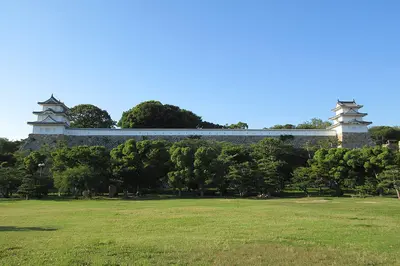
Ruins with partial reconstruction — the main tower was never completed (the lord's death in 1701 halted construction). Several gates and turrets have been partially reconstructed (1996–). Stone walls, earthworks, and moat system are largely intact.

Stone walls

Natural stone stacking

The stone walls of the main and secondary compounds are substantially intact and well-maintained. Several turret foundations survive and some turrets have been reconstructed. The moat system is partially preserved.

Moats

A moat system using water from the Chikata River. The inner moat partially survives. The Seto Inland Sea coast provided a natural defensive barrier to the south in the original castle's active period.

Key defensive features

Chikata River Moat System

The Chikata River water was channeled into the castle's moat system, creating a water defense that took advantage of the flat coastal terrain. The river and moats together created multiple barriers on the approaches from inland.

Coastal Position on Seto Inland Sea

The original castle was positioned to utilize Ako Bay's coast as a southern natural barrier, combining sea access with the inland moat system for comprehensive defense.

The Story of Ako Castle

Originally built 1661 / Asano Nagaakira
Current form 1661 / Asano Nagaakira (initiated); Asano Nagatomo (continued)
    1661

    Asano Nagaakira begins construction of Ako Castle after the Asano clan is assigned the Ako domain. The castle is designed as a proper flatland fortress taking advantage of the coastal position and Chikata River water system. Construction continues under successive lords.

    1701

    Lord Asano Naganori draws his sword against Kira Yoshinaka inside Edo Castle — an act strictly forbidden in the shogunal palace. Asano is ordered to commit seppuku (ritual suicide) the same day. The Ako domain is confiscated. The castle's construction — including the main tower, never yet completed — is permanently halted. 321 retainers become ronin (masterless samurai) overnight.

    1702

    On the night of December 14, 47 of the former Ako retainers (led by Oishi Kuranosuke) attack the Edo mansion of Kira Yoshinaka, kill him, and carry his head to the grave of their lord Asano at Sengakuji Temple in Edo. They then surrender to the authorities. All 47 are ordered to commit seppuku in February 1703. The story immediately becomes Japan's most celebrated tale of samurai loyalty.

    1703

    The 47 ronin commit seppuku as ordered, completing the cycle of loyalty and sacrifice. Within years, theatrical retellings begin appearing in Osaka and Edo. The Chushingura theatrical tradition is born.

    1996

    Reconstruction of the Honmaru Otemon (main gate) completed. Subsequent turret reconstructions follow. The castle park is designated a National Historic Site.

In Pop Culture

Film

Chushingura (multiple films and TV dramas)

The 47 ronin story (Chushingura) is the most frequently filmed story in Japanese cinema and television. Major productions include the 1962 Toho film with an all-star cast, and numerous NHK Taiga Dramas. Ako Castle appears in many of these productions as the retainers' former home.

Film

47 Ronin (2013 Hollywood film)

The Hollywood fantasy-action adaptation starring Keanu Reeves used the Ako ronin story as its loose inspiration, bringing the Chushingura narrative to international audiences (though with considerable dramatic license).

Did You Know?

  • The 47 ronin story — Chushingura — is the most frequently dramatized story in Japanese theater, cinema, and television. By some counts there have been over 100 film and drama adaptations, making it Japan's equivalent of Romeo and Juliet or Hamlet in terms of cultural ubiquity. Every December 14, NHK and commercial channels broadcast Chushingura specials.
  • Lord Asano's act of drawing a sword inside Edo Castle was punishable by death partly because the shogunate required all weapons to be checked before entry — the fact that Asano managed it, and that the wound he inflicted on Kira was shallow (not fatal), added further shame. He was ordered to commit seppuku on the same day without being given the normal formalities of time to prepare.
  • Oishi Kuranosuke, the leader of the 47 ronin, is said to have spent the period between Lord Asano's death and the revenge attack (about 21 months) carousing in the pleasure quarters of Kyoto, apparently to throw off suspicion that he was planning revenge. Whether this was genuine strategic deception or later embellishment, it became one of the most celebrated episodes of the story.
  • Ako's salt production — the economic foundation of the Asano domain — continues to this day. Ako is still a significant salt production center, and Ako salt is sold as a specialty product associated with the 47 ronin story.

Score Breakdown

Tourism Score

D 50/100
  • Accessibility 10 /20
  • Foreign-Friendly 10 /20
  • Historical Value 15 /20
  • Visual Impact 9 /20
  • Facilities 6 /20

Defense Score

C 60/100
  • Terrain Advantage 10 /20
  • Entrance Defense 12 /20
  • Internal Complexity 15 /20
  • Siege Endurance 13 /20
  • Strategic Oversight 10 /20

Planning Your Visit

Best Time to Visit

December 14 for the Gishi-sai (Loyal Retainers Festival) — the annual commemoration parade. Cherry blossom season for the castle park. Autumn for comfortable walking weather.

Time Needed

1.5–2 hours (castle + Oishi Shrine + castle town walk)

Insider Tip

After the castle, walk to the Oishi Shrine (dedicated to Oishi Kuranosuke and the 47 ronin, about 10 minutes from the castle). Then walk the preserved Edo-period townscape of the Ako castle town — it retains more historical atmosphere than the castle itself. The salt museum (En Museum) in the town explains the Ako salt production history that made the Asano domain prosperous and its fall all the more poignant.

Map

Getting There

Nearest station: Ako Station (JR Ako Line)
Walk from station: 20 min walk
Bus: Bus from Ako Station to the castle area. JR Ako Line runs from Aioi on the Sanyo Main Line. From Osaka/Kobe, take JR to Aioi and change.
Parking: Free parking available near the castle park entrance.
Accessible with a JR Pass

Admission

Free

Ako Castle (Ako Joshi) park is freely accessible. The main gate (Honmaru Otemon) and several turrets have been partially reconstructed and can be viewed and entered. No admission fee for the park. The Ako City Historical Museum near the castle charges a small entrance fee.

Opening Hours

Open

Park open at all times. Reconstructed structures have limited opening hours.

Facilities

  • – English guides
  • – Audio guide
  • ✓ Wheelchair access
  • ✓ Restrooms
  • ✓ Gift shop
  • ✓ Food nearby

Nearby Castles

Featured in collections

FAQ

Frequently Asked Questions

How do I get to Ako Castle?

The nearest station is Ako Station (JR Ako Line). From there it is about 20 minutes on foot. Bus from Ako Station to the castle area. JR Ako Line runs from Aioi on the Sanyo Main Line. From Osaka/Kobe, take JR to Aioi and change.

How much does Ako Castle cost to enter?

Ako Castle is free to enter.

Is Ako Castle worth visiting?

Ako Castle's physical remains are modest — partial stone walls, reconstructed gates, an unfilled tenshu-dai — but the Chushingura historical atmosphere is immensely powerful for anyone who knows the story. The castle town preserves the Oishi Shrine (dedicated to the leader of the 47 ronin, Oishi Kuranosuke) and several related historical sites within walking distance. The December 14 Gishi-sai festival is one of the best reasons to visit — the samurai parade through the historical town is moving and spectacular. A good half-day from Himeji combined with the castle town walk.

What are the opening hours of Ako Castle?

null to null.

How long should I spend at Ako Castle?

Plan for about 1.5–2 hours (castle + Oishi Shrine + castle town walk), depending on how closely you want to explore the grounds.