Hachigata Castle

鉢形城·Hachigata-jo

F Tourism Score 38/100
A Defense Score 86/100

The cliff-top fortress that defeated Takeda Shingen — Hachigata's natural river defenses are among the best in the Kanto region, now preserved in an excellent earthworks park.

#18 — 100 Famous Castles Ruins
Hachigata Castle (鉢形城)
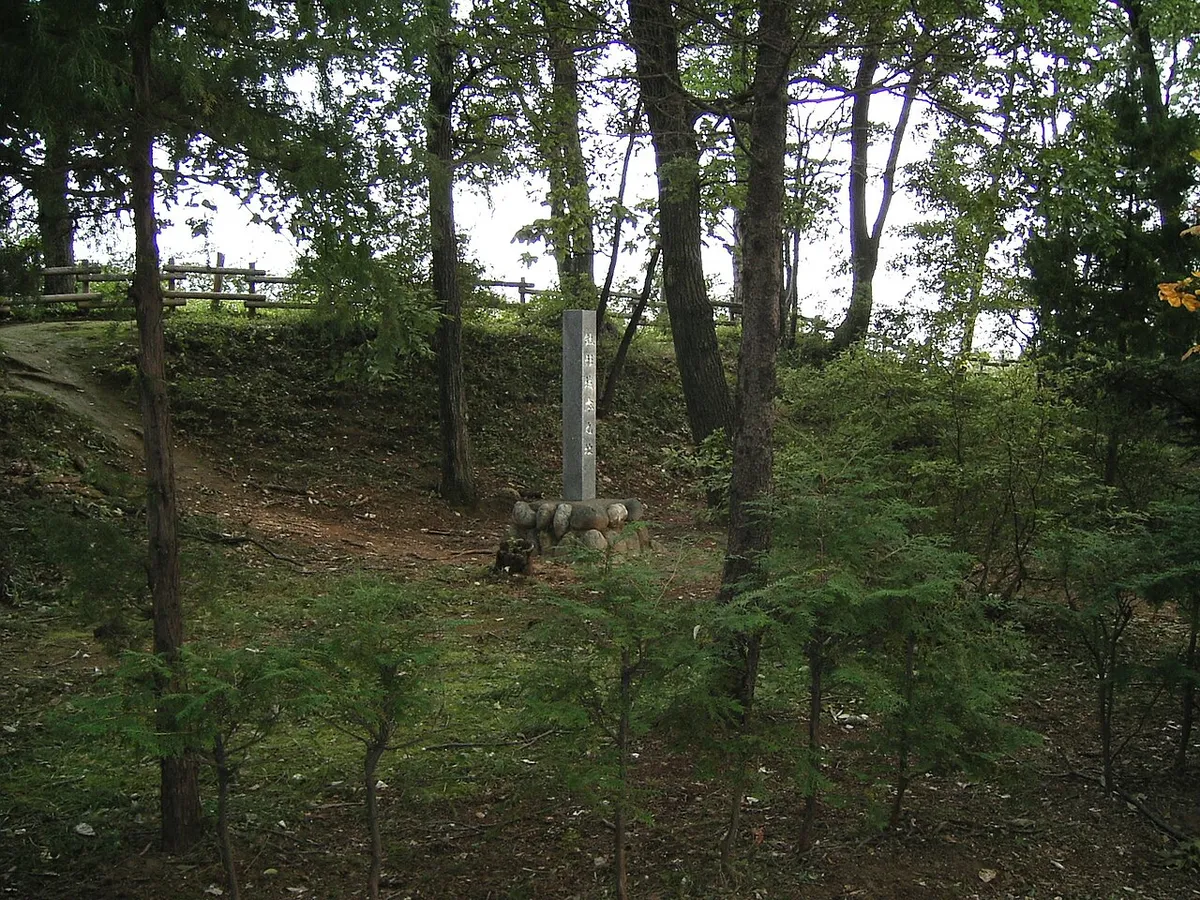
Photo:Taketarou/Wikimedia Commons/CC BY-SA 3.0

Quick Facts

Quick Facts

Admission
Free Free
Hours
09:00 – 17:00
Nearest Station
Yorii Station (Tobu Chichibu Line / JR Hachiko Line)
Walk from Station
15 min walk
Time Needed
1–1.5 hours (ruins park and museum)

The castle ruins park (Hachigata Castle Historical Park) is completely free. The adjacent Hachigata Castle Historical Museum charges ¥200 adult admission.

Defense Overview

Defense Overview

Why Hachigata Castle was hard to attack

This castle is hard to attack because natural ground and added defensive depth work together to make every push inward more difficult.

An attacker would first have to fight the site itself before reaching the main defenses. They would have to cross water barriers or moat lines, approach through at least some constrained entry space, and face more defensive depth after the first line.

Overall score

86/100

Estimated range

80–92

Confidence

B

Usable estimate with some inference

This is a site-original comparison score for learning and comparison, not a reconstruction of one historical battle.

Radar view

Terrain 20/20 Entrance 19/20 Internal 17/20 Siege 14/20 Oversight 16/20
How this estimate was built+

This estimate combines broad terrain, approach, layout, and route-control signals. It is meant to explain the castle's defensive logic in plain English, not reconstruct a single historical attack.

Terrain Advantage

How much the terrain itself seems to help: height, slope, ridges, cliffs, water edges, and limited approach directions.

20/20

Entrance Defense

How awkward and dangerous the first entry looks: gates, bridge or moat crossings, chokepoints, and forced turns.

19/20

Internal Complexity

How hard it seems to keep pushing after entry: layered baileys, depth, compartmentalization, and repeated defensive lines.

17/20

Siege Endurance

A rough sense of long-hold potential: moats, water access, space, storage plausibility, and defensive staying power.

14/20

Strategic Oversight

How much the castle appears to command nearby roads, plains, rivers, basins, harbors, or town approaches.

16/20

Why Visit

Hachigata Castle is a specialist destination — it offers no standing structures and minimal tourist facilities, but the earthwork preservation is exceptional and the cliff-top position above the Arakawa River is genuinely dramatic. For visitors interested in Sengoku-era earthwork castle design, Hachigata is one of the best sites in the Kanto region. The fact that Takeda Shingen failed to take it in 1569, and that it outlasted even Odawara in 1590, gives it historical credentials far beyond its modest profile. Combine with Kawagoe Castle for a two-castle Saitama day.

Highlights

1

Cliffs Above the Arakawa — Natural Defense of Rare Quality

Hachigata Castle occupies one of the most dramatically positioned sites in the entire Kanto region — a promontory formed by the confluence of the Arakawa River and the Fukasawa River, with sheer cliffs dropping to the water on three sides. The natural defensive position rivals mountain castles in approach difficulty: rivers and cliffs replace mountain slopes, creating a natural fortress that made the castle extraordinarily difficult to assault directly.
2

The Hojo's Northern Shield

Hachigata was the northernmost major Hojo clan fortress in the Kanto region, guarding the critical passes into Musashino plain from the north and west. As the Hojo controlled the entire Kanto region from Odawara, Hachigata served as their frontier fortress facing potential threats from the Uesugi (Kasugayama) and later the Takeda. Its location at the western Kanto gateway gave it strategic importance far beyond its modest scale.

3

Last Hojo Castle to Fall in 1590

When Toyotomi Hideyoshi besieged the Hojo at Odawara in 1590, Hachigata was among the last Hojo positions to surrender — holding out even after Odawara itself fell. The garrison under Hojo Ujikuni conducted a legendary defensive resistance that earned their opponents' respect and allowed their surrender on honorable terms. Hachigata's ability to hold longer than Odawara demonstrates just how formidable its natural position was.

Structure Details

Visitor tip

Walk to the cliff edges above the Arakawa River — the drop to the river far below is the defining experience of Hachigata Castle and immediately explains why it was so difficult to attack. The dry moats (karabori) on the eastern land approach are well-preserved and clearly show how the earth-based defenses worked. Bring the historical park map from the information boards to identify the compound layout. The adjacent Hachigata Castle Historical Museum (¥200) has good scale models showing the original castle extent.

Castle type

Mountain castle

Mountain castle — more accurately a cliff-top promontory castle, using river cliffs rather than mountain height for elevation and natural defense

Layout type

Linked compound layout

Compound style — main compound and subsidiary compounds arranged on the cliff promontory above the river confluence

Main tower

Earthwork and dry moat ruins only — no stone walls or structures survive above ground level. Extensive earthwork remains (yagurama, karabori dry moats) are well-preserved and clearly visible.

Stone walls

Earthen walls

The defenses at Hachigata are earthen: banks (dorui) and dry moats (karabori) define the compound boundaries on the plateau, while the natural cliff faces to the rivers provide the primary vertical defense. No stone ishigaki walls survive, though some foundation evidence has been found in archaeological work.

Moats

Dry moats (karabori) cut across the promontory plateau to separate compound levels. The Arakawa and Fukasawa rivers serve as natural wet moats on three sides, forming a water-based defense of exceptional width and depth.

Key defensive features

Arakawa River Cliff Defense

The Arakawa River cuts deep cliffs below the castle promontory — sheer rock faces dropping to the river far below. These cliff faces are impassable for any attacking force and require no constructed reinforcement. Three sides of the castle are effectively defended by geology.

Dual River Confluence Trap

The castle sits at the confluence of the Arakawa and Fukasawa rivers, meaning attackers must either cross both rivers (which converge at this point) or approach exclusively from the narrow land neck to the east — concentrating all attack on a single, heavily defended approach.

Deep Dry Moats (Karabori)

The land approach (east side) is crossed by multiple deep dry moats cut into the promontory plateau. These karabori are still clearly visible today — wide trenches requiring ladders or scaling equipment to cross, all under fire from the compound walls above.

The Story of Hachigata Castle

Originally built 1476 / Nagao Kageharu
Current form 1564 / Hojo Ujiyasu / Hojo Ujikuni
    1476

    Nagao Kageharu establishes a fortification on the Arakawa River promontory during the Kanto political conflicts of the mid-Muromachi period. The cliff-top position above the river confluence is immediately recognized as exceptional.

    1564

    The Hojo clan, under Hojo Ujiyasu, takes control of Hachigata and develops it into a major fortress. Hojo Ujikuni (Ujiyasu's fourth son) is installed as the castle lord and carries out substantial expansion of the earthworks and dry moat system.

    1569

    Takeda Shingen besieges Hachigata Castle with a large force during his Odawara campaign. Despite the Takeda army's formidable reputation, the natural cliff defenses frustrate a direct assault and Shingen is unable to take the castle — withdrawing after failing to reduce it. Hachigata's defensive reputation is established.

    1590

    Toyotomi Hideyoshi's coalition besieges the entire Hojo clan. Hachigata holds out under Hojo Ujikuni even after Odawara (the main Hojo stronghold) has surrendered — eventually capitulating only after negotiations that secured honorable terms for the garrison. Ujikuni's defense earns wide respect.

    1590

    After the Hojo surrender, Tokugawa Ieyasu is assigned the Kanto region. He does not develop Hachigata further — instead focusing on Edo as his base — and the castle is gradually abandoned. By the early Edo period it has been decommissioned.

    1988

    Hachigata Castle is designated a National Historic Site. Archaeological excavation and preservation work over the following decades clarifies the extent of the earthworks and establishes the historical park that visitors walk today.

Did You Know?

  • Takeda Shingen — arguably the greatest military strategist of the Sengoku period — besieged Hachigata in 1569 and failed to take it. The natural cliff defenses frustrated even Shingen's formidable siege capabilities, cementing the castle's reputation as one of the Kanto region's most defensible positions.
  • Hachigata Castle held out after Odawara (the Hojo main stronghold, far larger and better provisioned) had surrendered in 1590 — a remarkable demonstration of the cliff-top position's defensive superiority over a much larger castle on flat terrain.
  • The castle's earthwork defenses — particularly the deep karabori dry moats — are among the best-preserved examples of Sengoku-era earthwork castle construction in the Kanto region. Stone castle construction is well-documented, but the earthwork tradition is often less visible; Hachigata preserves it in exceptional condition.
  • Hojo Ujikuni, the last lord of Hachigata, went on to write one of the most detailed firsthand accounts of Sengoku castle governance after his peaceful retirement following the 1590 surrender. His writings provide valuable primary source material on Hojo administrative practices.

Score Breakdown

Tourism Score

F 38/100
  • Accessibility 10 /20
  • Foreign-Friendly 4 /20
  • Historical Value 12 /20
  • Visual Impact 8 /20
  • Facilities 4 /20

Defense Score

A 86/100
  • Terrain Advantage 20 /20
  • Entrance Defense 19 /20
  • Internal Complexity 17 /20
  • Siege Endurance 14 /20
  • Strategic Oversight 16 /20

Planning Your Visit

Best Time to Visit

Spring (April–May) for pleasant walking weather. Autumn (October–November) for clear views and foliage. Accessible year-round.

Time Needed

1–1.5 hours (ruins park and museum)

Insider Tip

Walk to the Arakawa cliff edge first — the drop to the river gives you the immediate visceral understanding of why this castle was so difficult to take. Then walk the karabori dry moats on the eastern approach to see how the earthwork defenses handled the one vulnerable land approach. The scale model in the Hachigata Castle Historical Museum (¥200, adjacent to park) is excellent for understanding the full compound layout before or after walking the site.

Map

Getting There

Nearest station: Yorii Station (Tobu Chichibu Line / JR Hachiko Line)
Walk from station: 15 min walk
Parking: Free parking at the castle ruins park.
Accessible with a JR Pass

Admission

Free

The castle ruins park (Hachigata Castle Historical Park) is completely free. The adjacent Hachigata Castle Historical Museum charges ¥200 adult admission.

Opening Hours

Open09:00 – 17:00

Park is accessible year-round. Museum is closed on Mondays.

Facilities

  • – English guides
  • – Audio guide
  • ✓ Wheelchair access
  • ✓ Restrooms
  • – Gift shop
  • – Food nearby

Nearby Castles

Featured in collections

FAQ

Frequently Asked Questions

How do I get to Hachigata Castle?

The nearest station is Yorii Station (Tobu Chichibu Line / JR Hachiko Line). From there it is about 15 minutes on foot.

How much does Hachigata Castle cost to enter?

Hachigata Castle is free to enter.

Is Hachigata Castle worth visiting?

Hachigata Castle is a specialist destination — it offers no standing structures and minimal tourist facilities, but the earthwork preservation is exceptional and the cliff-top position above the Arakawa River is genuinely dramatic. For visitors interested in Sengoku-era earthwork castle design, Hachigata is one of the best sites in the Kanto region. The fact that Takeda Shingen failed to take it in 1569, and that it outlasted even Odawara in 1590, gives it historical credentials far beyond its modest profile. Combine with Kawagoe Castle for a two-castle Saitama day.

What are the opening hours of Hachigata Castle?

09:00 to 17:00.

How long should I spend at Hachigata Castle?

Plan for about 1–1.5 hours (ruins park and museum), depending on how closely you want to explore the grounds.