Kawagoe Castle

川越城·Kawagoe-jo

D Tourism Score 52/100
C Defense Score 66/100

The last honmaru palace in the Kanto region and the castle town that became 'Little Edo' — Kawagoe rewards visitors who want castle life beyond just the tower.

#19 — 100 Famous Castles Ruins
Kawagoe Castle (川越城)
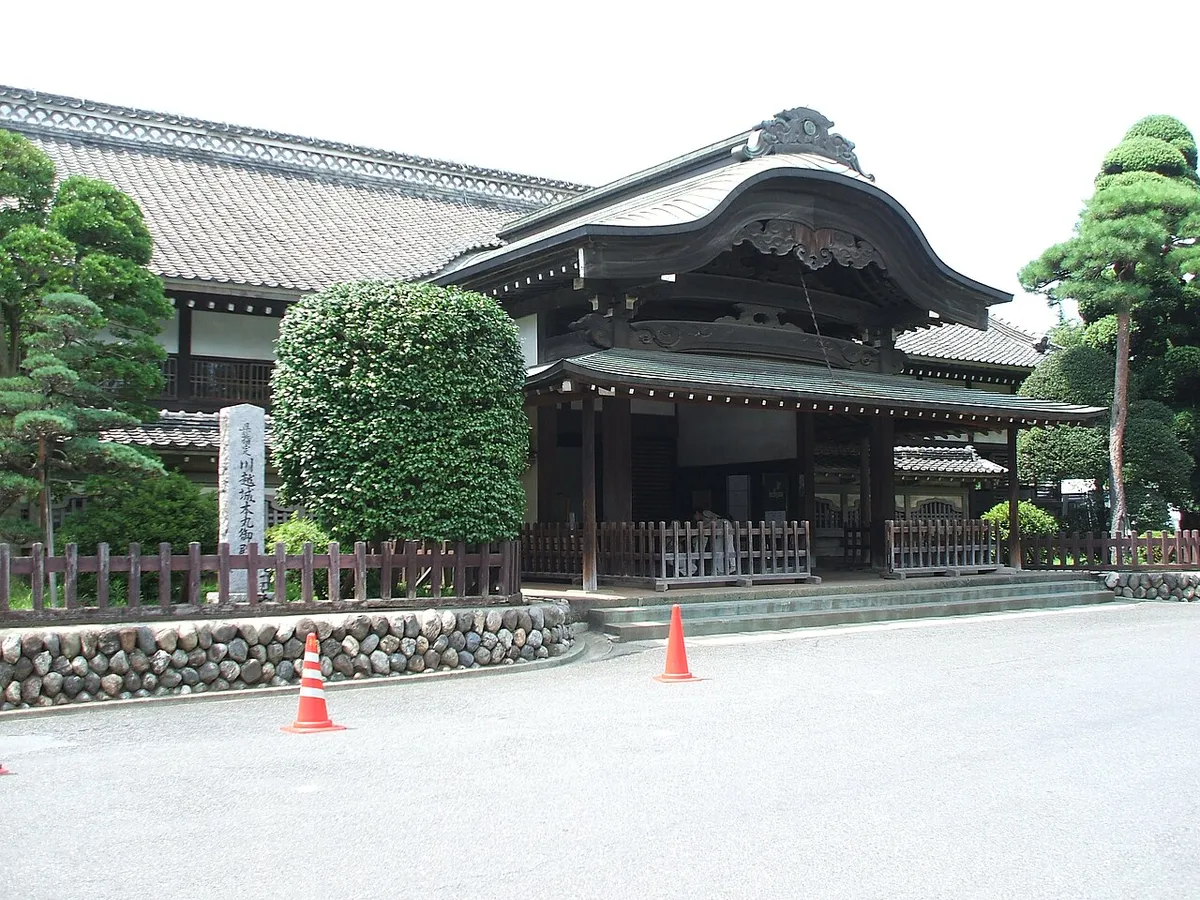
Photo:ja:user:Twilight2640/Wikimedia Commons/CC BY-SA 3.0

Quick Facts

Quick Facts

Admission
¥100

¥50

Hours
09:00 – 17:00

Last entry 16:30

Nearest Station
Hon-Kawagoe Station (Seibu Shinjuku Line) or Kawagoe Station (Tobu Tojo Line / JR Kawagoe Line)
Walk from Station
20 min walk

Bus also available

Time Needed
30 minutes for castle; 3–4 hours for the full Kawagoe historic town experience

Admission to the Honmaru Goten (palace building). Children under elementary school age free. The castle grounds otherwise are free to walk.

Defense Overview

Defense Overview

Why Kawagoe Castle was hard to attack

This castle is hard to attack because it combines managed outer defenses on relatively level ground with a controlled route inward.

An attacker would not simply arrive at the center on open flat ground. They would have to cross water barriers or moat lines and face more defensive depth after the first line.

Overall score

66/100

Estimated range

60–72

Confidence

B

Usable estimate with some inference

This is a site-original comparison score for learning and comparison, not a reconstruction of one historical battle.

Radar view

Terrain 10/20 Entrance 11/20 Internal 17/20 Siege 15/20 Oversight 13/20
How this estimate was built+

This estimate combines broad terrain, approach, layout, and route-control signals. It is meant to explain the castle's defensive logic in plain English, not reconstruct a single historical attack.

Terrain Advantage

How much the terrain itself seems to help: height, slope, ridges, cliffs, water edges, and limited approach directions.

10/20

Entrance Defense

How awkward and dangerous the first entry looks: gates, bridge or moat crossings, chokepoints, and forced turns.

11/20

Internal Complexity

How hard it seems to keep pushing after entry: layered baileys, depth, compartmentalization, and repeated defensive lines.

17/20

Siege Endurance

A rough sense of long-hold potential: moats, water access, space, storage plausibility, and defensive staying power.

15/20

Strategic Oversight

How much the castle appears to command nearby roads, plains, rivers, basins, harbors, or town approaches.

13/20

Why Visit

Kawagoe Castle is best appreciated as part of a broader Kawagoe day: the Honmaru Goten palace (unique survivor), the historic warehouse district, the old bell tower, and the sweet potato street all combine to create one of the most satisfying historic town experiences near Tokyo. The castle alone is a minor ruin site, but within the Kawagoe urban context it becomes genuinely worthwhile. Easy day trip from Tokyo (45 minutes from Ikebukuro) with no need to stay overnight.

Highlights

1

The Only Surviving Honmaru Palace in the Kanto Region

Kawagoe Castle's Honmaru Goten (main compound palace) is a uniquely valuable survival — a genuine Edo-period palace building from 1848, the only honmaru goten (main castle palace) remaining in the entire Kanto region. While most Japanese castles are known for their towers, the palace was where the lord actually lived and governed. Kawagoe's palace preserves the residential and administrative reality of castle life that tower-focused sites cannot show.
2

'Little Edo' — Kawagoe's Urban Heritage

Kawagoe earned the nickname 'Ko-Edo' (Little Edo) for its importance as a supply town for the capital and its well-preserved Edo-period streetscape. The castle fits within a broader historic urban environment that includes a renowned warehouse district (kurazukuri) with distinctive black-plastered storehouses. A castle visit naturally extends into a half-day exploration of one of the Kanto region's most intact historic towns.

3

Ota Dokan — Builder of Edo and Kawagoe

Kawagoe Castle was originally built by Ota Dokan in 1457 — the same remarkable general who built the original Edo Castle (now the Imperial Palace). Dokan was one of the greatest castle builders and strategists of the Muromachi period, and Kawagoe was one of his paired fortifications designed to control access to the Kanto plain. The historical connection between Kawagoe and the site of modern Tokyo is direct and remarkable.

Structure Details

Visitor tip

The Honmaru Goten (palace building) is the reason to visit — it is unique in the Kanto region and shows how a castle lord actually lived and worked, rather than the military tower focus of most castle sites. After the palace, explore the nearby Kawagoe historic district (kurazukuri warehouse area) — the castle and the historic town together make for an excellent half-day from Tokyo.

Castle type

Flatland castle

Flatland castle — built on the Kanto plain with no natural elevation, relying entirely on artificial moats and earthworks for defense

Layout type

Linked compound layout

Compound style — multiple compounds on flat terrain

Main tower

No tenshu survives — the tower was demolished in 1848 and only the Honmaru Goten (palace building, also 1848) remains as an original structure.

Stone walls

Natural stone stacking

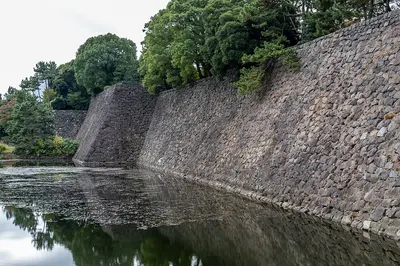
Surviving stone walls are minimal — the castle's primary defenses were moats and earthen embankments rather than the stone ishigaki walls of western Japanese castles. The flat terrain made extensive artificial earthworks the only option for creating defensive depth.

Moats

Multiple moats surrounded the castle compounds. Some moat remnants survive within and around the castle grounds, though most have been filled in during urban development.

Key defensive features

Multiple Moat Lines

Kawagoe Castle compensated for its flat terrain with multiple concentric moat lines — the only defensive multiplier available on the Kanto plain. The multiple moats required successive crossing operations by any attacking force.

Iri-no-numa Swamp

The castle was positioned to exploit the Iri-no-numa swamp area on its northern side, which provided a natural marshy barrier supplementing the artificial moats. Marsh terrain was as effective as water moats against armored attackers.

The Story of Kawagoe Castle

Originally built 1457 / Ota Dokan and Ota Sukenaga
Current form 1848 / Matsudaira Naritaka
    1457

    Ota Dokan and his father Ota Sukenaga construct Kawagoe Castle as one of a pair of fortifications (with Edo Castle) controlling the Kanto plain. Dokan simultaneously builds Edo Castle — the eventual capital of Japan — and Kawagoe as its northern guardian.

    1546

    The Battle of Kawagoe: The Hojo clan, under siege in Kawagoe Castle by a 80,000-strong combined force of the Uesugi and Ashikaga clans, makes a surprise night attack with 8,000 men and achieves a miraculous victory. This battle — one of the most dramatic in Sengoku history — is called the 'Kawagoe Night Battle' and secured Hojo dominance of the Kanto region.

    1590

    Toyotomi Hideyoshi's siege of Odawara Castle ends Hojo power. Kawagoe is granted to Tokugawa retainers and becomes an important castle in the Tokugawa control network protecting the approaches to Edo.

    1848

    The Honmaru Goten (main palace building) is reconstructed — the structure surviving today. The tower had already been demolished by this time, leaving the palace as the primary remaining structure of the Edo-period castle.

    1873

    Meiji government orders demolition of remaining castle structures. The Honmaru Goten is preserved by transfer to local ownership, eventually becoming a museum — the only honmaru palace to survive in the Kanto region.

Did You Know?

  • Kawagoe Castle was originally built by Ota Dokan in 1457 — the same year and by the same person who built Edo Castle (the predecessor of the Imperial Palace in modern Tokyo). Dokan built both fortifications as a paired defensive system for the Kanto plain.
  • The 1546 Night Battle of Kawagoe is one of the most dramatic small-vs-large victories in Japanese military history: 8,000 Hojo defenders made a night attack on an 80,000-strong besieging force and routed it completely. The battle is celebrated as one of the 'three great night battles' of the Sengoku period.
  • Kawagoe's Honmaru Goten is the only surviving honmaru goten (main castle palace building) in the Kanto region — vastly more common Japanese castles preserve towers, but the palace where the lord actually lived is far rarer, making Kawagoe's survival uniquely valuable.
  • Kawagoe's 'Ko-Edo' (Little Edo) nickname dates to the Edo period, when the town served as a key supply depot for the capital 30 kilometers to the south. The preserved kurazukuri warehouse district and the historic bell tower (Toki no Kane) are the main surviving elements of that Edo-period urban character.

Score Breakdown

Tourism Score

D 52/100
  • Accessibility 16 /20
  • Foreign-Friendly 10 /20
  • Historical Value 13 /20
  • Visual Impact 8 /20
  • Facilities 5 /20

Defense Score

C 66/100
  • Terrain Advantage 10 /20
  • Entrance Defense 11 /20
  • Internal Complexity 17 /20
  • Siege Endurance 15 /20
  • Strategic Oversight 13 /20

Planning Your Visit

Best Time to Visit

Year-round as a day trip from Tokyo. Spring (April) for cherry blossoms in the castle park area. Autumn for the Kawagoe Festival (mid-October) — one of the most famous matsuri in the Kanto region, with elaborate dashi floats.

Time Needed

30 minutes for castle; 3–4 hours for the full Kawagoe historic town experience

Insider Tip

Do not visit Kawagoe Castle in isolation — combine it with a walk through the kurazukuri warehouse district (15 minutes walk from the castle) and up to the Toki no Kane bell tower. The castle is just one element of a rich historic town. The Honmaru Goten interior shows the residential layout of a daimyo's living and working spaces — look for the formal reception rooms (distinguished by their decorative alcoves and shelving) versus the informal private quarters at the back.

Map

Getting There

Nearest station: Hon-Kawagoe Station (Seibu Shinjuku Line) or Kawagoe Station (Tobu Tojo Line / JR Kawagoe Line)
Walk from station: 20 min walk
Bus: Bus from Kawagoe Station to the castle area. Kawagoe is easily reached from central Tokyo (approximately 45 minutes on the Tobu Tojo Line from Ikebukuro). Day trip from Tokyo.
Parking: Paid parking available in central Kawagoe.
Accessible with a JR Pass

Admission

Adult¥100
Child¥50

Admission to the Honmaru Goten (palace building). Children under elementary school age free. The castle grounds otherwise are free to walk.

Opening Hours

Open09:00 – 17:00
Last entry16:30

Closed on Mondays (or following day if Monday is a holiday). Closed December 28 to January 4.

Facilities

  • – English guides
  • – Audio guide
  • ✓ Wheelchair access
  • ✓ Restrooms
  • – Gift shop
  • ✓ Food nearby

Nearby Castles

Featured in collections

FAQ

Frequently Asked Questions

How do I get to Kawagoe Castle?

The nearest station is Hon-Kawagoe Station (Seibu Shinjuku Line) or Kawagoe Station (Tobu Tojo Line / JR Kawagoe Line). From there it is about 20 minutes on foot. Bus from Kawagoe Station to the castle area. Kawagoe is easily reached from central Tokyo (approximately 45 minutes on the Tobu Tojo Line from Ikebukuro). Day trip from Tokyo.

How much does Kawagoe Castle cost to enter?

Adult admission is ¥100 and child admission is ¥50.

Is Kawagoe Castle worth visiting?

Kawagoe Castle is best appreciated as part of a broader Kawagoe day: the Honmaru Goten palace (unique survivor), the historic warehouse district, the old bell tower, and the sweet potato street all combine to create one of the most satisfying historic town experiences near Tokyo. The castle alone is a minor ruin site, but within the Kawagoe urban context it becomes genuinely worthwhile. Easy day trip from Tokyo (45 minutes from Ikebukuro) with no need to stay overnight.

What are the opening hours of Kawagoe Castle?

09:00 to 17:00, last entry 16:30.

How long should I spend at Kawagoe Castle?

Plan for about 30 minutes for castle; 3–4 hours for the full Kawagoe historic town experience, depending on how closely you want to explore the grounds.