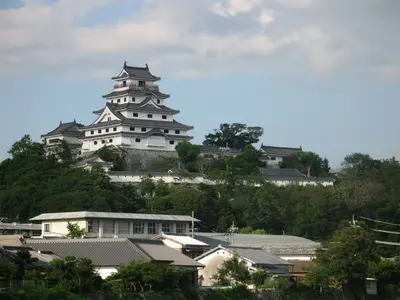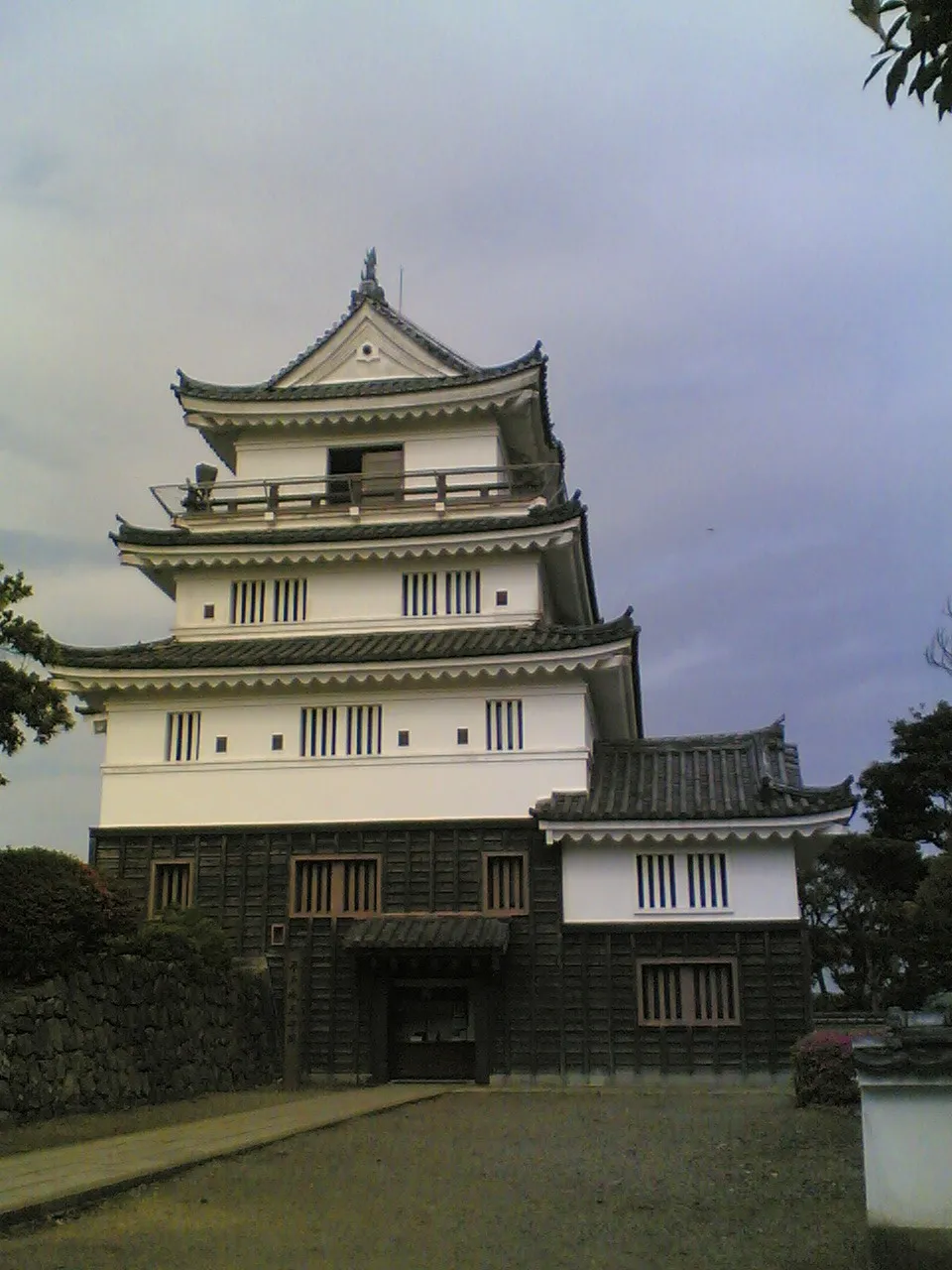
Hirado Castle

平戸城·Hirado-jo

D Tourism Score 55/100
B Defense Score 75/100

Japan's first Western trading port — where Portuguese, Dutch, and English merchants anchored for a century before Japan closed its doors to the world.

#90 — 100 Famous Castles Reconstructed
Hirado Castle (平戸城)
Photo:shunkoh/Wikimedia Commons/CC BY 2.0

Quick Facts

Quick Facts

Admission
¥520

¥200

Hours
08:30 – 18:00

Last entry 17:30

Nearest Station
Tabira-Hiradoguchi Station (Matsuura Railway) — then bus or taxi to Hirado Island
Walk from Station
null min walk

Bus also available

Time Needed
2–3 hours (castle + Dutch trading post + town walk)

Children (elementary/junior high) ¥200. High school/university students ¥310.

Defense Overview

Defense Overview

Why Hirado Castle was hard to attack

This castle is hard to attack because it combines a raised core with defended outer space with enough defensive depth to slow attackers before the center.

An attacker would not get a simple direct approach to the center. They would have to cross water barriers or moat lines, approach through at least some constrained entry space, and push through successive outer areas before the core.

Overall score

75/100

Estimated range

69–81

Confidence

A

Strong multi-source support

This is a site-original comparison score for learning and comparison, not a reconstruction of one historical battle.

Radar view

Terrain 15/20 Entrance 15/20 Internal 15/20 Siege 15/20 Oversight 15/20
How this estimate was built+

This estimate combines broad terrain, approach, layout, and route-control signals. It is meant to explain the castle's defensive logic in plain English, not reconstruct a single historical attack.

Terrain Advantage

How much the terrain itself seems to help: height, slope, ridges, cliffs, water edges, and limited approach directions.

15/20

Entrance Defense

How awkward and dangerous the first entry looks: gates, bridge or moat crossings, chokepoints, and forced turns.

15/20

Internal Complexity

How hard it seems to keep pushing after entry: layered baileys, depth, compartmentalization, and repeated defensive lines.

15/20

Siege Endurance

A rough sense of long-hold potential: moats, water access, space, storage plausibility, and defensive staying power.

15/20

Strategic Oversight

How much the castle appears to command nearby roads, plains, rivers, basins, harbors, or town approaches.

15/20

Why Visit

Hirado is a small, somewhat remote city with outsized historical significance. The castle itself is a modest concrete reconstruction, but the setting — hilltop over the Hirado Strait, with European church architecture visible below — is visually and historically extraordinary. The Dutch trading post replica, the English trading house museum, the Matsuura Historical Museum, and the old castle town streets make Hirado an excellent half-day to full-day destination for anyone interested in Japan's early contact with the West. Worth the travel effort from Sasebo or Nagasaki.

Highlights

1

Japan's First Western Trading Port

Hirado was the first place in Japan where Europeans established a permanent trading presence. Portuguese traders arrived in 1550, followed by the Dutch (who maintained a trading post here from 1609 to 1641) and the English (1613–1623). For over a century, Hirado was Japan's window on the Western world — exotic goods, Christian missionaries, firearms, and new ideas all passed through this harbor before the Tokugawa shogunate imposed sakoku (national isolation).
2

The View That Shows Two Eras at Once

From Hirado Castle's main tower, you can see both a Catholic church and a Buddhist temple in the same view — an extraordinary visual reminder of the period when Hirado was an open, cosmopolitan port. The juxtaposition of Christian and Buddhist architecture visible from a samurai castle speaks to the unique historical complexity of this small city.

3

The Matsuura Clan — Japan's Sea Lords

The Matsuura clan, lords of Hirado, were among Japan's most powerful maritime lords. They controlled the sea lanes of the Hirado Strait — the passage between Kyushu and the outer islands — and had long-standing trade relationships with Korea, China, and ultimately Europe. The castle on the hill was their visible statement of dominance over both land and sea.

Structure Details

Visitor tip

The walk up through the original stone walls to the reconstructed tower is the main experience. From the top floor, find the view showing both the Catholic church steeple and a Buddhist pagoda simultaneously — it is one of the most historically evocative views in Kyushu. The harbor below is where Dutch and Portuguese ships once anchored.

Castle type

Hill castle

Hill castle on coastal terrain — built on a hill directly overlooking the Hirado Strait, with the sea providing natural defense on multiple sides

Layout type

Concentric layout

Enclosure style — compounds descending the hillside toward the harbor, with the main tower at the summit

Main tower

Reconstructed in concrete (1962) on the original foundations. The exterior approximates the historical appearance; the interior is a museum.

5 floors

Stone walls

Natural stone stacking

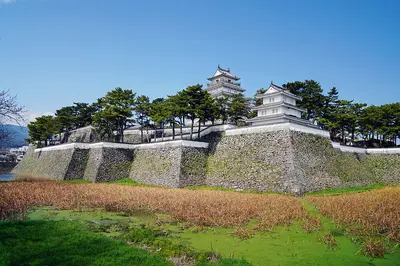
Original ishigaki stone walls survive on the hillside approaches. The reconstructed tower sits on its original stone foundation platform, and the approach path retains substantial original stone walls in good condition.

Key defensive features

Hirado Strait Command

The castle hill directly overlooks the Hirado Strait — the narrow passage between Hirado Island and the Kyushu mainland. Any ship entering or leaving the strait was under observation from the castle, giving the Matsuura clan complete intelligence over maritime traffic and the ability to control the trade gateway.

Coastal Cliff Approaches

The castle is built on a rocky coastal hill with sea cliffs on multiple sides. Direct approach from the water was extremely difficult, channeling any land-based attack through a limited number of ascending paths.

The Story of Hirado Castle

Originally built 1704 / Matsuura Takashi
Current form 1704 / Matsuura Takashi
    1550

    Portuguese traders arrive at Hirado, establishing the first permanent European trading presence in Japan. The Matsuura clan welcomes them as economically valuable partners. Francis Xavier visits Hirado the same year.

    1609

    The Dutch East India Company (VOC) establishes a trading post (factorij) at Hirado. Dutch ships begin regular trading operations, bringing European goods, books, and scientific instruments to Japan through Hirado harbor.

    1641

    The Tokugawa shogunate orders the Dutch trading post moved from Hirado to the artificial island of Dejima in Nagasaki harbor. Hirado's era as Japan's Western trading gateway ends. The port's international significance declines rapidly.

    1704

    The current castle is completed by Matsuura Takashi — a relatively late construction after the area's trading importance had already declined. The castle serves as the Matsuura clan's domain headquarters through the Edo period.

    1962

    The main tower is reconstructed in concrete on the original foundation, becoming the current visible landmark on the Hirado hillside.

Did You Know?

  • The Dutch trading post in Hirado operated from 1609 to 1641, making it one of the earliest continuous European commercial operations in East Asia. When it was forcibly relocated to Dejima in Nagasaki, the Dutch trading directors are said to have demolished their stone warehouses rather than leave them as testimony to Dutch presence — the shogunate had objected to the use of stone, seen as too permanent.
  • William Adams — the English sailor who became the first Western samurai and whose story inspired James Clavell's novel 'Shogun' — operated his shipbuilding business near Hirado and was based in the region. The English trading post in Hirado (1613–1623) was managed with Adams's assistance.
  • The view from Hirado Castle showing both a Catholic church and a Buddhist temple simultaneously is intentionally famous — it appears on tourist materials as a symbol of Hirado's unique history as a place of religious and cultural encounter.

Score Breakdown

Tourism Score

D 55/100
  • Accessibility 9 /20
  • Foreign-Friendly 12 /20
  • Historical Value 16 /20
  • Visual Impact 12 /20
  • Facilities 6 /20

Defense Score

B 75/100
  • Terrain Advantage 15 /20
  • Entrance Defense 15 /20
  • Internal Complexity 15 /20
  • Siege Endurance 15 /20
  • Strategic Oversight 15 /20

Planning Your Visit

Best Time to Visit

Spring and autumn for comfortable weather. The castle and town are small enough that there is no significant seasonal peak.

Time Needed

2–3 hours (castle + Dutch trading post + town walk)

Insider Tip

Don't rush past the original stone walls on the way up to the reconstructed tower — they are the most authentic remaining elements. From the top floor, ask a local or check the information panels for which direction shows the famous church-and-pagoda view. Then walk down to the waterfront and find the site of the original Dutch trading post (now a replica reconstruction with a small museum).

Map

Getting There

Nearest station: Tabira-Hiradoguchi Station (Matsuura Railway) — then bus or taxi to Hirado Island
Walk from station: null min walk
Bus: Bus from Tabira-Hiradoguchi Station across the Hirado Bridge to Hirado city, then short walk to the castle. From Nagasaki or Sasebo, limited express bus services also available.
Parking: Parking available near the castle.

Admission

Adult¥520
Child¥200

Children (elementary/junior high) ¥200. High school/university students ¥310.

Opening Hours

Open08:30 – 18:00
Last entry17:30

Apr–Sep: 8:30–18:00. Oct–Mar: 8:30–17:00.

Facilities

  • – English guides
  • – Audio guide
  • – Wheelchair access
  • ✓ Restrooms
  • ✓ Gift shop
  • ✓ Food nearby

Nearby Castles

Featured in collections

FAQ

Frequently Asked Questions

How do I get to Hirado Castle?

The nearest station is Tabira-Hiradoguchi Station (Matsuura Railway) — then bus or taxi to Hirado Island. From there it is about null minutes on foot. Bus from Tabira-Hiradoguchi Station across the Hirado Bridge to Hirado city, then short walk to the castle. From Nagasaki or Sasebo, limited express bus services also available.

How much does Hirado Castle cost to enter?

Adult admission is ¥520 and child admission is ¥200.

Is Hirado Castle worth visiting?

Hirado is a small, somewhat remote city with outsized historical significance. The castle itself is a modest concrete reconstruction, but the setting — hilltop over the Hirado Strait, with European church architecture visible below — is visually and historically extraordinary. The Dutch trading post replica, the English trading house museum, the Matsuura Historical Museum, and the old castle town streets make Hirado an excellent half-day to full-day destination for anyone interested in Japan's early contact with the West. Worth the travel effort from Sasebo or Nagasaki.

What are the opening hours of Hirado Castle?

08:30 to 18:00, last entry 17:30.

How long should I spend at Hirado Castle?

Plan for about 2–3 hours (castle + Dutch trading post + town walk), depending on how closely you want to explore the grounds.