Shimabara Castle

島原城·Shimabara-jo

C Tourism Score 60/100
C Defense Score 67/100

The castle whose oppressive taxation triggered Japan's largest civil war — a Christian peasant revolt that shut Japan off from the Western world for 200 years.

#91 — 100 Famous Castles Reconstructed
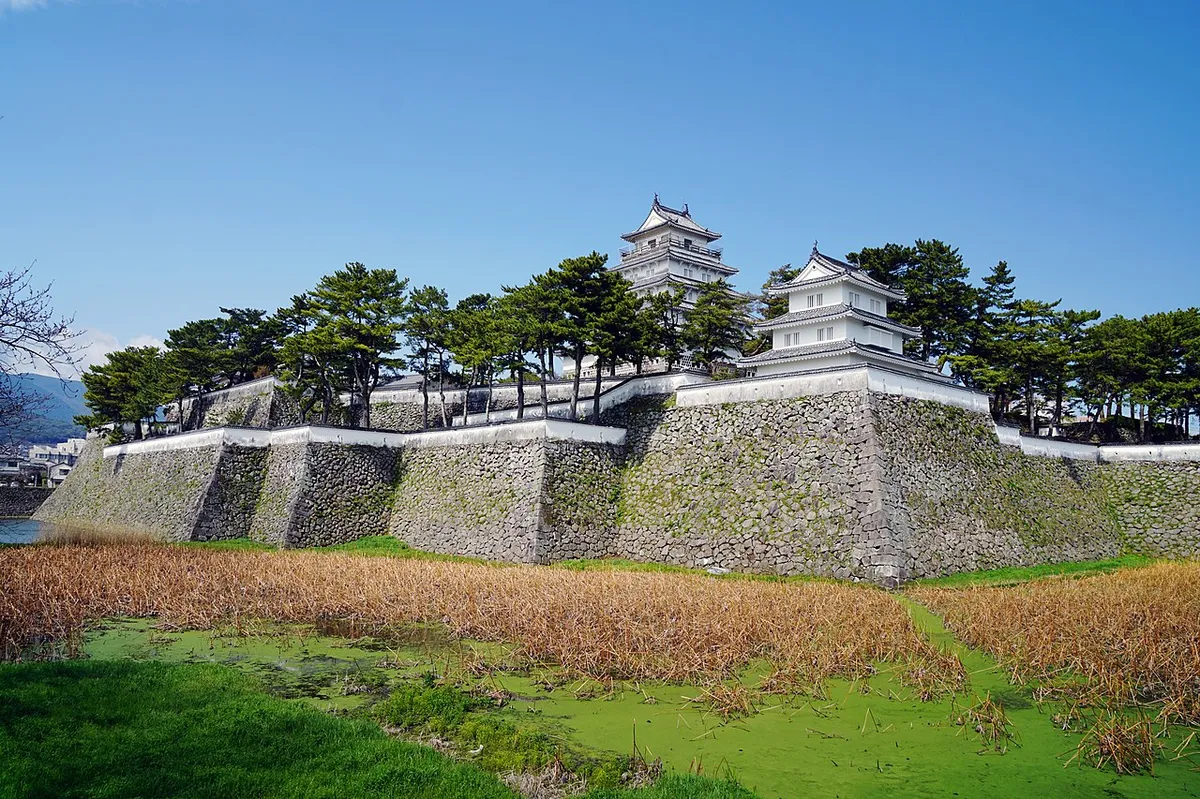
Shimabara Castle (島原城)
Photo:663highland/Wikimedia Commons/CC BY 2.5

Quick Facts

Quick Facts

Admission
¥550

¥280

Hours
09:00 – 17:30

Last entry 17:00

Nearest Station
Shimabara Station (Shimabara Railway)
Walk from Station
7 min walk
Time Needed
1.5–2 hours (castle + samurai district walk)

Admission to the main tower museum. The castle grounds are freely accessible.

Defense Overview

Defense Overview

Why Shimabara Castle was hard to attack

This castle is hard to attack because it combines managed outer defenses on relatively level ground with enough defensive depth to slow attackers before the center.

An attacker would not simply arrive at the center on open flat ground. They would have to cross water barriers or moat lines, approach through at least some constrained entry space, and push through successive outer areas before the core.

Overall score

67/100

Estimated range

61–73

Confidence

A

Strong multi-source support

This is a site-original comparison score for learning and comparison, not a reconstruction of one historical battle.

Radar view

Terrain 11/20 Entrance 13/20 Internal 15/20 Siege 15/20 Oversight 13/20
How this estimate was built+

This estimate combines broad terrain, approach, layout, and route-control signals. It is meant to explain the castle's defensive logic in plain English, not reconstruct a single historical attack.

Terrain Advantage

How much the terrain itself seems to help: height, slope, ridges, cliffs, water edges, and limited approach directions.

11/20

Entrance Defense

How awkward and dangerous the first entry looks: gates, bridge or moat crossings, chokepoints, and forced turns.

13/20

Internal Complexity

How hard it seems to keep pushing after entry: layered baileys, depth, compartmentalization, and repeated defensive lines.

15/20

Siege Endurance

A rough sense of long-hold potential: moats, water access, space, storage plausibility, and defensive staying power.

15/20

Strategic Oversight

How much the castle appears to command nearby roads, plains, rivers, basins, harbors, or town approaches.

13/20

Why Visit

Shimabara Castle is a compact, photogenic site with an extraordinary history. The reconstructed tower is not architecturally exceptional, but the story it contains — the Shimabara Rebellion, the Christian martyrs, the sakoku consequences — is among the most consequential in Japanese history. The castle town south of the grounds (Teppo-machi) is one of the best-preserved samurai districts in Kyushu and takes 30–45 minutes to walk. Shimabara is also a gateway to the Unzen volcanic hot springs area, making a combined visit easy. A day trip from Nagasaki is very feasible via ferry or bus.

Highlights

1

The Castle That Sparked Japan's Closure to the World

The Shimabara Rebellion of 1637–38 — Japan's largest domestic conflict of the Edo period — began as a tax revolt against the Matsukura clan's brutal rule from this castle. Up to 37,000 rebels, many of them Christian converts, made their last stand at Hara Castle (nearby). The Tokugawa shogunate's response was decisive: it expelled the Portuguese, banned Christianity with extreme severity, and implemented sakoku (national isolation). A tax revolt at one castle changed the trajectory of Japanese history for over 200 years.
2

The Most Beautiful White Tower in Kyushu

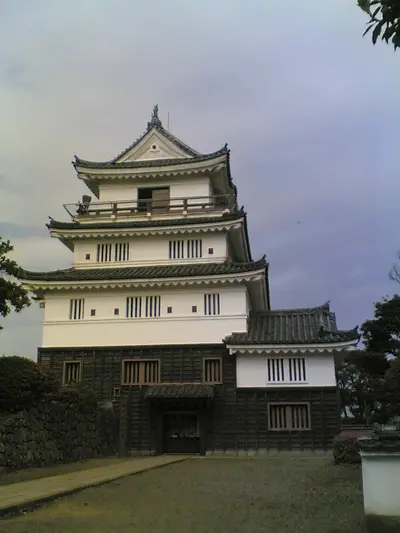
Shimabara Castle's five-story white tower — reconstructed in 1964 — is the defining visual landmark of the Shimabara Peninsula. Rising above the town's moat and stone walls, with Mount Unzen's volcanic profile in the background, it creates one of the most classically picturesque castle vistas in Kyushu. The combination of white walls, blue moat water, and volcanic mountain backdrop is genuinely striking.

3

The Samurai Quarter — Japan's Most Atmospheric Castle Town Streets

The streets immediately south of the castle preserve the original samurai residential quarter — low whitewashed walls, narrow lanes, and running water channels (yusui) that bring natural spring water through the town. The Teppo-machi district is one of the best-preserved samurai townscapes in Kyushu and gives an exceptional sense of Edo-period castle town life.

Structure Details

Visitor tip

The castle is compact and easy to navigate. Walk the stone walls around the moat first, then enter the main tower for the museum. The Christian martyrdom exhibits — documenting the persecution that helped ignite the Shimabara Rebellion — are historically important and sobering. After the castle, walk south into the Teppo-machi samurai district.

Castle type

Flatland castle

Flatland castle — built on flat terrain near the coast of the Shimabara Peninsula, using moats for defense

Layout type

Concentric layout

Enclosure style — roughly square compound layout with moats and stone walls on all sides

Main tower

Reconstructed in concrete (1964) on the original foundations. Five-story white tower. Interior is a museum with Christian martyrdom artifacts and local history.

5 floors

Stone walls

Natural stone stacking

The inner compound stone walls are well-preserved and substantial, ringing the main compound on all sides. The moat outside the stone walls still holds water and contributes to the visual drama of the reconstruction.

Moats

The inner moat surrounding the main compound survives and still holds water. The original castle had additional outer moats now largely filled. The surviving water moat reflects the white tower dramatically.

Key defensive features

Water Moat — Primary Defense on Flat Terrain

On flat coastal terrain, the moat system was Shimabara Castle's main defense. The wide water moat surrounding the main compound made direct assault without bridging equipment extremely difficult and forced attackers into channeled approaches at gate positions.

Matsukura's Over-Engineering

Paradoxically, the very strength of the castle contributed to the Shimabara Rebellion. The Matsukura clan taxed peasants and Christians so heavily to fund construction that they triggered the revolt. The castle's impressive stone walls were built on the misery of the population — a warning about the political costs of military over-investment.

The Story of Shimabara Castle

Originally built 1618 / Matsukura Shigemasa
Current form 1625 / Matsukura Shigemasa
    1618

    Matsukura Shigemasa begins construction of a new castle at Shimabara, replacing the previous lord's simpler fortification. The construction is vast and expensive — financed through extremely heavy taxation of the local population, including Christian peasants.

    1637

    The Shimabara Rebellion erupts. Approximately 37,000 rebels — peasants, former samurai, and Christian converts — rise against Matsukura rule. Led nominally by the young Amakusa Shiro (reportedly 16 years old), the rebels fortify the abandoned Hara Castle on the coast and withstand a government siege for months.

    1638

    Hara Castle falls. The government forces, numbering over 100,000, slaughter virtually all defenders. Amakusa Shiro is beheaded. It is Japan's largest domestic armed conflict of the entire Edo period.

    1638

    In the aftermath of the rebellion, the Tokugawa shogunate expels the Portuguese from Japan entirely (blaming them for supporting Christianity), further restricts contact with Europeans, and intensifies anti-Christian persecution. The sakoku system of national isolation is effectively completed.

    1964

    The main tower is reconstructed in concrete on the original foundation. Corner turrets are also reconstructed. The castle becomes a museum focusing on the Shimabara Rebellion and the Christian martyrdom history of the region.

In Pop Culture

Film

Amakusa Shiro (various films and dramas)

The tragic figure of Amakusa Shiro — the young Christian leader of the Shimabara Rebellion — has been the subject of multiple film and television dramatizations. The rebellion and its connection to Shimabara Castle appear regularly in period dramas dealing with the Edo shogunate's persecution of Christianity.

Did You Know?

  • The Shimabara Rebellion is often characterized as Japan's only Christian uprising, but it was fundamentally a peasant tax revolt in which Christian identity provided organizational cohesion. The rebels used Christian imagery and Amakusa Shiro's reported miraculous powers as rallying points, but the underlying cause was the Matsukura clan's catastrophic over-taxation.
  • Amakusa Shiro — the rebellion's charismatic young leader — is one of the most romanticized figures in Japanese history. His reported age of 15–16 at the rebellion, his alleged ability to perform miracles (turn water to wine, make birds lay eggs on command), and his death at the fall of Hara Castle have made him a legendary figure who appears in anime, manga, and popular fiction.
  • The fall of the Shimabara Rebellion in 1638 is considered the effective end of Christianity in Japan for over 200 years. Approximately 37,000 people were killed. The Portuguese were expelled the following year. When Western traders were next permitted (in limited form) at Nagasaki's Dejima, they were Dutch — Protestants without a missionary agenda — specifically because the shogunate distinguished them from Catholic proselytizers.

Score Breakdown

Tourism Score

C 60/100
  • Accessibility 13 /20
  • Foreign-Friendly 12 /20
  • Historical Value 18 /20
  • Visual Impact 11 /20
  • Facilities 6 /20

Defense Score

C 67/100
  • Terrain Advantage 11 /20
  • Entrance Defense 13 /20
  • Internal Complexity 15 /20
  • Siege Endurance 15 /20
  • Strategic Oversight 13 /20

Planning Your Visit

Best Time to Visit

Spring for cherry blossoms in the castle grounds. Autumn for cooler temperatures. Avoid summer heat if possible — the area is humid.

Time Needed

1.5–2 hours (castle + samurai district walk)

Insider Tip

The Christian martyrdom museum inside the castle tower has an unexpectedly serious and moving collection — don't rush past it. Then walk south into the Teppo-machi district where the water channels (yusui) run through the streets — local carp are kept in the channels, fed by natural spring water from Mount Unzen. It's a uniquely atmospheric townscape that most visitors miss by leaving immediately after the castle.

Map

Getting There

Nearest station: Shimabara Station (Shimabara Railway)
Walk from station: 7 min walk
Parking: Parking available at the castle grounds.

Admission

Adult¥550
Child¥280

Admission to the main tower museum. The castle grounds are freely accessible.

Opening Hours

Open09:00 – 17:30
Last entry17:00

Open daily. May close during typhoons or severe weather.

Facilities

  • – English guides
  • – Audio guide
  • – Wheelchair access
  • ✓ Restrooms
  • ✓ Gift shop
  • ✓ Food nearby

Nearby Castles

Featured in collections

FAQ

Frequently Asked Questions

How do I get to Shimabara Castle?

The nearest station is Shimabara Station (Shimabara Railway). From there it is about 7 minutes on foot.

How much does Shimabara Castle cost to enter?

Adult admission is ¥550 and child admission is ¥280.

Is Shimabara Castle worth visiting?

Shimabara Castle is a compact, photogenic site with an extraordinary history. The reconstructed tower is not architecturally exceptional, but the story it contains — the Shimabara Rebellion, the Christian martyrs, the sakoku consequences — is among the most consequential in Japanese history. The castle town south of the grounds (Teppo-machi) is one of the best-preserved samurai districts in Kyushu and takes 30–45 minutes to walk. Shimabara is also a gateway to the Unzen volcanic hot springs area, making a combined visit easy. A day trip from Nagasaki is very feasible via ferry or bus.

What are the opening hours of Shimabara Castle?

09:00 to 17:30, last entry 17:00.

How long should I spend at Shimabara Castle?

Plan for about 1.5–2 hours (castle + samurai district walk), depending on how closely you want to explore the grounds.