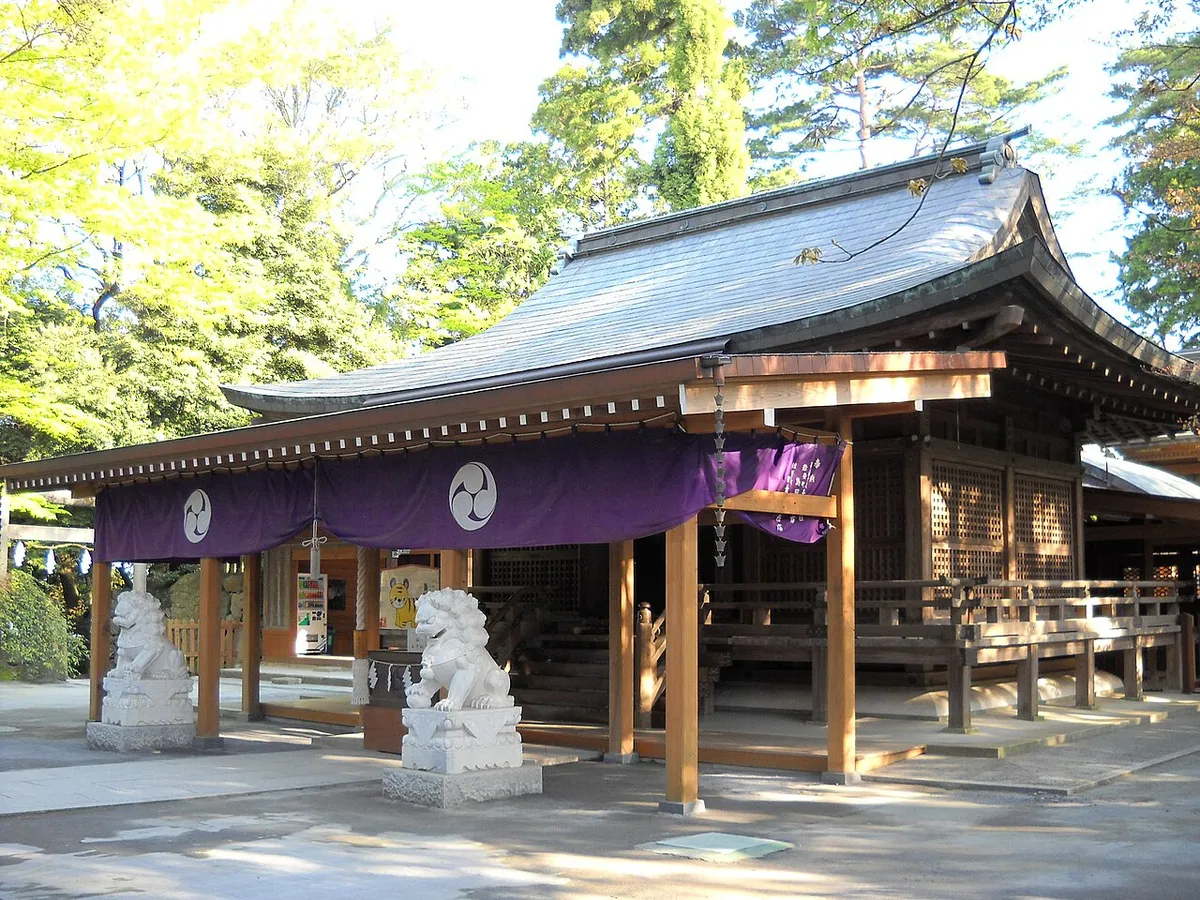
Karasawayama Castle

唐沢山城·Karasawayama-jo

F Tourism Score 38/100
A Defense Score 87/100

The castle that beat Uesugi Kenshin nine times — and now hosts dozens of cats among its mossy stone walls and mountain shrine.

#114 — Continued 100 Castles Ruins
Karasawayama Castle (唐沢山城)
Photo:韋駄天狗/Wikimedia Commons/CC BY 3.0

Quick Facts

Quick Facts

Admission
Free Free
Hours
00:00 – 23:59
Nearest Station
Sano Station (Tobu Sano Line / JR Ryomo Line)
Walk from Station
60 min walk

Bus also available

Time Needed
1.5–2 hours including mountain trail and ruins exploration

Castle ruins and mountain grounds are freely accessible at all times. Karasawayama Shrine on the castle grounds charges no admission.

Defense Overview

Defense Overview

Why Karasawayama Castle was hard to attack

This castle is hard to attack because it combines high ground and difficult natural access with a controlled route inward.

An attacker would first have to fight the site itself before reaching the main defenses. They would have to cross water barriers or moat lines and face more defensive depth after the first line.

Overall score

87/100

Estimated range

81–93

Confidence

B

Usable estimate with some inference

This is a site-original comparison score for learning and comparison, not a reconstruction of one historical battle.

Radar view

Terrain 19/20 Entrance 17/20 Internal 17/20 Siege 16/20 Oversight 18/20
How this estimate was built+

This estimate combines broad terrain, approach, layout, and route-control signals. It is meant to explain the castle's defensive logic in plain English, not reconstruct a single historical attack.

Terrain Advantage

How much the terrain itself seems to help: height, slope, ridges, cliffs, water edges, and limited approach directions.

19/20

Entrance Defense

How awkward and dangerous the first entry looks: gates, bridge or moat crossings, chokepoints, and forced turns.

17/20

Internal Complexity

How hard it seems to keep pushing after entry: layered baileys, depth, compartmentalization, and repeated defensive lines.

17/20

Siege Endurance

A rough sense of long-hold potential: moats, water access, space, storage plausibility, and defensive staying power.

16/20

Strategic Oversight

How much the castle appears to command nearby roads, plains, rivers, basins, harbors, or town approaches.

18/20

Why Visit

Karasawayama Castle delivers a genuinely memorable ruins experience for two reasons: the stone walls are impressive and the cats are delightful. Together with the mountain setting, the shrine, and the nine-siege-and-never-taken military history, it makes for one of the more characterful ruins sites in the northern Kanto region. Accessible as a day trip from Tokyo via the Tobu Sano Line, and easily combined with Sano outlet mall for a very eclectic itinerary.

Highlights

1

Impressive Stone Walls on a Commanding Mountain

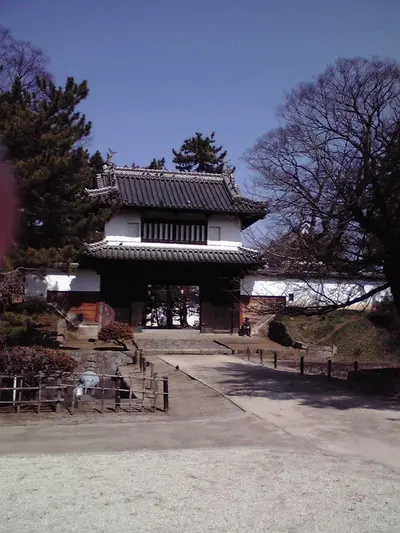
Karasawayama Castle is celebrated among castle enthusiasts for its ishigaki (stone walls) — large-scale cut stone walls rising from a mountain summit that gives commanding views across the southern Kanto plain. For a northern Kanto (Tochigi) mountain castle, the scale and quality of the surviving stone walls is exceptional — a level of masonry investment that reflects how strategically important this mountain was to the Sano clan that held it for generations.
2

A Castle Transformed into a Shrine — and Populated by Cats

Like Yonezawa in Yamagata, Karasawayama Castle's inner compound is now occupied by a Shinto shrine — Karasawayama Shrine. But what makes this site uniquely memorable is the population of semi-feral cats that inhabit the shrine and castle ruins. Dozens of cats live among the stone walls and shrine buildings, cared for by shrine priests and local volunteers. The combination of impressive medieval stone walls, a working Shinto shrine, and cats on every ancient surface is unlike any other castle ruins experience in Japan.

3

Southern Kanto Guardian — 800 Years of the Sano Clan

Karasawayama Castle was the seat of the Sano clan — one of the longest-continuously-occupying samurai families in Japanese history, holding this mountain and the surrounding Sano domain from the Kamakura period into the Sengoku era. The castle withstood multiple sieges by Uesugi Kenshin (who besieged it at least nine times between 1560 and 1576) and by Hojo forces — never successfully taken despite repeated determined assaults.

Structure Details

Visitor tip

The mountain trail to the castle summit is well-maintained and takes about 20–30 minutes from the parking area. Wear comfortable walking shoes. The stone walls and shrine are the rewards — walk the various compound terraces to appreciate the wall scale, and spend time with the shrine cats (bring cat treats if you wish). The views from the summit over the Kanto plain toward the distant Nikko mountains are a bonus.

Castle type

Mountain castle

Mountain castle — built on the summit of Karasawayama (240 meters), a strategically positioned peak with commanding views over the southern Tochigi / northern Kanto plain

Layout type

Linked compound layout

Compound style — multiple terraced compounds following the mountain's natural contours, with the honmaru at the summit and the shrine now occupying the inner compound

Main tower

Ruins only — no surviving wooden structures. The principal attraction is the ishigaki (stone walls) ascending the mountain in terraced layers, considered among the finest surviving stone wall ruins in the northern Kanto region. Karasawayama Shrine now occupies the honmaru area.

Stone walls

Natural stone stacking

The stone walls of Karasawayama Castle are the site's defining feature. Constructed from locally quarried mountain stone in the nozurazumi style, the walls rise in terraced geometric layers up the mountain slopes. The scale of some wall sections — several meters high, extending for dozens of meters — is impressive for a northern Kanto mountain castle. The combination of moss, age, and the surrounding cedar forest gives the walls an evocative quality that photographs capture well.

Key defensive features

Mountain Summit Commanding Position

The 240-meter summit provides panoramic views over the Kanto plain — allowing observation of approaching forces from great distances. The steep slopes on all sides make any assault physically demanding, giving the defending garrison a substantial natural advantage.

Large-Scale Stone Walls

The ishigaki stone walls are unusually large-scale for a northern Kanto mountain castle. The investment in quality stone construction reflects both the Sano clan's resources and the castle's strategic importance — these walls were built to withstand sustained siege pressure, not merely to define compound boundaries.

Multiple Compound Defense Network

Five or more compounds create a defensive network where each compound must be separately reduced. The nine sieges by Uesugi Kenshin — all unsuccessful — demonstrate the practical effectiveness of this multi-compound layout.

The Story of Karasawayama Castle

Originally built 1202 / Fujiwara no Hidesuke (initial fortification); Sano clan (development)
Current form 1560 / Sano clan (major stone wall construction in response to Uesugi sieges)
    1202

    An initial fortification is established on Karasawayama by the Fujiwara (later Sano) clan in the early Kamakura period, beginning what will become one of the longest continuous occupations of a single castle site by one family in Japanese history.

    1560

    Uesugi Kenshin begins his series of sieges of Karasawayama Castle — ultimately besieging it at least nine times over the following 16 years. Each siege fails. The Sano clan's ability to hold the mountain against one of Japan's greatest military commanders establishes Karasawayama's reputation as an exceptionally defensible site.

    1575

    Despite repeated Uesugi sieges, the Sano clan successfully negotiates shifting alliances — at various times allied with Uesugi, Hojo, and Takeda interests — to maintain their mountain domain. The castle's impregnability gives the Sano clan political leverage that its small domain's resources alone could not provide.

    1590

    With the Hojo clan's defeat at Odawara and the Tokugawa reorganization of Kanto, the Sano clan's domain is absorbed. Karasawayama Castle is abandoned as a military fortification. Karasawayama Shrine, which had coexisted with the castle on the summit, continues as a living religious institution.

    1650

    Karasawayama Shrine is formally established on the castle's former honmaru grounds, incorporating the castle's spiritual protection tradition. The shrine's continuous operation has preserved the summit site from agricultural clearance or redevelopment.

Did You Know?

  • The semi-feral cats of Karasawayama Castle are a genuine phenomenon — the site has been known for decades for the large population of cats living among the shrine buildings and stone walls. Visitors who know about the cats specifically seek out the site for the unusual combination of historical architecture and feline inhabitants. The cats are cared for by shrine volunteers and are generally approachable.
  • Uesugi Kenshin's nine failed sieges of Karasawayama make it one of the most repeatedly attacked and never-taken castles in the Sengoku period. Kenshin, who virtually never failed to take a castle he seriously committed to attacking, makes the Karasawayama exception all the more notable. The standard explanation is terrain — the mountain is simply too defensible for conventional Sengoku siege tactics.
  • Sano City, at the foot of Karasawayama, is famous in contemporary Japan for its outlet shopping mall — one of the largest in eastern Japan. The juxtaposition of a significant Sengoku-period mountain castle above a major 21st-century outlet mall is one of Japan's more unexpected heritage-commerce combinations.

Score Breakdown

Tourism Score

F 38/100
  • Accessibility 7 /20
  • Foreign-Friendly 6 /20
  • Historical Value 12 /20
  • Visual Impact 9 /20
  • Facilities 4 /20

Defense Score

A 87/100
  • Terrain Advantage 19 /20
  • Entrance Defense 17 /20
  • Internal Complexity 17 /20
  • Siege Endurance 16 /20
  • Strategic Oversight 18 /20

Planning Your Visit

Best Time to Visit

Spring (April–May) and autumn (October–November) for the most comfortable mountain walking and best visibility. Year-round for cats. Avoid icy winter days on the mountain trail.

Time Needed

1.5–2 hours including mountain trail and ruins exploration

Insider Tip

Bring cat food or treats. The cats of Karasawayama are well-fed by regular visitors and shrine staff, but offering treats makes for memorable interactions on the stone walls. Also: the views from the summit toward the distant Nikko mountains are underrated — on clear autumn days, the mountain backdrop is genuinely scenic.

Map

Getting There

Nearest station: Sano Station (Tobu Sano Line / JR Ryomo Line)
Walk from station: 60 min walk
Bus: City bus from Sano Station to the mountain base area runs infrequently. Taxi from Sano Station recommended (approximately 15 minutes). The mountain trail from the base takes an additional 20–30 minutes on foot.
Parking: Free parking at the mountain base. A good road leads to a higher parking area closer to the castle site, reducing the walking time significantly.
Accessible with a JR Pass

Admission

Free

Castle ruins and mountain grounds are freely accessible at all times. Karasawayama Shrine on the castle grounds charges no admission.

Opening Hours

Open00:00 – 23:59

Accessible at all times. The mountain trail is well-maintained. The shrine has standard visiting hours. Famous for wild cats (semi-feral cats that inhabit the shrine and ruins grounds — a notable and unusual feature).

Facilities

  • – English guides
  • – Audio guide
  • – Wheelchair access
  • ✓ Restrooms
  • – Gift shop
  • – Food nearby

Nearby Castles

Featured in collections

FAQ

Frequently Asked Questions

How do I get to Karasawayama Castle?

The nearest station is Sano Station (Tobu Sano Line / JR Ryomo Line). From there it is about 60 minutes on foot. City bus from Sano Station to the mountain base area runs infrequently. Taxi from Sano Station recommended (approximately 15 minutes). The mountain trail from the base takes an additional 20–30 minutes on foot.

How much does Karasawayama Castle cost to enter?

Karasawayama Castle is free to enter.

Is Karasawayama Castle worth visiting?

Karasawayama Castle delivers a genuinely memorable ruins experience for two reasons: the stone walls are impressive and the cats are delightful. Together with the mountain setting, the shrine, and the nine-siege-and-never-taken military history, it makes for one of the more characterful ruins sites in the northern Kanto region. Accessible as a day trip from Tokyo via the Tobu Sano Line, and easily combined with Sano outlet mall for a very eclectic itinerary.

What are the opening hours of Karasawayama Castle?

00:00 to 23:59.

How long should I spend at Karasawayama Castle?

Plan for about 1.5–2 hours including mountain trail and ruins exploration, depending on how closely you want to explore the grounds.