Tsuchiura Castle

土浦城·Tsuchiura-jo

F Tourism Score 35/100
B Defense Score 70/100

A lake-floating castle with two genuine Edo-period survivors — modest ruins, but the Lake Kasumigaura setting tells the whole defensive story.

#113 — Continued 100 Castles Ruins
Tsuchiura Castle (土浦城)
Photo:User: (WT-shared) Tsuchiuradaigaku at wts wikivoyage/Wikimedia Commons/Public domain

Quick Facts

Quick Facts

Admission
Free Free
Hours
00:00 – 23:59
Nearest Station
Tsuchiura Station (JR Joban Line)
Walk from Station
10 min walk
Time Needed
45 minutes to 1 hour for the castle site; add 1–2 hours for lake shore walk or cycling

Castle ruins (Tsuchiura City Museum park and grounds) are freely accessible. The Tsuchiura City Museum on the castle grounds may charge a small fee for special exhibitions.

Defense Overview

Defense Overview

Why Tsuchiura Castle was hard to attack

This castle is hard to attack because it combines managed outer defenses on relatively level ground with a controlled route inward.

An attacker would not simply arrive at the center on open flat ground. They would have to cross water barriers or moat lines, pass tighter turns and chokepoints, push through successive outer areas before the core, and do so under a position that also watches the surrounding routes.

Overall score

70/100

Estimated range

64–76

Confidence

B

Usable estimate with some inference

This is a site-original comparison score for learning and comparison, not a reconstruction of one historical battle.

Radar view

Terrain 11/20 Entrance 14/20 Internal 15/20 Siege 16/20 Oversight 14/20
How this estimate was built+

This estimate combines broad terrain, approach, layout, and route-control signals. It is meant to explain the castle's defensive logic in plain English, not reconstruct a single historical attack.

Terrain Advantage

How much the terrain itself seems to help: height, slope, ridges, cliffs, water edges, and limited approach directions.

11/20

Entrance Defense

How awkward and dangerous the first entry looks: gates, bridge or moat crossings, chokepoints, and forced turns.

14/20

Internal Complexity

How hard it seems to keep pushing after entry: layered baileys, depth, compartmentalization, and repeated defensive lines.

15/20

Siege Endurance

A rough sense of long-hold potential: moats, water access, space, storage plausibility, and defensive staying power.

16/20

Strategic Oversight

How much the castle appears to command nearby roads, plains, rivers, basins, harbors, or town approaches.

14/20

Why Visit

Tsuchiura Castle is a modest site that rewards visitors who combine it with the broader Tsuchiura/Kasumigaura experience. The two surviving original structures (East Gate and East Turret) are architecturally significant for Kanto. The lake geography explains the castle's logic. Best visited as part of a Kasumigaura cycling day or in combination with the Mito/Kasama cultural circuit. Accessible directly from Tokyo by JR Joban Line in about 50 minutes — a reasonable day-trip addition for dedicated castle visitors.

Highlights

1

The Floating Castle of the Kanto Wetlands

Tsuchiura Castle earned the nickname 'Ukishiro' (Floating Castle) — the same title claimed by Oshi Castle in Saitama — because it was built on a low peninsula surrounded by the waters of Lake Kasumigaura, one of Japan's largest lakes. The castle appeared to float on the lake's surface when viewed from a distance. This natural water defense, provided by Japan's second-largest lake, was the castle's defining defensive feature.
2

Two Surviving Original Structures — Rare for a Ruins Site

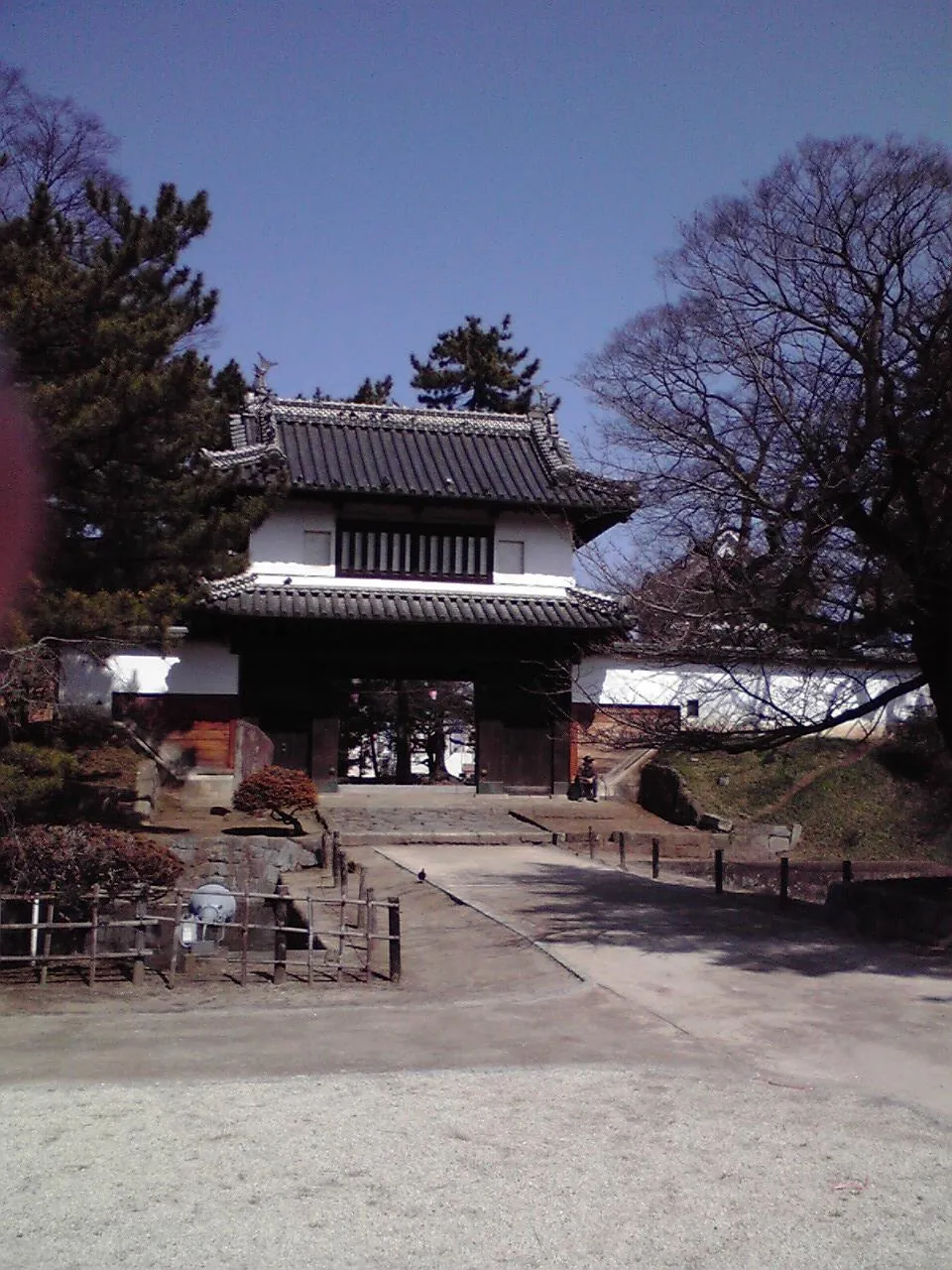
While Tsuchiura Castle has no surviving main tower, it retains two original Edo-period structures that are designated National Important Cultural Properties: the East Turret (Higashi-yagura) and the East Gate (Higashi-mon). The gate in particular is one of the better-preserved Edo-period castle gates in the Kanto region — an original wooden structure rather than a reconstruction — giving the site a physical historical authenticity that many castle ruins lack entirely.

3

Gateway to Lake Kasumigaura

Lake Kasumigaura — at 220 square kilometers, Japan's second-largest lake — was the strategic context for Tsuchiura Castle's existence and its natural defensive resource. Today the lake is a major recreational area for the Kanto region, and visiting Tsuchiura Castle can be combined with cycling the lake shore (one of Japan's best cycling routes) and exploring the town's lotus cuisine traditions.

Structure Details

Visitor tip

The site is modest — the two surviving original structures (East Turret and East Gate) are the highlights, and both are compact. The castle grounds are now a city park. The most satisfying visit combines the castle ruins with a walk to the Lake Kasumigaura shore to understand the water-defense geography. The lake view from the castle area helps visualize why this flat peninsula was considered defensible.

Castle type

Flatland castle

Flatland castle — built on a low peninsula extending into Lake Kasumigaura, Japan's second-largest lake, using the lake's waters as the dominant natural defense on multiple sides

Layout type

Concentric layout

Enclosure style — concentric compounds on the lake peninsula, with the lake providing the outer water defense and artificial moats providing inner barriers

Main tower

Partial ruins — the main tower is lost, but two Important Cultural Property structures survive: the East Turret (Higashi-yagura, original Edo-period) and the East Gate (Higashi-mon, original Edo-period). These are the principal surviving historical structures.

Stone walls

Natural stone stacking

Tsuchiura Castle's stone walls are modest in scale — the primary defensive barrier was always the surrounding lake waters rather than the fortifications. Stone embankments defined the compound boundaries, but the engineering priority was management of the peninsula's water position rather than construction of impressive stone heights.

Moats

The castle combined natural lake water on multiple sides with artificial inner moats. Lake Kasumigaura directly contacted the castle on the west and north sides, functioning as a natural moat of extraordinary width. Artificial moats defined the eastern land approach, where the peninsula connected to the shore.

Key defensive features

Lake Kasumigaura Natural Defense

Japan's second-largest lake, directly contacting the castle on multiple sides, provided a water barrier of unprecedented width — measured in kilometers rather than meters. Any attacker had to approach by boat or via the narrow eastern land connection, with no other viable route.

Eastern Land Approach Moats

The single land approach from the east was guarded by artificial moats cutting across the peninsula — forcing any land-based attacker through a narrow, heavily defended corridor before reaching the castle compounds.

The Story of Tsuchiura Castle

Originally built 1429 / Wakagashira clan (initial fortification)
Current form 1590 / Various Edo-period lords (subsequent development)
    1429

    A fortification is established on the Lake Kasumigaura peninsula by local Kanto samurai, taking advantage of the natural lake defense position. The site develops through successive Muromachi-period lords.

    1590

    With the Hojo clan's defeat at Odawara and Tokugawa Ieyasu's transfer to the Kanto region, Tsuchiura becomes a Tokugawa-controlled domain. The castle is developed as an administrative center for the lake region.

    1681

    The Tsuchiya clan is installed as lords of Tsuchiura domain and remains in possession through the entire remainder of the Edo period — one of the more stable Kanto domain tenures. The East Gate and East Turret, surviving today, date from the Edo-period development under the Tsuchiya clan.

    1871

    Domain abolition ends the castle's administrative function. The main tower and most structures are subsequently demolished, leaving the East Gate and East Turret as the principal survivors.

Did You Know?

  • Lake Kasumigaura's role as Tsuchiura Castle's natural defense gave the castle its 'Ukishiro' (Floating Castle) nickname — shared with Oshi Castle in neighboring Saitama. The simultaneous use of the same prestigious nickname by two Kanto castles reflects both their similar reliance on water defenses and their distance from each other in the pre-modern Kanto geography.
  • The lotus flower is Tsuchiura's civic symbol — Lake Kasumigaura's shallow waters support extensive lotus cultivation, and renkon (lotus root) cuisine is a local specialty. The lotus fields visible around the lake shore from the castle area are a distinctive regional landscape feature.
  • Tsuchiura is home to the Japan Fireworks Championship (Tsuchiura Zenkoku Hanabi Kyogi Taikai), held each autumn and considered one of Japan's three great fireworks competitions. The castle park area has views of the fireworks over the lake — connecting the historical site to one of the region's most spectacular contemporary events.

Score Breakdown

Tourism Score

F 35/100
  • Accessibility 10 /20
  • Foreign-Friendly 7 /20
  • Historical Value 10 /20
  • Visual Impact 5 /20
  • Facilities 3 /20

Defense Score

B 70/100
  • Terrain Advantage 11 /20
  • Entrance Defense 14 /20
  • Internal Complexity 15 /20
  • Siege Endurance 16 /20
  • Strategic Oversight 14 /20

Planning Your Visit

Best Time to Visit

Autumn for the Japan Fireworks Championship (October) — the lake setting is spectacular. Spring for lotus blossom viewing on the lake margins. Year-round accessibility makes it a low-priority seasonal consideration.

Time Needed

45 minutes to 1 hour for the castle site; add 1–2 hours for lake shore walk or cycling

Insider Tip

Cycle the Lake Kasumigaura shore path (Kasumigaura Cycling Road, 180km circumference, Japan's most popular cycling route) as part of your Tsuchiura visit. The view of the lake from the cycling path — understanding the sheer expanse of water that surrounded the castle — makes the castle's 'Floating Castle' nickname suddenly visceral rather than abstract.

Map

Getting There

Nearest station: Tsuchiura Station (JR Joban Line)
Walk from station: 10 min walk
Parking: Parking available near the castle park. Central city location — walking from the station is the most convenient approach.
Accessible with a JR Pass

Admission

Free

Castle ruins (Tsuchiura City Museum park and grounds) are freely accessible. The Tsuchiura City Museum on the castle grounds may charge a small fee for special exhibitions.

Opening Hours

Open00:00 – 23:59

Outer grounds accessible at all times. The city museum has standard visiting hours. The surviving East Turret (Higashi-yagura) and the East Gate (Higashi-mon) — designated Important Cultural Properties — are the principal surviving structures.

Facilities

  • – English guides
  • – Audio guide
  • ✓ Wheelchair access
  • ✓ Restrooms
  • – Gift shop
  • ✓ Food nearby

Nearby Castles

Featured in collections

FAQ

Frequently Asked Questions

How do I get to Tsuchiura Castle?

The nearest station is Tsuchiura Station (JR Joban Line). From there it is about 10 minutes on foot.

How much does Tsuchiura Castle cost to enter?

Tsuchiura Castle is free to enter.

Is Tsuchiura Castle worth visiting?

Tsuchiura Castle is a modest site that rewards visitors who combine it with the broader Tsuchiura/Kasumigaura experience. The two surviving original structures (East Gate and East Turret) are architecturally significant for Kanto. The lake geography explains the castle's logic. Best visited as part of a Kasumigaura cycling day or in combination with the Mito/Kasama cultural circuit. Accessible directly from Tokyo by JR Joban Line in about 50 minutes — a reasonable day-trip addition for dedicated castle visitors.

What are the opening hours of Tsuchiura Castle?

00:00 to 23:59.

How long should I spend at Tsuchiura Castle?

Plan for about 45 minutes to 1 hour for the castle site; add 1–2 hours for lake shore walk or cycling, depending on how closely you want to explore the grounds.