Kasama Castle

笠間城·Kasama-jo

F Tourism Score 35/100
A Defense Score 87/100

A medieval mountain castle above one of Japan's three great Inari shrines, with boulder-integrated stone walls and a famous spring azalea garden.

#112 — Continued 100 Castles Ruins
Kasama Castle (笠間城)
Photo:by Monado/Wikimedia Commons/CC BY-SA 2.5

Quick Facts

Quick Facts

Admission
Free Free
Hours
00:00 – 23:59
Nearest Station
Kasama Station (Suigun Line) or Tomobe Station (JR Mito Line)
Walk from Station
20 min walk

Bus also available

Time Needed
2-3 hours (castle ruins + shrine)

Free to enter the castle ruins and Tsutsujigaoka Park at all times. The famous Kasama Inari Shrine adjacent to the castle grounds is always free.

Defense Overview

Defense Overview

Why Kasama Castle was hard to attack

This castle is hard to attack because it combines high ground and difficult natural access with enough defensive depth to slow attackers before the center.

An attacker would first have to fight the site itself before reaching the main defenses. They would have to cross water barriers or moat lines, approach through at least some constrained entry space, and push through successive outer areas before the core.

Overall score

87/100

Estimated range

81–93

Confidence

B

Usable estimate with some inference

This is a site-original comparison score for learning and comparison, not a reconstruction of one historical battle.

Radar view

Terrain 19/20 Entrance 18/20 Internal 16/20 Siege 16/20 Oversight 18/20
How this estimate was built+

This estimate combines broad terrain, approach, layout, and route-control signals. It is meant to explain the castle's defensive logic in plain English, not reconstruct a single historical attack.

Terrain Advantage

How much the terrain itself seems to help: height, slope, ridges, cliffs, water edges, and limited approach directions.

19/20

Entrance Defense

How awkward and dangerous the first entry looks: gates, bridge or moat crossings, chokepoints, and forced turns.

18/20

Internal Complexity

How hard it seems to keep pushing after entry: layered baileys, depth, compartmentalization, and repeated defensive lines.

16/20

Siege Endurance

A rough sense of long-hold potential: moats, water access, space, storage plausibility, and defensive staying power.

16/20

Strategic Oversight

How much the castle appears to command nearby roads, plains, rivers, basins, harbors, or town approaches.

18/20

Why Visit

Kasama Castle offers a genuinely unusual combination: a well-maintained mountain ruins site directly above one of Japan's most visited Inari shrines, with boulder-integrated stone walls, an original Edo-period storehouse, and a spring azalea garden. It's more complete and more rewarding than most 続100名城 sites in Kanto. The combination of castle, shrine, and pottery culture makes Kasama a strong candidate for a day trip from Mito or Tokyo.

Highlights

1

Japan's Third Largest Inari Shrine Below a Castle Mountain

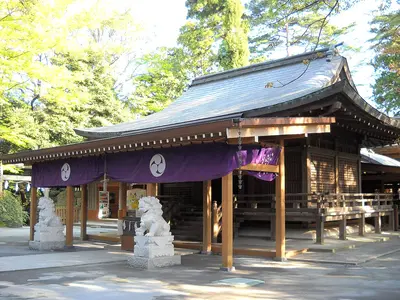
Kasama Inari Shrine — one of the three great Inari shrines in Japan — is located directly at the base of Kasama Castle mountain, making Kasama a rare combination of major religious site and castle ruins. The shrine draws over 3 million visitors a year, making the town itself bustling and lively compared to the quiet of the castle ruins above.
2

Stone Walls and Natural Rock Outcrops on a Forest Mountain

Kasama Castle is built on a mountain where large natural granite boulders and outcrops were incorporated directly into the castle's defensive design — stone walls are anchored to natural rock faces and boulder clusters, creating a distinctive hybrid of natural and constructed fortification. The forest-covered mountain retains well-preserved stone wall sections and the castle's characteristic rock-integrated architecture.

3

Azalea Paradise in Spring

The Tsutsujigaoka area within the castle grounds contains one of the finest azalea displays in Ibaraki Prefecture — thousands of azalea plants in vivid pink, red, and white blooming in late April and early May. The combination of azaleas, old stone walls, and the mountain forest makes the castle grounds particularly scenic during the spring bloom season.

Structure Details

Visitor tip

Kasama Castle is best visited as part of a day that includes Kasama Inari Shrine — one of Japan's top three Inari shrines at the mountain base. The castle ruins are a moderately easy forest walk above the shrine, with stone walls incorporating natural boulders and the small original storehouse (Yagura) at the summit. In spring, the Tsutsujigaoka azalea garden within the castle grounds is genuinely beautiful. The combination of major shrine and historical ruins makes Kasama a more complete destination than the castle alone.

Castle type

Mountain castle

Mountain castle — built on a granite boulder-studded mountain in the Kasama uplands of central Ibaraki Prefecture (Hitachi Province), with natural rock outcrops incorporated into the defensive design alongside stone walls

Layout type

Linked compound layout

Compound style — compounds arranged on the mountain with natural granite boulders and rock faces integrated into the stone wall construction

Main tower

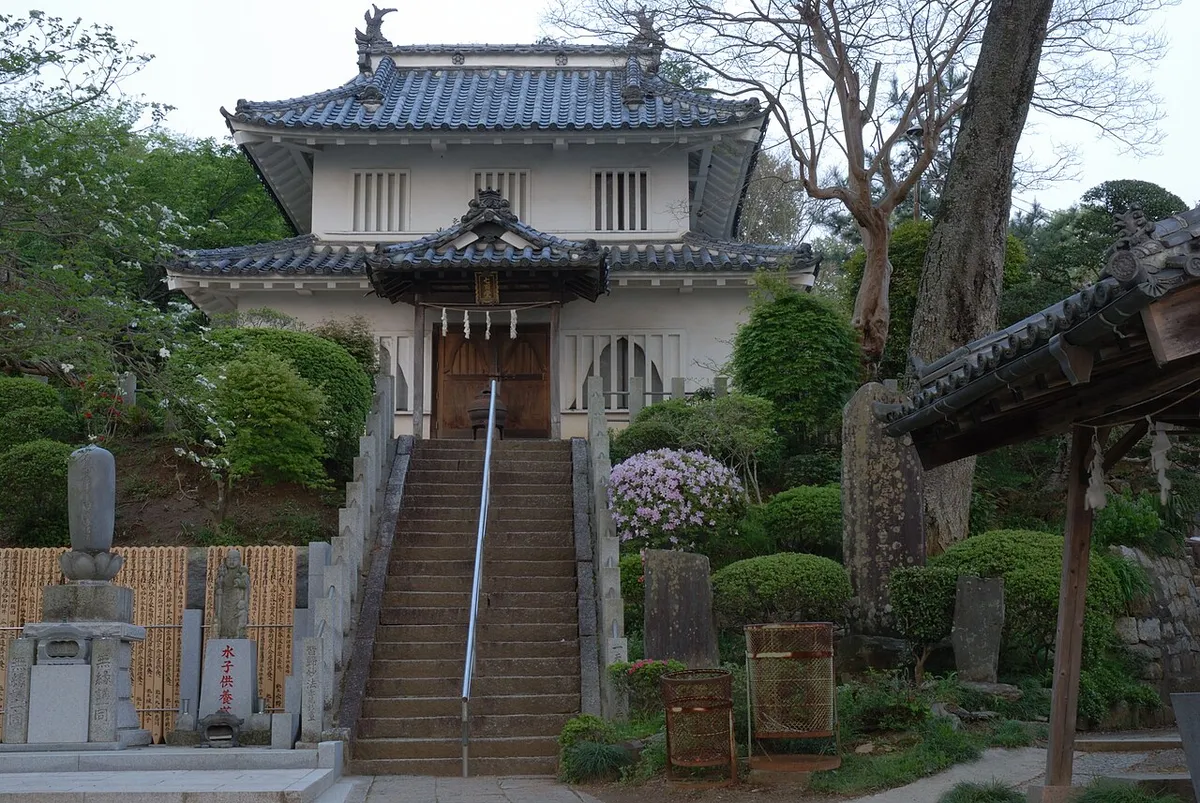
Partial ruins — the main tower (tenshu) foundation and stone walls survive, along with a small storehouse (Yagura) that is the only original standing structure remaining on the castle mountain. The storehouse has been designated a nationally registered tangible cultural property.

Stone walls

Natural stone stacking

The stone walls at Kasama Castle have the distinctive feature of integrating natural granite boulder outcrops directly into the wall fabric — in places, a large natural boulder serves as the anchor point for the stone wall, with cut and natural stones filling in around it. This creates a highly individual visual character and reflects the practical use of the mountain's natural geology.

Key defensive features

Natural Granite Boulders as Fortification Elements

Kasama Castle's most distinctive defensive feature is the incorporation of large natural granite boulder outcrops directly into the castle's wall and compound design. Where most castles had to build everything from scratch, Kasama's builders used the mountain's natural geology as a construction shortcut and defensive asset — the boulders were larger and harder to breach than any man-made wall.

Mountain Summit Elevation Above Hitachi Plain

The castle mountain rises above the Kasama uplands, providing commanding views over the Hitachi plain and the approach roads from Mito (the Tokugawa domain headquarters in Ibaraki). Any movement toward Kasama was visible from the summit well in advance.

Forest Mountain Terrain

The densely forested mountain terrain below the castle compounds slowed any attacking force, exhausted troops before they reached the first stone walls, and channeled approaches through narrow forest paths that defenders could cover with missile fire from higher positions.

The Story of Kasama Castle

Originally built 1219 / Kasama Muneoki
Current form 1668 / Makino clan
    1219

    Kasama Muneoki, a local warrior family, establishes the first fortification on the Kasama mountain, taking advantage of the natural granite boulders and elevated terrain to create a defensible position above the Hitachi plain.

    1380

    The Kasama clan continues to hold the castle through the turbulent Nanbokucho period (Southern and Northern Courts conflict), using the mountain position to survive the political chaos of competing imperial courts and shifting samurai allegiances across the Kanto region.

    1590

    Toyotomi Hideyoshi's Odawara campaign brings all Kanto lords under his authority. The Kasama clan submits, and the castle is integrated into the new domain system for the Kanto region.

    1600

    After the Battle of Sekigahara, the Kanto is reorganized under Tokugawa oversight. Kasama Castle is assigned to a succession of Tokugawa vassal daimyo families who rebuild and maintain it as a regional administrative center through the Edo period.

    1668

    The Makino clan is assigned to Kasama domain and undertakes significant construction work, bringing the castle to its final form — including the stone walls and the small Yagura storehouse that survive as the only original standing structure on the mountain today.

    1871

    The Meiji government's domain abolition ends Kasama's castle function. The mountain is eventually converted to public park use, with the Tsutsujigaoka azalea garden planted in the former Sannomaru compound.

    2017

    Kasama Castle is selected as #112 on the 続日本100名城 list, recognizing the medieval castle's long history, the surviving stone walls with their distinctive boulder integration, and the castle's role in the historical landscape of the Hitachi plain.

Did You Know?

  • Kasama Inari Shrine — directly below the castle mountain — is one of the three great Inari shrines in Japan, alongside Fushimi Inari in Kyoto and Yutoku Inari in Saga Prefecture. It receives over 3 million visitors per year, far more than the castle ruins above it.
  • The Yagura storehouse at the Kasama Castle summit is one of very few original Edo-period castle structures in the entire Kanto region — most castle buildings in Kanto were destroyed during the Boshin War or by post-Meiji demolition. It was designated a nationally registered tangible cultural property in 2003.
  • Kasama is also famous throughout Japan for its pottery (Kasama-yaki), which has been produced in the area for over 300 years. The castle, the shrine, and the pottery tradition make Kasama one of the culturally richest small cities in Ibaraki Prefecture.

Score Breakdown

Tourism Score

F 35/100
  • Accessibility 8 /20
  • Foreign-Friendly 5 /20
  • Historical Value 11 /20
  • Visual Impact 7 /20
  • Facilities 4 /20

Defense Score

A 87/100
  • Terrain Advantage 19 /20
  • Entrance Defense 18 /20
  • Internal Complexity 16 /20
  • Siege Endurance 16 /20
  • Strategic Oversight 18 /20

Planning Your Visit

Best Time to Visit

Late April to early May for the Tsutsujigaoka azalea bloom (spectacular). Autumn (October-November) for forest color. The Kasama Inari Shrine New Year (hatsumode) draws enormous crowds but has a special atmosphere.

Time Needed

2-3 hours (castle ruins + shrine)

Insider Tip

Visit the Kasama Inari Shrine first for atmosphere, then walk up the mountain to the castle ruins. The shrine's fox (kitsune) statues line the stone stairway approaches — hundreds of them in all sizes donated by worshippers over the centuries. The contrast between the lively shrine below and the quiet forest ruins above makes the visit unusually layered.

Map

Getting There

Nearest station: Kasama Station (Suigun Line) or Tomobe Station (JR Mito Line)
Walk from station: 20 min walk
Bus: Buses run from Mito and Tomobe stations to Kasama town. From the town center the castle ruins are a short walk or bicycle ride. Kasama Inari Shrine is walkable from the main bus stop.
Parking: Free parking near Kasama Inari Shrine and Tsutsujigaoka Park.
Accessible with a JR Pass

Admission

Free

Free to enter the castle ruins and Tsutsujigaoka Park at all times. The famous Kasama Inari Shrine adjacent to the castle grounds is always free.

Opening Hours

Open00:00 – 23:59

Open year-round. The Tsutsujigaoka area (azalea park) within the castle grounds is famous for azalea blooms in late April to early May — one of Ibaraki's top flower-viewing spots. Autumn offers pleasant walking conditions.

Facilities

  • – English guides
  • – Audio guide
  • – Wheelchair access
  • ✓ Restrooms
  • ✓ Gift shop
  • ✓ Food nearby

Nearby Castles

Featured in collections

FAQ

Frequently Asked Questions

How do I get to Kasama Castle?

The nearest station is Kasama Station (Suigun Line) or Tomobe Station (JR Mito Line). From there it is about 20 minutes on foot. Buses run from Mito and Tomobe stations to Kasama town. From the town center the castle ruins are a short walk or bicycle ride. Kasama Inari Shrine is walkable from the main bus stop.

How much does Kasama Castle cost to enter?

Kasama Castle is free to enter.

Is Kasama Castle worth visiting?

Kasama Castle offers a genuinely unusual combination: a well-maintained mountain ruins site directly above one of Japan's most visited Inari shrines, with boulder-integrated stone walls, an original Edo-period storehouse, and a spring azalea garden. It's more complete and more rewarding than most 続100名城 sites in Kanto. The combination of castle, shrine, and pottery culture makes Kasama a strong candidate for a day trip from Mito or Tokyo.

What are the opening hours of Kasama Castle?

00:00 to 23:59.

How long should I spend at Kasama Castle?

Plan for about 2-3 hours (castle ruins + shrine), depending on how closely you want to explore the grounds.