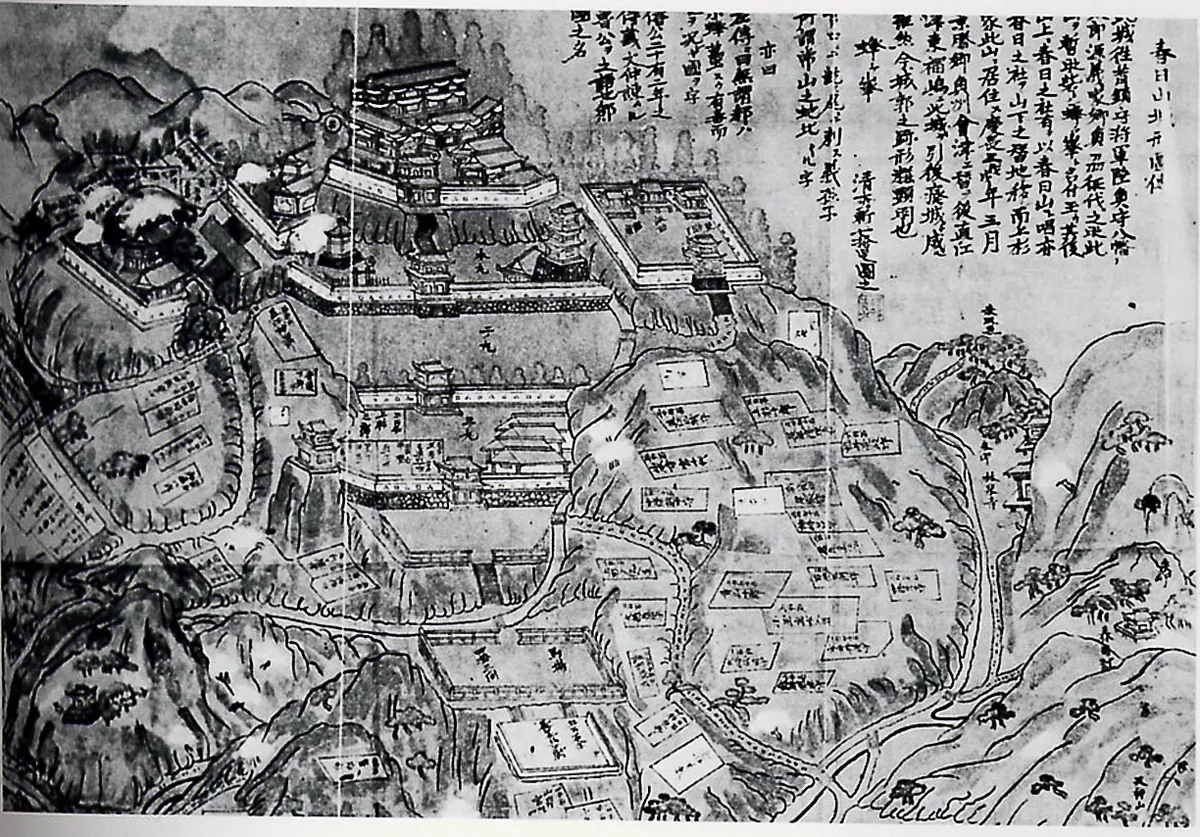
Kasugayama Castle

春日山城·Kasugayama-jo

D Tourism Score 40/100
A Defense Score 88/100

Uesugi Kenshin's legendary mountain fortress survives only as earthworks in the forest — the pilgrimage is for history lovers, not casual tourists.

#32 — 100 Famous Castles Ruins
Kasugayama Castle (春日山城)
Photo:Unknown authorUnknown author/Wikimedia Commons/Public domain

Quick Facts

Quick Facts

Admission
Free Free
Hours
00:00 – 23:59
Nearest Station
Kasugayama Station (Echigo Tokimeki Railway) or Naoetsu Station (Hokuriku Shinkansen)
Walk from Station
30 min walk

Bus also available

Time Needed
2–3 hours (approach hike, summit, descent)

The castle ruins and mountain trails are free to access. The Uesugi Kenshin memorial museum nearby (separate facility) may charge admission.

Defense Overview

Defense Overview

Why Kasugayama Castle was hard to attack

This castle is hard to attack because it combines high ground and difficult natural access with a controlled route inward.

An attacker would first have to fight the site itself before reaching the main defenses. They would have to cross water barriers or moat lines, face more defensive depth after the first line, and do so under a position that also watches the surrounding routes.

Overall score

88/100

Estimated range

82–94

Confidence

B

Usable estimate with some inference

This is a site-original comparison score for learning and comparison, not a reconstruction of one historical battle.

Radar view

Terrain 19/20 Entrance 17/20 Internal 17/20 Siege 16/20 Oversight 19/20
How this estimate was built+

This estimate combines broad terrain, approach, layout, and route-control signals. It is meant to explain the castle's defensive logic in plain English, not reconstruct a single historical attack.

Terrain Advantage

How much the terrain itself seems to help: height, slope, ridges, cliffs, water edges, and limited approach directions.

19/20

Entrance Defense

How awkward and dangerous the first entry looks: gates, bridge or moat crossings, chokepoints, and forced turns.

17/20

Internal Complexity

How hard it seems to keep pushing after entry: layered baileys, depth, compartmentalization, and repeated defensive lines.

17/20

Siege Endurance

A rough sense of long-hold potential: moats, water access, space, storage plausibility, and defensive staying power.

16/20

Strategic Oversight

How much the castle appears to command nearby roads, plains, rivers, basins, harbors, or town approaches.

19/20

Why Visit

Kasugayama Castle offers almost nothing in terms of visible remains — no stone walls, no buildings, no museum at the summit — and yet it draws devoted visitors because of who was here. Uesugi Kenshin is one of Japan's most beloved historical figures, and standing on his mountain, looking out over the Joetsu plain he defended for decades, connects visitors directly to the Sengoku period in a way that reconstructed concrete towers cannot. The mountain hike is the experience; the earthwork ruins are the destination.

Highlights

1

Home Base of Uesugi Kenshin — the 'Dragon of Echigo'

Kasugayama Castle was the headquarters of Uesugi Kenshin (1530–1578), one of the most celebrated and enigmatic warlords of the Sengoku period. Known as the 'Dragon of Echigo,' Kenshin was regarded as militarily undefeatable in open battle — a devout Buddhist who nonetheless fought nearly continuously, famously clashing with his great rival Takeda Shingen in the legendary five Battles of Kawanakajima. His base at Kasugayama was the nerve center for campaigns that stretched from Hokuriku to the Kanto plain.
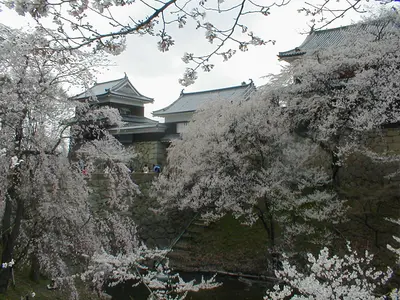
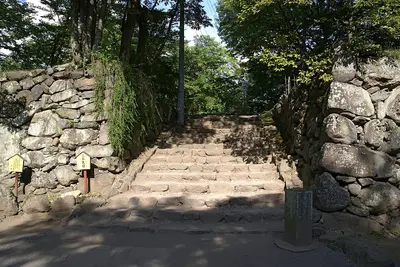
2

Mountain Fortress of Extraordinary Natural Strength

Kasugayama Castle scores exceptionally high as a defensive position by any measure — a mountain fortress where the terrain itself is the primary weapon. The summit at 182 meters commands comprehensive views in all directions, while the approach paths through dense forest funnel any attacking force into narrow killing grounds. Kenshin reportedly said the castle could hold even if he were absent — the natural position made it effectively self-defending.

3

The Vanished Capital

At its height, the Kasugayama domain below the castle was one of the wealthiest in all Japan — Kenshin controlled the lucrative Nihonkai coastal trade and salt supply lines. The castle town was said to rival Kyoto in prosperity. Today almost nothing remains of that wealth: the mountain forest has reclaimed the castle site, leaving only earthworks and foundations for those who make the climb.

Structure Details

Visitor tip

Kasugayama Castle is a mountain hike to earthwork ruins — be prepared for a 30–45-minute climb and don't expect dramatic stone walls or buildings. What you get is the experience of standing on Uesugi Kenshin's mountain, with 360-degree views over the Joetsu plain, and the genuine sensation of why this position was considered impregnable. Good footwear and clear weather are essential. Start at the Uesugi Kenshin memorial statue partway up the mountain.

Castle type

Mountain castle

Mountain castle — built on a 182-meter mountain above the Joetsu plain, with multiple compound levels descending from the summit

Layout type

Linked compound layout

Compound style — multiple baileys arranged vertically down the mountain ridgeline from summit to base

Main tower

Stone and earthwork ruins only — no wooden structures survive. The extent and layout of the original buildings are documented through archaeological excavation.

Stone walls

Natural stone stacking

The castle walls were primarily earthen banks and natural rock faces rather than the elaborate stone ishigaki walls of later castle construction. Excavation has revealed building foundations across multiple compound levels descending the mountain. The natural terrain provided far more defense than any constructed wall.

Key defensive features

182-Meter Mountain Summit

The castle sits atop a 182-meter peak above the Joetsu plain. The ascent is demanding even for modern hikers without armor or weapons — an attacking army would arrive exhausted at walls defended by fresh troops.

Cascading Compound Defense

The multiple compounds descending the mountain from summit to base meant an attacker had to fight through successive defensive lines at increasing cost before reaching the Honmaru. Each compound provided a fallback position and added depth to the defense.

360-Degree Observation

The summit position gave the garrison comprehensive visibility across the Joetsu plain and surrounding mountains — no approaching force could avoid detection, denying any element of surprise to attackers.

The Story of Kasugayama Castle

Originally built 1507 / Nagao Tamekage (expanded by Uesugi Kenshin)
Current form 1564 / Uesugi Kenshin
    1507

    Nagao Tamekage, Kenshin's father, establishes Kasugayama Castle as the base of Nagao clan power in Echigo Province. The mountain position dominates the Joetsu plain and the Nihonkai coastal trade route.

    1548

    Uesugi Kenshin — then known as Nagao Kagetora — becomes lord of Kasugayama at age 18 after defeating his brother in a power struggle. He begins transforming the castle into one of the great fortresses of the Sengoku period.

    1553

    The first of the five legendary Battles of Kawanakajima, where Kenshin's forces clash with Takeda Shingen's on the plain near modern Nagano. Kenshin leads his campaigns from Kasugayama, returning repeatedly after each inconclusive engagement.

    1564

    The fourth Battle of Kawanakajima — the largest and bloodiest of the five — is fought. Kenshin and Shingen reportedly clash in single combat during the battle. Kasugayama remains the operational base for Kenshin's army.

    1578

    Uesugi Kenshin dies suddenly at Kasugayama Castle — according to tradition, of a stroke in the castle privy, though rumors of assassination persist. His death triggers a succession dispute that fatally weakens the Uesugi clan.

    1598

    Uesugi Kagekatsu (Kenshin's adopted heir) is transferred by Toyotomi Hideyoshi to Aizu domain in Fukushima. Kasugayama Castle is abandoned as the Uesugi center of power shifts east, and the mountain fortress is left to the forest.

In Pop Culture

TV

Furin Kazan (NHK Taiga Drama, 1969)

The 1969 NHK historical drama based on Yasushi Inoue's novel about Takeda Shingen featured Uesugi Kenshin and his Kasugayama base prominently, cementing the site's national profile.

TV

Tenchijin (NHK Taiga Drama, 2009)

The 2009 NHK Taiga Drama set in Echigo and following the Uesugi clan significantly boosted tourism to Joetsu and Kasugayama Castle, drawing visitors interested in Uesugi Kenshin and his era.

Did You Know?

  • Kasugayama Castle was never taken by direct military assault during the Sengoku period — it fell only through political collapse after Uesugi Kenshin's death. Kenshin's military reputation was such that even Oda Nobunaga, who conquered most of Japan, was cautious about directly confronting him.
  • Uesugi Kenshin famously supplied salt to his rival Takeda Shingen when Shingen's domains were cut off from salt sources by an enemy blockade — the act being commemorated in the phrase 'sending salt to the enemy.' This story encapsulates Kenshin's self-image as a warrior fighting for honor rather than pure strategic advantage.
  • Kenshin took Buddhist vows of celibacy and never married or produced biological heirs, complicating succession after his death. His two adopted heirs — Kagekatsu and Kagetora — fought a civil war that shattered Uesugi power.
  • The five Battles of Kawanakajima (1553–1564) between Kenshin and Shingen are the most famous recurring rivalry in Sengoku history, celebrated in literature, drama, and games for centuries. Despite fighting five major engagements, neither side ever achieved a decisive victory.

Score Breakdown

Tourism Score

D 40/100
  • Accessibility 7 /20
  • Foreign-Friendly 6 /20
  • Historical Value 16 /20
  • Visual Impact 7 /20
  • Facilities 4 /20

Defense Score

A 88/100
  • Terrain Advantage 19 /20
  • Entrance Defense 17 /20
  • Internal Complexity 17 /20
  • Siege Endurance 16 /20
  • Strategic Oversight 19 /20

Planning Your Visit

Best Time to Visit

Spring (April–May) and autumn (October–November) for good hiking weather and clear views. Avoid winter due to Niigata's heavy snowfall.

Time Needed

2–3 hours (approach hike, summit, descent)

Insider Tip

The Uesugi Kenshin memorial statue partway up the mountain is the usual photo stop, but continue to the actual summit Honmaru for the full panoramic view over the Joetsu plain. The view explains instantly why Kenshin chose this position — you can see everything. Combine with the Joetsu City Museum for context on Kenshin's life and campaigns.

Map

Getting There

Nearest station: Kasugayama Station (Echigo Tokimeki Railway) or Naoetsu Station (Hokuriku Shinkansen)
Walk from station: 30 min walk
Bus: Bus and local walking access from Kasugayama Station. The mountain hike to the summit takes 30–45 minutes from the trailhead.
Parking: Parking available at the trailhead / Kasugayama History Museum area.
Accessible with a JR Pass

Admission

Free

The castle ruins and mountain trails are free to access. The Uesugi Kenshin memorial museum nearby (separate facility) may charge admission.

Opening Hours

Open00:00 – 23:59

Open at all hours year-round. Winter mountain access may be difficult due to snow — check conditions from December through March.

Facilities

  • – English guides
  • – Audio guide
  • – Wheelchair access
  • ✓ Restrooms
  • – Gift shop
  • – Food nearby

Nearby Castles

Featured in collections

FAQ

Frequently Asked Questions

How do I get to Kasugayama Castle?

The nearest station is Kasugayama Station (Echigo Tokimeki Railway) or Naoetsu Station (Hokuriku Shinkansen). From there it is about 30 minutes on foot. Bus and local walking access from Kasugayama Station. The mountain hike to the summit takes 30–45 minutes from the trailhead.

How much does Kasugayama Castle cost to enter?

Kasugayama Castle is free to enter.

Is Kasugayama Castle worth visiting?

Kasugayama Castle offers almost nothing in terms of visible remains — no stone walls, no buildings, no museum at the summit — and yet it draws devoted visitors because of who was here. Uesugi Kenshin is one of Japan's most beloved historical figures, and standing on his mountain, looking out over the Joetsu plain he defended for decades, connects visitors directly to the Sengoku period in a way that reconstructed concrete towers cannot. The mountain hike is the experience; the earthwork ruins are the destination.

What are the opening hours of Kasugayama Castle?

00:00 to 23:59.

How long should I spend at Kasugayama Castle?

Plan for about 2–3 hours (approach hike, summit, descent), depending on how closely you want to explore the grounds.