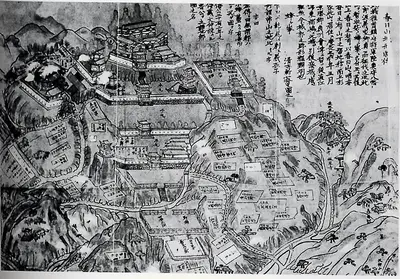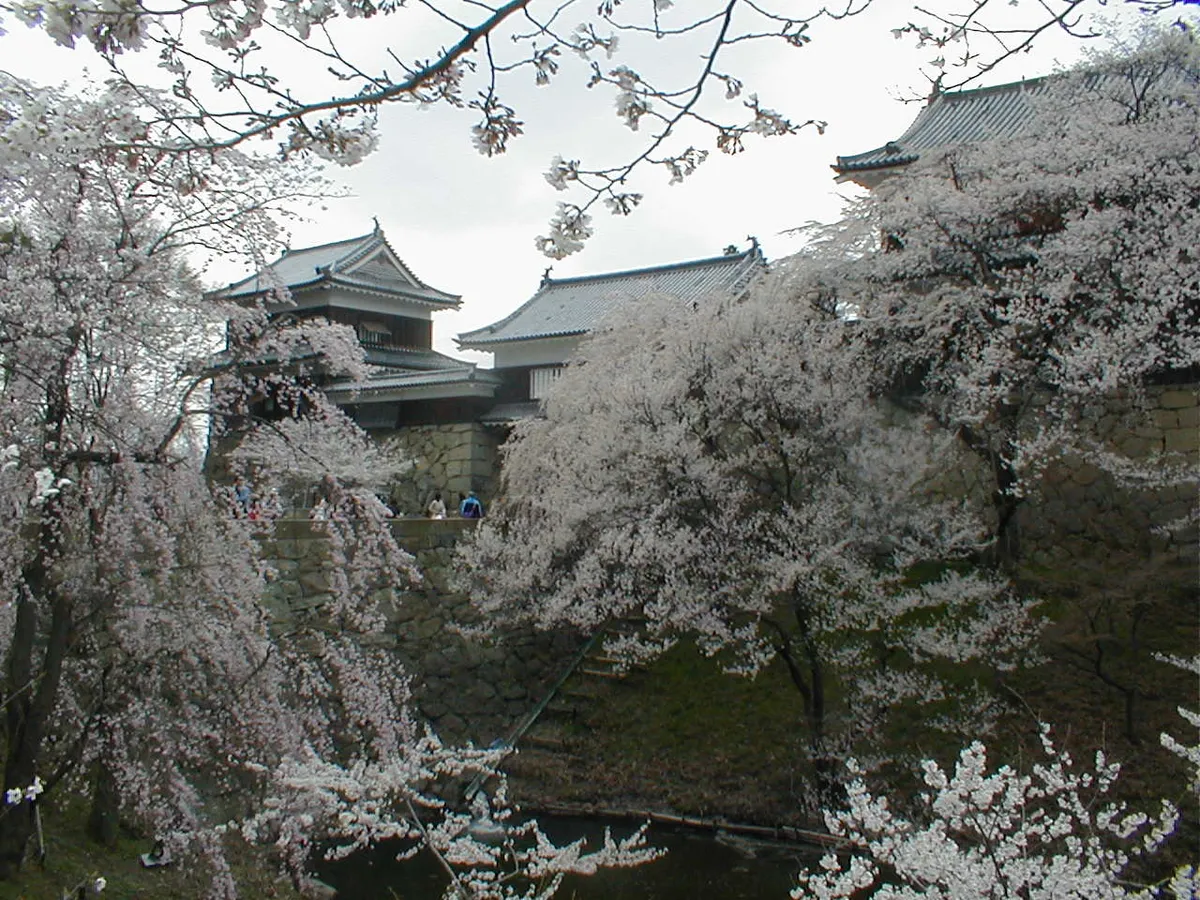
Ueda Castle

上田城·Ueda-jo

D Tourism Score 58/100
B Defense Score 76/100

The castle that humiliated Tokugawa twice — Ueda's surviving turrets are modest, but the history of Sanada Masayuki's impossible victories makes it one of Japan's most compelling castle sites.

#27 — 100 Famous Castles Ruins
Ueda Castle (上田城)
Photo:Tomorobi/Wikimedia Commons/CC BY-SA 4.0

Quick Facts

Quick Facts

Admission
¥300

¥100

Hours
08:30 – 17:00

Last entry 16:30

Nearest Station
Ueda Station (Hokuriku Shinkansen / Shinonoi Line / Ueda Electric Railway)
Walk from Station
15 min walk

Bus also available

Time Needed
1.5–2 hours

Children (elementary/junior high) ¥100 for turret only. Combined ticket (turret + museum) Adult ¥500, Child ¥150.

Defense Overview

Defense Overview

Why Ueda Castle was hard to attack

This castle is hard to attack because it combines a raised core with defended outer space with a controlled route inward.

An attacker would not get a simple direct approach to the center. They would have to cross water barriers or moat lines, pass tighter turns and chokepoints, and push through successive outer areas before the core.

Overall score

76/100

Estimated range

70–82

Confidence

B

Usable estimate with some inference

This is a site-original comparison score for learning and comparison, not a reconstruction of one historical battle.

Radar view

Terrain 16/20 Entrance 17/20 Internal 16/20 Siege 14/20 Oversight 13/20
How this estimate was built+

This estimate combines broad terrain, approach, layout, and route-control signals. It is meant to explain the castle's defensive logic in plain English, not reconstruct a single historical attack.

Terrain Advantage

How much the terrain itself seems to help: height, slope, ridges, cliffs, water edges, and limited approach directions.

16/20

Entrance Defense

How awkward and dangerous the first entry looks: gates, bridge or moat crossings, chokepoints, and forced turns.

17/20

Internal Complexity

How hard it seems to keep pushing after entry: layered baileys, depth, compartmentalization, and repeated defensive lines.

16/20

Siege Endurance

A rough sense of long-hold potential: moats, water access, space, storage plausibility, and defensive staying power.

14/20

Strategic Oversight

How much the castle appears to command nearby roads, plains, rivers, basins, harbors, or town approaches.

13/20

Why Visit

Ueda Castle's physical remains are modest — three small turrets and an original gate — but the history is extraordinary. This is where Sanada Masayuki defeated Tokugawa forces twice against impossible odds, and where one of the most beloved warrior families in Japanese history was based. For anyone interested in the Sengoku period and Sanada clan history, Ueda is an essential pilgrimage. The Shinkansen access makes it an easy half-day addition to any Nagano itinerary. Cherry blossom season adds a visual dimension to the historical interest.

Highlights

1

The Castle That Defeated Tokugawa — Twice

Ueda Castle is unique in Japanese history for having repelled Tokugawa forces not once but twice — an extraordinary record given that the Tokugawa clan eventually became the unchallenged rulers of all Japan. In 1585, Sanada Masayuki held off a Tokugawa force of 7,000 with just 2,000 defenders. In 1600, during the Sekigahara campaign, he did it again — pinning down 38,000 Tokugawa troops under Hidetada for weeks while his own forces numbered only 2,000. The second siege delayed Hidetada's arrival at Sekigahara itself.
2

Sanada Clan — Japan's Most Beloved Warrior Family

The Sanada clan, based at Ueda, is among the most romanticized warrior families in Japanese popular culture. Sanada Masayuki's tactical brilliance, his son Yukimura's legendary last stand at Osaka Castle, and the family's seemingly impossible string of victories against far superior forces have made the Sanada the subject of countless novels, films, and games. The red hexagonal Sanada clan mon (family crest) is instantly recognizable across Japan.

3

Three Surviving Turrets and Original Gates

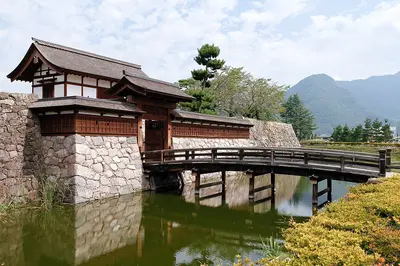
Ueda Castle retains three turrets and the main east gate from the Edo-period reconstruction — more original material than many more famous castle sites. The turrets are small but authentic, and the East Gate (Higashi-Yaguramon) was moved from a nearby shrine where it had been preserved during the Meiji demolitions. The surviving structures give a genuine sense of the castle's original appearance.

4

Cherry Blossoms and the Sanada Festival

Ueda Castle Park is one of Nagano's best cherry blossom spots (over 1,000 trees), and the annual Ueda Sanada Matsuri in spring celebrates the 1585 siege with historical reenactments, armored parades, and pageantry that draws visitors from across Japan who love Sanada clan history.

Structure Details

Visitor tip

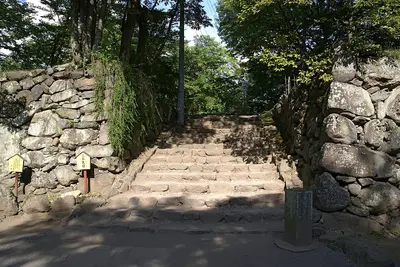
The three turrets and the East Gate are the things to look for — they are small but genuine Edo-period structures that give a sense of the castle's original appearance. The Sanada Shrine within the park is built on the Honmaru and contains exhibits on the Sanada clan. The castle's north wall dropping to the Saigawa River below is the best surviving example of the natural defensive position that made Ueda so difficult to take. Cherry blossom season is excellent.

Castle type

Hill castle

Hill-top flatland castle — built on a natural terrace above the Saigawa River, using the river as a natural moat on the south side

Layout type

Linked compound layout

Compound style — main compound with three turrets and associated subsidiary compounds

Main tower

No tenshu survives — the original main tower was demolished by Tokugawa forces after their eventual victory. Three turrets from the later Tokugawa-era reconstruction survive, plus the original East Gate.

Stone walls

Natural stone stacking

Stone walls survive extensively around the Honmaru, with the north wall in particular well-preserved. The walls use a combination of rough natural stone stacking (nozurazumi) from the Sanada-era construction and some later improvements. The north wall drops sharply to the Saigawa River below — the river provides a natural defensive barrier reinforcing the stone walls.

Moats

The Saigawa River forms a natural moat along the south/west sides. Artificial moats completed the encirclement on other sides. The combination made the castle difficult to approach from most directions.

Key defensive features

Saigawa River Natural Moat

The Saigawa River runs directly below the south wall of the castle, providing a natural barrier of significant depth and current. In 1585, Tokugawa attackers attempting a river crossing came under intense fire from the castle walls and suffered heavy losses.

Deliberately Dismantled — Then Rebuilt

After Masayuki's death, the Tokugawa deliberately demolished the castle — the ultimate acknowledgment of how effective it had been. When the Sanada Nobuyuki (Masayuki's son who had sided with Tokugawa) was granted Ueda domain, he rebuilt it on the same site — the very thing that had caused his masters such grief. The rebuilt castle is what stands today.

Cross-Fire Gate Approach

The gate approach is designed with multiple turns and blind corners, exposing any attacking force to fire from multiple angles simultaneously. Defenders at Ueda reportedly used these approaches to devastating effect during the 1585 and 1600 sieges.

The Story of Ueda Castle

Originally built 1583 / Sanada Masayuki
Current form 1622 / Sanada Nobuyuki (rebuilt on Masayuki's foundations)
    1583

    Sanada Masayuki constructs Ueda Castle on the Saigawa River terrace, choosing the position for its natural defensive advantages. The Sanada were a minor clan caught between Takeda, Oda, and Tokugawa power — building a strong defensive base was existential strategy.

    1585

    First Siege of Ueda: Tokugawa forces (7,000 troops) attack Ueda Castle after Masayuki defects from Tokugawa alliance. Masayuki's 2,000 defenders repel the attack, inflicting significant Tokugawa casualties. Masayuki's tactical genius first becomes nationally recognized.

    1600

    Second Siege of Ueda: As the armies march to Sekigahara, Tokugawa Hidetada (Ieyasu's son) besieges Ueda with 38,000 men. Masayuki holds out for weeks with 2,000 defenders — Hidetada is so delayed that he misses the Battle of Sekigahara entirely, an absence that infuriated his father Ieyasu.

    1600

    Tokugawa wins at Sekigahara. Masayuki, on the losing side, is sentenced to exile rather than death — reportedly because his son Nobuyuki (who had sided with Tokugawa) pleaded for clemency. Masayuki dies in exile in Wakayama in 1611, never returning to Ueda.

    1614

    Sanada Yukimura (Masayuki's younger son) joins Toyotomi forces in the Osaka Winter and Summer Campaigns, earning fame as the greatest warrior of the age with his legendary defense of Osaka Castle. He dies in the Summer Campaign — the last great Sengoku warrior's death.

    1622

    Sanada Nobuyuki rebuilds Ueda Castle on his father's foundations, creating the Edo-period castle whose turrets survive today. The rebuilt castle, somewhat ironically, was funded by the Tokugawa system that Masayuki had so brilliantly resisted.

In Pop Culture

TV

Sanada Maru (NHK Taiga Drama, 2016)

The 2016 NHK Taiga Drama focused on Sanada Yukimura, with Ueda Castle and Sanada Masayuki as central elements. The drama significantly boosted tourism to Ueda, with visitor numbers more than doubling during the broadcast year.

Film

Rurouni Kenshin (film series)

Several installments of the Rurouni Kenshin live-action film series used Ueda Castle as a filming location.

Did You Know?

  • Sanada Masayuki defeated Tokugawa forces twice — in 1585 (7,000 Tokugawa vs. 2,000 defenders) and 1600 (38,000 Tokugawa vs. 2,000 defenders). No other castle commander in the Sengoku period achieved this against Tokugawa forces, and the 1600 siege directly affected the outcome of the most decisive battle in Japanese history.
  • After Sekigahara, Tokugawa Ieyasu was reportedly so furious at Hidetada's late arrival (caused by the Ueda delay) that he refused to speak to his son for days. The Ueda siege indirectly shaped the internal dynamics of the Tokugawa family at the most critical moment of their rise to power.
  • The Sanada clan's red hexagonal mon (family crest) is one of the most instantly recognizable crests in Japanese history. Sanada troops wore red armor as a unit identifier — a sea of red becoming their signature visual identity in battle.
  • Sanada Yukimura (Masayuki's son) is repeatedly rated Japan's favorite Sengoku warrior in national popularity polls — ahead of Nobunaga, Hideyoshi, and Ieyasu. His father Masayuki, the Ueda defender, is arguably the greater strategist, but Yukimura's romantic death at Osaka overshadows him in popular memory.

Score Breakdown

Tourism Score

D 58/100
  • Accessibility 15 /20
  • Foreign-Friendly 10 /20
  • Historical Value 16 /20
  • Visual Impact 10 /20
  • Facilities 7 /20

Defense Score

B 76/100
  • Terrain Advantage 16 /20
  • Entrance Defense 17 /20
  • Internal Complexity 16 /20
  • Siege Endurance 14 /20
  • Strategic Oversight 13 /20

Planning Your Visit

Best Time to Visit

Late April for cherry blossoms and the Sanada Matsuri festival. Year-round for history; Shinkansen access makes any season viable.

Time Needed

1.5–2 hours

Insider Tip

Stand on the north wall of the Honmaru and look down at the Saigawa River below. This is what Masayuki's 2,000 defenders saw when 38,000 Tokugawa troops tried to cross. The river is narrower now than in 1600, but the drop is still dramatic. The Sanada Shrine inside the Honmaru has exhibits on both Masayuki and Yukimura — spend time here before the turrets. If you can time a visit during the Sanada Matsuri (spring), the historical reenactment of the 1585 siege is one of the best castle festivals in Nagano.

Map

Getting There

Nearest station: Ueda Station (Hokuriku Shinkansen / Shinonoi Line / Ueda Electric Railway)
Walk from station: 15 min walk
Bus: Ueda is a Shinkansen stop. Bus and local options from Ueda Station. 15-minute walk is easy and pleasant.
Parking: Free parking available at the castle park.
Accessible with a JR Pass

Admission

Adult¥300
Child¥100

Children (elementary/junior high) ¥100 for turret only. Combined ticket (turret + museum) Adult ¥500, Child ¥150.

Opening Hours

Open08:30 – 17:00
Last entry16:30

Open year-round. Park accessible at all times; museum hours apply to the turret interior.

Facilities

  • – English guides
  • – Audio guide
  • ✓ Wheelchair access
  • ✓ Restrooms
  • ✓ Gift shop
  • ✓ Food nearby

Nearby Castles

Featured in collections

FAQ

Frequently Asked Questions

How do I get to Ueda Castle?

The nearest station is Ueda Station (Hokuriku Shinkansen / Shinonoi Line / Ueda Electric Railway). From there it is about 15 minutes on foot. Ueda is a Shinkansen stop. Bus and local options from Ueda Station. 15-minute walk is easy and pleasant.

How much does Ueda Castle cost to enter?

Adult admission is ¥300 and child admission is ¥100.

Is Ueda Castle worth visiting?

Ueda Castle's physical remains are modest — three small turrets and an original gate — but the history is extraordinary. This is where Sanada Masayuki defeated Tokugawa forces twice against impossible odds, and where one of the most beloved warrior families in Japanese history was based. For anyone interested in the Sengoku period and Sanada clan history, Ueda is an essential pilgrimage. The Shinkansen access makes it an easy half-day addition to any Nagano itinerary. Cherry blossom season adds a visual dimension to the historical interest.

What are the opening hours of Ueda Castle?

08:30 to 17:00, last entry 16:30.

How long should I spend at Ueda Castle?

Plan for about 1.5–2 hours, depending on how closely you want to explore the grounds.