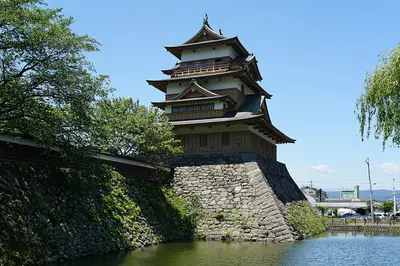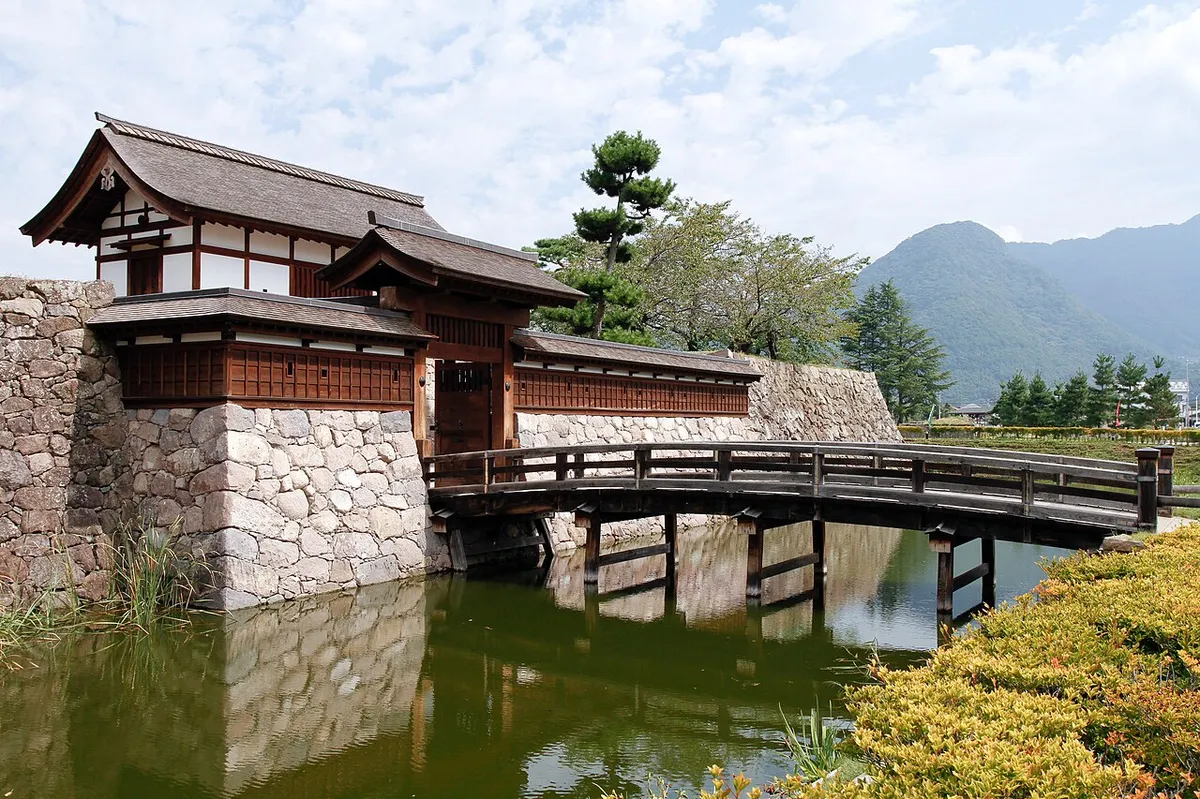
Matsushiro Castle

松代城·Matsushiro-jo

D Tourism Score 40/100
C Defense Score 65/100

The quiet moat-island home of the Sanada clan — Japan's most beloved samurai family — set in a remarkably intact castle town that time forgot.

#26 — 100 Famous Castles Ruins
Matsushiro Castle (松代城)
Photo:baku13/Wikimedia Commons/CC BY-SA 2.1 jp

Quick Facts

Quick Facts

Admission
Free Free
Hours
09:00 – 17:00

Last entry 16:30

Nearest Station
Nagano Station (JR Hokuriku Shinkansen / Multiple JR lines)
Walk from Station
50 min walk

Bus also available

Time Needed
1 hour castle ruins; 2-3 hours if exploring the wider Matsushiro town historical area

Matsushiro Castle ruins park is completely free to enter. The Sanada Clan Museum (Matsushiro Clan School) in the nearby town of Matsushiro charges separately (¥500 adults).

Defense Overview

Defense Overview

Why Matsushiro Castle was hard to attack

This castle is hard to attack because attackers have to work across water barriers before pressing inward instead of getting a direct run at the core.

An attacker would not simply arrive at the center on open flat ground. They would have to cross water barriers or moat lines, approach through at least some constrained entry space, and push through successive outer areas before the core.

Overall score

65/100

Estimated range

59–71

Confidence

B

Usable estimate with some inference

This is a site-original comparison score for learning and comparison, not a reconstruction of one historical battle.

Radar view

Terrain 11/20 Entrance 13/20 Internal 15/20 Siege 14/20 Oversight 12/20
How this estimate was built+

This estimate combines broad terrain, approach, layout, and route-control signals. It is meant to explain the castle's defensive logic in plain English, not reconstruct a single historical attack.

Terrain Advantage

How much the terrain itself seems to help: height, slope, ridges, cliffs, water edges, and limited approach directions.

11/20

Entrance Defense

How awkward and dangerous the first entry looks: gates, bridge or moat crossings, chokepoints, and forced turns.

13/20

Internal Complexity

How hard it seems to keep pushing after entry: layered baileys, depth, compartmentalization, and repeated defensive lines.

15/20

Siege Endurance

A rough sense of long-hold potential: moats, water access, space, storage plausibility, and defensive staying power.

14/20

Strategic Oversight

How much the castle appears to command nearby roads, plains, rivers, basins, harbors, or town approaches.

12/20

Why Visit

Matsushiro Castle itself is a minor attraction, but the surrounding Matsushiro town is exceptional: a well-preserved Edo-period castle town with the domain school, Sanada clan mansion, and temple complex all within walking distance. For Sanada history enthusiasts (a substantial crowd after the 2016 Sanada Maru taiga drama), this is an essential pilgrimage. The area is also accessible from Nagano city, making it combinable with other Nagano sights.

Highlights

1

Sanada Clan's Lowland Base

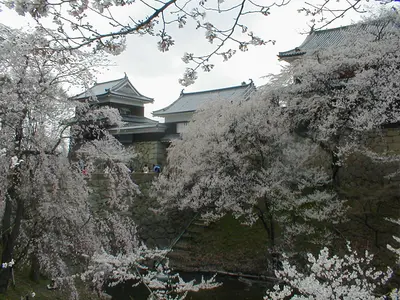
Matsushiro Castle was the home base of the Sanada clan — one of the most celebrated samurai families in Japanese history, famous for their cunning strategy and their defiant stand at the Siege of Osaka. The Sanada's mountain stronghold was Ueda Castle, but after the Sengoku period ended, the Tokugawa assigned them Matsushiro as their official domain seat. The castle and the surrounding Matsushiro town preserve significant Sanada-era heritage.
2

Moat Island Structure

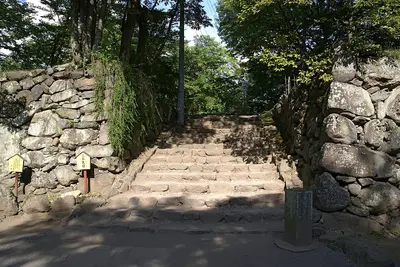
Matsushiro Castle was built on a flat plain completely surrounded by water moats — essentially an island castle. The reconstructed Taiko-bashi (drum bridge) and stone-walled moat give a clear picture of the original layout, even though all wooden structures are gone. The reflection of the stone walls in the moat water makes for an atmospheric scene.

Structure Details

Visitor tip

This is a quiet, atmospheric ruins site best suited for visitors with a specific interest in Sanada clan history or Japanese castle architecture in its most minimal form. Combine with a visit to the Sanada Clan Museum and the Bunbu Gakko (domain school) in the Matsushiro town area for the full historical context.

Castle type

Flatland castle

Flatland castle — built on flat terrain in the Chikuma River valley, completely surrounded by moats

Layout type

Concentric layout

Enclosure style — main compound and subsidiary compounds surrounded by moats on the flat plain

Main tower

Ruins only — all wooden structures including the main tower and buildings are lost. Stone walls, earthworks, the bridge, and moats partially survive.

Stone walls

Natural stone stacking

Sections of the original stone walls survive around the main compound, supplemented by earthwork embankments. The reconstructed Taiko-bashi (drum bridge) and the moat-side stone walls were restored in the 1990s, giving the ruins site a coherent visual identity.

Moats

The castle's defining feature is its water moat system — the main compound sits on a near-island of land surrounded by wide moats. Sections of the original moat survive and have been restored, with water maintained in the inner moat circuit.

Key defensive features

Moat-Surrounded Island Position

The main compound's complete encirclement by wide water moats gave it significant defensive value despite the flat terrain. Any attack required boats or the ability to force the bridge approaches under fire.

Chikuma River Flank

The Chikuma River running near the castle provided additional water barriers and flood-zone terrain that would have been difficult for large formations of soldiers to traverse.

The Story of Matsushiro Castle

Originally built 1560 / Takeda Shingen (attributed)
Current form 1598 / Sanada Nobuyuki
    1560

    A fortification is established on the site, attributed to the Takeda clan under Shingen as part of their network of Shinano province strongholds.

    1598

    Sanada Nobuyuki (son of the famous Sanada Masayuki) is granted Matsushiro domain following the Battle of Sekigahara, establishing the Sanada as lords of the area. The castle is expanded as the domain's administrative center.

    1622

    The Sanada clan formally establishes Matsushiro as their domain castle, building residences and administrative buildings around the castle site.

    1871

    Domain abolition during the Meiji Restoration ends the Sanada clan's rule. The castle buildings are demolished or fall into disrepair over subsequent decades.

    2004

    Partial restoration of the castle ruins is completed, including the Taiko-bashi bridge reconstruction and moat restoration, creating the current park appearance.

In Pop Culture

TV

Sanada Maru (NHK Taiga Drama 2016)

The celebrated NHK Taiga drama focused on Sanada Nobushige (Yukimura) featured the Sanada family prominently, bringing visitor attention to Matsushiro and related Sanada sites.

Did You Know?

  • The Sanada clan's famous crests — the 'Rokumonsen' (six coins, symbolizing the toll paid to cross the River Styx, showing readiness to die in battle) — are displayed throughout the Matsushiro area.
  • Sanada Nobushige, who died heroically at the Siege of Osaka in 1615, is often called 'Japan's greatest warrior' and remains a perennial favorite subject of historical dramas. His family seat was here at Matsushiro.
  • The Matsushiro area contains an extraordinary collection of Sanada-period historical sites: the castle, the domain school (Bunbu Gakko), the Sanada clan mansion, and several temples with Sanada connections — making it one of the most intact clan heritage areas in Japan.
  • During WWII, an enormous underground bunker was secretly constructed in the hills behind Matsushiro — intended as the wartime headquarters for the Imperial General Staff and the Emperor. The 'Matsushiro Underground Imperial Headquarters' can be toured today and is one of Japan's most unusual historical sites.

Score Breakdown

Tourism Score

D 40/100
  • Accessibility 7 /20
  • Foreign-Friendly 6 /20
  • Historical Value 12 /20
  • Visual Impact 8 /20
  • Facilities 7 /20

Defense Score

C 65/100
  • Terrain Advantage 11 /20
  • Entrance Defense 13 /20
  • Internal Complexity 15 /20
  • Siege Endurance 14 /20
  • Strategic Oversight 12 /20

Planning Your Visit

Best Time to Visit

Spring (April–May) and autumn (October–November) are ideal. The castle is closed in winter. Avoid summer heat.

Time Needed

1 hour castle ruins; 2-3 hours if exploring the wider Matsushiro town historical area

Insider Tip

Don't miss the Matsushiro Underground Imperial Headquarters — it's a 10-minute walk from the castle and offers a fascinating and eerie WWII history experience completely unrelated to the Sengoku period. The contrast between the samurai castle town and the secret WWII bunker network makes Matsushiro one of Japan's most historically layered destinations.

Map

Getting There

Nearest station: Nagano Station (JR Hokuriku Shinkansen / Multiple JR lines)
Walk from station: 50 min walk
Bus: Nagano Electric Railway Chikuma Line to Matsushiro Station, then 10-minute walk. Bus from Nagano Station to Matsushiro approximately 30 minutes.
Parking: Free parking available at the castle site.

Admission

Free

Matsushiro Castle ruins park is completely free to enter. The Sanada Clan Museum (Matsushiro Clan School) in the nearby town of Matsushiro charges separately (¥500 adults).

Opening Hours

Open09:00 – 17:00
Last entry16:30

Closed December 1 through March 31 (winter closure). Open April through November.

Facilities

  • – English guides
  • – Audio guide
  • ✓ Wheelchair access
  • ✓ Restrooms
  • – Gift shop
  • – Food nearby

Nearby Castles

Featured in collections

FAQ

Frequently Asked Questions

How do I get to Matsushiro Castle?

The nearest station is Nagano Station (JR Hokuriku Shinkansen / Multiple JR lines). From there it is about 50 minutes on foot. Nagano Electric Railway Chikuma Line to Matsushiro Station, then 10-minute walk. Bus from Nagano Station to Matsushiro approximately 30 minutes.

How much does Matsushiro Castle cost to enter?

Matsushiro Castle is free to enter.

Is Matsushiro Castle worth visiting?

Matsushiro Castle itself is a minor attraction, but the surrounding Matsushiro town is exceptional: a well-preserved Edo-period castle town with the domain school, Sanada clan mansion, and temple complex all within walking distance. For Sanada history enthusiasts (a substantial crowd after the 2016 Sanada Maru taiga drama), this is an essential pilgrimage. The area is also accessible from Nagano city, making it combinable with other Nagano sights.

What are the opening hours of Matsushiro Castle?

09:00 to 17:00, last entry 16:30.

How long should I spend at Matsushiro Castle?

Plan for about 1 hour castle ruins; 2-3 hours if exploring the wider Matsushiro town historical area, depending on how closely you want to explore the grounds.