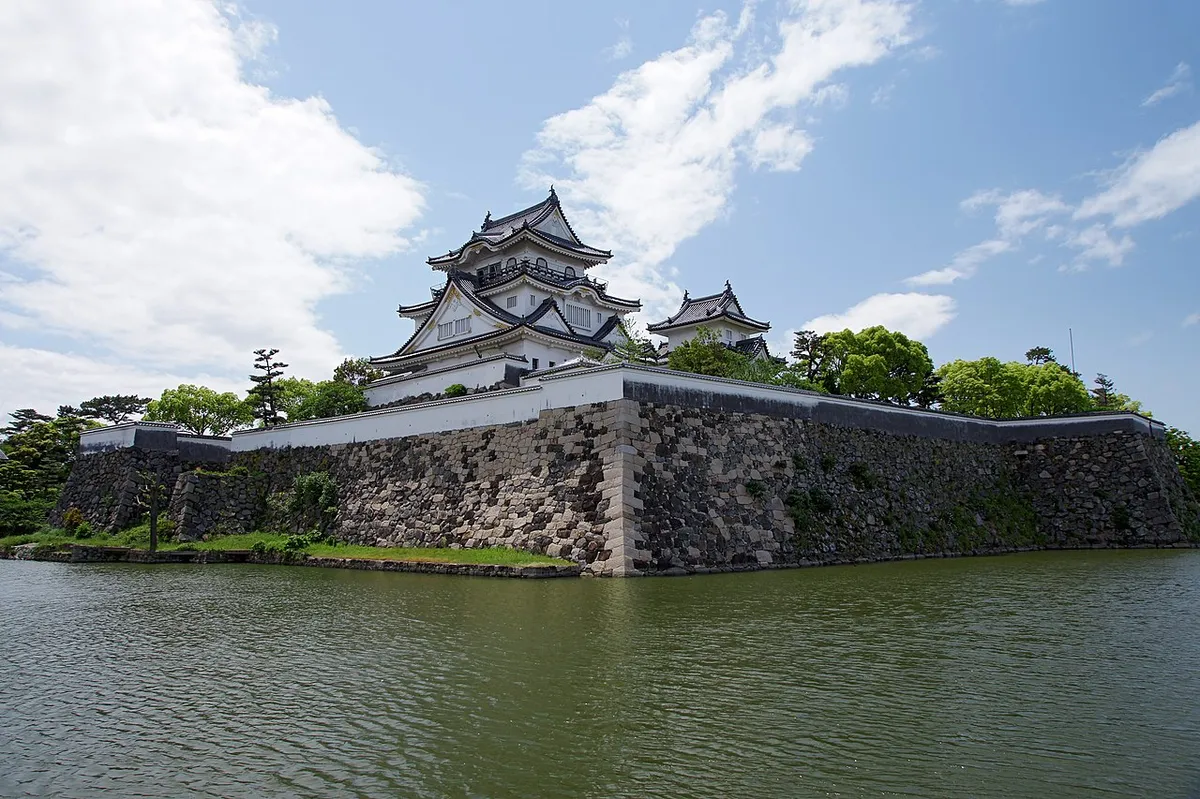
Kishiwada Castle

岸和田城·Kishiwada-jo

D Tourism Score 52/100
C Defense Score 60/100

The castle of the Danjiri Festival — where every September, teams of hundreds haul four-ton wooden floats through narrow streets at running speed while men dance on the rooftops.

#161 — Continued 100 Castles Reconstructed
Kishiwada Castle (岸和田城)
Photo:663highland/Wikimedia Commons/CC BY 2.5

Quick Facts

Quick Facts

Admission
¥300

¥0

Hours
09:00 – 17:00

Last entry 16:30

Nearest Station
Kishiwada Station (Nankai Koya Line) or Kishiwada Station (Nankai Main Line)
Walk from Station
10 min walk
Time Needed
1 to 1.5 hours (castle only); full day during Danjiri Festival

Children (junior high and under) free.

Defense Overview

Defense Overview

Why Kishiwada Castle was hard to attack

This castle is hard to attack because attackers have to work across water barriers before pressing inward instead of getting a direct run at the core.

An attacker would not simply arrive at the center on open flat ground. They would have to cross water barriers or moat lines, approach through at least some constrained entry space, and push through successive outer areas before the core.

Overall score

60/100

Estimated range

54–66

Confidence

B

Usable estimate with some inference

This is a site-original comparison score for learning and comparison, not a reconstruction of one historical battle.

Radar view

Terrain 10/20 Entrance 12/20 Internal 15/20 Siege 13/20 Oversight 10/20
How this estimate was built+

This estimate combines broad terrain, approach, layout, and route-control signals. It is meant to explain the castle's defensive logic in plain English, not reconstruct a single historical attack.

Terrain Advantage

How much the terrain itself seems to help: height, slope, ridges, cliffs, water edges, and limited approach directions.

10/20

Entrance Defense

How awkward and dangerous the first entry looks: gates, bridge or moat crossings, chokepoints, and forced turns.

12/20

Internal Complexity

How hard it seems to keep pushing after entry: layered baileys, depth, compartmentalization, and repeated defensive lines.

15/20

Siege Endurance

A rough sense of long-hold potential: moats, water access, space, storage plausibility, and defensive staying power.

13/20

Strategic Oversight

How much the castle appears to command nearby roads, plains, rivers, basins, harbors, or town approaches.

10/20

Why Visit

If your visit coincides with the Danjiri Festival in mid-September, Kishiwada is an unmissable experience — one of the most viscerally exciting traditional festivals in Japan. Outside festival season, the castle itself is a pleasant visit with a good moat system and an easy day trip from Osaka (30 minutes by Nankai train). The castle museum has interesting exhibits on the festival history. The nearby Danjiri Museum offers year-round experience of the floats.

Highlights

1

Home of the Danjiri Festival — Japan's Most Dangerous Celebration

Kishiwada Castle is inseparable from the Danjiri Festival (Danjiri Matsuri), held every September. Teams of hundreds of men haul massive ornately carved wooden floats (danjiri) — weighing up to 4 tons — through the narrow streets of Kishiwada at full running speed, cornering at breakneck angles around sharp turns while a man dances on the roof of the moving float. The festival has a centuries-long history and a well-documented casualty record. It is one of Japan's most viscerally exciting traditional festivals and draws hundreds of thousands of visitors annually.
2

The Castle That Survived a Lightning Strike by Rebuilding Itself

The original Kishiwada Castle keep was destroyed by lightning in 1827 and not rebuilt for over a century — leaving Kishiwada without a keep through the entire late Edo and Meiji periods. A concrete reconstruction was finally built in 1954, nearly 130 years after the lightning strike. The current keep is a postwar reconstruction, but the stone walls and moat system surrounding it are substantially original Edo-period construction.

3

Hideyoshi's Gateway to Shikoku

Kishiwada Castle was significantly expanded by Toyotomi Hideyoshi in 1585 as the staging base for his Shikoku Campaign — his military invasion of the island across the Kii Channel. Its coastal position on Osaka Bay made it ideal for assembling and supplying the invasion fleet. The castle's history is thus tied to one of Hideyoshi's major military campaigns and to the broader story of Japan's reunification.

Structure Details

Visitor tip

Kishiwada Castle is an excellent half-day visit within easy reach of Osaka. The moat system is photogenic and largely intact. The keep is a comfortable concrete reconstruction with city history exhibits inside. The surrounding castle park is pleasant. For timing: if the Danjiri Festival is your priority, plan for mid-September, but book accommodation far in advance — the festival weekend fills Kishiwada completely.

Castle type

Flatland castle

Flatland castle — built on completely flat coastal terrain on Osaka Bay, relying entirely on moats and stone walls for defense

Layout type

Concentric layout

Ring-style layout — concentric compounds surrounding the central keep on flat coastal ground

Main tower

Concrete reconstruction (1954) — built after the original keep was destroyed by lightning in 1827; exterior approximates the Edo-period three-story design

3 floors

Stone walls

Natural stone stacking

The stone walls and moat system of Kishiwada Castle are the most historically significant surviving elements — substantially original Edo-period construction in good condition. The reconstructed keep sits on original stone wall foundations. The double moat system is largely intact and gives a clear sense of the original flatland fortress layout.

Moats

Double moat system — inner and outer moats — survives in good condition and is one of Kishiwada Castle's most impressive features. The flat Osaka Bay coastal terrain required effective water defenses as there was no natural topographic protection.

Key defensive features

Double Moat System

The inner and outer moat system surrounds the castle on flat coastal terrain, creating a multi-ring water defense that compensates for the absence of any natural topographic protection. The moats survive in good condition and remain filled with water.

Coastal Position on Osaka Bay

Kishiwada's original position on Osaka Bay provided sea access and visibility over maritime approaches — valuable for a castle whose strategic role included staging for the Shikoku Campaign invasion fleet.

Stone Wall Perimeter

The ishigaki stone walls encircling the Honmaru compound are well-preserved and substantial — the primary defensive barrier on the flat terrain where moats were first crossed.

The Story of Kishiwada Castle

Originally built 1334 / Waki Yasuharu (attributed)
Current form 1954 / Kishiwada City (concrete reconstruction of 1827 lightning-destroyed keep)
    1334

    The original fortification at Kishiwada is attributed to Waki Yasuharu in the Nanbokucho period, establishing a coastal stronghold on Osaka Bay. The Okabe clan later controls the site and develops it into a proper castle.

    1585

    Toyotomi Hideyoshi expands Kishiwada Castle substantially as the staging base for his Shikoku Campaign — the military invasion of Shikoku across the Kii Channel. The castle's importance rises significantly as a logistics center for one of Hideyoshi's major military operations.

    1600

    After Sekigahara, Kishiwada domain is assigned to Okabe Nobukatsu, a Tokugawa ally. The Okabe clan holds Kishiwada for the entire Edo period, administering the domain with no further military conflict.

    1827

    Lightning strikes and destroys the main keep of Kishiwada Castle. Financial constraints — typical of late Edo-period domain finances — prevent immediate reconstruction. The castle operates without a keep for the remaining decades of the Edo period and into the Meiji era.

    1954

    Kishiwada City constructs a concrete keep as a postwar reconstruction, nearly 130 years after the lightning strike. The project is part of the broader postwar wave of Japanese castle reconstruction as communities sought to restore local identity and heritage.

In Pop Culture

other

Danjiri Festival coverage

The Kishiwada Danjiri Festival is regularly featured in Japanese national television coverage, NHK documentaries, and foreign media as one of Japan's most intense and dangerous traditional festivals. The castle is typically featured as backdrop and symbol of the festival.

Did You Know?

  • The Kishiwada Danjiri Festival has resulted in fatalities over its centuries-long history — the combination of multi-ton wooden floats moving at running speed through narrow streets with men dancing on the roof creates real physical danger. Local participants treat injuries as part of the experience, and the festival's refusal to be sanitized for safety is a large part of its fierce local pride and cultural significance.
  • The Danjiri floats themselves are extraordinary works of craft — ornately carved over months by specialist woodcarvers, with detailed scenes from Japanese history and mythology on every panel. Each neighborhood's float is a source of intense community pride and represents generations of accumulated carving tradition.
  • Kishiwada Castle's lightning-destroyed keep went unrebuilt for 127 years — from 1827 to 1954. This makes it one of the castles whose current reconstruction is the result of 20th-century civic investment rather than immediate historical restoration, a distinction that affects how historians and castle enthusiasts classify its authenticity.

Score Breakdown

Tourism Score

D 52/100
  • Accessibility 14 /20
  • Foreign-Friendly 6 /20
  • Historical Value 11 /20
  • Visual Impact 12 /20
  • Facilities 9 /20

Defense Score

C 60/100
  • Terrain Advantage 10 /20
  • Entrance Defense 12 /20
  • Internal Complexity 15 /20
  • Siege Endurance 13 /20
  • Strategic Oversight 10 /20

Planning Your Visit

Best Time to Visit

Mid-September for the Danjiri Festival (book far in advance — accommodation fills completely). Spring for cherry blossoms in the castle park. Year-round for the castle itself.

Time Needed

1 to 1.5 hours (castle only); full day during Danjiri Festival

Insider Tip

The Danjiri Festival's most dramatic moment is the 'yari-mawashi' — the sharp corner turns where the multi-ton float pivots at full speed. Stake out a corner position on the parade route well before the procession starts. Standing on the outer corner of a sharp turn gives you the full spectacle of the float bearing down and then pivoting at the last moment. The festival runs over two days — Saturday afternoon and Sunday are the main events.

Map

Getting There

Nearest station: Kishiwada Station (Nankai Koya Line) or Kishiwada Station (Nankai Main Line)
Walk from station: 10 min walk
Parking: Paid parking adjacent to the castle. Can fill up during Danjiri Festival — use public transport during the festival period.

Admission

Adult¥300
ChildFree

Children (junior high and under) free.

Opening Hours

Open09:00 – 17:00
Last entry16:30

Closed Mondays (or following day if Monday is a holiday). Closed December 29–January 3. Special extended hours during Danjiri Festival period (September).

Facilities

  • – English guides
  • – Audio guide
  • ✓ Wheelchair access
  • ✓ Restrooms
  • ✓ Gift shop
  • ✓ Food nearby

Nearby Castles

Featured in collections

FAQ

Frequently Asked Questions

How do I get to Kishiwada Castle?

The nearest station is Kishiwada Station (Nankai Koya Line) or Kishiwada Station (Nankai Main Line). From there it is about 10 minutes on foot.

How much does Kishiwada Castle cost to enter?

Adult admission is ¥300 and child admission is ¥0.

Is Kishiwada Castle worth visiting?

If your visit coincides with the Danjiri Festival in mid-September, Kishiwada is an unmissable experience — one of the most viscerally exciting traditional festivals in Japan. Outside festival season, the castle itself is a pleasant visit with a good moat system and an easy day trip from Osaka (30 minutes by Nankai train). The castle museum has interesting exhibits on the festival history. The nearby Danjiri Museum offers year-round experience of the floats.

What are the opening hours of Kishiwada Castle?

09:00 to 17:00, last entry 16:30.

How long should I spend at Kishiwada Castle?

Plan for about 1 to 1.5 hours (castle only); full day during Danjiri Festival, depending on how closely you want to explore the grounds.